Basic Lawn Care for Beginners: The Whole Lawn Year in Five Jobs
By the Windchime Walker editorial team
Photo: Magic K / Pexels
Lawn care intimidates new homeowners because it is sold as a program: bags, schedules, treatments, a shelf of products with a season each. Underneath the marketing, a healthy lawn rests on five jobs, and a beginner who does those five at the right times, and skips the rest, will have a lawn that embarrasses neighbors running the full program badly. This page is the whole year on one page: the five jobs, the season table for both grass families, and the permission, which beginners rarely get, to leave everything else undone.
One identification comes before every date on this page: your grass family. Cool season grasses, fescue, bluegrass, and ryegrass, grow actively in spring and fall and sulk in summer heat; they dominate northern lawns. Warm season grasses, Bermuda, zoysia, and St. Augustine, grow in summer heat and go dormant and brown in winter cold; they dominate southern lawns. Every job below has a season for each family, and they are nearly opposite, which is why generic lawn advice so often fails: it was written for the other family. If you do not know your grass, your local extension office or a lawn care neighbor can name it from a photo and your zip code, and that one answer unlocks the whole calendar.
The First Year Lawn Care Checklist on this page lays the five jobs out season by season for both families. This site's other lawn guides own each job in depth, mowing, watering, overseeding, weeds, and bare spots, and are linked from the jobs below. This page owns the year as a whole.
Interactive tool
First Year Lawn Care Checklist
Check off each step as you finish it. Your progress stays on this page.
0 of 7 complete
0% done
Job 1: Mow High, and Never Take More Than a Third
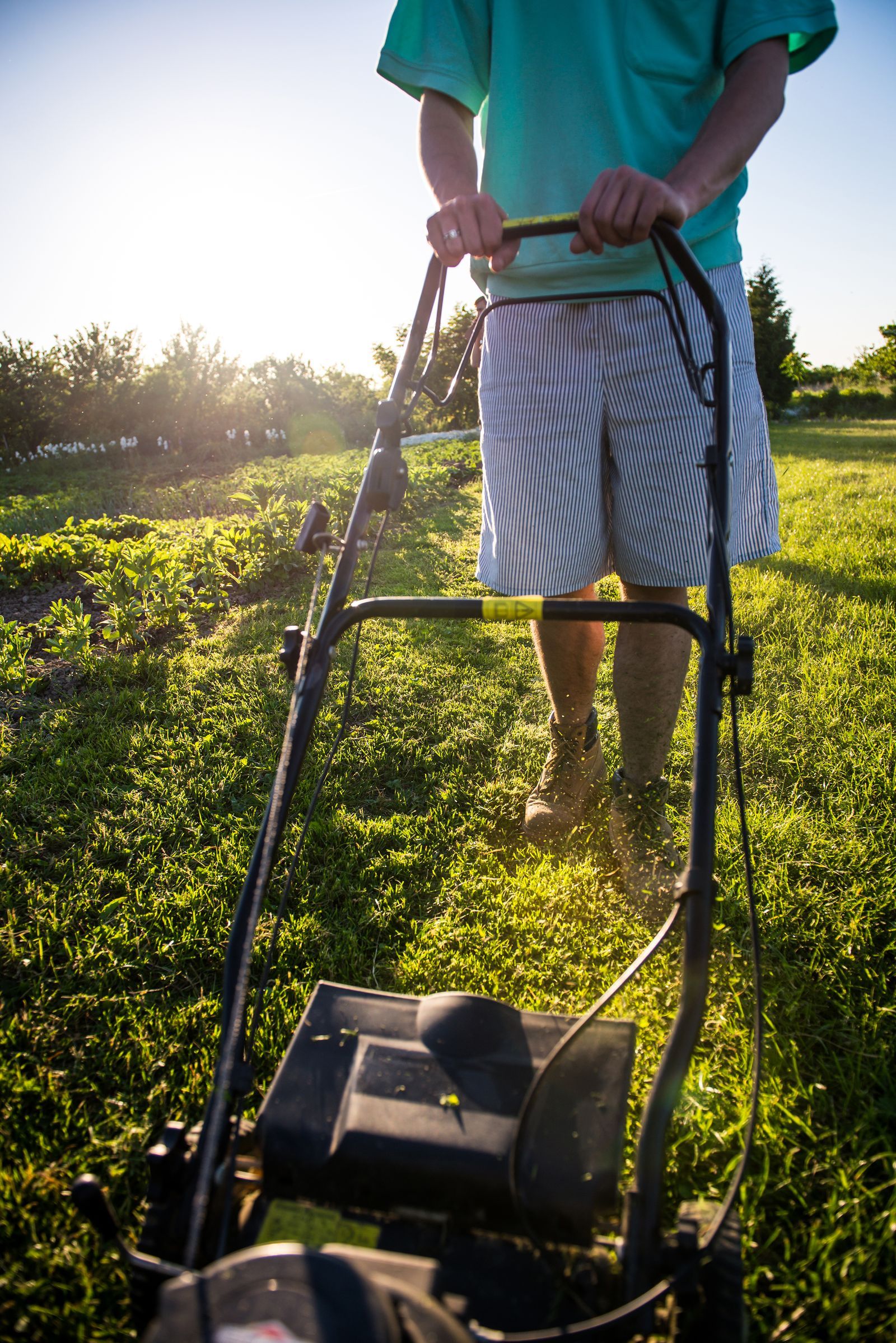
Mowing is the job you will do most, and it is the one with the most leverage. Two rules carry it. First, mow high: cool season lawns do best cut at about 3 to 4 inches, and most warm season lawns at 2 to 3 inches, with the exact height varying by species. Tall grass shades its own soil, holds moisture, crowds out weed seeds, and grows deep roots; scalped grass does the opposite in every particular. Second, the one third rule: never remove more than a third of the blade in one mowing, which in a fast growing spring means mowing more often, not lower. Leave the clippings where they fall; they return nitrogen to the lawn and are not thatch, whatever the old belief says. Keep the blade sharp, because a dull blade tears grass into frayed, browning tips that invite disease, and vary your mowing pattern so the soil does not compact into ruts along your habitual line. Our mowing guide owns the details; the beginner's summary is that height and sharpness matter more than frequency records.
Job 2: Water Deeply, About an Inch a Week
Established lawns want about 1 inch of water a week, from rain and irrigation together, delivered in one or two deep waterings rather than daily sprinkles. Deep watering grows deep roots, the same principle as the vegetable garden, and a lawn with deep roots crosses a dry fortnight without drama. Water early in the morning, so the grass dries as the day warms and fungal disease gets no long, wet night to work in. Measure your sprinkler with a rain gauge or a tuna can; sprinklers deliver far less than they appear to, and knowing your rate converts watering from a mood into a number. A lawn is also allowed to go dormant in a summer drought, browning and resting, and to green up when rain returns; many beginners water frantically to prevent a dormancy the grass evolved to survive. Our lawn watering guide works through the volumes for your lawn's size.
Job 3: Feed Only After a Soil Test, in Your Family's Season
Fertilizer is the most overbought and mistimed lawn product. The order of operations is fixed: soil test first, because it tells you whether your lawn needs phosphorus, potassium, or lime at all, and many lawns need less than the bag schedule assumes. Then feed in your family's growth season, when the grass can use the food: cool season lawns are fed mainly in fall, with a light spring feeding at most, because fall food builds roots and stored energy; warm season lawns are fed from late spring through summer, their active growth, and never late into fall, when tender new growth meets the cold. Feeding a lawn in its off season grows weeds, runoff, and nothing else. Between the test and the timing, most beginners can cut their fertilizer use in half and grow a better lawn, which is the program's worst kept secret.
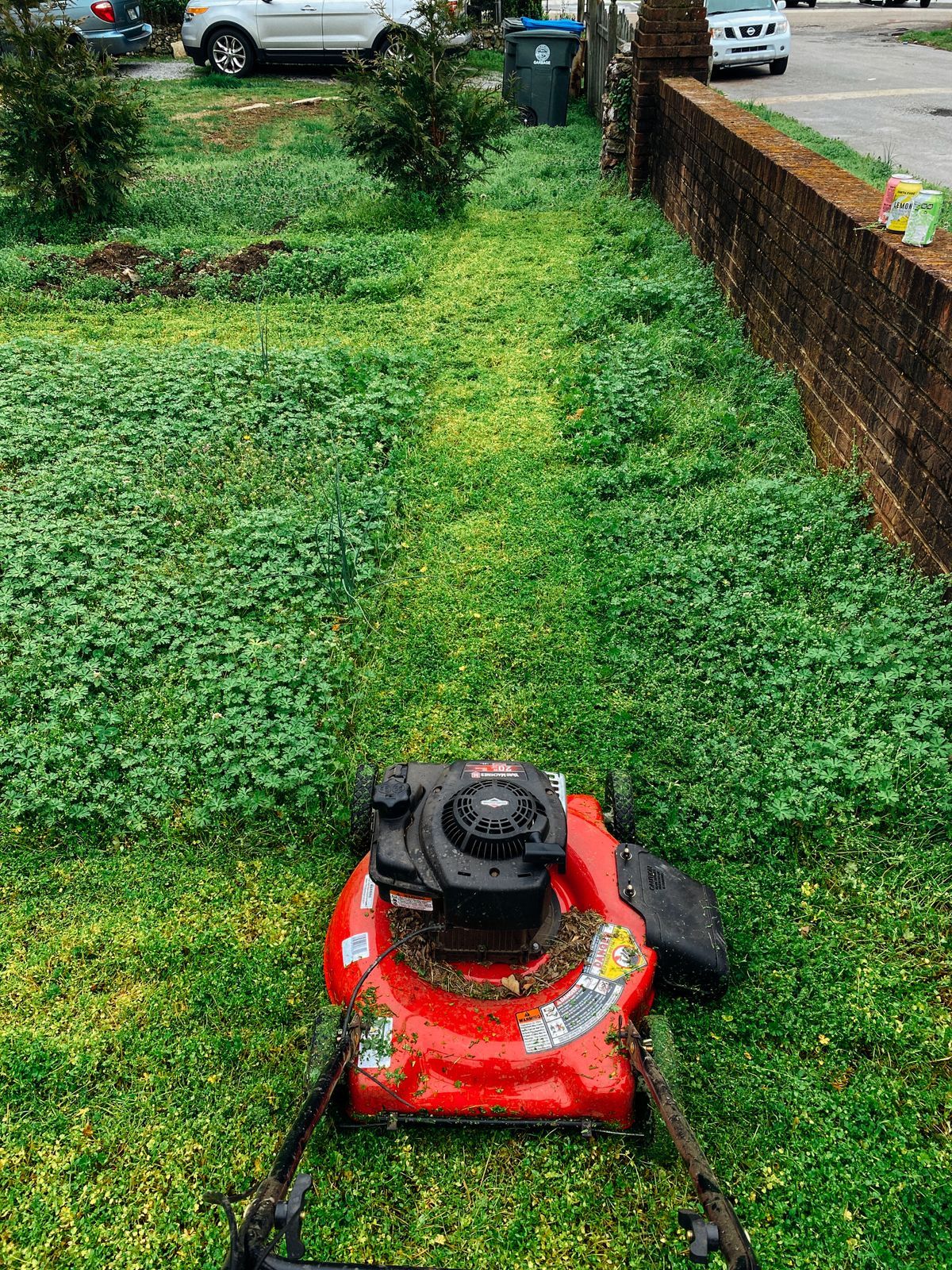
A red lawn mower cutting grass with a visible cut path behind it
Job 4: Seed in the Prime Season, Which Is Fall for Cool Season Lawns
New grass seed is its own topic, and this site's overseeding and grass seed guides own it, but the year level rule belongs here: seed when your grass family germinates and grows best with the least competition. For cool season lawns that is early fall, by a wide margin: warm soil, cool air, autumn rains, and weeds winding down. Spring seeding works and fights crabgrass season and summer heat with baby roots. For warm season lawns, late spring into early summer is the window, when soil is warm and the whole summer of growth lies ahead. Seed outside the window is mostly bird food and disappointment; the calendar, not the product, is the difference.
Job 5: Treat Leaves and Weeds as Management, Not War
Two recurring chores shrink to size with the right frame. Fall leaves: a light layer mulched into the lawn with the mower, chopped fine, feeds the soil and disappears; a heavy layer must come off, raked or collected, because a mat of whole leaves smothers grass through winter. Weeds: a thick, high mown, properly fed lawn is itself the main weed control, because weed seeds need light and bare soil to start. Pull or spot treat the weeds that appear, fill the bare spots they leave with seed in season, and the weed pressure falls every year the five jobs are done. The beginner who starts with herbicides and skips the five jobs is mopping with the tap running.
The Year at a Glance
Season
Cool season lawn
Warm season lawn
Spring
Mow high as growth starts; light feed only if tested; seed repairs early if fall was missed
Begin feeding late spring as grass greens fully; mow as growth starts
Summer
Water deeply in drought or let it rest dormant; mow high and less often
Peak growth: mow regularly, feed through summer, water in drought
Fall
Prime season: overseed, feed the main feeding, mulch leaves fine
Stop feeding in time before dormancy; overseed with rye only if you want winter green
Winter
Stay off frozen grass; plan and test soil
Dormant and brown is normal; plan and test soil
Do the five jobs in your family's seasons, test the soil before you feed it, and keep the mower blade sharp and high. That is basic lawn care, entire. The shelf of extra products exists for problems the five jobs mostly prevent, and a beginner's money is better spent on a soil test, a sharp blade, and good seed in the right month than on any of them.
The Beginner's Lawn Tool Kit, Without the Shelf of Regret
The five jobs need very few tools, and a beginner's money is best spent on the short list in working order. A mower that cuts at your grass's proper height, kept with a sharp blade, is the program's engine; blade sharpening, a file and ten minutes or a shop's small fee, matters more than the mower's price. A spreader, even an inexpensive broadcast model, makes seeding and measured feeding even instead of striped. A soil test, through your extension office, is a purchase rather than a tool and outranks everything else on this list. A rain gauge or a straight sided can turns watering into a number. A hand weeder and a garden fork handle the weeds and the bare spot repairs, and a leaf rake or the mower's mulching mode handles autumn. That is the kit.
What can wait, possibly forever: the dethatcher, the aerator rental, the sprayer wardrobe, and the season ticket of treatments. Dethatching and aerating solve specific problems, heavy thatch and compacted soil, that a high mown, clipping returned lawn on decent soil may never develop; rent the machine the year the problem is diagnosed, not before. The beginner who buys the five jobs' tools and a soil test has spent less than the cost of one season of full program products, and owns everything the program actually uses. Spend the savings on good seed in the prime month, which is where lawns are genuinely made.
Reading the Lawn: What It Tells You Between Jobs
A lawn under the five jobs still talks, and a beginner who learns its few signals can answer most problems without a product. Grass that yellows in stripes after feeding is telling you the spreader overlapped or skipped; the fix is technique, and the stripes grow out. Grass that yellows in circles in summer heat, especially where a dog visits, is usually burn, from urine or fertilizer concentration, and water is its remedy. Thin, mossy patches in shade are the lawn declining a location it cannot win: dense shade grows moss and groundcovers better than grass, and the mature response is to replant those corners with something that wants them rather than fighting for turf under a tree. Footprints that stay visible in the grass on a summer afternoon mean the lawn is thirsty and asking for its deep watering; footprints that spring back mean it is not, whatever the calendar says.
Weeds, read properly, are reports rather than enemies. Clover spreading in a lawn often reports low nitrogen, and clover itself fixes nitrogen and feeds bees, which is why many gardeners now keep it deliberately. Crabgrass reports thin turf and summer bare soil, and its cure is the fall seeding and high mowing that thicken the lawn, not a spring of spraying. Dandelions report almost nothing except that dandelions are good at their jobs; dig them or tolerate them, but do not let them sell you a program. The five jobs, a sharp blade, and this habit of reading before reacting: that is the whole of basic lawn care, and it is enough.
Frequently Asked Questions
What are the basic lawn care jobs a beginner actually needs?
Five: mow high and never remove more than a third of the blade at once; water deeply, about 1 inch a week, in one or two sessions; feed only after a soil test, in your grass family's growth season; seed in the prime season, fall for cool season lawns and late spring for warm season ones; and manage leaves and weeds by keeping the lawn thick rather than by constant treatment.
How do I know if I have cool season or warm season grass?
Cool season grasses, fescue, bluegrass, and ryegrass, grow in spring and fall, stay green in cool weather, and dominate northern lawns. Warm season grasses, Bermuda, zoysia, and St. Augustine, grow in summer heat and turn brown and dormant in winter, and dominate southern lawns. Your local extension office can identify yours from a photo and your location, and the answer sets every date in your lawn calendar.
How high should I mow my lawn?
Cool season lawns do best at about 3 to 4 inches. Most warm season lawns do best at 2 to 3 inches, varying by species. In all cases, never cut more than a third of the blade in one mowing; in fast spring growth that means mowing more often, not lower. Tall grass shades soil, holds moisture, and crowds out weeds.
When should I fertilize my lawn?
Only after a soil test shows what is needed, and in your grass family's growth season. Cool season lawns take their main feeding in fall, with a light spring feeding at most. Warm season lawns are fed from late spring through summer and never late into fall. Feeding in the off season feeds weeds and runoff, not grass.
How much water does a lawn need?
About 1 inch a week from rain and irrigation combined, given in one or two deep waterings, early in the morning. Measure your sprinkler's output with a rain gauge or an empty can, because sprinklers deliver less than they appear to. Established lawns may also be allowed to go dormant and brown in summer drought; they green up when rain returns.
When is the best time to seed a lawn?
Early fall for cool season grasses, when warm soil, cool air, and autumn rain favor seedlings and weeds are winding down. Late spring into early summer for warm season grasses, when soil is warm and a full summer of growth follows. Seed sown outside its family's window mostly fails, regardless of the seed's quality.
Photo credits: Magic K (Pexels); K (Pexels). Photos are served from this site; follow the credit to the library page for the original.