Best Grass Seed for Sandy Soil: Species That Root Deep and a System That Feeds Them
By the Windchime Walker editorial team
Photo: King Ho / Pexels
Sandy soil defeats lawns in a specific way: not by poisoning them, but by refusing to hold anything for them. Water drains through sand before roots can drink deeply, fertilizer washes past the root zone with the water, and the grass lives meal to meal in a soil with no pantry. The seed question, which species, matters, and this page answers it by climate. But the growers who succeed on sand are the ones who learn the second half: sand is managed, not just planted, with organic matter as the long fix and a lighter, more frequent rhythm of water and food as the standing one.
Our best grass seed guide owns the general decision. This page owns the sand.
Interactive tool
Sandy Soil Seed Checklist
Check off each step as you finish it. Your progress stays on this page.
0 of 7 complete
0% done
First, Confirm You Have Sand, and Test It
Sand is diagnosed in the hand before it is managed: a handful of moist soil that will not form a ribbon or even a ball, that grits between the fingers and falls apart when poked, is sand or sandy loam. Confirm with a soil test before spending on seed or amendments, because sand country soils are commonly acidic and low in everything, and the test converts guessing into a shopping list: pH and lime need, phosphorus and potassium levels, and organic matter percentage, which on true sands often reads under 2 percent, against the 3 to 5 percent a lawn soil wants. The test is cheap through cooperative extension, and on sand it pays for itself in the first season by preventing the classic error, fertilizing a lawn whose real limit was pH or water all along.
Cool Season Sand: Tall Fescue Leads
For cool season regions, tall fescue is the sandy soil standard, and the reason is architecture: its root system is the deepest of the common lawn grasses, driving down through sand to chase the moisture that drains away from shallower roots, and it tolerates the drought and low fertility that come with the territory better than Kentucky bluegrass, which is the grass to avoid on sand, being thirsty, hungry, and shallow rooted by comparison. The fine fescues, hard fescue above all, are the low input partners: on poor, dry, acidic sand where the goal is a durable green cover rather than a showcase lawn, hard fescue persists on rainfall and minimal fertilizer that would starve fussier grasses, the same family our shade guide recommends for its own hard conditions. Perennial ryegrass earns a small place in mixes for its fast germination, nursing slower species through establishment on a surface that dries by the hour. A practical cool season sand blend is tall fescue as the base, fine fescue for the poorest and driest zones, and a little ryegrass for speed, seeded in fall like every cool season lawn, with establishment watering adjusted to sand's quick drying, below.
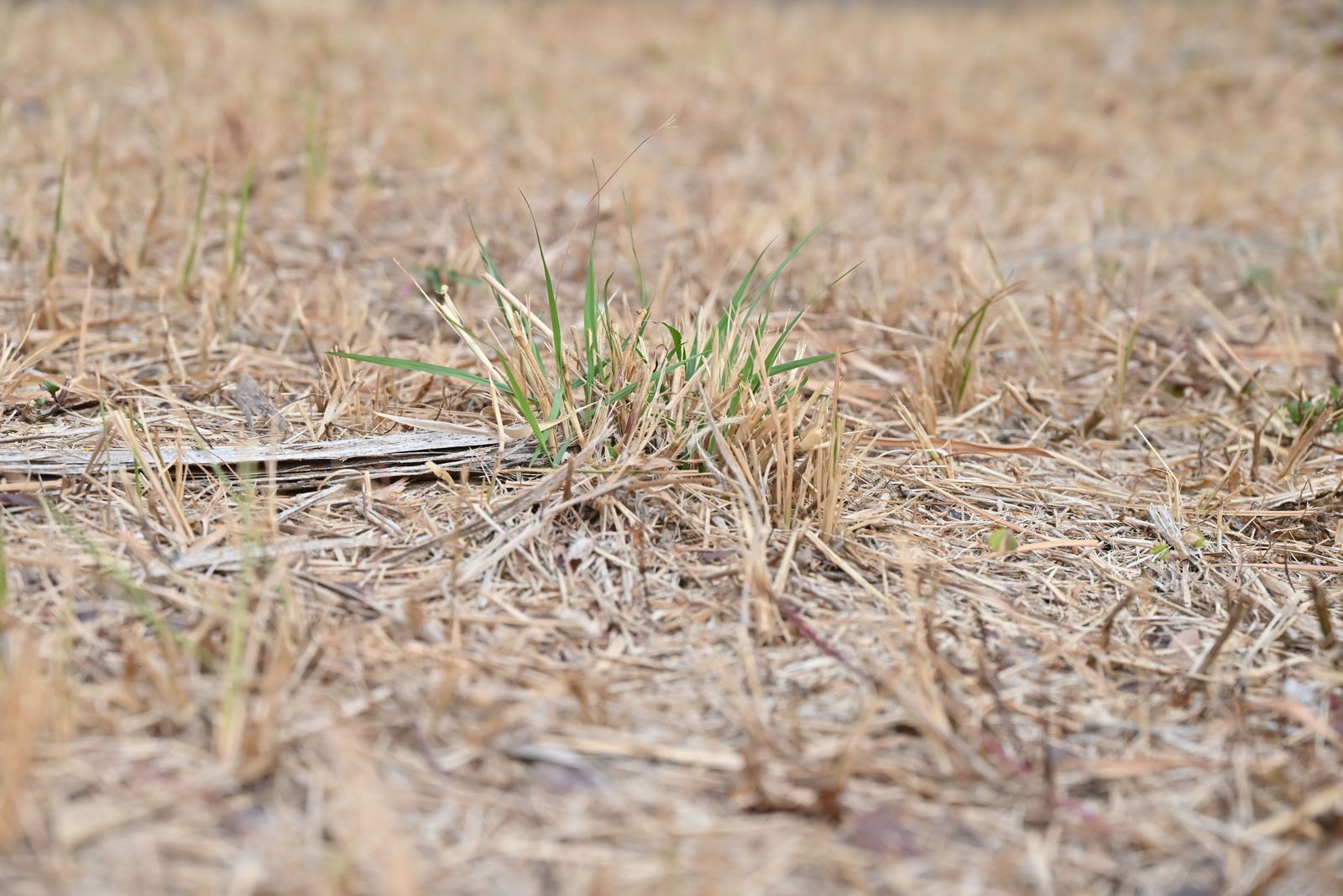
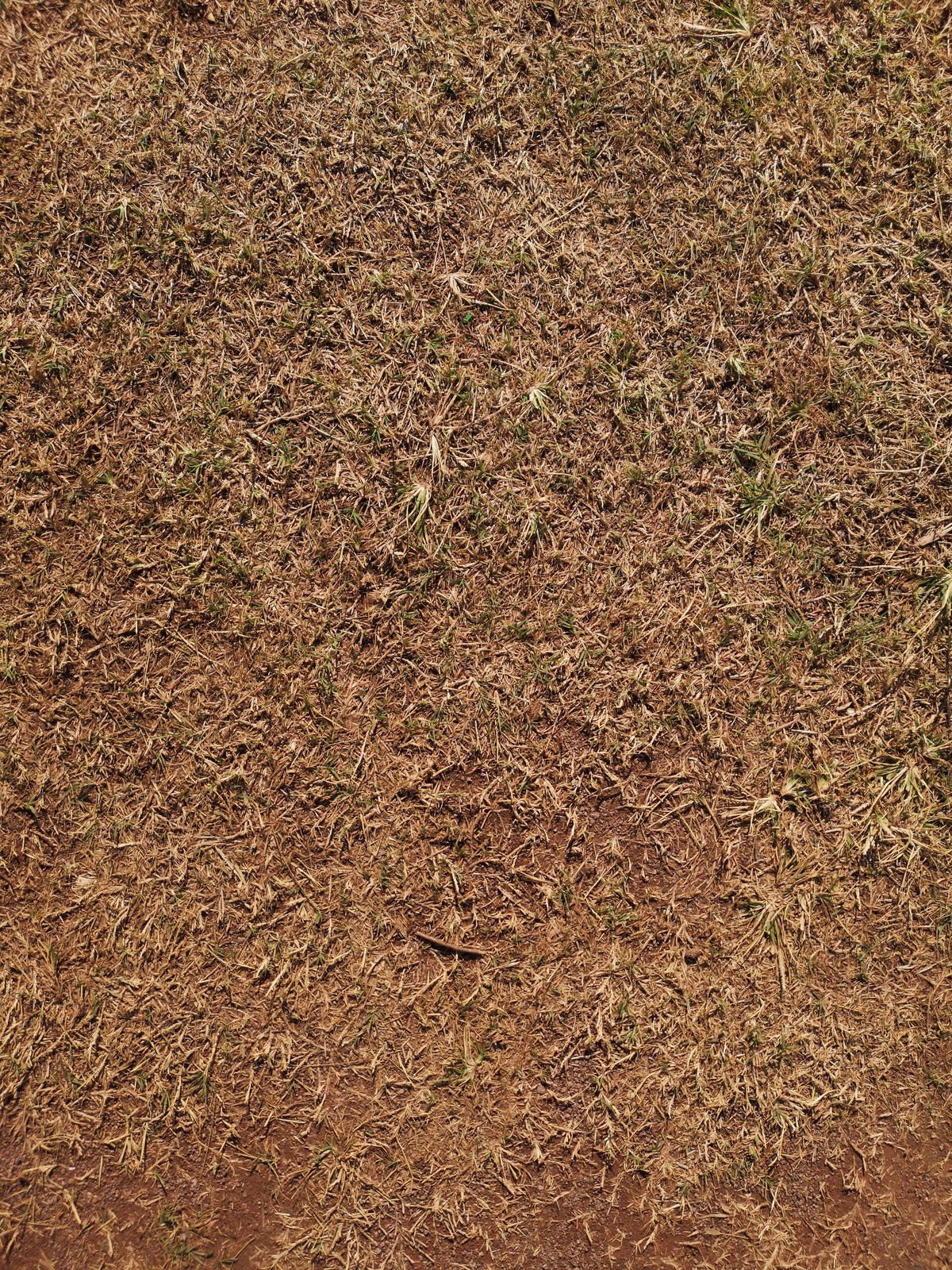
Dry grass and exposed soil in close up
Warm Season Sand: Four Grasses and One Flagged Conflict
The warm season sand list runs bermudagrass where sun is full and wear is real, the toughest and fastest of the group on sand, though hungry for a sand soil's income; zoysiagrass, slower, denser, and more forgiving of lean conditions and some shade; and bahiagrass, the deep rooted, low input workhorse of the sandy Southeast, coarse in texture and unbeatable in persistence on poor sand with almost no care. Centipedegrass is where this page must flag rather than settle: some extension and industry sources praise it as adapted to exactly this, acidic, infertile, sandy soils, and at least one respected turf source warns against it in sand. The conflict is real in the literature and it is not averaged here. The decider a homeowner can actually use: centipede's reputation is strongest in the humid Southeast on sandy loams with reliable rainfall, and weakest on deep, droughty, pure sands; if your sand is deep and dry and irrigation is limited, choose bahia or zoysia, and if your sand is a loam with rain, centipede's low input record is honestly earned. Either way, warm season grasses on sand are often established as sod or plugs rather than seed, bahia and bermuda being the common seeded exceptions.
The Real Fix: Organic Matter, Added Forever
Every authority on sand agrees on the long game: raise the organic matter, because organic matter is the pantry sand lacks, holding water and nutrients in the root zone and releasing both slowly. The program is unglamorous and cumulative. Topdress the established lawn with a quarter inch of compost in fall, annually; the worms and weather work it in, and each year's layer raises the soil's holding capacity a little. Leave grass clippings, always, since on sand they are a significant fraction of the lawn's nutrient income. At establishment or renovation, work 1 to 2 inches of compost into the top layer before seeding if the budget allows one big intervention; it is the single highest value spend on a sandy lawn. None of this transforms sand into loam in a season. It transforms the lawn's experience of the sand within two or three years, measurably, in the only currency that matters: how long the grass stays green between rains.
Water and Food on Sand's Rhythm
Sand inverts the usual watering advice's timing without changing its principle. The principle stands: water deeply enough to wet the root zone. On sand the root zone wets fast and drains fast, so the practical pattern is somewhat more frequent and moderately deep rather than the very deep and rare of clay: enough to push moisture 6 inches down, verified once with a trowel after watering so you know your system's time, and repeated when the grass shows the first dull, footprints stay down signs of thirst. Fertilizer follows the same logic in miniature: smaller doses, more often, spoon feeding, because a large single dose on sand is a donation to the groundwater. Slow release formulations are the sand grower's friend for the same reason, metering nitrogen out at roughly the pace roots can take it. Irrigation audits matter more on sand than anywhere: a dry stripe on sand is a starving stripe within a week, so catch can tests and head adjustments are lawn care, not fussiness.
Establishment on a Surface That Dries by the Hour
Seeding sand fails at germination more than at any other stage, because the surface quarter inch, where the seed lies, dries between waterings while the soil below stays moist. The counters are standard and effective: seed in fall in cool season country (spring for warm season seed), cover the seed with a thin layer of compost or peat rather than leaving it on the surface, which holds moisture at seed level and is the one case where a topdressing is part of seeding itself, and water lightly several times a day until germination rather than deeply once. A light straw mulch, or a germination blanket on slopes and in wind, holds both seed and moisture against sand's two thefts. Once seedlings root below the surface layer, taper toward the standing rhythm gradually. Expect establishment on sand to want a week or two more of vigilance than the same seed on loam, and budget the water for it: the lawn you are establishing is the cheap part of the project; the soil you are building under it is the asset.
When Seed Is the Wrong Tool: Sod and Plugs on Sand
Warm season lawns on sand are often better begun without seed at all, and a page about seed should say so plainly. Zoysia and centipedegrass from seed are slow to the point of testing a saint, and on sand, where the seedbed dries by the hour, their establishment failure rate is high enough that sod and plugs are the standard recommendation for both. Plugs planted on a grid in late spring, watered through their first season on sand's frequent rhythm, knit into a lawn by the second year at a fraction of sod's cost, and sod buys the instant version of the same lawn at full price, with the same first season watering discipline, because sod on sand dries at its edges and seams until its roots cross into the soil. Bermudagrass is the exception that seeds readily and fast, which is part of its reputation as the sand belt's default. The decision is budget against time, not quality against quality: all three routes arrive at the same lawn if the soil program in this article runs underneath them, and all three fail the same way if it does not.
Frequently Asked Questions
What is the best grass seed for sandy soil?
By climate. Cool season: tall fescue as the base for its deep roots, with fine fescues for the poorest, driest areas and a little perennial ryegrass for fast cover. Warm season: bermudagrass for sun and wear, zoysia for density and some shade, bahiagrass for the lowest input persistence on poor sand, and centipedegrass only where rainfall is reliable, a conflict in the sources this page flags rather than hides.
Why does my lawn keep dying on sandy soil?
Because sand holds neither water nor nutrients, so the grass starves and thirsts between inputs. The fix is a system, not a species swap: organic matter added every year, watering timed to wet 6 inches and repeated at the first signs of thirst, and fertilizer in smaller, more frequent, slow release doses. A soil test first, because sandy soils are often acidic as well.
How do I improve sandy soil for a lawn?
Raise the organic matter, patiently: topdress with a quarter inch of compost each fall, leave all clippings, and if renovating, work 1 to 2 inches of compost into the top layer before seeding. Sandy soils often test under 2 percent organic matter; each year of the program moves the soil toward the 3 to 5 percent a lawn wants, and the grass greens longer between rains as it does.
How often should I water a lawn on sandy soil?
More often than on clay, moderately deep each time: enough to wet the soil 6 inches down, which you should verify once with a trowel to learn your system's minutes, then repeated when footprints start staying down in the grass. During establishment, switch to light watering several times a day until germination, because the surface of sand dries by the hour.
Is centipedegrass good for sandy soil?
The sources conflict, and this page does not average them. Centipede is widely praised as adapted to acidic, infertile sandy soils and performs well on sandy loams in the humid Southeast with reliable rain; at least one respected turf source warns against it in sand, and on deep, droughty pure sand, bahia or zoysia is the safer choice. Match the grass to your rainfall, not just your soil.
Should I fertilize sandy lawns differently?
Yes: smaller doses, more often, preferably slow release. A large single application on sand leaches past the roots before they can use it. Spoon feeding at reduced rates through the season feeds the lawn instead of the groundwater, and the annual compost topdress steadily reduces how much fertilizer the lawn needs at all.
Photo credits: King Ho (Pexels); Engin Akyurt (Pexels). Photos are served from this site; follow the credit to the library page for the original.