Best Grass Seed for Shade: Fine Fescues, Honest Light Minimums, and When to Stop
By the Windchime Walker editorial team
Photo: Titouan Jullien / Pexels
Every bag of shade seed promises a lawn under trees, and every spring the same yards thin out again, because shade grass is sold as a product question when it is really two questions: is there enough light for any grass at all, and if there is, which grasses spend it best. This page answers in that order. The light floor comes first, because no seed defeats it, and a homeowner who learns their yard is below the floor has been saved money, not denied a lawn. Then the species, the blend, the rates, and the system of mowing and tree care that keeps shade turf alive after the seed has done all it can.
Our best grass seed guide owns the general aisle decision and our brands guide owns the company layer. This page owns the shade condition.
Interactive tool
Shade Seed Choice Checklist
Check off each step as you finish it. Your progress stays on this page.
0 of 7 complete
0% done
The Light Floor: Measure Before You Spend
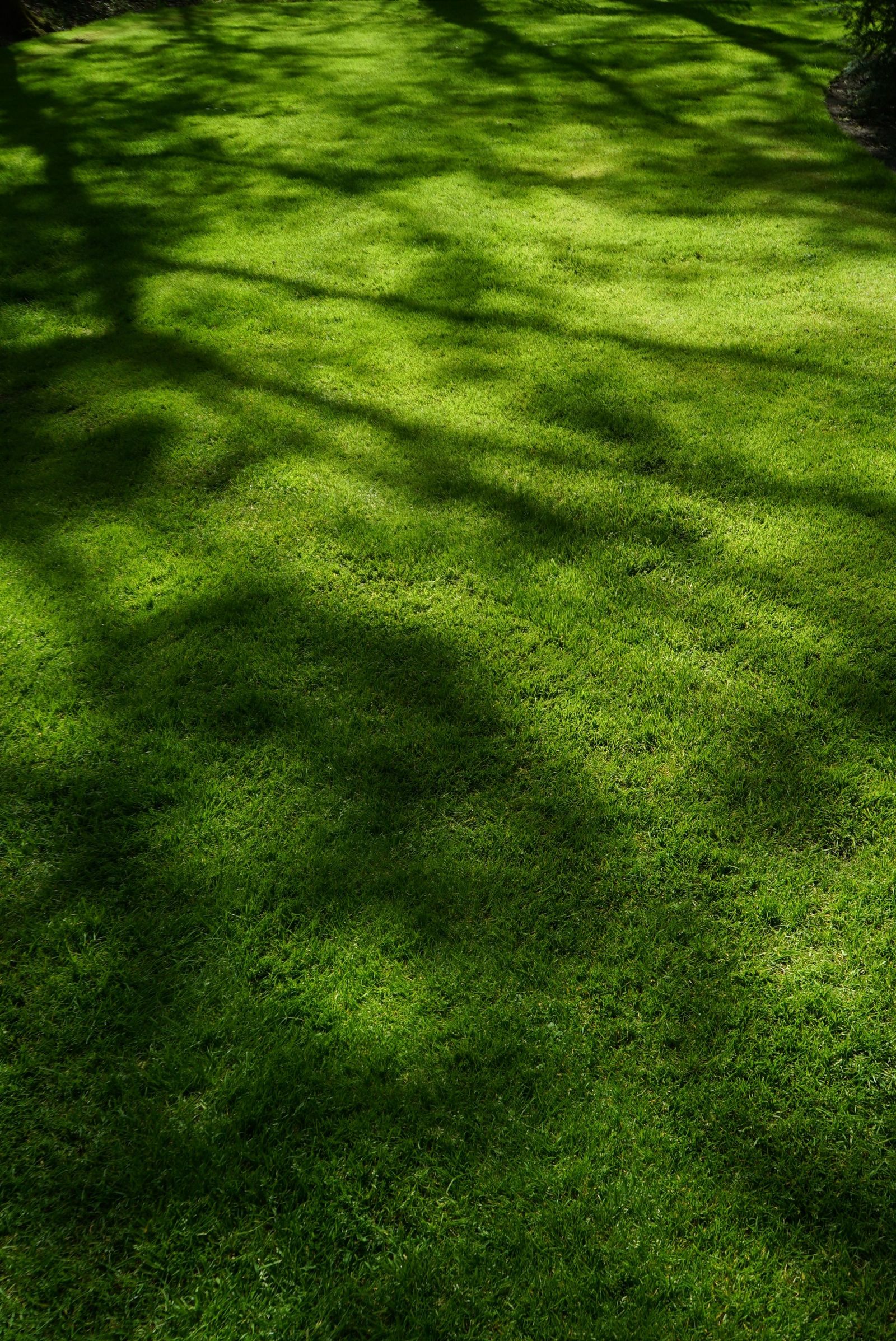
Turfgrass is a sun crop being asked to work part time, and it has a minimum shift. Below roughly 3 to 4 hours of direct sun a day, or the equivalent in dappled light at about 5 to 6 hours, no lawn grass sustains itself, whatever the bag says; it germinates, charms you for a season on the seed's stored energy and your watering, and thins to mud by the second year. Between that floor and about 6 hours, shade grasses survive with the system below and honest expectations: a thinner, finer, slower lawn that is walked on gently. Above 6 hours, shade is a mild condition and most general seed does fine. Measure your yard before buying: spend one day near the summer solstice noting when sun reaches the test area and when it leaves, or use a sun calculator app with your address and tree canopy honestly drawn. An hour of measurement is the cheapest lawn advice on this page, because it routes the below floor yards to the groundcover answer at the end, where they will succeed, instead of to a third year of reseeding, where they will not.
The Species: Fine Fescues Own the Shade
For cool season lawns, the shade answer is a grass family, not a brand: the fine fescues. Strong creeping red fescue spreads by short rhizomes, which lets it knit and self repair better than its bunch type cousins, and it is the backbone of shade blends. Chewings fescue is the most shade tolerant of the group and the finest textured, upright and bunch forming. Hard fescue is the low input champion, tolerating shade, drought, and poor soil with the least fertilizer and mowing of any lawn grass, at the price of a slower, less lush look. The University of Minnesota's shade blend proportions are the reference recipe this page recommends starting from: about 40 percent chewings fescue, 40 percent strong creeping red fescue, and 20 percent hard fescue. Kentucky bluegrass, the sun lawn's aristocrat, is a poor shade citizen and should be a minor ingredient or absent under trees; perennial ryegrass establishes fast and serves as a nurse grass in small proportions. Penn State's seeding rate for fine fescue lawns, 4 to 5 pounds per 1,000 square feet, is the rate to hold; shade tempts overseeding, and crowded seedlings in low light damp off and compete themselves thin.
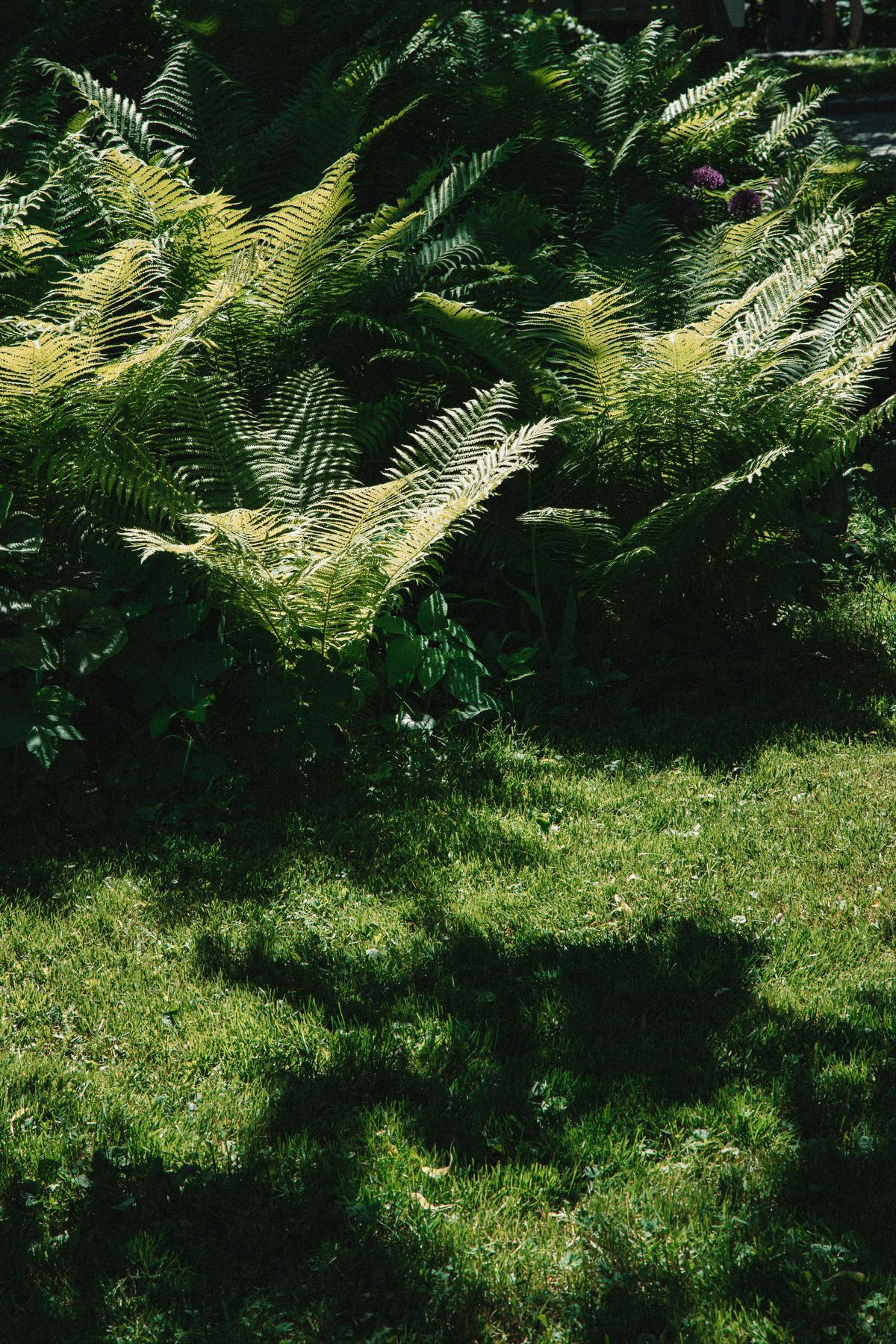
Ferns growing at the edge of a shaded lawn
The Two Exceptions: Traffic and Warm Season
Two situations bend the fine fescue rule. Shade with foot traffic: fine fescues tolerate wear poorly, and a shaded path to a gate or a play area under trees will fail in fescue no matter the blend. Tall fescue is the answer there: less shade tolerant than the fine fescues but far tougher under feet, and in moderate shade with the system below it holds where feet insist. Choose by the yard's actual use, because the prettiest shade grass under a daily path is a mud path by October. Warm season shade: in the South the shade grasses are different plants entirely. Zoysiagrass is the most shade tolerant of the warm season lawn grasses and the usual recommendation where Bermuda, the region's sun standard, thins under trees; St. Augustinegrass also carries real shade tolerance where it is grown. Both are usually established as sod or plugs rather than seed, which changes the shopping from a bag to a yard decision, and both still obey the light floor: under true deep shade, the southern answer is also groundcover.
The System Around the Seed
Shade turf dies of its management as often as of its shade, because the sunny lawn's habits are wrong under trees. Mow high: keep shade grass at 3 to 4 inches, the top of its range, because every leaf is a solar panel in short supply and scalping a shade lawn starves it in a way a sun lawn forgives. Fertilize less: shade grass grows slower and needs roughly half the nitrogen of the sunny lawn; the full sun program pushes soft, disease prone growth the light cannot support. Water the competition honestly: the tree above your lawn is drinking from the same soil with a far larger root system, and in dry spells the grass loses; deep, infrequent watering that reaches the tree roots reduces the surface competition the grass feels. Manage leaves fast: a leaf layer that a sun lawn tolerates for a week smothers thin shade turf, so mulch mow or remove leaves promptly in fall, which is also, not coincidentally, the season to overseed shade, when the canopy thins and light returns. Buy light where you can: limbing up a tree, raising its canopy by removing the lowest branches, and thinning interior growth are legitimate lawn care, often worth more than any seed, and an arborist's hour can move a yard across the light floor that no product can cross.
Seeding the Shade, in Order
Time the work for late summer into fall in cool season country, when soil is warm, weed pressure falls, tree roots slow their drinking, and the thinning canopy admits the year's best light. Prepare the surface without tilling under trees, since tree roots fill the top inches and tilling wounds them and the lawn both: mow short, rake the thin areas hard enough to expose soil between the surviving plants, and spread a thin layer of compost if the soil is poor. Sow at the Penn State rate, 4 to 5 pounds per 1,000 square feet, keep the seedbed evenly moist with light daily watering until germination (fine fescues are slow, 2 to 3 weeks, and patience is part of the rate), then taper to the deep and infrequent pattern. Keep feet off until the new grass has been mowed twice. Expect a good result, judged by shade standards: even, fine, and thinner than the sunny front, holding its ground year over year with a light annual overseed, rather than a carpet that exists in seed catalog photographs taken in clearings.
When the Answer Is Not Grass
Below the light floor, the winning move is to stop seeding and plant the shade for what it is. The groundcover and mulch answers are not surrender; a bed of hosta, pachysandra, vinca, or native shade perennials under a tree, mulched cleanly to the drip line, looks designed, asks almost nothing, and ends the yearly reseeding bill. Many of the best looking shaded yards are mostly this: a smaller lawn, kept where the light actually reaches, with the deep shade given to plants that evolved for it. Measure the light, and if your yard is below the floor, spend the seed money on the groundcover bed and enjoy the first spring in years that the yard simply looks right.
The Moss Question
A shaded lawn that thins invites moss, and moss invites a shelf of products promising to kill it, so the honest word belongs here: moss is not the disease, it is the diagnosis. Moss colonizes exactly the ground this page has been describing, shade below the turf floor, compacted or acidic soil, and moisture sitting where grass is too weak to compete. Killing moss without changing those conditions produces a brief black patch and then moss again, on schedule, because the vacancy it filled is still vacant. The sequence that works is the sequence of this whole article run in order: measure the light, and if the spot is below the floor, accept the moss as a green groundcover in its own right, which many gardeners in deep shade deliberately keep, or replace it with the planted groundcover bed. If the light is adequate, correct the soil by test, relieve compaction, improve drainage where water sits, overseed with the fine fescue blend in fall, and the grass, given its floor of light and a fair soil, evicts the moss by competition, which is the only eviction that lasts. Moss is the yard telling the truth about a corner; the skill is listening before spending.
Frequently Asked Questions
What is the best grass seed for shaded areas?
A fine fescue blend for cool season lawns: about 40 percent chewings fescue, 40 percent strong creeping red fescue, and 20 percent hard fescue, the University of Minnesota proportions, sown at 4 to 5 pounds per 1,000 square feet per Penn State. Chewings is the most shade tolerant, creeping red knits and repairs, and hard fescue carries the poor soil and low input corners.
How much sun does shade grass actually need?
At least roughly 3 to 4 hours of direct sun, or about 5 to 6 hours of dappled light, to sustain itself. Below that floor every grass thins out within a couple of seasons regardless of seed quality. Measure a day near the summer solstice before spending; below floor yards succeed with groundcover and mulch instead.
What grass handles shade and foot traffic?
Tall fescue. The fine fescues are the most shade tolerant but wear poorly under feet, so a shaded path or play area fails in them. Tall fescue tolerates moderate shade and real traffic, and is the standard compromise where the yard is both dim and used.
What is the best shade grass for southern lawns?
Zoysiagrass is the most shade tolerant warm season lawn grass and the usual answer where Bermuda thins under trees; St. Augustinegrass also tolerates shade where it is grown. Both are normally sodded or plugged rather than seeded, and both still need the minimum light; deep southern shade belongs to groundcover too.
How do I keep shade grass alive once it grows?
Mow high at 3 to 4 inches, fertilize at about half the sunny lawn's rate, water deeply and infrequently so tree roots drink below the grass, remove fall leaves promptly, and overseed lightly each fall when the thinning canopy admits light. Limbing up the tree to buy light is worth more than any product change.
Why does my shade lawn keep dying every year?
Work the causes in order: light below the 3 to 4 hour floor, which no seed fixes; tree root competition for water in dry spells; mowing too short and fertilizing like a sun lawn, which grows soft tissue the light cannot feed; and fall leaves left lying on thin turf. If the light measures below the floor, the honest fix is groundcover, not another bag.
Photo credits: Titouan Jullien (Pexels); ROMAN ODINTSOV (Pexels). Photos are served from this site; follow the credit to the library page for the original.