Best Grass Seed: The Aisle Decision, Family First and Then the Label
By the Windchime Walker editorial team
Photo: adrian vieriu / Pexels
Every bag in the seed aisle promises the same lawn in the same green typeface, which is how you know the bags are not where the decision lives. The best grass seed for your yard is decided in three steps, in a fixed order: the grass family your climate dictates, the species your sun and wear and water argue for, and then the label on the specific bag, read closely, because two bags of the same species can be different products wearing similar names. Brand rankings skip all three steps and sell you somebody else's climate. This page teaches the aisle decision itself, usable standing in the store with a bag in each hand.
Our grass seeding guide owns sowing day itself, and our grow a lawn guide owns the full establishment arc. This page owns the choosing.
Interactive tool
Grass Seed Choice Checklist
Check off each step as you finish it. Your progress stays on this page.
0 of 7 complete
0% done
Step 1: Family First, Because Climate Is Not Negotiable
Grasses split into two great families by the temperatures they love, and planting against your family is a subscription to failure.
Cool season grasses grow best in the cool of spring and fall and sulk in summer heat: Kentucky bluegrass, tall fescue, perennial ryegrass, and the fine fescues. They are the lawns of the northern two thirds of the country and the high elevations elsewhere.
Warm season grasses grow in summer heat and go dormant and brown in winter cold: Bermuda, zoysia, bahia, centipede, and St. Augustine. They are the lawns of the South and the warm coasts. Know also that two of them, zoysia and St. Augustine, are usually established from plugs or sod rather than seed, which matters when the aisle seems to have forgotten them; it has not, the plant has preferences.
The transition zone between the families is real and is where tall fescue earns its living, tolerating more heat than the other cool season grasses and more cold than the warm ones. If your neighbors' lawns disagree about which family they belong to, you live in the transition zone, and tall fescue is the aisle's answer more often than not.
Step 2: Species by Sun, Wear, and Water
Species
Family
Its honest strengths
Its honest limits
Kentucky bluegrass
Cool
The dark, dense, self repairing classic; rhizomes fill bare spots
Thirsty, slow to germinate, sulks in heat and shade
Tall fescue
Cool
Drought leaning, tough, deep rooted, transition zone champion
Clumping habit; does not self repair like bluegrass
Perennial ryegrass
Cool
The fastest cover in the aisle; overseeding's sprinter, good wear tolerance
Shorter lived; a nurse grass more than a foundation in hot summers
Fine fescues
Cool
The shade answer; fine texture, low input, low mowing
Poor wear tolerance; not for play lawns
Bermuda
Warm
Heat proof, wear proof, self repairing, the southern sports field
Invasive into beds; brown all winter; poor shade
Zoysia
Warm
Dense, soft, low input once established (our zoysia care guide owns its calendar)
Slow to establish; usually plugged, not seeded
Bahia
Warm
Survives poor soil and neglect in the deep South and Gulf
Coarse texture; seed heads on stalks all summer
Centipede
Warm
The lazy southern lawn: slow, low, light feeding
Slow to repair; fussy about overfeeding and iron
Match the species to the yard you have: fine fescue under the maples where bluegrass goes to die, ryegrass in the overseed mix for the worn play area, tall fescue where the hose does not reach and the summers are hot, Bermuda where the sun is merciless and the traffic is worse. A bag blended of two or three compatible species is the normal, sensible purchase for a home lawn; the blend hedges your microclimates against each other.
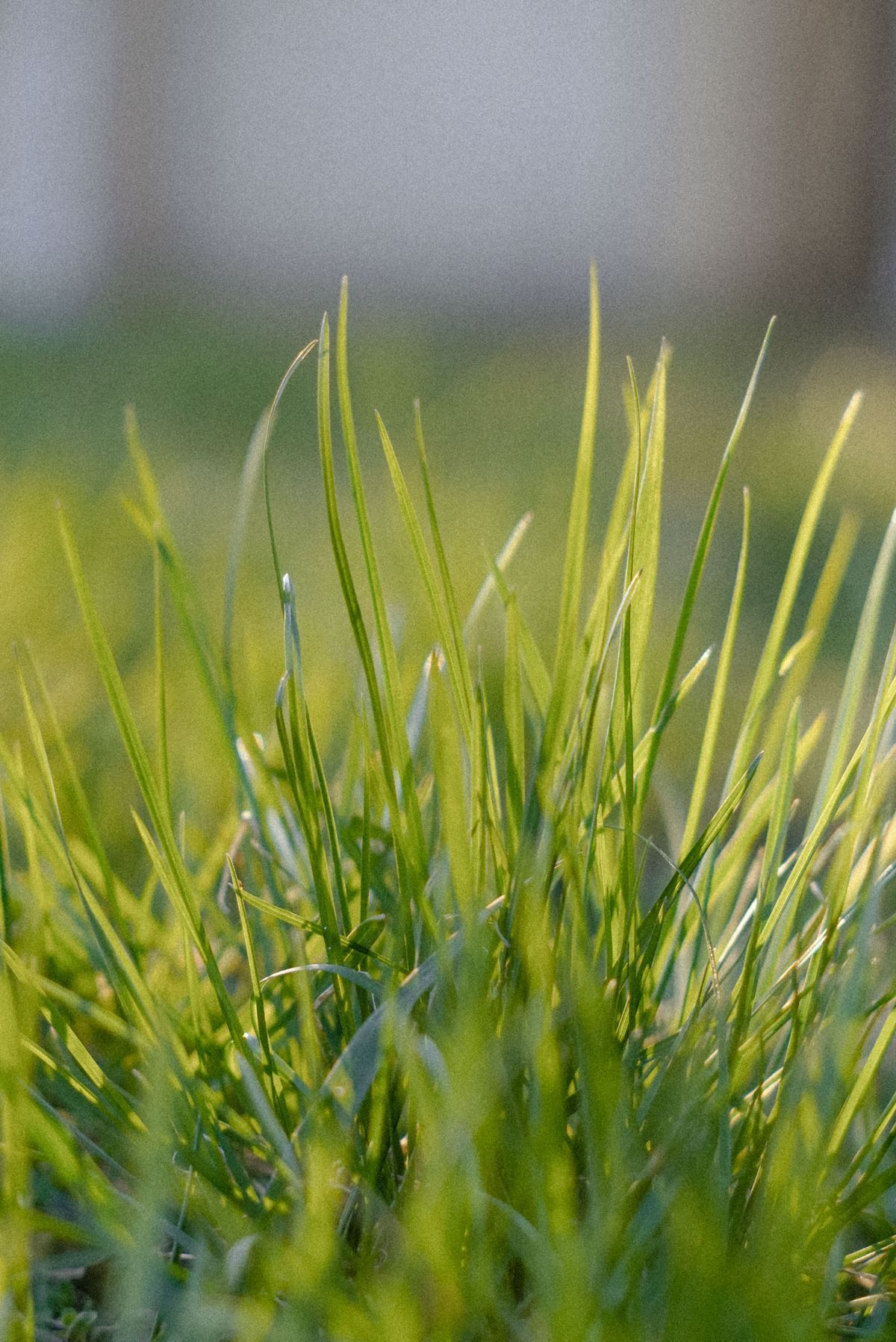
Close view of green grass blades in a healthy lawn
Step 3: Read the Label Like a Contract
Turn the bag over. The seed label is a legal document and the most honest text in the aisle. Read these lines in this order:
Named cultivars. Good seed names its varieties: specific cultivar names mean bred, tested grass. A bag that says only the species, or leans on the phrase variety not stated, is selling you commodity seed of unknown breeding, and the price difference to named cultivars is smaller than the performance difference.
Germination percentage. The share of the seed that sprouted in testing. Higher is more lawn per pound; a cheap bag at low germination can be the expensive bag wearing a disguise. Compare bags on this number and the next one together.
Weed seed and other crop seed. Stated as percentages, and both should be as close to zero as the aisle offers. Weed seed in the bag is a problem you are paying to import, at exactly the moment your bare soil gives weeds their best chance in years. Other crop seed means other grasses, some of which become the coarse, pale invaders you will curse in your fine lawn for a decade.
Inert matter. The filler fraction: chaff, dust, and increasingly, coating. Coated seed is a legitimate technology for moisture retention, but a heavily coated bag is part seed and part coating by weight, so compare the pure seed math, not the bag weight.
The test date. Germination is tested on a date printed on the label, and seed ages. Fresh seed, tested within the past year or so, is the buy; a dusty bag from two seasons ago at a discount is the aisle's oldest trick.
The Per Situation Shortlist
For a northern lawn in sun that you want to look like the photographs: a Kentucky bluegrass and perennial ryegrass blend, the rye covering fast while the bluegrass establishes and self repairs behind it. For shade anywhere cool: fine fescue blends, and honesty about the deepest shade, where no grass wins and groundcover should be offered the job. For the transition zone and the low water yard: tall fescue, named cultivars, as the foundation. For a southern lawn in full sun and hard use: Bermuda from seed where a seeded variety suits, knowing its winter brown is the family's nature. For a southern lawn you intend to feed rarely and mow calmly: centipede in the deep South, zoysia by plugs where its density is worth the slow start. Every one of these is a family and species answer before it is a bag answer, which is the whole teaching of this page: the aisle is a library, and now you can read it.
Blends and Mixes, Decoded
Most home lawn seed is sold as a blend or a mix, and the two words mean different things worth knowing in the aisle. A blend is several cultivars of the same species in one bag, bluegrass variety A with bluegrass variety B, hedging disease and weather bets within a species whose look stays uniform. A mix is several species together, bluegrass with ryegrass with fescue, hedging across microclimates: the rye covers fast, the fescue takes the shady corner, the bluegrass knits the sunny middle into a self repairing whole. A good mix is a designed community whose members share a texture and color family, so the lawn reads as one grass at mowing distance; a bad mix is a sweepings bag whose members mature into a patchwork of coarse and fine, pale and dark, that no mowing height reconciles. The label tells you which you are holding, because the species and cultivar list with percentages is printed right there. Read the proportions with the same skepticism as the ingredients: a mix that is mostly cheap ryegrass wearing a bluegrass headline is a common aisle costume, and the percentages, not the photograph, are the product. When in doubt between two mixes, choose the one whose minor ingredients you can explain; a mix is a plan, and you should be able to say what each member is for.
The Leftover Bag: Storage and Honest Expectations
Grass seed is a living product with a shelf life, and the half bag left after a project is next year's patching supply if it is stored like one. Keep it sealed, dry, cool, and dark, off a damp garage floor and away from the fertilizer shelf's fumes, with the bag's label and its test date intact. Seed stored well holds most of its germination into a second year and declines after that, which is why the test date mattered at purchase: an old bag is not dead, it is discounted, and the field fix is simply to sow it at a heavier rate to compensate for the seeds that will not wake. The germination test for a doubtful bag is a ten minute piece of kitchen science: count out a small sample on a damp paper towel, keep it moist in a warm spot for the species' germination window, and count what sprouts; the percentage you get is the truth the bag's label used to tell. What stored seed cannot survive is moisture and heat together, the steamed trunk and the flooded basement corner, and seed that smells musty or shows mold has become bird food and compost, in that order. Buy fresh for a new lawn, where the whole project rides on the stand; spend the leftovers on patches and overseeding, where a slightly tired bag at a heavier rate does honest work.
Frequently Asked Questions
What is the best grass seed overall?
There is no single best; there is a best for your climate, sun, wear, and water. Decide family first (cool season in the North and transition zone, warm season in the South), then species (bluegrass for the classic self repairing lawn, tall fescue for drought and transition zones, fine fescue for shade, ryegrass for fast cover, Bermuda for hot and hard used southern lawns), then read the label of the specific bag.
How do I read a grass seed label?
Look for named cultivars rather than unspecified varieties, a high germination percentage, weed seed and other crop seed percentages as close to zero as possible, and a recent test date. Compare bags on pure seed math, remembering that heavily coated seed is part coating by weight. The label is a legal document and the most honest text in the aisle.
Is expensive grass seed worth it?
Usually, because the cost difference buys named cultivars, high germination, and near zero weed seed, while a cheap bag can cost more per living plant and import weeds into bare soil at their best opportunity in years. Seed is the smallest cost in a lawn project; your labor and water are the large ones. Buy the seed like it matters, because it is the one input you cannot upgrade later.
What grass seed is best for shade?
Fine fescues, among cool season grasses: they tolerate shade that starves Kentucky bluegrass, with fine texture and low input needs. In warm season country, St. Augustine tolerates the most shade of its family and is established from sod or plugs rather than seed. In deep, dry shade under dense trees, no grass truly wins, and groundcover is the honest answer.
What is the fastest grass seed to grow?
Perennial ryegrass is the aisle's sprinter, used for quick cover and overseeding, which is why it anchors blends as a nurse grass while slower species like Kentucky bluegrass establish behind it. Fast is not the same as permanent: ryegrass is shorter lived in hot summers, so read it as cover, not foundation, in warm climates.
Why can I not find zoysia or St. Augustine seed?
Because those two warm season grasses are usually established from plugs or sod rather than seed; their seed is scarce, slow, or unreliable compared to vegetative planting. Bermuda, bahia, and centipede are the warm season grasses commonly sold as seed. Our zoysia care guide covers that lawn's calendar once it is established.
Photo credits: adrian vieriu (Pexels); Max Bonda (Pexels). Photos are served from this site; follow the credit to the library page for the original.