Best Wind Chimes: Choose by Sound First, and the Choice Cannot Go Stale
By the Windchime Walker editorial team
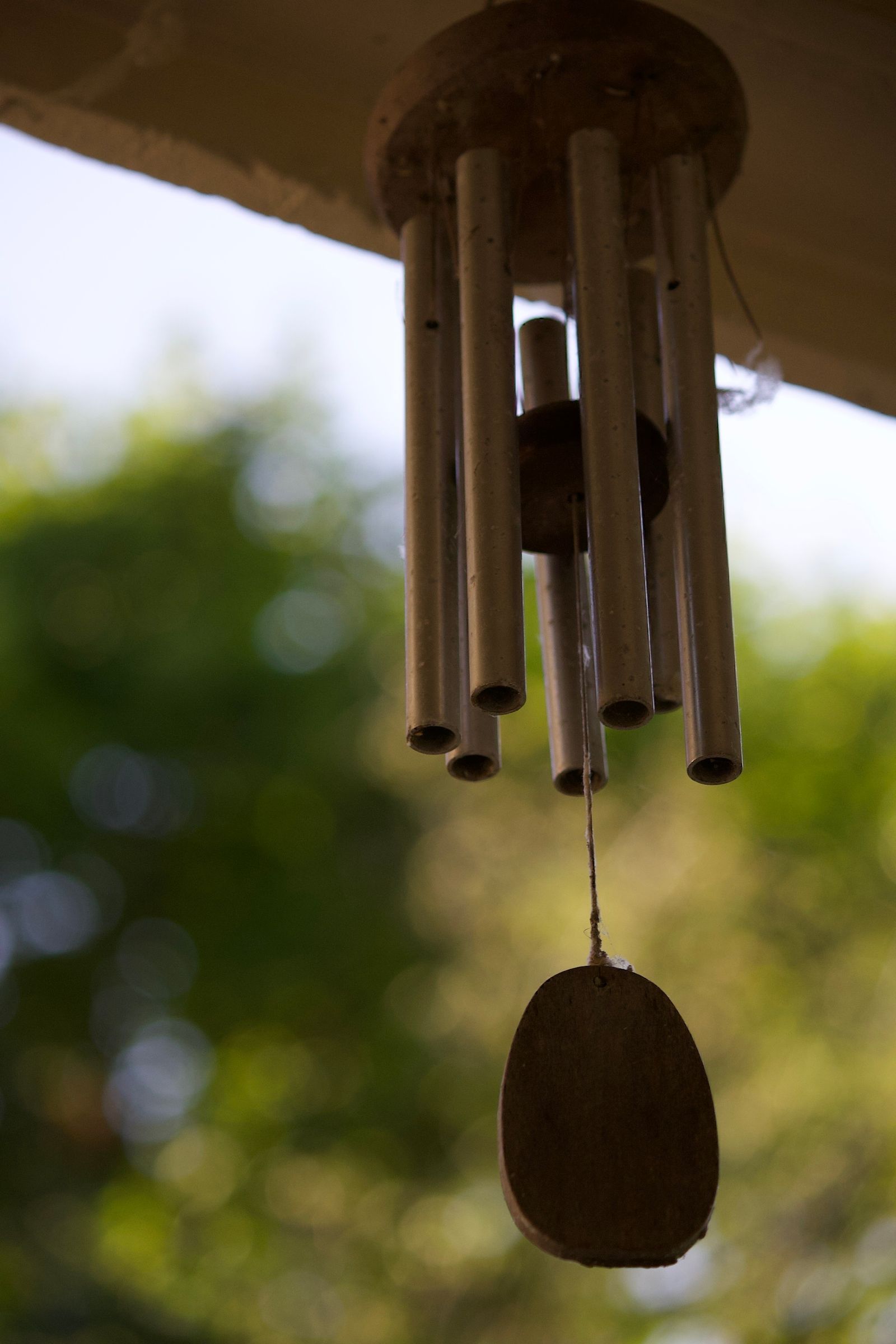
Photo: Alex Midence / Pexels
Wind chime roundups rank products by star ratings and affiliate prices, and they are stale before the season turns, because the listings change faster than the writing. What does not change is the physics and the craft underneath the choice, and a buyer who understands four things, how pitch is made, why tuning matters, how size fits space, and what wears out, can walk up to any chime in any store or listing and judge it in a minute. This page teaches that judgment, in the order a good purchase actually happens, for the garden and for the gift table, where chimes do more emotional work than any other object in the garden store.
Our wind chime hanging guide owns placement, height, and hardware once the chime is yours. This page owns the choosing, for the site that carries the walker's name: sound first, always.
Interactive tool
Wind Chime Choice Checklist
Check off each step as you finish it. Your progress stays on this page.
0 of 7 complete
0% done
Step 1: Sound Family, by Tube Length and Material
A chime's voice is set before anything else by the length of its longest tubes and what they are made of. Long tubes ring low and slow, with a sustain that carries; short tubes ring high and bright and fade fast. Neither is better; they are different instruments, and the first buying decision is which voice belongs in your garden.
Sound family
Longest tube
Voice
Belongs in
Deep and meditative
20 to 30 in and longer
Low, slow, church bell sustain
Large gardens, distance from the house, memorial settings
Mid and melodic
12 to 20 in
Balanced, musical, present but not commanding
Most porches and patios; the default good choice
Bright and sparkling
Under 12 in
High, quick, fairy like
Small balconies, kitchen windows, sheltered corners
Material colors the voice the tube length chooses. Aluminum is the modern standard for a reason: it rings clean, holds its tuning, and does not rust, which is why the respected makers build in it. Copper and steel ring warmer and deeper, and weather to a patina some gardens want. Bamboo knocks rather than rings, a soft wooden percussion that suits a quiet corner and lasts a few seasons at best outdoors. Glass and capiz shell tinkle decoratively and are honest ornaments rather than instruments; buy them for the eye, knowingly. Wall thickness is the quiet spec inside the aluminum family: a tube wall around 0.06 inches is the deep tone neighborhood, because a substantial tube sustains its note, while a paper thin tube sounds, unmistakably, like its price.
Step 2: The Tuning Test
Random wind strikes random tubes, and whether the result is music or noise is decided by the scale the tubes are tuned to. The industry standard answer is the pentatonic scale, the five note scale whose notes agree with each other in any combination, which is why a pentatonically tuned chime cannot play a wrong note no matter how the wind shuffles it. Makers worth their price name the scale and often the key; the respected names in the field, Woodstock and Corinthian Bells by Wind River among them, publish their tunings as a point of pride. The test in a store is your own ear: lift the chime, strike the tubes in a random order with the striker, and listen for whether the combinations please or jar. A chime tuned to a full major scale can clash when the wind plays it out of order; a pentatonic chime forgives the wind everything. For a gift, pentatonic is not a preference, it is insurance.
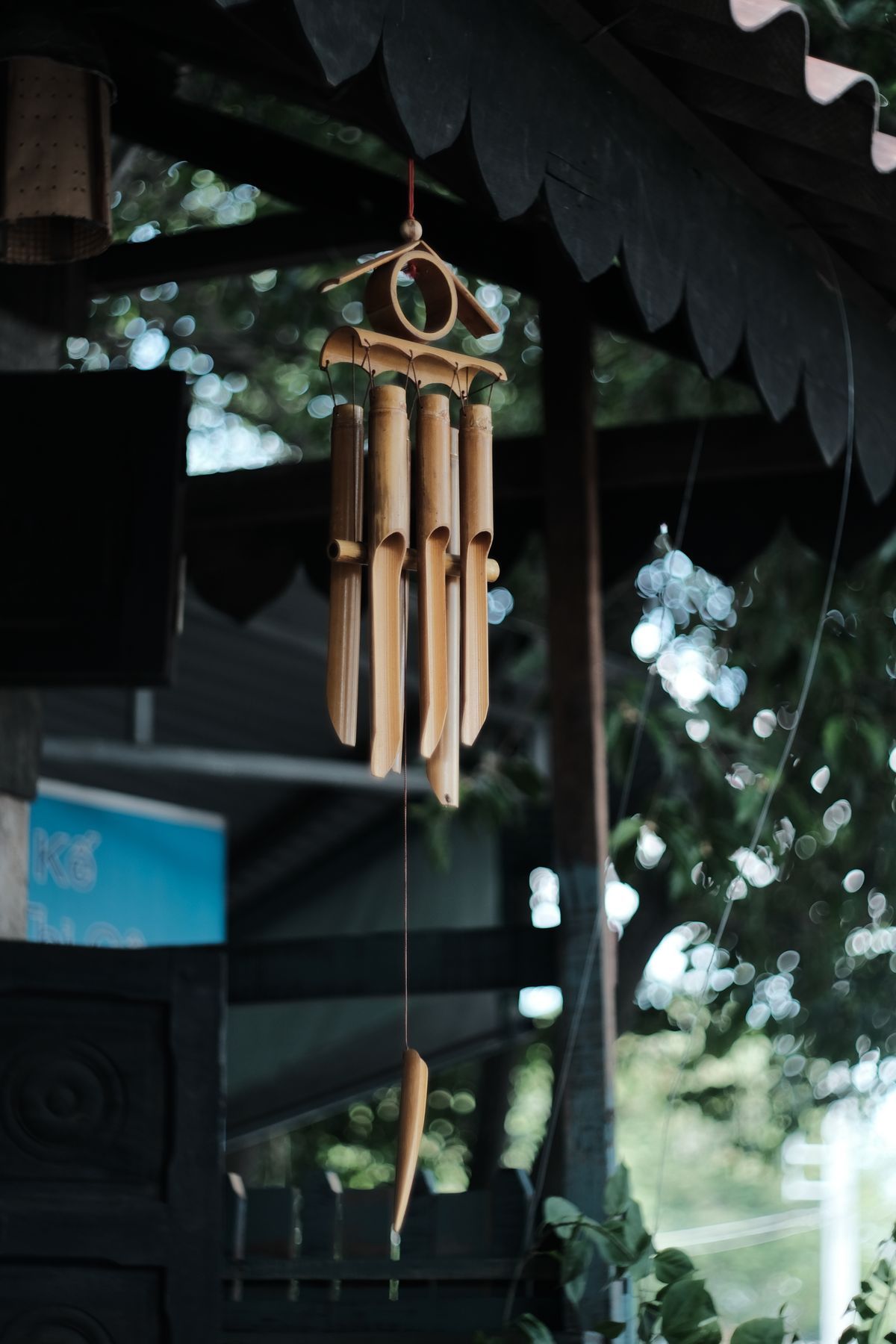
A bamboo wind chime hanging on a shaded porch
Step 3: Size by Space
Overall chime length, measured from hanger to the bottom of the wind sail, runs from compact pieces around 27 inches to statement instruments of 60 and 78 inches, and size is a fit decision, not a grandeur decision. A large chime in a small courtyard overwhelms the space and the neighbors; a small chime in a big garden is a rumor. Match the chime to the listening distance: the deep large instruments are built to be heard across a yard and belong where that yard exists, mid sizes carry a porch and its garden edge, and compact chimes are near field instruments for the chair beside them. Neighbors are part of the specification, honestly: a deep toned pentatonic chime at a sensible distance is the sound least likely to start a feud, and a bright, high, constantly struck small chime hung on a shared fence line is the most likely, whatever its price.
Step 4: The Build That Predicts Years
What wears out on a chime is never the tubes; it is everything that holds them. Inspect, in order: the cord, which should be braided synthetic rated for outdoors, because cotton and cheap string rot in a season or two; the striker, the clapper that strikes the tubes, denser wood or composite for a clean attack, positioned to actually reach every tube; the top plate and hardware, which carry the whole weight in wind for years; and the finish on wooden parts, which is either outdoor rated or a countdown. A chime whose maker specifies these parts is telling you its intended lifespan; a chime whose listing is all melody adjectives and no materials is telling you the same thing, in the other direction. Buy the build, and the sound you chose in steps one and two is still ringing in five years.
The Memorial and Gift Case
Sympathy and memorial chimes are a major share of why people buy, and they deserve their own guidance because the purchase is emotional and the object is permanent. Choose the deep or mid sound family; grief does not want bright and sparkling at the graveside or the garden bench. Pentatonic tuning matters most here, because the chime will be heard on the worst days and must never jar. Engraving, offered by the established makers on the sail or a plate, should carry the name and dates plainly; the wind will do the poetry. Size down one step from your instinct if the recipient's space is unknown, and include a note saying what the chime is for and where you imagined it hanging, because a memorial gift's meaning is completed by the giver's words, and a chime received without them is sometimes set aside, unhung, by a family unsure of the etiquette. There is no etiquette beyond this: it is a kind gift, and it should be hung and heard.
What the Price Actually Buys
Chime prices span from pocket money to furniture money, and the steps between them buy identifiable things, which a buyer should be able to name before paying for any of them. The budget tier buys the idea of a chime: thin walled tubes tuned approximately, natural fiber or light cord, and a season or two of pleasant sound before the soft parts fail; bought knowingly, as a trial of whether you like a chime at all, it is a rational purchase. The middle tier is where the durable value lives: substantial aluminum tubes at the wall thickness that sustains a note, a named pentatonic tuning, braided synthetic cord, and finishes rated for weather, which together buy the five to fifteen year instrument. The premium tier buys refinement rather than survival: hand tuning to a specific key, heavier tubes with longer sustain, hardwood and metalwork finished like furniture, and engraving and gift presentation worthy of the memorial case. What no tier buys is immunity from the build inspection on this page: a premium price on thin cord is still thin cord, and the five minute check of tubes, tuning, cord, striker, and finish outranks the price tag at every level of the shelf.
Listening Before You Buy: The Store Test
If the chime is within reach, buy with your ears in this order. Hang it or hold it from its loop so the tubes hang free, never judging a chime lying in a box or gripped in a fist, which damps every note it makes. Strike the tubes one at a time with the striker and listen to the longest tube longest: its sustain, the seconds the note lives, is the chime's quality in a single number you can hear. Then strike combinations at random, simulating the wind, and listen for the clashes the pentatonic tuning exists to prevent. Finally, imagine the sound at the distance it will actually live from your chair and your neighbor's window, and choose the voice for that distance, not for the aisle. Two minutes of this test tells you more than any star rating, because a chime is the rare product whose entire value can be auditioned before purchase, and the audition is free.
Frequently Asked Questions
What size wind chime sounds best?
The one matched to your space. Deep, large chimes with longest tubes of 20 to 30 inches and more sound best across a real garden; mid sizes suit porches; compact chimes are near field instruments. Oversized for the space is the common mistake: the chime dominates, the neighbors hear it more than you do, and the sound that was meant to soothe becomes a negotiation.
Why do some wind chimes sound musical and others random?
Tuning. A chime tuned to a pentatonic scale cannot produce a clashing combination, because every note in the scale agrees with every other, so random wind still plays harmony. Chimes tuned to full scales or to no particular scale jar when the wind plays their notes out of order. Strike the tubes randomly before buying and trust your ear.
What is the best material for a wind chime?
Aluminum, for most buyers: it rings clean, holds tuning, and resists rust outdoors for years. Copper and steel sound warmer and patina with age. Bamboo gives a soft wooden knock and a short outdoor life. Glass and capiz are decoration that tinkles; buy them as ornaments, not instruments.
How long will a good wind chime last outdoors?
Years, if the soft parts are built for it: braided synthetic cord, a solid striker, outdoor rated finishes, and sound hardware. The tubes themselves are nearly immortal. Cheap chimes usually fail at the cord in a season or two, which is why the build inspection matters more than the first ring.
Are large wind chimes too loud for neighbors?
Deep toned, pentatonically tuned large chimes are, paradoxically, among the least annoying sounds a garden makes, because their notes are low, slow, and harmonious, and they carry less sharply than high bright tinkling. Placement matters as much as size: hang for your own listening distance, not on the shared fence line, and take the chime in during storms and, considerately, during a neighbor's garden party.
What makes a wind chime a good memorial gift?
A deep or mid voice, pentatonic tuning so it never jars, a plain engraving of the name, and a note from you saying where you imagined it hanging. Choose one size smaller than instinct if you do not know the garden. The established makers offer engraving as a standard option; use it, because the words are what make the object a memorial rather than a purchase.
Photo credits: Alex Midence (Pexels); Nguyen Huy (Pexels). Photos are served from this site; follow the credit to the library page for the original.