Search for garden bench ideas and you get galleries: thirty photographs, forty photographs, page after page of benches in other people's gardens, with not one dimension, material note, or placement reason among them. A photograph cannot tell you whether a bench is comfortable, whether it will rot in five years, or whether it belongs at the end of your path or under your tree. This page takes the eight bench types that fill those galleries and converts each one into the things a gallery never gives you: dimensions, base, placement, and upkeep. Our how-to-build-a-garden-bench owns the single classic build in full; this page owns the shortlist you choose from before any build or purchase, the same idea to spec conversion this site applied to garden seating ideas, one level more specific.
Home / Garden Projects and Outdoor Living
Garden Bench Ideas: Eight Benches, With the Specs Galleries Skip
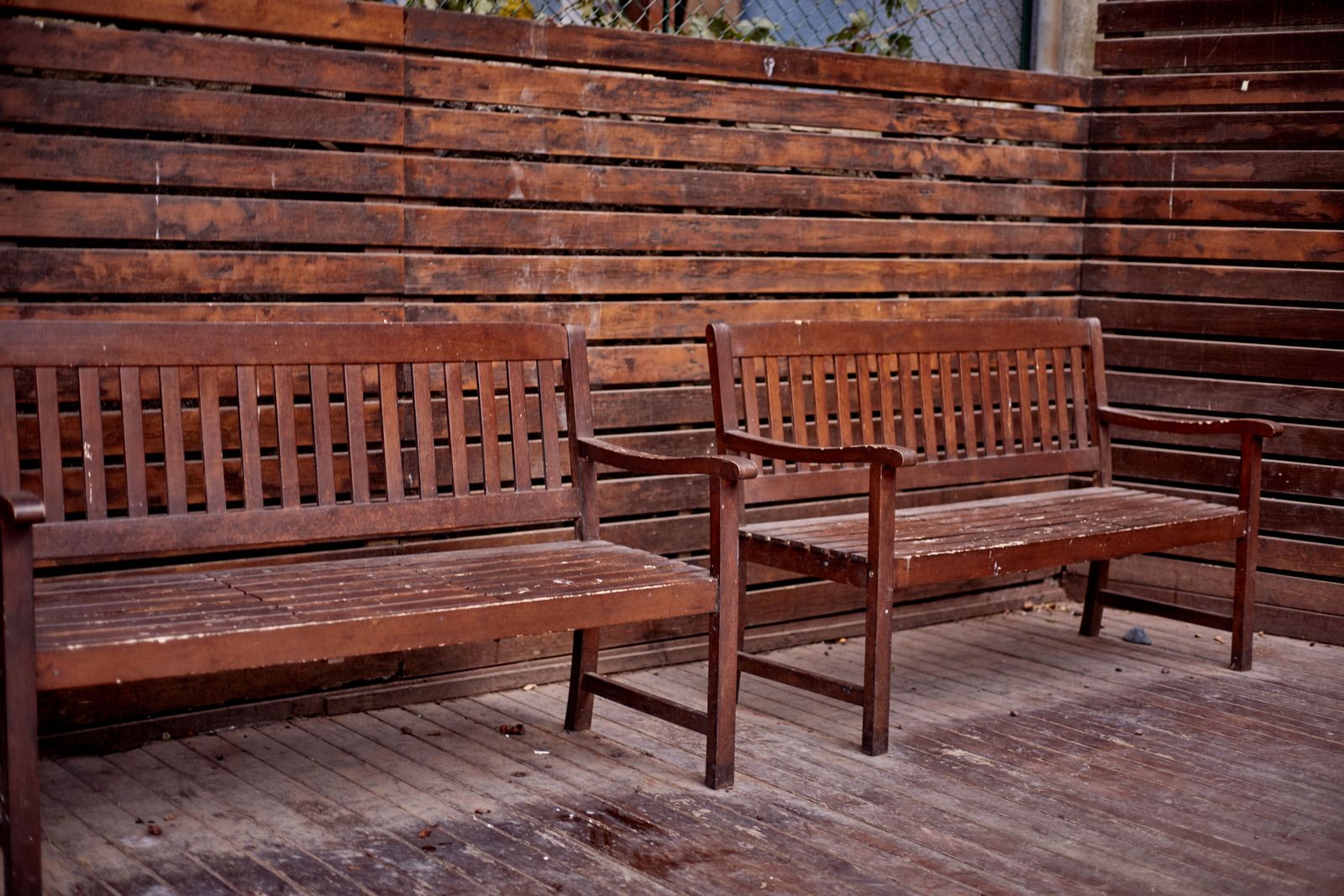
Photo: Eyüpcan Timur / Pexels
Garden Bench Shortlist Checklist
Check off each step as you finish it. Your progress stays on this page.
0 of 8 complete
0% done
The Dimensions Every Bench Obeys
Whatever the type, a bench you can sit on for twenty minutes obeys the same ergonomics. Seat height runs 17 to 18 inches, which lets feet rest flat and lets most adults stand up without hauling on their knees. Seat depth runs 16 to 20 inches; deeper than that and shorter sitters perch on the edge with the seat cutting behind their knees. A back, if the bench has one, should rise 12 to 18 inches above the seat and tilt slightly, and arms, at about 7 to 9 inches above the seat, are the difference between a bench an older gardener can use and one they cannot, because arms are how you lower yourself down and push yourself up. Length is the flexible number: 4 feet seats two, 5 to 6 feet seats three or lets one person stretch out with a book. Carry these numbers into every idea below, and into any store, because the most beautiful bench at 14 inches high is a bench you will look at and never sit on.
1. The Classic Slatted Bench
The default for a reason: horizontal slats on a frame, with or without a back, in wood or wood and metal. Slats shed rain instead of pooling it, which is why the type outlives solid seat designs outdoors. Specs: standard dimensions above, slats with small gaps, and a frame in a durable hardwood or powder coated steel. Placement: anywhere, which is its virtue; it is the bench for the first seat in a new garden, at the destination described below. Upkeep: wood versions want oil or sealant every year or two, or accept the gray.
2. The Log and Rustic Bench
A halved log on stump legs, or a rough plank on stone supports: the lowest build in the list and the most forgiving of imperfect carpentry. Specs matter more here, not less, because rustic benches are chronically built too low and too deep; hold the 17 to 18 inch height by choosing stump legs to measure, and keep the seat's flat face at 16 to 20 inches. Placement: woodland corners, fire pit circles, vegetable gardens, anywhere a formal bench would look like furniture left outside. Upkeep: bark left on rots and harbors insects; peel it, and expect a rustic bench in ground contact to be a 5 to 8 year object, which its builders usually accept as the price of an afternoon's work.
3. The Lutyens Bench
The rolled arm, lattice backed bench designed by Edwin Lutyens is the most copied garden bench in the world, and the gallery favorite. Be honest about what it is: a piece of garden architecture that happens to seat people, bought or built as a focal point. Specs: it is large, typically 6 feet, and heavy; check the seat dimensions on any particular version, because decorative copies sometimes shrink the seat depth below comfort. Placement: as the destination itself, at the end of an axis, against a hedge, where the bench is the view from the house as much as a seat in the garden. Upkeep: teak originals and good copies weather to silver and last decades; painted softwood copies need their paint maintained or they peel their way to shabby in three winters.
4. The Tree Bench
A bench that wraps a trunk, in a full circle or a half. It converts the shadiest spot in the garden into the most used seat in it. Specs: build or buy it in sections, sized to the trunk with at least a foot of clearance all around for growth, and plan on the tree outgrowing a fixed circle eventually; sectional designs can be expanded or removed. Seat height standard, and note that the seat under a tree collects what the tree drops, flowers, sap, bird contributions, so a tree bench is for sitting between cleanings. Placement: it places itself. Upkeep: check the clearance annually, and never let the bench or its supports girdle or wound the trunk.
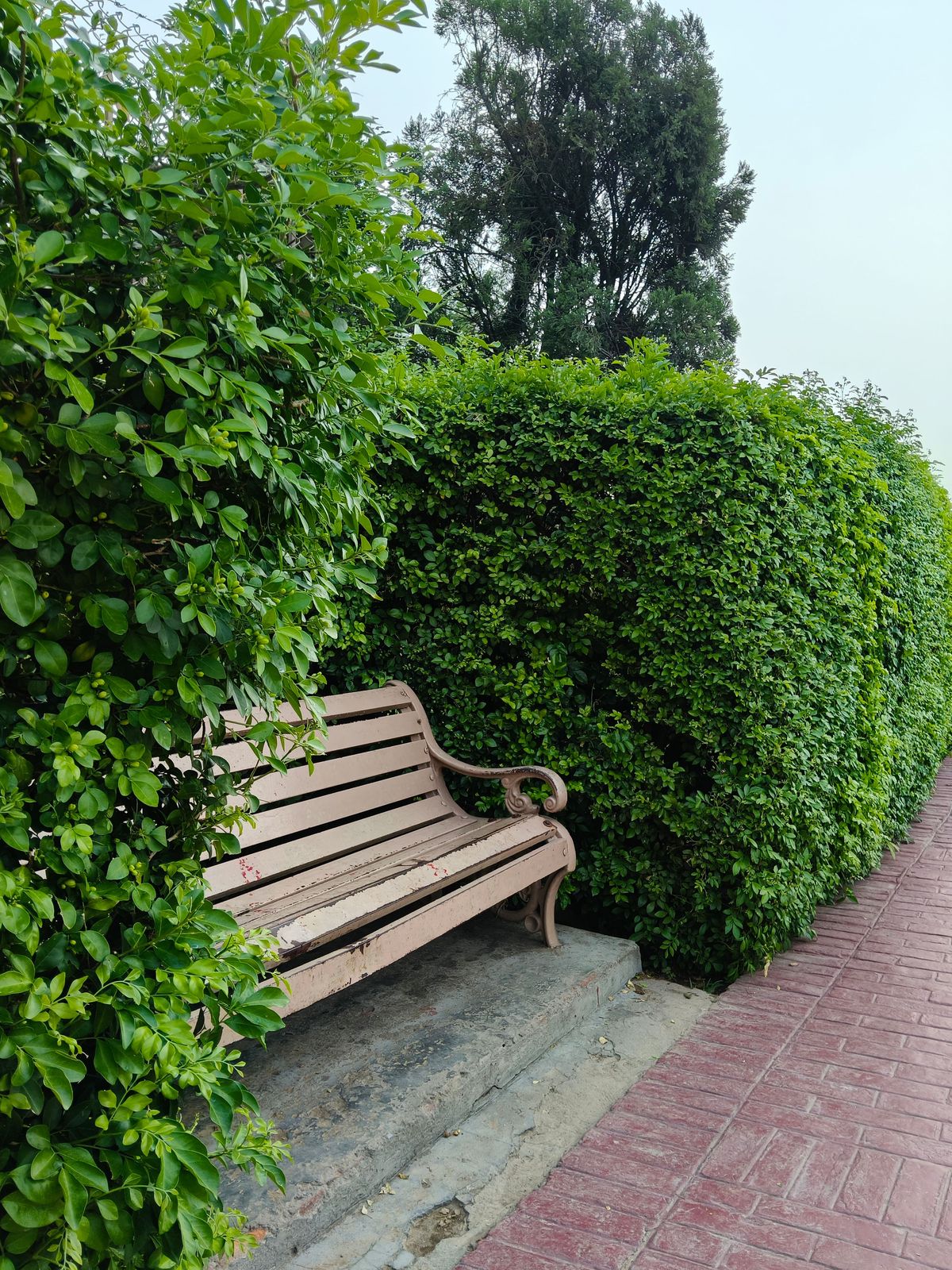
5. The Wall Mounted and Floating Bench
A seat cantilevered from a wall or a retaining structure, with no legs. It is the cleanest look in a small garden and the one that most needs engineering honesty: the fixings carry the whole load of bench and sitters as leverage, so this is a masonry anchor and through bolt job, not a screw into siding job. Specs: standard seat dimensions, and a wall that is genuinely structural. Placement: terraces, courtyard gardens, and the side of a raised bed or retaining wall, where it doubles the use of a structure you already built. Upkeep: the least of any type, nothing at ground level to rot, just the seat slats to oil.
6. The Storage Bench
A bench with a box under the seat: cushions, tools, hoses, and toys disappear into it, which in a small garden is worth more than the seat. Specs: the box wants a lid that sheds water away from the interior, drainage or ventilation so the inside does not become a mildew cabinet, and a seat height that stays at standard once the lid's thickness is counted. Placement: beside the door, on the patio, at the potting area, wherever the stored things are used. Upkeep: check the lid hinges and the interior annually; a storage bench fails from the inside out.
7. The Planter Bench
Benches joined to planter boxes, the seat spanning between two planters or flanked by them. The planters are the structure, which is why the type suits beginners: no joinery carries the load, the boxes do. Specs: the planters must be heavy enough, filled, not to tip when a sitter lands on the seat's edge, and the seat span between them should stay under about 5 feet in ordinary lumber. Placement: patios and deck edges, where the planters double as the boundary. Upkeep: the planter soil stays wet against the seat ends, so use durable or treated wood at the junctions and expect those contact points to age first.
8. The Wall Cap Seat
The bench you already own if you have a retaining wall or a raised bed of the right height: a wide, flat cap, in stone, timber, or composite, at 17 to 18 inches turns the wall into seating with no furniture at all. Specs: the cap wants 14 to 16 inches of width to sit on comfortably and a slight overhang for your heels. Placement: everywhere the wall runs, which makes it the highest capacity seating in any garden, free at every gathering. Upkeep: none beyond the wall's own. If you are building any wall or tall bed, choosing its height and cap with this idea in mind is the cheapest seating decision in garden design.
Placement: Destination, View, and Shade
Three rules place any bench better than taste alone. Make it a destination: a bench at the end of a path, in a corner the garden has been pointing at, gets used; a bench stranded mid lawn gets photographed. Sit for the view: place the bench where the view from the seat is the garden's best, which is usually looking back at the house and the planted borders, not out from them. And check the shade at the hour of use: a bench in blazing afternoon sun is unusable when you most want it, so note where the shade actually falls at 5 in the afternoon in summer, not at noon in spring, and if the perfect spot has no shade, the tree bench and the pergola exist because of this rule. The checklist above turns the shortlist into a decision; pick the type, fix the dimensions, walk the placement, and the gallery problem is solved, because you are no longer choosing a photograph.
Frequently Asked Questions
What is the most comfortable height for a garden bench?
Seventeen to 18 inches at the seat, with a depth of 16 to 20 inches. That height lets most adults sit with feet flat and stand without pushing off their knees, and adding arms at 7 to 9 inches above the seat makes the bench usable for older gardeners who need the leverage. Benches outside these numbers, the charming 14 inch rustic seat, the deep 24 inch lounge bench, are benches people admire and avoid. Measure any bench you buy, including the decorative copies of classic designs, because looks scale down more easily than comfort does.
What is the best material for a garden bench?
It depends on the upkeep you will actually do. Teak is the premium answer: it weathers to silver, resists rot for decades, and asks for nothing but cleaning. Cedar is lighter, cheaper, and good for 10 to 15 years with occasional oil. Powder coated metal and aluminum need paint checks at scratches and chips but no other care. Stone and concrete are permanent and cold, best as wall caps and built ins. Softwood is the budget option and the honest deal is maintenance: seal it yearly or replace it in 5 years. Choose by the maintenance you know you will do, not the maintenance you intend in April.
Where should I put a bench in my garden?
At a destination, with a view, in shade at the hour you will use it. The end of a path, a corner with a planted backdrop, or against a hedge all give a bench a reason to exist. Face it toward the best view, which is usually back across the garden toward the house and borders. Then check the sun: a spot shaded at noon may be in full glare at 5 in the afternoon, which is when garden benches earn their keep. A bench placed by these three rules gets sat on weekly; one placed to fill a gap in a photograph gets sat on twice.
How long should a garden bench be?
Four feet seats two people comfortably and fits most paths and corners. Five to 6 feet seats three, allows one person to stretch out, and suits the focal point benches like the Lutyens style that anchor a view. Beyond 6 feet, consider two separate benches instead: they can be angled for conversation, moved for events, and placed in two different spots of sun and shade, which one long fixed bench cannot do. In a small garden, a 4 foot bench and a wall cap seat usually beat a single long bench on both capacity and flexibility.
Can I build a garden bench instead of buying one?
Yes, and the simplest types are beginner builds: the rustic log bench, the planter bench, and the classic slatted bench are all within a weekend's skills with basic tools, and this site's how-to-build-a-garden-bench walks the classic build in full. Building buys you the exact dimensions on this page, which ready made benches often miss. Buy when the design is the point, as with a true Lutyens bench, or when metalwork is involved. Either way, decide the type and the placement first, with the shortlist here, and let the build or the purchase serve the decision.
Photo credits: Eyüpcan Timur (Pexels); Vishvajeet Kumar (Pexels). Photos are served from this site; follow the credit to the library page for the original.