Garden Decor Ideas for Small Spaces: the Floor Plane Rule and the One Focal Piece
By the Windchime Walker editorial team
Photo: 余鑫磊 / Pexels
Small space decor fails in a predictable direction: the space gets filled. A small patio collects a statue, a fountain, three signs, a gnome, a lantern collection, and a rug, and the result is smaller than the empty patio was, because in a small space every object spends floor, and floor is the currency the space cannot print. This page teaches the system the galleries assume: keep the floor plane nearly empty, decorate the vertical surfaces, choose one focal piece and let everything else support it, and use light as the cheapest decor of all. The ideas are the familiar ones; the discipline is what makes them work at small scale.
Our container gardening ideas page owns the plant arrangements. This page owns the non plant layer: the objects, surfaces, and light that make a small garden feel finished.
Interactive tool
Small Space Decor Checklist
Check off each step as you finish it. Your progress stays on this page.
0 of 8 complete
0% done
Rule One: the Floor Plane Stays Clear
Walk your space and count what stands on the ground that is not a plant container or furniture. In a small space, the decor budget for the floor is close to zero, and every exception must earn it. Floor objects shrink the usable area, trip the eye, complicate sweeping and watering, and make a small space read as storage. The decor moves up: onto walls, fences, railings, and into the air as hanging pieces, where it costs no floor and sits at eye level where decor actually works. The exceptions that earn floor space are the ones that work for a living: a small water feature whose sound masks street noise, a single sculptural pot that is also the garden's anchor, a bench that is both seating and the visual base of the planting. Everything else that currently lives on your floor is a candidate for the wall, a shelf, or the donation box, and the space will feel larger the day it leaves than the day it arrived.
Rule Two: One Focal Piece, Everything Else Supporting
A small space gets one star. Choose it deliberately: a striking pot with a specimen plant, a piece of wall art, a small fountain, a mirror, an arbor or obelisk, a fire bowl where allowed. One. Every other decor decision is then made in support: colors that echo it, objects smaller and quieter than it, sight lines that end at it. The discipline feels restrictive until you see the alternative, which is five medium interesting objects competing in a phone booth, a space that feels busy and slightly anxious without anyone knowing why. When you fall for a second focal piece, and you will, the rule is replacement, not addition: the new star retires the old one to another spot or another home. Gardeners with large gardens can collect; gardeners with small ones curate, and curation is the whole aesthetic.
The Vertical Layer: Walls, Fences, and Railings
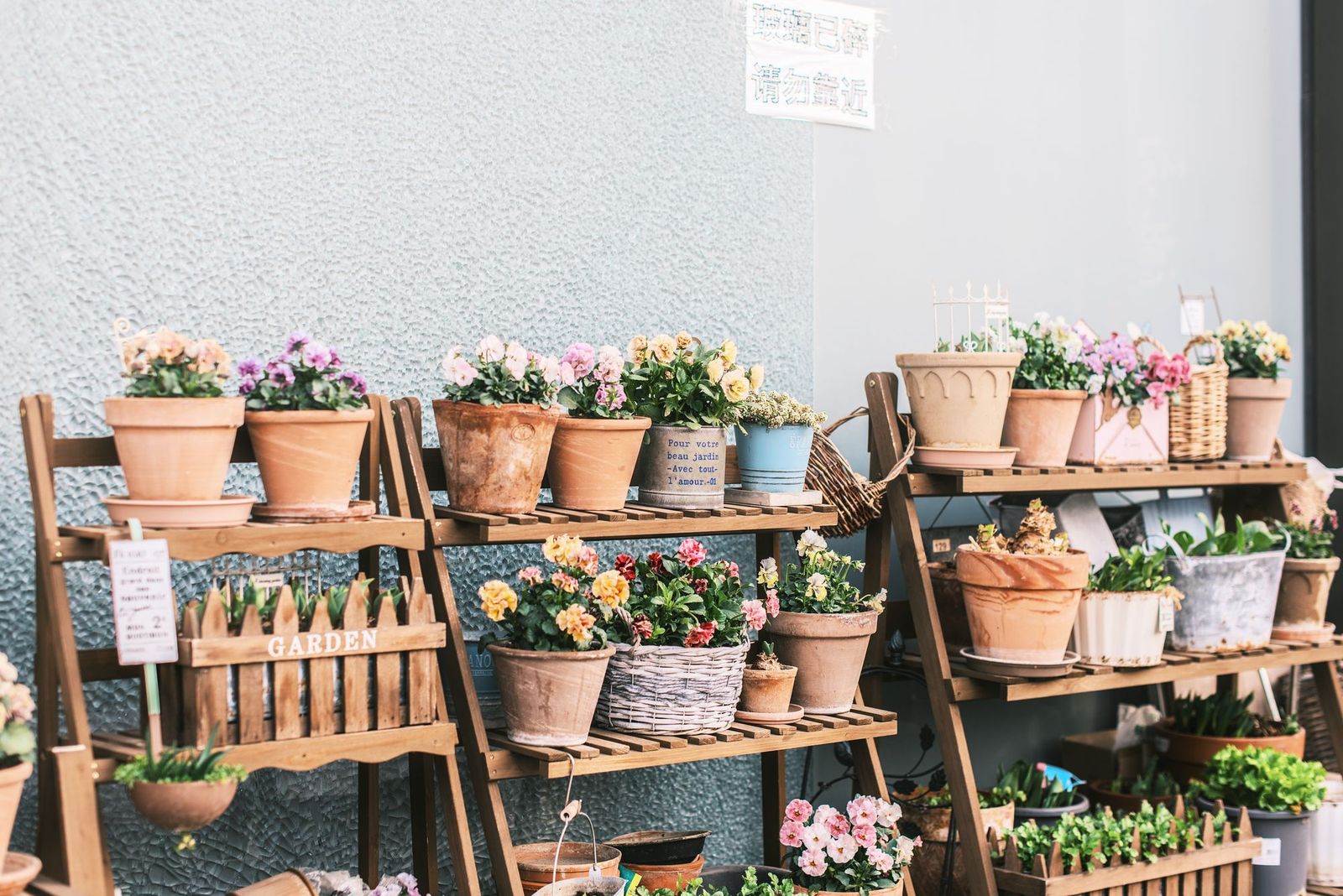
With the floor clear and the star chosen, the walls become the gallery. Wall mounted planters and pocket planters carry the green layer upward; hang them in a deliberate arrangement, a grid, a single vertical line, a triangle, rather than scattered at random heights, because arrangement is the difference between decor and storage on a wall too. Outdoor wall art, metal work, ceramic pieces, a painted trellis panel, must be genuinely weather rated or accepted as a one or two season piece; indoor decor moved outside is a slow disappointment of rust and fading. Mirrors are the famous small space trick and they work, doubling a view and bouncing light into shade, with two caveats: mount them where they will not reflect a neighbor's window or a harsh glare into seating, and expect outdoor mirrors to need weather rated backing and regular cleaning, because a spotted mirror advertises itself. Light colored surfaces, a pale fence stain, light gravel, a bright rug rated for outdoors, lift a shaded small space more cheaply than any object, by raising the light level everything else is seen in.
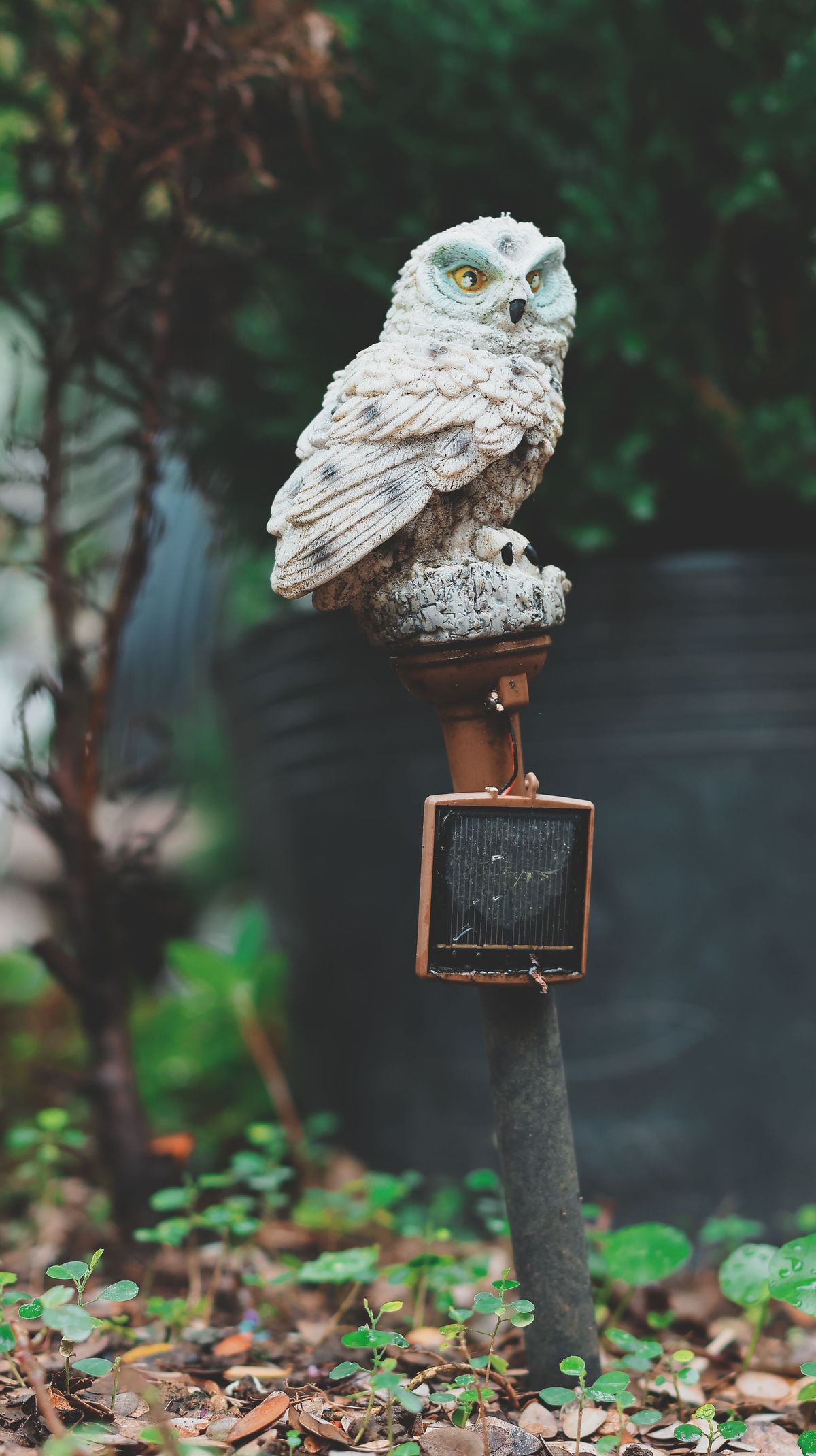
An owl statue on a solar light stake used as a single accent piece
Light: the Cheapest Transformation in the Garden
If the budget allows one purchase, spend it on light. Solar stake lights along a path edge, a string of warm bulbs over a seating corner, a lantern on the table: lighting changes a small space after dark from a dark rectangle into a room, and it does so for the price of one statue. The rules are few. Warm light flatters gardens and people; cold blue white light belongs in parking lots. Light the focal piece and the path, not the whole space evenly, because contrast is what makes it feel designed. Solar fixtures have improved enough to be the default for renters and sunny spaces, with the honest caveat that they dim in winter and in shade; a shaded garden may need a low voltage wired set or battery lanterns recharged indoors. A single lit focal point seen from the house window extends the garden's value into every evening of the year, including the months when nobody sits outside.
Renter Rules and Small Budgets
Renters decorate under a constraint the galleries ignore: nothing permanent, nothing screwed into what you do not own, nothing the deposit will pay for. The renter's toolkit is tension and weight: plant stands and ladder shelves that lean, hooks that hang over fence tops and railing rails without fasteners, planters that sit rather than mount, and decor that moves out with you. Command style outdoor hooks and over rail hangers carry more than they are credited with. Buy decor that is light enough to carry down stairs in one trip per piece, because the move out is part of the purchase. On budget, the order of impact per dollar runs: light colored surface improvements and a tidy edge first, lighting second, the one focal piece third, and everything else after, which is also the order of the checklist below. The last decor rule for small spaces is subtraction as a seasonal habit: once a year, in spring, take one thing away. Small gardens accumulate by kindness, gifts, sales, and sentiment, and the annual removal is what keeps the system a system.
A Worked Example: One Balcony, Decorated by the System
Take a typical small balcony, 4 by 10 feet, one chair's worth of ambition and a lease that forbids screws and rail planters. Before: six small pots in a row on the floor, a plastic gnome, a wind spinner stuck in a pot, a string of dead solar lights, and a folding chair, reading as storage with plants. The system applied: the floor is cleared to the pots and the chair; the gnome and the spinner retire in the annual subtraction, performed early. The six small pots consolidate into two larger ones in one material, dark resin, grouped at the sunny end as a triangle of two floor pots and one on a stand, planted as the garden's green mass. The focal piece is chosen: a single ceramic pot in the palette's accent color on the stand, planted with one striking plant, because at this scale the pot and plant together are the star. The wall gets the decor: a weather rated metal piece over the seating, hung from an over rail hook turned inward, and a small shelf holding the herb pot at hand height. Light is the one purchase: a warm solar string along the inside of the railing, and a lantern for the small table that replaces the bare chair setup. The total spend is the lights, the shelf, and one pot; the total floor objects are three pots, a chair, and a table; and the balcony reads, in the only judgment that matters, as a room someone designed rather than a ledge where plants are kept. That transformation, subtraction plus one star plus light, is available at every scale this article covers, which is why it is a system and not a shopping list.
Frequently Asked Questions
How do I decorate a small garden without making it feel smaller?
Keep the floor plane clear and decorate vertically: walls, fences, railings, and hanging pieces cost no floor and sit at eye level. Choose one focal piece and let everything else support it. Most small spaces feel smaller from accumulated floor objects, and removing them is the fastest decor improvement available, at negative cost.
What is the best single decor purchase for a small space?
Lighting. Solar stakes, a warm string of bulbs over seating, a lantern: light turns a small space into a room after dark for less than most statues cost. Light the focal piece and the path rather than everything evenly, and choose warm light over cold.
Can I use a mirror in a small garden?
Yes, with caveats. A mirror doubles a view and lifts light into shade, which is why it is the classic small space move. Use a weather rated mirror, mount it where it will not glare into seating or a neighbor's window, and expect to clean it; a spotted mirror draws the wrong kind of attention.
How do renters decorate a garden without permanent fixtures?
With stands, shelves, over rail and over fence hooks, and planters that sit rather than mount. Nothing screwed, nothing glued, everything light enough to carry out in one trip per piece. Tension and weight replace fasteners, and the deposit stays intact.
How many decorative objects should a small garden have?
One focal piece, plus a small supporting cast of quieter items, mostly on vertical surfaces. The working rule is replacement, not addition: a new star retires the old one. A yearly spring subtraction, removing one accumulated piece, keeps the system from sliding back into clutter.
Photo credits: 余鑫磊 (Pexels); Nguyễn Tiến Thịnh (Pexels). Photos are served from this site; follow the credit to the library page for the original.