Garden Fence Ideas: Choose by the Job, Not by the Photo
By the Windchime Walker editorial team
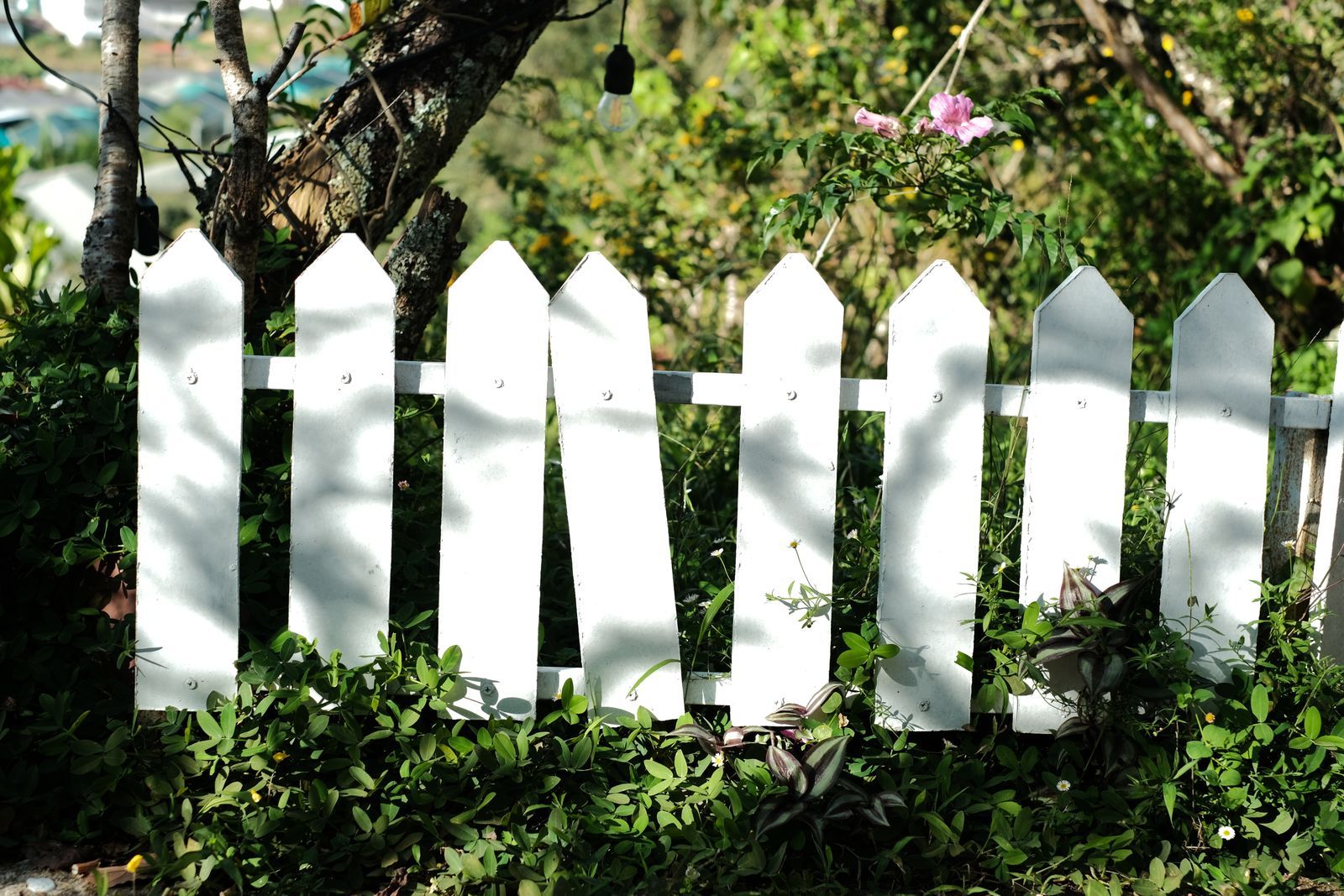
Photo: Tris Truong / Pexels
Search for garden fence ideas and you get photography: white pickets at golden hour, rustic split rails, fences as scenery. But a fence around a garden is not primarily scenery. It is a tool with a job, usually keeping a specific animal out, or holding climbing plants up, or marking the line where the mower stops arguing with the beds. The right fence for a gardener is chosen by answering the job question first, and the galleries never ask it. This page asks it: which animal, which purpose, what height, what mesh, and only then which material wears the job best in your budget and your winters.
Our bed edging guide owns the small line between bed and lawn, and our trellis guide owns plant supports as structures. This page owns the garden fence decision itself, the perimeter with a purpose.
Interactive tool
Garden Fence Choice Checklist
Check off each step as you finish it. Your progress stays on this page.
0 of 8 complete
0% done
Start With the Job: The Pest and Purpose Table
The job
What works
The critical detail
Rabbits out of the vegetables
Welded wire or hardware cloth, about 2 feet high
Tight mesh, and the bottom edge buried or bent outward along the ground
Deer out of everything
Fencing about 7 to 8 feet tall, or a shorter angled fence leaning outward
Deer jump height and hesitate at depth; a fence they cannot judge is a fence they skip
Dogs in, or out, honestly assessed
Sturdy welded wire or picket at a height matched to the dog
A determined dog tests the bottom edge and the gate, in that order
Chickens contained or excluded
Wire mesh with small openings, buried skirt against diggers
Predators dig; the skirt matters more than the top
Climbers supported
Any open fence on the bed's north side: panel, picket, trellis style
The fence is a free trellis; plant it and it disappears under green
A boundary with good manners
Picket, split rail with wire behind it, or a hedge line
The wire does the work while the wood does the looking
Read the rabbit row twice, because it is the most common garden fence job and the most commonly bungled. Rabbits do not need height to defeat; they need an opening. A handsome three foot fence with a two inch gap under the bottom rail is a rabbit door with decoration above it. The working rabbit fence is humble: about 2 feet of tight mesh, the bottom edge pinned, buried a few inches, or bent outward flat along the ground so a digging or pushing rabbit meets wire wherever it tries. Deer are the opposite problem, all height and psychology: about 7 to 8 feet of fence clears their comfortable jump, and an angled fence, leaning outward at a slant, defeats them at less height because deer judge jumps by the landing they can see, and a slanted fence offers no readable landing.
Materials, Compared for Garden Duty
Wood. The warmest looking and usually the cheapest to build, with a working life of roughly 10 to 20 years depending on species, treatment, and how its feet meet the soil. Picket and split rail are the garden classics. Wood's honest costs are maintenance and rot at the ground line, which is where every wooden fence dies first.
Welded wire and hardware cloth. The working garden's real fence: inexpensive, nearly invisible from ten feet away, and the only material on this list that actually stops a rabbit. It wants a frame or posts to hold its line and pairs invisibly behind decorative wood when you want both the look and the function.
Vinyl and composite. Low upkeep is the entire sales pitch, and it is true: no painting, no rot, a hose off once a year. The costs are money up front and a look that suits some gardens and fights others. In cold climates, cheap vinyl goes brittle; buy the grade rated for your winters.
Chain link. Functional, durable, and honest about what it is. In a garden it disappears remarkably well behind plantings and serves as an outstanding free trellis for climbers, which is the gardener's way to make a utility fence earn beauty.
Bamboo and reed. Quick, cheap, and charming for a season or three, and short lived by nature; treat it as a temporary screen or a rented look, not a fence. It stops no animal that has read this page's table.
Metal panel and estate fencing. The long lived, high cost end: decades of service, a formal look, and a price that makes sense for a permanent boundary, less sense for a vegetable patch that may move.
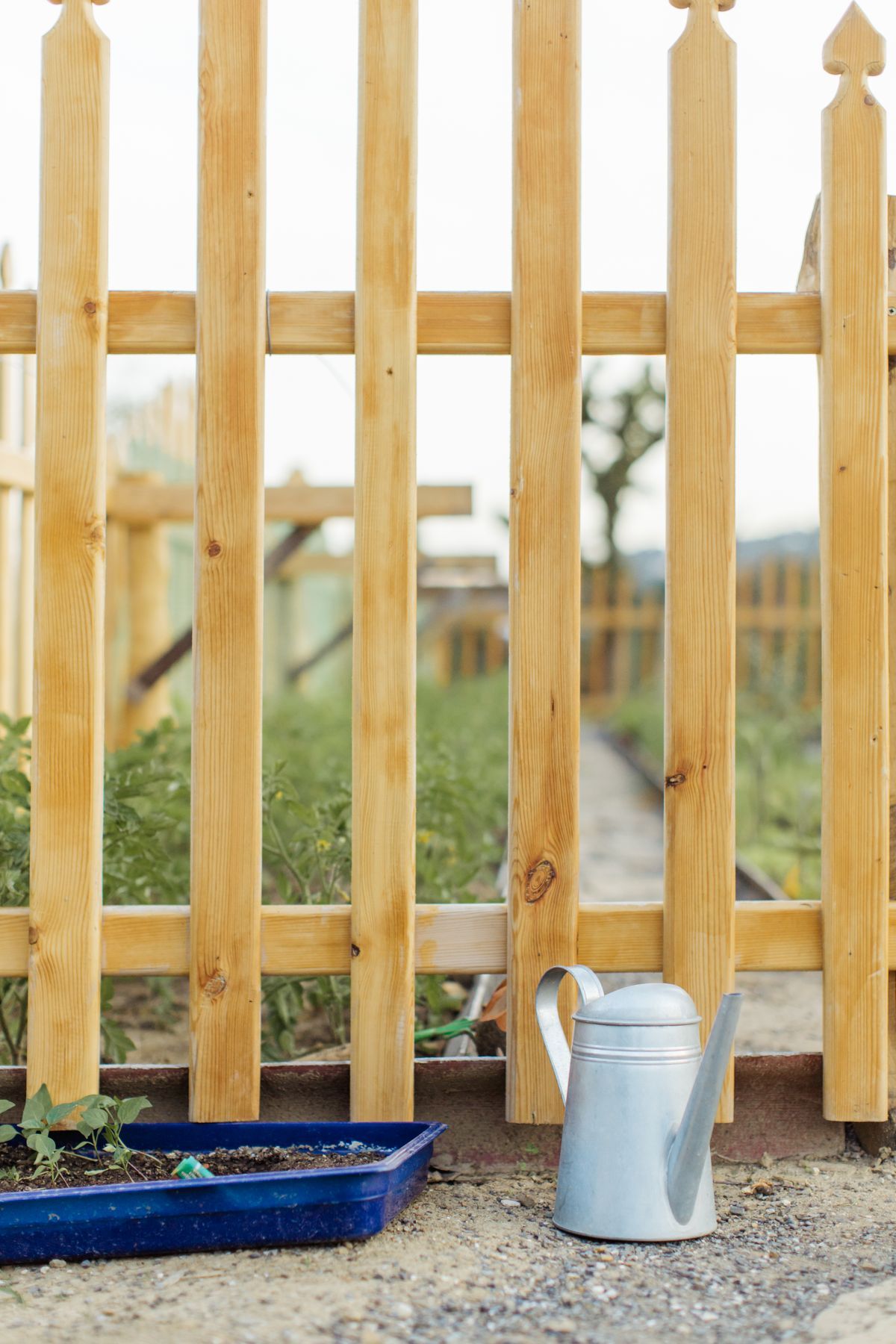
A watering can resting beside a wooden garden fence
The Fence as Free Trellis
Every fence on the sunny side of a bed is a support structure waiting for a crop. Peas up a picket fence, cucumbers on welded wire (our vertical cucumber guide runs that method in full), beans along chain link, sweet peas making a boundary fence into the best smelling wall in the neighborhood. Plant the fence's north side so the climbers' shade falls on the fence line and the path, not on the bed behind them. A fence doing double duty earns its cost twice, and a wire fence covered in green by July has solved the aesthetics problem that made you hesitate over wire in April. When you plan a new garden fence, run the trellis question before the style question: a fence placed and built to be climbed is worth more than a prettier fence that cannot be.
The Details That Decide Whether It Works
Gates are where fences fail socially: put the gate where the wheelbarrow actually travels, wide enough for it and for you carrying something awkward, because a gate you avoid is a fence you climb, and a fence you climb is a fence you will eventually break. Corners and ends take the tension of any wire run and want the sturdiest posts in the line. The bottom edge, as the rabbit row taught, is the working edge of the whole installation; walk yours at animal height, on your knees if necessary, and look for the gaps with an intruder's eye. And check before you dig or build: property lines, utility marks, and any local rules or association limits on fence height and placement are cheaper to learn in advance than after the posts are in. That homework is unglamorous and is the difference between a fence and a dispute with a fence attached.
A Word on Cost and Sequence
Fence the garden you actually have, at the size it actually is, rather than the empire in the five year plan; wire and posts move more easily than regrets. If budget forces a sequence, build the working fence first, wire on posts, planted with climbers, and let it serve while the decorative upgrade waits its turn in the budget. Many gardens discover the wire and green version was the destination all along. The checklist on this page runs the decision in order: job, height, mesh, bottom edge, gate, then material. Answer in that order and the fence you build will be the fence the photographs cannot sell you, the one that works.
Living Fences: The Hedge Option
A fence does not have to be built; it can be grown, and a hedge is the fence for gardeners whose timeline runs in years and whose job list is boundary and beauty rather than rabbits. A hedge of dense shrubs gives privacy no panel matches, shelters birds, muffles a road, and never needs painting, and it charges for all of it in time, water in its establishment years, and an annual trim. What a hedge does not do is stop a rabbit this season, or a deer in any season worth planning around, which returns us to the job table: a hedge is a boundary fence, and pairing it with a run of welded wire on its garden side, invisible inside the green, is the classic estate trick at cottage prices. Plant a hedge where the line is permanent, because a hedge at year five is a landscape feature and moving it is a fiction. For the gardener whose job list reads boundary first and animals second, hedge plus hidden wire is the complete answer, and the years it takes are the same years the garden itself takes, so the wait is rarely wasted.
Renters and Temporary Fences
Not every garden fence is a capital project, and the renter's version of this page deserves its own honesty. Temporary fencing, wire panels on step in posts, removable mesh on stakes, does the two most common garden jobs, rabbits and dogs, at a fraction of the cost and with a full refund of the yard when you leave. It will not win a beauty prize in April, but planted with the climbers from the trellis section it disappears under green by July exactly like its permanent cousins, and it comes with one advantage no built fence offers: it moves when the garden plan does, which in a young garden is every year. The decision rule generalizes beyond renting: any gardener in a first or second year garden, whose beds have not settled into their final geography, should fence temporarily on purpose and let the permanent fence wait for the permanent plan. A fence is the hardest garden feature to move and the one most often built for a garden that no longer exists by year three. Build the working version, live with the garden, and let permanence be the reward of a plan that stopped changing.
Frequently Asked Questions
What fence actually keeps rabbits out of a vegetable garden?
About 2 feet of tight mesh, welded wire or hardware cloth, with the bottom edge secured: buried a few inches, pinned tight, or bent outward flat along the ground. Height is not the rabbit problem; openings are. A tall fence with a gap under the bottom rail is a decorated rabbit door.
How tall does a deer fence need to be?
About 7 to 8 feet for a vertical fence, which clears a deer's comfortable jump. A shorter fence angled outward, leaning away from the garden, can work at less height because deer hesitate to jump a barrier whose landing they cannot judge. Half measures at four or five feet vertical are a deer suggestion, not a barrier.
What is the cheapest garden fence that works?
Welded wire or hardware cloth on posts. It is inexpensive, nearly invisible from a short distance, stops the small animals that decorative fences wave through, and doubles as a trellis for peas, beans, and cucumbers. Pair it behind picket or split rail later if you want the classic look with the function kept.
How long do fence materials last?
Wood runs roughly 10 to 20 years depending on species, treatment, and ground contact, dying first at the soil line. Vinyl and composite trade a higher upfront cost for decades of low upkeep. Bamboo and reed are short lived, a season or a few years. Metal panel fencing is the longest lived and the most expensive.
Can a garden fence double as a trellis?
Yes, and it should wherever the sun allows. Peas, beans, cucumbers, and sweet peas climb picket, wire, and chain link happily; plant the fence's north side so climber shade falls on the path, not the bed. A wire fence under green growth by July solves its own looks problem.
What do I check before building a garden fence?
Your property line, utility locations before any digging, and any local or association rules on fence height and placement. Then plan the gate where the wheelbarrow travels, the sturdiest posts at corners and ends, and the bottom edge at animal height. Homework first is cheaper than a dispute with a fence attached.
Photo credits: Tris Truong (Pexels); Anastasia Shuraeva (Pexels). Photos are served from this site; follow the credit to the library page for the original.