Garden Seating Ideas: Every Idea Specified, With Dimensions, Base, and Shade
By the Windchime Walker editorial team
Photo: Hồng Thắng Lê / Pexels
Garden seating ideas are usually sold as photographs: a bench in dappled light, a swing under a tree, a wall that doubles as a seat. The photographs never answer the questions that decide whether the seat works: how high, how deep, what it stands on, where the shade is at the hour you will actually sit there, and how many people it honestly holds. This page converts the standard ideas into specs. Every idea below carries its dimensions, its base, its shade requirement, and its cost in effort, so you can choose by engineering instead of by mood. One standard governs all of them, the comfort dimensions of a seat a person can sit in for an hour: a seat height of 17 to 18 inches, a seat depth of 16 to 20 inches, and a back wherever the sitting is meant to last.
Our how to build a garden bench guide owns the bench build itself. This page owns choosing and placing seating across the whole garden.
Interactive tool
Garden Seating Checklist
Check off each step as you finish it. Your progress stays on this page.
0 of 8 complete
0% done
The Bench, Specified
The garden bench is the default because it is the most seat per dollar and per hour of work. Spec: 4 to 6 feet long, which seats two honestly and three at a party; seat height 17 to 18 inches; depth 16 to 18 inches without a back, 18 to 20 with one; a back angled slightly, about 5 to 10 degrees off vertical, if anyone will read there. Base: a level pad of gravel, pavers, or a poured strip, never bare turf, because bench legs on soil sink unevenly and the bench begins its rock within a season. Shade: a bench in full afternoon sun in July is a photograph, not a seat; place it for the shade of the hours you sit, which for most households is late afternoon. Effort: a weekend to build, an afternoon to buy and place. Put the first bench where the garden is looked at from, not where it is looked at: facing the best border, across the lawn, with the house behind you.
The Seating Wall and the Built In Edge
A low wall along a patio or around a raised bed is seating that costs no floor space, and it is the highest capacity idea on this page: every linear foot of wall at seat height is a place a guest can sit. Spec: cap height 17 to 18 inches, which means designing the wall to finish there, not hoping it lands close; cap depth at least 12 inches of flat, smooth top, stone or a wide timber cap, because a narrow or rough cap is a wall, not a seat. Base: the wall's own footing, which is the work; a seating wall is a masonry project and its effort cost is the highest here, days rather than hours. Shade: walls hold the sun's heat, so a south facing stone cap can be too hot to sit on at midday in summer and pleasantly warm on a spring evening; know which one you are building for. The raised bed version is the gardener's special: a bed built at seat height along its public edge gives you a place to sit while you weed, which converts chore posture from kneeling to sitting for the rest of your gardening life.
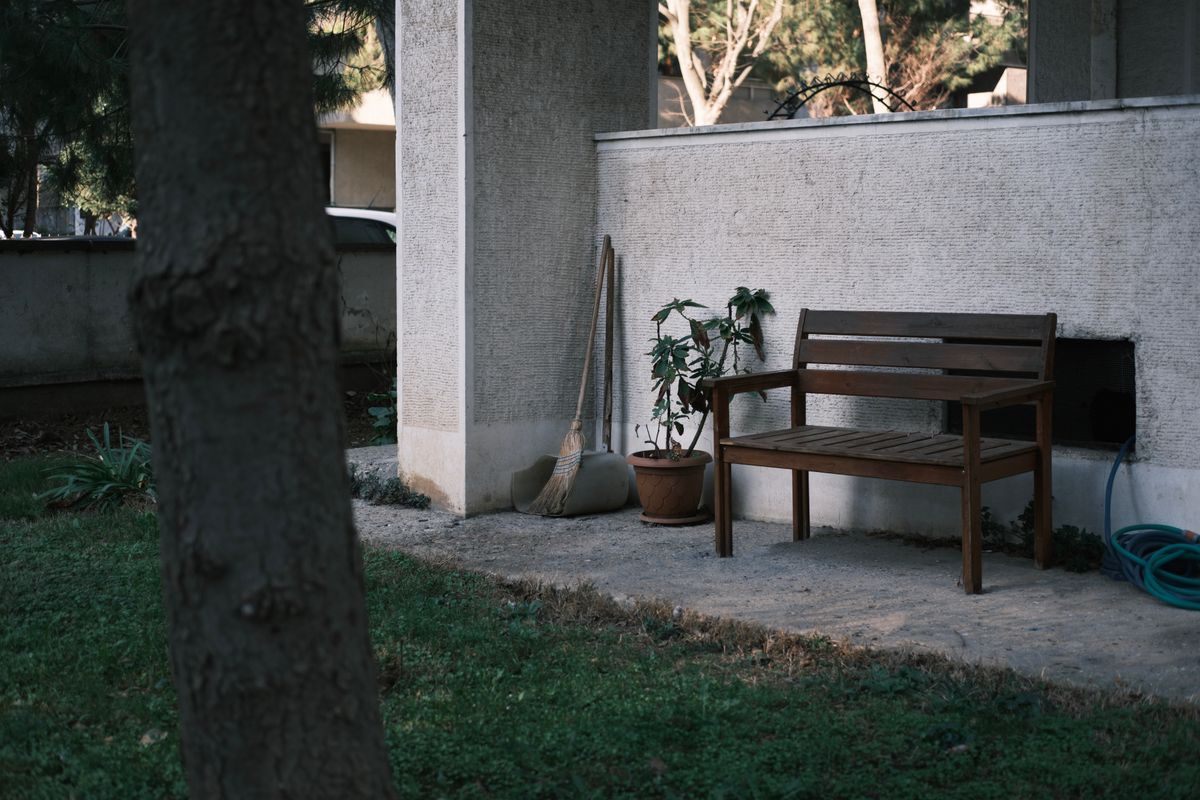
A wooden bench and a potted plant beside a garden wall
The Tree Seat and the Swing
A seat around a tree is the idea every garden romantic wants, and its spec has one non negotiable: clearance. Build the seat ring at least 2 feet out from the trunk of a young tree, more for a fast grower, because the trunk will thicken into the seat and lift it; a tree seat is furniture with a growing landlord. Height and depth follow the standard; the base is a gravel ring, which also serves the tree as mulch. A swing seat, porch swing or a single hanging chair, is the opposite spec problem: the seat is easy and the structure is the project. A swing needs a beam or frame rated for the dynamic load, which is well above the static weight of the sitters, hung with clearance to swing without striking the planting behind it, and it earns its effort only where someone will genuinely sit and swing daily; as a guest seat it is a poor bargain, one or two places at high cost. Both ideas share a shade gift: they live under canopy, which is the seat people choose at noon in August.
The Cafe Set, the Hammock, and the Destination Seat
The cafe set, a small table and two chairs, is the most flexible idea here and the only one that is also a dining room: spec it at a 24 to 30 inch table, chairs at the standard seat height, on a paved or gravel pad of at least 6 by 6 feet so chair legs stay level and the set can be circled. It moves with the seasons and the shade, which no built seat can do. The hammock is seating as an event: two trees or posts 10 to 15 feet apart, hung with a sag that puts the sleeper's lowest point about 18 inches off the ground, and a storage answer for winter, because a hammock left out weathers in two seasons. The destination seat is a placement idea rather than a furniture idea: one seat, often the simplest bench you own, set at the far end of the garden facing back at the house, which creates the walk, the view of your own garden as a composition, and the only seat from which most gardeners ever actually look at the whole of what they have made. Gardens without a destination seat are gardens that are worked in and rarely sat in.
The Placement Audit: Sun, View, Distance
Before any seat is built or bought, run the audit on its spot. Sun path: sit in the proposed place at the hour you will use it, in the season you will use it, and check whether it is in sun or shade then; a seat's brochure hour is always morning and its real hour is usually evening. View: the seat faces the best thing within its sight line, a border, a tree, the long axis of the garden, never the compost corner or the neighbor's bins, and if the view is bad the seat moves, not the garden. Distance: a seat within a few steps of the door gets used daily with a coffee; a seat 50 feet away gets used on purpose, which is the destination seat's job and a failure mode for the everyday bench. Capacity: count your real gatherings, because a garden that hosts eight people twice a summer needs the wall or the lawn's edge, not eight chairs in storage. The checklist above sequences the audit and the build decisions in order, and it is deliberately unglamorous: seating fails on bases, shade, and distance, never on style.
Materials and Their Maintenance Years
Every seating idea above exists in wood, metal, stone, and plastic, and the material choice is a maintenance contract you sign at purchase. Wood, cedar and teak at the honest end, wants an annual wash and, for cedar, either an oil it will drink or the acceptance of silver gray weathering, which is a look, not a failure. Painted wood wants repainting on a 3 to 5 year cycle and fails at the ground contact points first, so feet and pads matter. Metal, powder coated aluminum at the good end, is the lightest maintenance of the set: a wash, an annual check of the coating at the joints, and storage or covers where winters freeze standing water in the frame. Stone and masonry are permanent and permanent is the contract: no maintenance for a decade, and no moving it when the garden changes its mind, which gardens do. The resin and plastic end asks nothing and gives back about five seasons before ultraviolet light makes it brittle. Choose by the years you actually intend to keep the arrangement, not by the photograph: a five year plan in teak is money burned, and a twenty year plan in resin is a replacement schedule disguised as a saving.
Frequently Asked Questions
What is the most comfortable height for a garden seat?
Seventeen to eighteen inches, with a seat depth of 16 to 20 inches. That is the standard behind every idea on this page, from benches to seating walls, and it is the dimension gallery photos never give you. A wall or bench built far off that height looks right and sits wrong.
How many people does a garden bench seat?
A 4 foot bench seats two honestly; a 6 foot bench seats three. For gatherings, the seating wall is the capacity answer: every linear foot of seat height wall with a cap at least 12 inches deep is a guest place, at no cost in floor space.
What should a garden bench stand on?
A level pad of gravel, pavers, or a poured strip. Legs on bare turf or soil sink unevenly and the bench starts rocking within a season. The base is the least photographed and most decisive part of any seating project.
Where is the best place to put garden seating?
Where the audit says: shade at the hour you will actually sit, facing the best view in the garden, and, for the everyday seat, within a few steps of the door. Add one destination seat at the garden's far end facing back, and the garden gains a reason to be walked to and looked at.
Is a garden swing seat worth it?
Only where someone will sit in it daily. The structure must carry a dynamic load well above the sitters' weight, with clearance to swing, which makes it the highest effort per seat on this page. As guest seating it is a poor bargain; as a daily ritual seat it has no rival.
Photo credits: Hồng Thắng Lê (Pexels); Yusuf Çelik (Pexels). Photos are served from this site; follow the credit to the library page for the original.