Most trellis failures are mismatches, not workmanship. A clematis planted against wide flat slats cannot grip them and slides down its own support all summer. A wisteria planted against a decorative panel dismantles it by August of its third year. The trellis question is therefore not which structure is prettiest but which structure the plant's climbing mechanism can actually use, and this page runs the match: the four mechanisms, the grip size each one needs, the weight classes that decide the build, and the heights by crop. The site's trellis building guide owns the construction of a general trellis, and the trellis ideas collection owns the decorative range; this page owns the matching, the decision that comes before either, plant by plant.
Home / Garden Projects and Outdoor Living
Garden Trellis for Climbing Plants: The Mechanism Match, the Grip Size Spec, and the Weight Classes
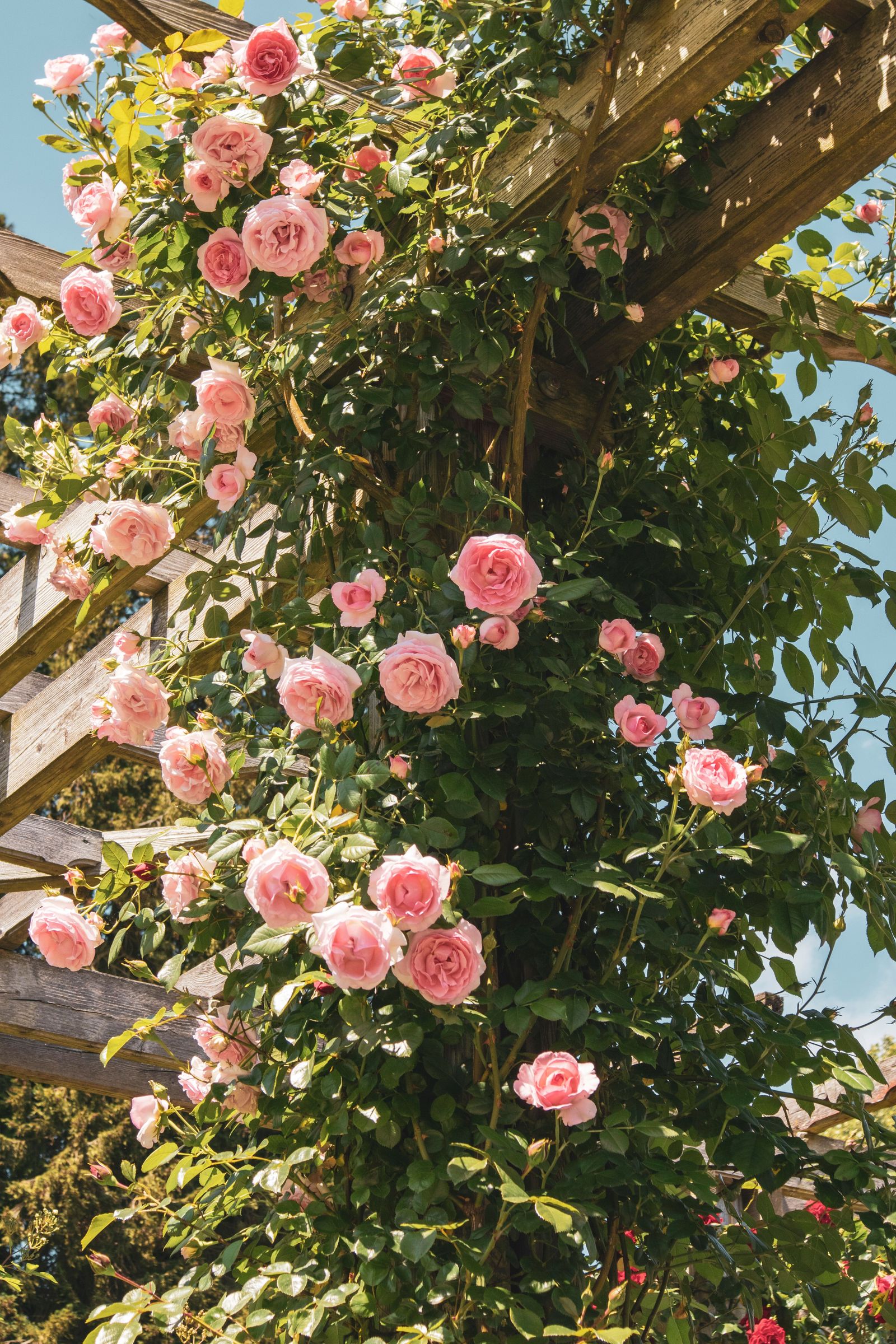
Photo: Roland Pálóczy / Pexels
Climbing Trellis Checklist
Check off each step as you finish it. Your progress stays on this page.
0 of 8 complete
0% done
The Four Mechanisms: How the Plant Actually Climbs
Climbing plants use four distinct tools, and they are not interchangeable. Tendril climbers, peas, sweet peas, clematis, and passionflower, reach out with thin curling tendrils or leaf stalks that wrap anything slender they touch; the grip must be thin enough for a tendril to encircle, which in practice means wire, string, twigs, or mesh with openings of 1 to 2 inches, and a flat 4 inch slat is as unusable to them as a wall. Twining climbers, pole beans, morning glory, hops, and honeysuckle, spiral their whole stem around a support; they need uprights slim enough to circle, poles and canes and vertical wires, and they climb a horizontal lattice poorly because the spiral wants a vertical path. Scramblers, climbing roses and bougainvillea, do not climb at all in the mechanical sense; they grow long canes that lean and hook with thorns, and the gardener supplies the climbing by tying the canes to a frame as they grow. Adhesive climbers, ivy and climbing hydrangea, glue themselves to flat surfaces with rootlets or pads and need no trellis at all, only a wall you are willing to commit. Name the mechanism from the plant tag or the plant's behavior, and the structure shortlist writes itself.
The Grip Size Spec: 1 to 2 Inches for Tendrils
The single most useful number in trellis selection is the tendril grip: mesh openings of 1 to 2 inches, or wire and string of similar scale, for every tendril climber. Pea and bean netting is manufactured at exactly this scale because the tendrils demand it. Clematis is the plant most often failed by ignoring the spec: its leaf stalks wrap like tendrils and need the same thin purchase, so a clematis against a wooden trellis of wide slats needs a netting overlay, a fan of twigs, or a few vertical strings added to the slats before it can climb the handsome structure behind them. Twiners are less fussy about diameter within reason, a pole of 1 to 2 inches suits beans and morning glory, but they share the verticality rule: give a twiner a wide flat panel and it will climb the edges and abandon the middle. Scramblers invert the spec entirely; the frame can be as wide and flat as you like, because your ties do the gripping, and the design variable is tie points, horizontal runs every foot or so where a cane can be fastened. Read the spec off the mechanism, and the garden center's whole trellis aisle sorts into plants it fits and plants it fails.
The Weight Classes: What the Mature Plant Weighs
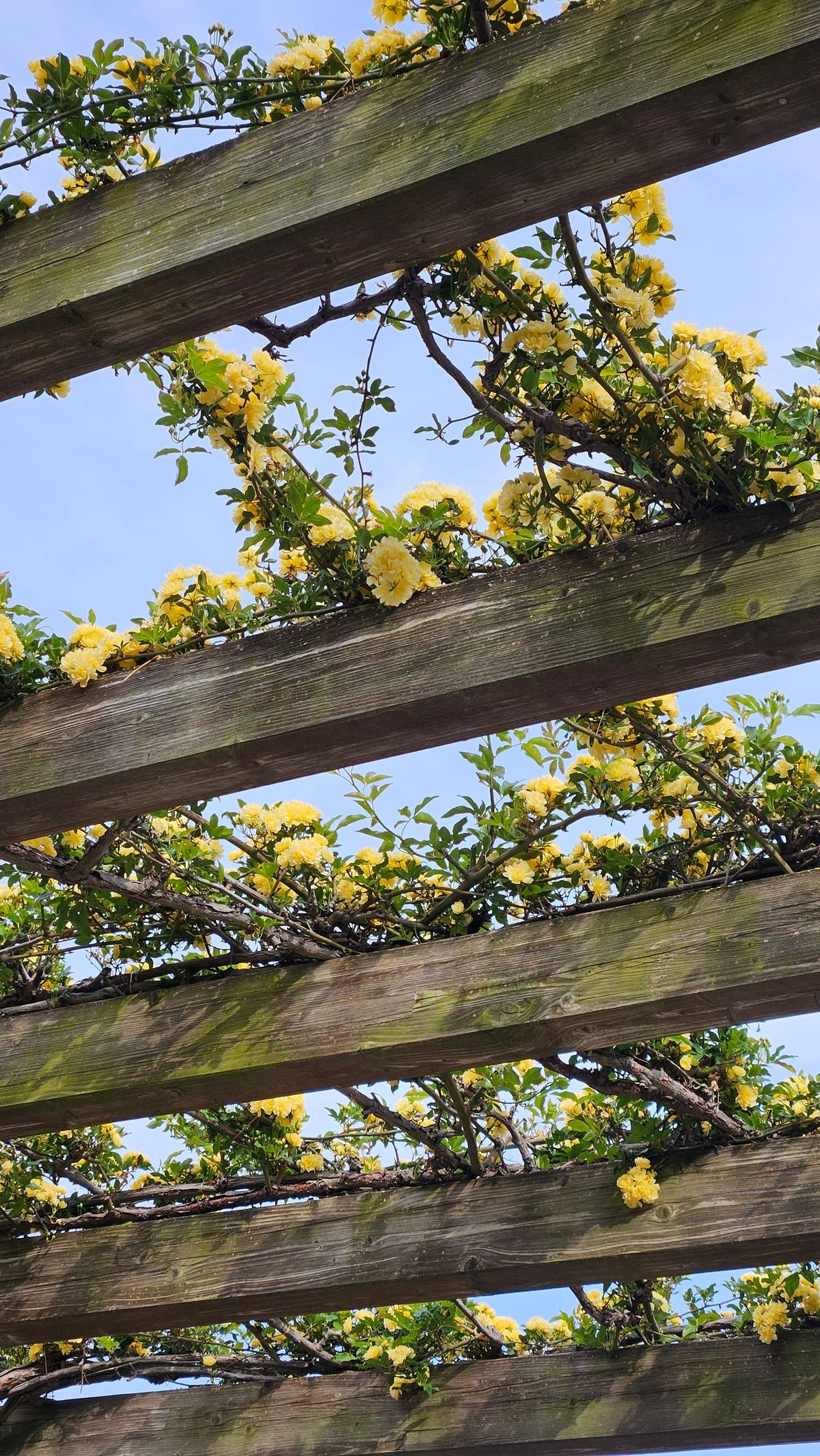
A trellis is a structure, and structures are sized for the mature load, not the transplant. The light class is the annual vegetables and flowers: peas, beans, sweet peas, morning glory, a season of stems and leaves that a net on two stakes carries easily, with the real load being wind on the leaf sail rather than the plant's own weight. The middle class is the perennial herbaceous climbers, clematis and passionflower, cut down or dying back each year, needing a panel that is firmly staked but not engineered. The heavy class is the woody vines, wisteria, grape, and climbing hydrangea, and it plays by construction rules: posts set in the ground, slats and crosspieces that can carry a mature vine's hundreds of pounds plus its wind load, and fixings into a wall that are rated for the pull of a plant that will spend decades trying to expand every joint it touches. A mature wisteria twists with enough force to crush weak lattice and lift light roofing; the decorative panel that charms in the store is a one season answer to a fifty year plant. Price the structure by the class, and the trellis stops being a consumable.
Heights by Crop: The Reach of the Harvest
Height is a harvest decision before it is a design one. Dwarf peas crop on 2 feet of support. Full peas and sweet peas want 5 to 6 feet. Pole beans and clematis run 6 to 8 feet, and the beans in particular should be sized to the picker's reach, because a bean trellis taller than the gardener is a ladder chore at every picking and a guarantee of missed pods going tough at the top. Cucumbers take 4 to 5 feet of panel or an A frame, tomatoes are tied to stakes or cages rather than trellised in the climbing sense, and climbing roses are fanned across whatever width of wall or fence their canes can be spread over, since a rose's display is horizontal as much as vertical. Install the structure before or at planting, always; a support added after the plant has started climbing means untangling growth that has already chosen its path, and tendril climbers in particular cannot be unwound and rewound without damage. Set the posts, tension the net, and plant at the base with the first ties or guides in place while the stems are short and cooperative, then train weekly while the growth is soft, because a stem guided at six inches follows the plan and a stem discovered at three feet has plans of its own.
Materials: What the Structure Is Made Of
The mechanism match chooses the shape; the material chooses the lifespan, and the two decisions are independent. Wood, cedar or treated pine, is the classic panel and post material: warm to look at, easy to cut and fasten ties to, and good for a decade in cedar before the ground line softens. Metal conduit and cattle panels are the utilitarian champions, galvanized steel arcs and grids that tendril and twining plants grip natively at the right scale, lasting decades with no maintenance and reading as farm infrastructure rather than furniture, which suits some gardens and not others. String and net trellises, jute or nylon run between two posts or a frame, are the annual class answer: pennies per season, cut down with the plants in fall, and composted or binned without a storage problem. Bamboo canes sit between, cheap, light, and good for two or three seasons before they split. The honest matching is by class from the section above: light annual climbers on string or canes, middle class perennials on wood or metal, and the heavy woody vines on the strongest material your budget allows, because replacing a failed structure under a mature wisteria is the most miserable job in the trellis world. Buy once for the heavy class; rent cheaply for the light.
Frequently Asked Questions
What kind of trellis do climbing plants need?
The kind that matches their climbing mechanism. Tendril climbers such as peas, sweet peas, and clematis need thin grips, netting or mesh with openings of 1 to 2 inches, or wire and string. Twining plants such as pole beans and morning glory need slim vertical poles or wires to spiral around. Scramblers such as climbing roses need a frame and ties, since they do not grip at all. Heavy woody vines such as wisteria and grape need a genuinely built structure of posts and slats. The plant's mechanism, not the trellis aisle's looks, makes the choice.
Why will my clematis not climb its trellis?
Almost always grip size. Clematis climbs by wrapping its leaf stalks around slender supports, like tendrils, and a wooden trellis with wide flat slats gives it nothing it can encircle. The fix is to add a thin layer to the structure: pea netting, wire mesh with 1 to 2 inch openings, a fan of twiggy branches, or vertical strings tied across the slats. Guide the first stems to the new grips and tie them loosely; once the plant takes hold, it climbs the rest of the season unaided.
How tall should a trellis be for pole beans?
Six to eight feet of structure, sized down to the picker's reach. Pole beans climb to the top of whatever they are given and crop along the whole climb, so the working rule is a trellis as tall as you can pick from comfortably, with 6 feet the common garden answer. Dwarf peas need only 2 feet, full peas and sweet peas 5 to 6 feet, and cucumbers 4 to 5 feet. A bean trellis taller than its picker guarantees tough, missed pods at the top.
Can one trellis design serve every climbing plant?
No, and the attempt is the commonest trellis failure. A wide slatted panel that suits a tied rose defeats a clematis, and a light net that carries peas beautifully would be dismantled by a mature wisteria in a few seasons. What can be shared is the frame: sturdy posts and crossbars can carry a net for tendril plants this year and a panel for a scrambler next. Match the gripping surface and the strength to the plant, and let the posts be the permanent part.
When should a trellis be installed?
Before or at planting, never after the plant has started climbing. Tendrils and twiners choose their path in the first weeks and cannot be unwound without damage, and a structure forced into a grown plant breaks the stems it was meant to support. Set the posts and tension the net first, plant at the base, and guide the young stems to their grips while they are short. A weekly minute of training while growth is soft keeps the plant on the structure all season.
Photo credits: Roland Pálóczy (Pexels); Heidy Lopez Galo (Pexels). Photos are served from this site; follow the credit to the library page for the original.