Trellis advice fails in August, when the structure that looked elegant in May meets the plant at full weight: a cucumber variety is light, a grapevine is a tree in training, and the same decorative panel that charms under clematis folds under wisteria. So this idea bank is sorted the way an experienced grower actually chooses, by climbing mechanism first and mature load second, with the dimensions and anchoring each idea honestly needs. This page is the idea and matching layer of the site's trellis coverage; our trellis building guide owns the construction of the standard garden trellis, and our arch guide owns the walk through arch build. Here the job is choosing: which structure, for which plant, at what size, anchored how, and which popular pairings to avoid because the plant will win. Run the checklist above as the matching audit before anything is bought or dug.
Home / Garden Projects and Outdoor Living
Garden Trellis Ideas: Matched to the Climbing Mechanism, Sized to the Mature Load
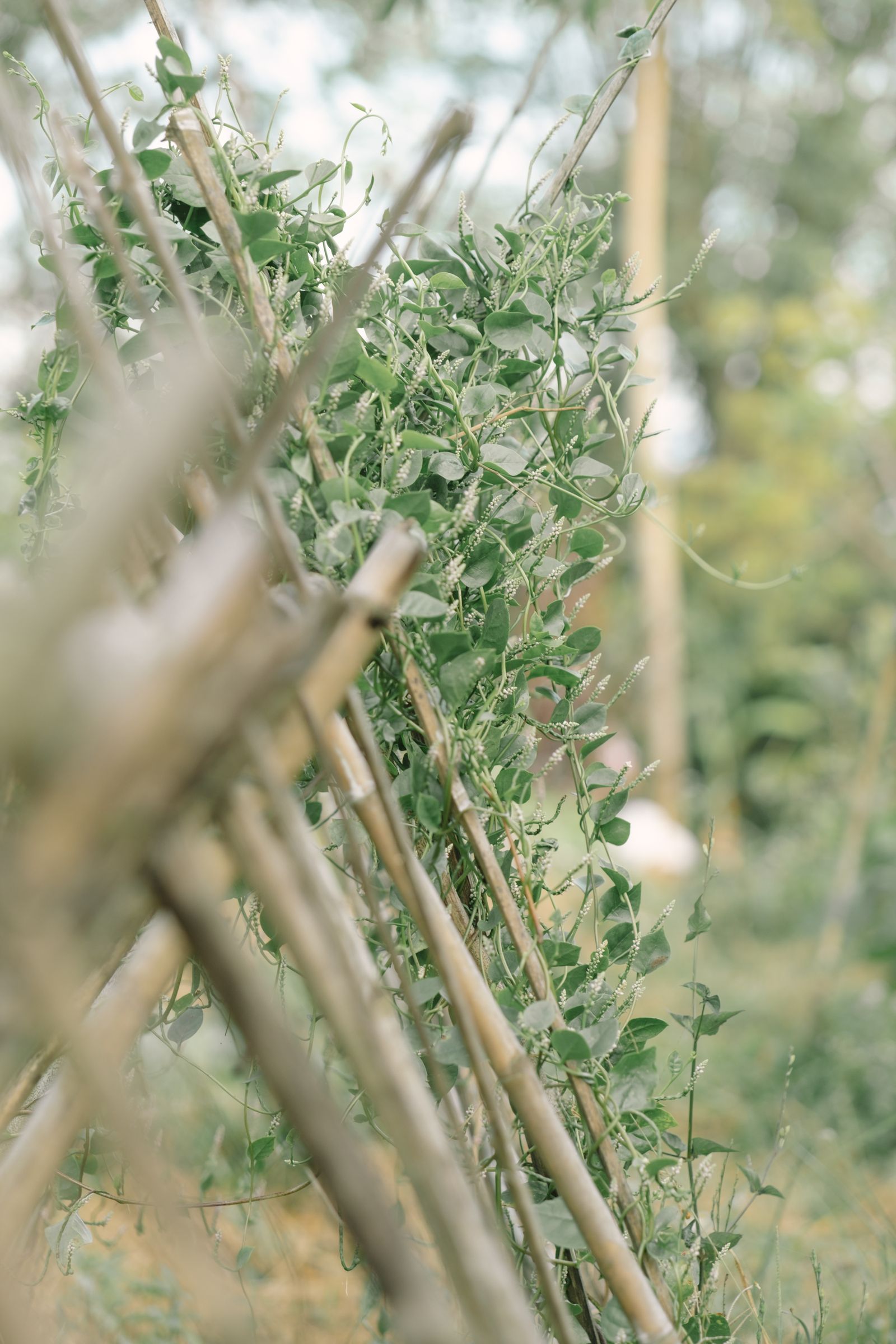
Photo: Pew Nguyen / Pexels
Trellis Ideas Checklist
Check off each step as you finish it. Your progress stays on this page.
0 of 8 complete
0% done
Tendril and Twining Climbers: Netting, String, and the Teepee
The light brigade climbs by tendrils that curl around anything slender or by stems that twine around a support, and it asks for grip, not strength. Peas, pole beans, cucumbers, malabar spinach, and sweet peas all belong here, and the ideas that serve them are the cheapest in the bank. Nylon or jute netting strung between two posts or a frame, mesh around 4 to 6 inches so hands reach through at harvest, is the workhorse: a 5 to 6 foot run of netting carries a full row of peas or beans and comes down in minutes at season's end. String trellises, individual lines dropped from a high bar or a fence top rail, suit tomatoes in the lean and lower system and single cucumber plants, with the honest caveat that jute rots by late season and synthetic twine must be cut out of the compost. The teepee, five to eight poles lashed at the top over a 3 to 4 foot circle, is the idea with a second life: a bean house for children in July, a cucumber tower in a small garden, a sweet pea feature in a flower border, all from the same eight sticks. The load warning for this whole class is wind, not weight; a netting wall in full leaf is a sail, so posts go 18 to 24 inches into the ground and corners get braced in exposed gardens.
Heavy Vines: Cattle Panel Arches and Pergola Grade Timber
The heavy brigade climbs the same way and weighs ten times as much, and it is where trellis ideas go to die prettily. Grapes, wisteria, hardy kiwi, and mature climbing roses in their woody form are not vines on a support; they are permanent woody structures that happen to lean, and a mature wisteria can carry hundreds of pounds and exert leverage that pulls fence panels out of plumb over a few seasons. The idea that has earned its reputation here is the cattle panel arch: a 16 foot livestock panel, 50 inches wide, bent into an arch between two beds or posts and secured with T posts and fasteners, giving a walk under tunnel that carries squash and beans in its first year and grapes for a generation. For wisteria and kiwi the honest idea is pergola grade timber, 6 by 6 posts set in concrete with a real beam structure, built like the small building it is. The avoid list matters as much as the idea list: no decorative metal arch, no lattice panel, no garden center trellis fan survives a mature wisteria, and planting one against a house wall on a light frame is a slow demolition the plant always wins. Match the structure to the plant's tenth year, not its first, and the heavy brigade becomes the garden's permanent architecture instead of its recurring repair.
Roses, Clematis, and the Tie In Class: Lattice, Obelisks, Arches
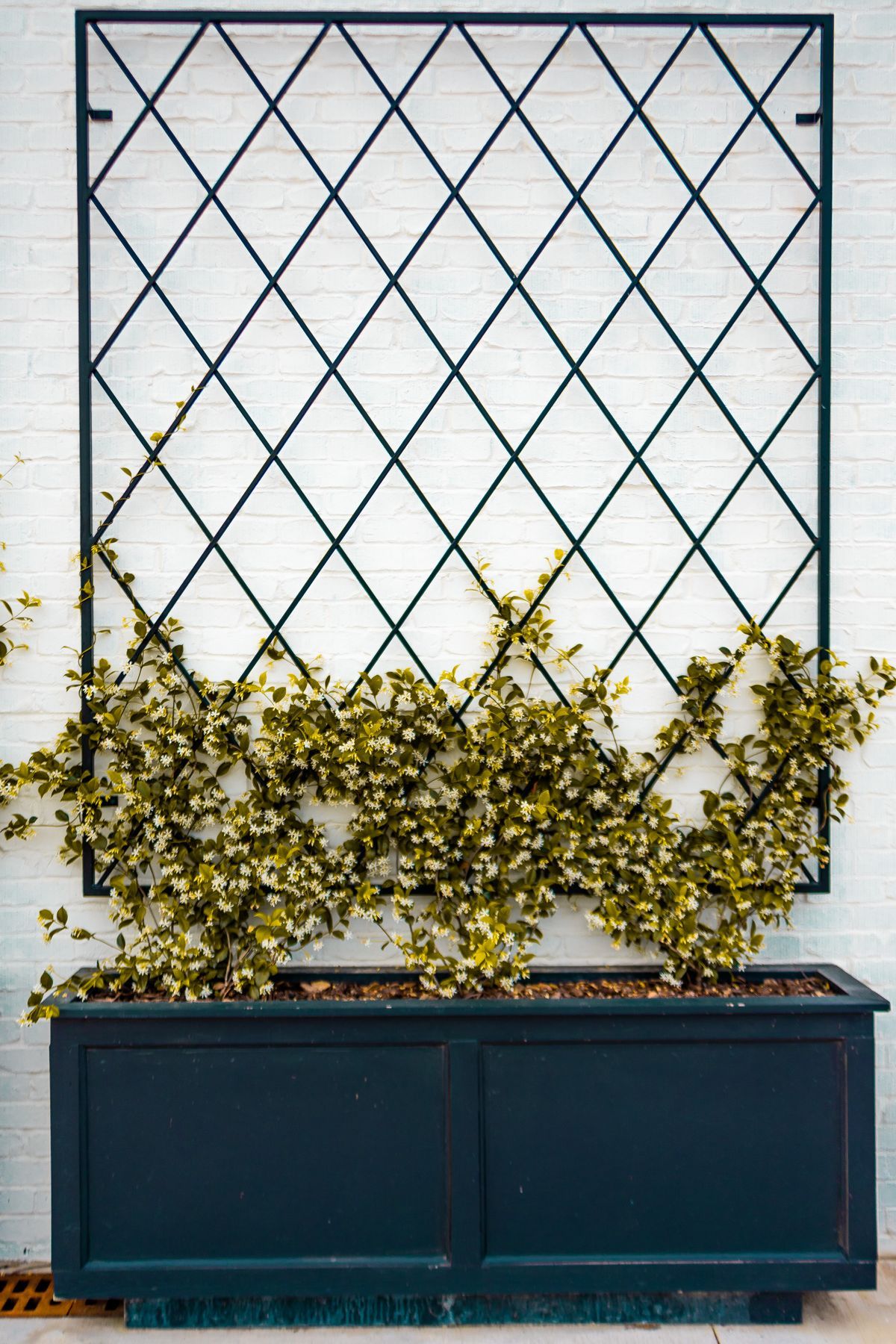
The third class does not truly climb at all. Roses have no tendrils and no twining stems; they lean, scramble, and must be tied in, and clematis climbs by leaf stems that need slender supports to wrap. The ideas that serve them are structures designed to be tied to. Lattice panels, wood or composite, with the frame to hold them rigid, are the wall and fence standard for both, giving clematis its thin laths and roses their tie points every foot. The obelisk is the freestanding idea of the class, a four sided tapering tower 5 to 7 feet tall, set in a border or a large pot, around which a rose is trained in a spiral and up which clematis threads itself; weight for weight it is the strongest small structure in the bank because its geometry is a pyramid. Garden arches serve this class handsomely at rose and clematis loads, with the arch's own build covered in our arch guide, and the pairing rule is one climber per side, planted a foot out from the post, trained in as it grows. The dimensional honesty for this class is width: a climbing rose tied to a 2 foot panel is a traffic problem by year three, so give roses a panel at least as wide as the variety's listed spread, and train the main canes as horizontally as the structure allows, because a rose cane run horizontal flowers along its whole length while a vertical one flowers at the top.
Privacy Screens and Living Walls: The Separate Class
The last class is asked for as a trellis and functions as a fence, and it fails when it is anchored like the former. A privacy screen of trellis and vine, jasmine, hops, annual morning glory for the fast temporary version, or an espaliered screen on posts, presents a solid leaf wall to the wind for its whole height, and its anchoring is fence anchoring: posts at 6 to 8 foot spacing set 24 to 30 inches deep, deeper or concreted in soft soil and windy sites, with rails top and bottom so the panel cannot work loose. The annual version of the idea deserves its own mention because it solves the renter's and the new garden's problem: morning glory, black eyed Susan vine, or hops on netting between two properly set posts gives a green wall in one season that can vanish in fall, at a tenth of the cost of the permanent build. The cautions are honest ones: check local rules before a screen becomes a fence in the eyes of a code, plant the vine a foot from the posts so its roots and the post holes do not fight, and remember that a deciduous screen is private from May to October and architecture from November to April, which for most gardens is exactly the right trade. Choose by mechanism, size by the tenth year, anchor for the wind: a trellis matched that way is an idea that survives its own success.
Frequently Asked Questions
What is the best trellis for climbing vegetables?
For peas, pole beans, and cucumbers, netting is the workhorse: a 5 to 6 foot run of 4 to 6 inch mesh between two posts set 18 to 24 inches deep, cheap, effective, and down in minutes at season's end. A pole teepee over a 3 to 4 foot circle is the best small garden idea and doubles as a children's bean house. These plants climb by tendrils and twining and need grip rather than strength, so the money in a vegetable trellis belongs in the posts and anchoring, not the panel.
What trellis can support a grapevine or wisteria?
A structure built like a small building. The cattle panel arch, a 16 foot panel bent between beds or posts and secured to driven T posts, carries grapes for years and is the best value heavy idea. Wisteria and hardy kiwi want pergola grade timber, 6 by 6 posts set in concrete with real beams. No decorative arch, lattice panel, or garden center trellis survives a mature wisteria, which can weigh hundreds of pounds and pull light structures out of plumb. Size for the plant's tenth year, not its first.
How do climbing roses use a trellis?
They do not climb it; they are tied to it. Roses have no tendrils or twining stems, so the structure's job is to offer tie points: lattice panels, obelisks, and arches all serve, at a width at least equal to the variety's listed spread. Train the main canes as horizontally as the structure allows, spiraling them around an obelisk or fanning them across a panel, because a horizontal cane flowers along its length while a vertical one flowers mainly at the top. Clematis, which climbs by wrapping leaf stems, shares these structures happily and needs only slender laths to grip.
How tall should a garden trellis be?
As tall as the plant and the harvest allow. Peas and beans use 5 to 6 feet of netting, since taller runs cannot be picked without a ladder. Obelisks for roses and clematis run 5 to 7 feet. Cattle panel arches give about 6 feet of walk under clearance at the center. Privacy screens are built to the local fence height rules, typically 6 feet. In every class the anchoring depth matters more than the height: posts 18 to 24 inches deep for light structures, 24 to 30 for screens and heavy vines.
What is a cheap trellis idea that actually works?
The teepee and the string trellis tie for first. Eight poles lashed at the top carry beans, cucumbers, or sweet peas for seasons at near zero cost. Strings dropped from a fence rail or high bar carry individual cucumber and tomato plants for the price of twine, with jute rotting by season's end and synthetic needing removal from the compost. Netting between two sound posts is the third: the recurring lesson of this page is that cheap panels succeed when the posts and anchoring are done properly, and expensive panels fail when they are not.
Photo credits: Pew Nguyen (Pexels); Caleb Oquendo (Pexels). Photos are served from this site; follow the credit to the library page for the original.