The calendar is the worst mowing schedule ever invented, and it is the one most lawns live on. Saturday mowing means the lawn is cut because it is Saturday: too early in a slow, dry week, when the grass barely grew, and too late in a lush spring week, when it grew past the point of a clean cut days before. Grass does not own a calendar. It grows by temperature, water, and season, and the right mowing interval is the one that follows the growth. There is a rule that converts growth into timing, and once you know it, the question in this article's title answers itself every week of the year.
The rule is the one third rule: never remove more than one third of the grass blade in a single mowing. It is the closest thing lawn care has to a law of physiology, taught by every turf program, because cutting deeper scalps the plant, exposes it to stress and weeds, and forces it to spend its reserves regrowing leaf instead of roots. Everything else in this guide, the season tables, the rescue plan, the mower height setting, is this rule applied. Work through the Mowing Routine Checklist on this page to set your mower once and build the measure before you mow habit that replaces the calendar.
Interactive tool
Mowing Routine Checklist
Check off each step as you finish it. Your progress stays on this page.
0 of 6 complete
0% done
The One Third Rule, Turned Into a Schedule
The rule becomes a schedule with one piece of arithmetic. Decide the height you want to keep your lawn, your target height, which your mower's deck setting controls. Then mow whenever the grass reaches about one and a half times that height, because cutting from one and a half down to one removes exactly one third. If your target is 3 inches, you mow at about 4.5 inches. If your target is 2 inches, you mow at about 3.
That is the entire system: measure the grass, not the date. A ruler or even a marked stick pushed into the lawn tells you in five seconds whether today is a mowing day. In peak growth the answer may be twice a week; in a dry summer slowdown it may be not for a fortnight, and the lawn is healthier for both answers than it would be under a rigid weekly cut. Beginners find this liberating within a month: the lawn looks consistently kept instead of cycling between shaggy and scalped, and mowing day becomes a decision the grass makes.
Set the Mower Height Once, Correctly
Your target height depends on your grass type and your climate's stresses, and the general direction of modern turf advice is taller than most people cut. Taller grass shades its own soil, keeping roots cooler, holding moisture, and, most valuably, shading out the weed seeds that need light to germinate. A lawn cut short is a lawn inviting weeds and then billing you for their removal.
Set the deck by measuring what it actually delivers: park the mower on a flat surface and measure from the ground to the blade, because deck markings are approximate and often wrong. Set it once at the start of the season to your target height, and resist lowering it for a tidier look before guests; the one third rule means a lower target also means more frequent mowing to stay legal, forever. Raise the height a notch in the stress of midsummer heat and drought, when taller leaf shades and protects the crowns, and let it come back down when growth resumes in kind weather.
The Season Rhythm: Cool Season Lawns
Cool season grasses, the fescues, bluegrasses, and ryegrasses of northern lawns, grow by a two peak calendar. Their great growth comes in spring and again in fall, when temperatures are mild, and they slow or go semi dormant in summer heat. Mowing follows exactly: in the spring and fall peaks, expect to mow as often as every 4 to 7 days, sometimes more in a wet, mild spring, because the grass is adding height daily and the one third rule keeps arriving. In summer, the interval stretches; you mow when growth justifies it, possibly rarely, and you raise the deck and leave the grass taller to shade its roots through the stress. Winter is rest.
The fall peak deserves emphasis, because it is when beginners abandon the lawn to football and leaves. Fall growth is when a cool season lawn builds the roots and reserves that carry it through winter and green it in spring, and regular, rule abiding mowing through fall, down to the last growth, is some of the most valuable mowing of the year. The final cut of the season can be a touch lower than your target to discourage matted grass under snow, but the one third rule still governs how you get there: in stages, never in one scalping pass.
The Season Rhythm: Warm Season Lawns
Warm season grasses, Bermuda, zoysia, St. Augustine, and their kin in southern lawns, run the opposite calendar. They are dormant and brown or slow through winter, wake as the soil warms in spring, and grow hardest in the heat of summer that stalls northern lawns. Their mowing peak is summer, when fast growth in heat and rain can demand cutting twice a week to respect the one third rule at their typically lower target heights, and their rest is winter, when a dormant lawn needs no mowing at all for months.
The transition seasons are where warm season lawns are won: in spring, begin mowing as growth genuinely starts, not by the calendar, and lower the deck gradually if you are bringing the height down for the season, a third at a time across several cuts. In fall, as growth slows, let the interval stretch naturally and leave the lawn slightly taller going into dormancy, because that leaf is the plant's protection through its winter sleep.
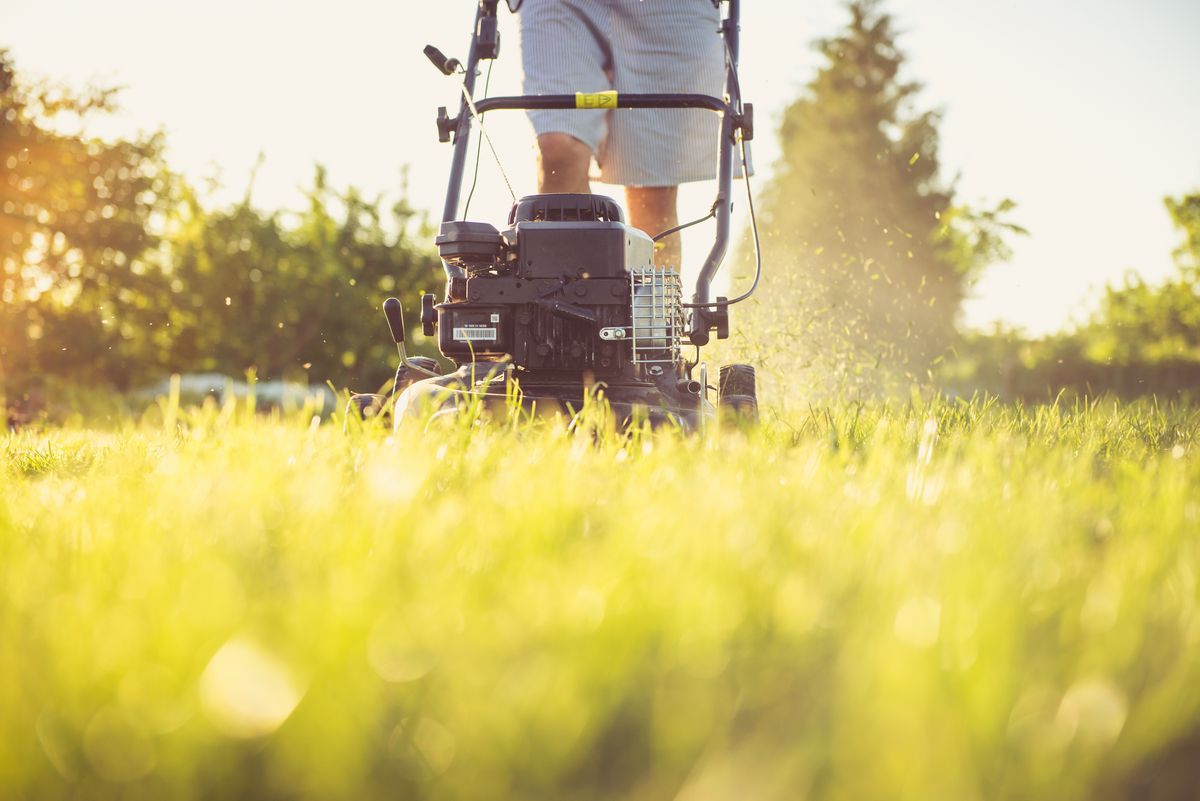
A person mowing a lawn with a mower on a sunny day, cutting by growth rather than by weekday
Wet Grass, Dry Grass, and the Honest Exceptions
Mow when the grass is dry when you can. Wet grass cuts raggedly, clumps and clogs the deck, mats onto the lawn in clumps that smother the grass beneath, and spreads some diseases from plant to plant on the mower's wheels and blade. Morning dew counts as wet; the classic mowing windows are late morning after the dew dries and late afternoon before it returns, with late afternoon kinder in heat waves because the grass gets the cool night to recover before facing sun.
Life does not always cooperate, and a lawn growing fast in a rainy week presents the honest exception: mowing slightly wet grass at the right height beats waiting a week and scalping dry grass, because the one third rule outranks the dry rule. If you must mow wet, take a smaller bite, raise the deck a notch, go slower, and scrape the deck afterward. Rules in this guide are ranked like everything else in a garden: the plant's physiology first, tidiness second.
Clippings: Leave Them
Unless they fall in heavy clumps, leave the clippings where they land. Grass clippings are mostly water and the lawn's own nutrients, and returning them feeds the soil, reduces your fertilizer needs, and saves the bagging labor entirely. The fear that clippings cause thatch is a myth with a long life: thatch is a layer of roots and stems, not clippings, and clippings decompose in days. The exceptions are clumps from mowing an overgrown lawn, which smother the grass beneath and should be raked up or spread, and clippings from a lawn being treated for an active disease outbreak, which are better removed. In the ordinary week, mulch mowing, which chops clippings finely and drops them, is the professional's choice and should be yours.
The Rescue Plan: A Lawn That Got Away
Vacations, rain, and life happen, and every lawn owner eventually faces grass far past the one third limit. The rescue is patience in stages. Raise the deck to its highest setting and take the first cut, removing no more than a third even if the lawn still looks too tall. Wait a few days for the grass to recover, then lower the deck a notch and cut again, and repeat until you are back at target height. Rake up or spread the heavy clippings each round produces.
What never works is the single heroic scalping: one pass from jungle to target. Scalping strips the plant's leaf, shocks it into survival mode, exposes soil to weed seeds and sun, and in summer can kill patches outright. The staged rescue takes a week of short sessions and returns a healthy lawn; the scalping takes one afternoon and returns a problem. If the lawn got away because of a long absence, consider it tuition: next time, a neighbor, a service for one cut, or a pre trip cut at the legal limit keeps you inside the rule.
Sharpen the Blade: The Cut You Cannot See From the Porch
A dull mower blade does not cut grass; it tears it, leaving frayed, whitened tips that lose water, invite disease, and make a lawn look tired no matter how correct its mowing schedule is. From the porch, a torn lawn and a cut lawn differ subtly. From the grass's perspective, they differ entirely. Sharpen the blade whenever the tips of freshly mown grass look shredded rather than sliced, which for most home lawns means at least once a season and more often if you mow over sticks, stones, and sandy soil that sandblast the edge.
A sharp blade also makes the one third rule honest, because a torn plant's effective injury is worse than the height suggests. Keep a spare blade if you can, so sharpening never becomes a reason to skip a needed cut, and treat the blade with the respect due to anything that spins that fast near your hands: mower off, spark plug disconnected on a gas mower, gloves on, every time. It is the only dangerous paragraph in lawn care, and it earns its place by being followed.
Patterns, Edges, and the Finishing Five Minutes
Alternate your mowing direction each session, rows one week, columns the next, diagonals when you feel like it. Grass leans in the direction it is repeatedly mown, and wheel lines compact into ruts over a season; varying the pattern prevents both and is the entire secret behind lawns that look professionally kept. Stripes, where your mower has a roller or you simply mow in straight alternating passes, are the visible byproduct of pattern discipline, not a separate technique.
Finish with the edges. A lawn's neatness is judged at its borders: the line where grass meets path, bed, and fence. A quick pass with a string trimmer or edger after mowing, and a blower or broom to clear clippings off hard surfaces, takes five minutes and changes the lawn's apparent quality more than any other five minutes in the routine. Edge first or edge last is a matter of taste; the professionals argue it both ways. What matters is that the finishing happens, because a mown lawn with ragged edges reads as unfinished in exactly the way an unmown one does.
Frequently Asked Questions
How often should I mow in spring?
As often as the one third rule demands, which for a cool season lawn in peak spring growth is typically every 4 to 7 days, and can be more often in a wet, mild spell. Measure the grass rather than counting days: when it stands about one and a half times your target height, mow. Warm season lawns start their season later, as the soil warms, and reach their peak mowing frequency in summer instead.
What happens if I cut my lawn too short?
Cutting off more than a third of the blade at once, or keeping a lawn scalped short generally, stresses the plant, thins it, exposes soil to light, and invites weeds to germinate in the gaps, while the grass spends its reserves regrowing leaf instead of deepening roots. A short lawn is not a neat lawn for long; it is a lawn advertising vacancies to every weed seed in the neighborhood. Raise the deck and let the one third rule set your schedule.
Should I mow on a fixed day each week?
No. Mow by growth: when the grass reaches about one and a half times your target height, which removes one third of the blade. In fast growth that may be twice a week; in a dry or dormant spell it may be nothing for two weeks or more. A fixed day cuts too late in lush weeks and needlessly in slow ones. The grass is the schedule; a marked stick or ruler is how you read it.
Is it better to bag clippings or leave them?
Leave them, in the ordinary week. Clippings return water and nutrients to the soil, decompose within days, and do not cause thatch, which is a root and stem layer, not a clipping layer. Remove or spread only heavy clumps, such as those from cutting an overgrown lawn, which can smother the grass beneath them. Mulching mowers, which chop clippings fine and drop them in place, are the ideal tool for this.
Can I mow wet grass?
Prefer dry grass: wet grass tears instead of cutting, clogs the deck, and drops clumps that smother the lawn. But the one third rule outranks dryness. In a rainy, fast growing week, mowing slightly wet grass at the correct height does less harm than waiting and scalping later. If you must, raise the deck a notch, take a smaller bite, mow slowly, and clean the deck afterward.
How short should the last mow of the season be?
For cool season lawns, the final cut can be a little lower than your usual target to reduce matted grass under snow, but reach it in stages across the last cuts, never by scalping once. For warm season lawns going dormant, leave the grass slightly taller than its summer height, because that leaf protects the crowns through winter. In both cases the one third rule governs every pass, including the last one of the year.
Photo credits: Magda Ehlers (Pexels); Magic K (Pexels). Photos are served from this site; follow the credit to the library page for the original.