Fresh sod is a carpet of grass with its roots cut off, laid on soil it has not yet gripped, and its watering is the bridge between the delivery truck and a rooted lawn. The shape of the answer is a taper, heavy at the start and lightening week by week, and Louisiana State University guidance carried in the results gives the taper its endpoint: about three weeks for the roots to establish into the soil below. Install day has its own protocol, water running as the rolls go down. Week one keeps the sod and the top of the soil beneath it continuously moist. Week two stretches the interval and deepens the drink. Week three hands the lawn over to the normal rhythm of deep and infrequent, if the corner lift check says the roots have taken. This page runs the taper week by week, with the heat adjustment, the rain rule, and the failure signs at both ends, drowned and dried, because fresh sod can die of either in its first fortnight.
Home / Lawn and Landscape Basics
How Often to Water Fresh Sod: The Install Day Protocol, the Three Week Taper, and the Corner Lift Check
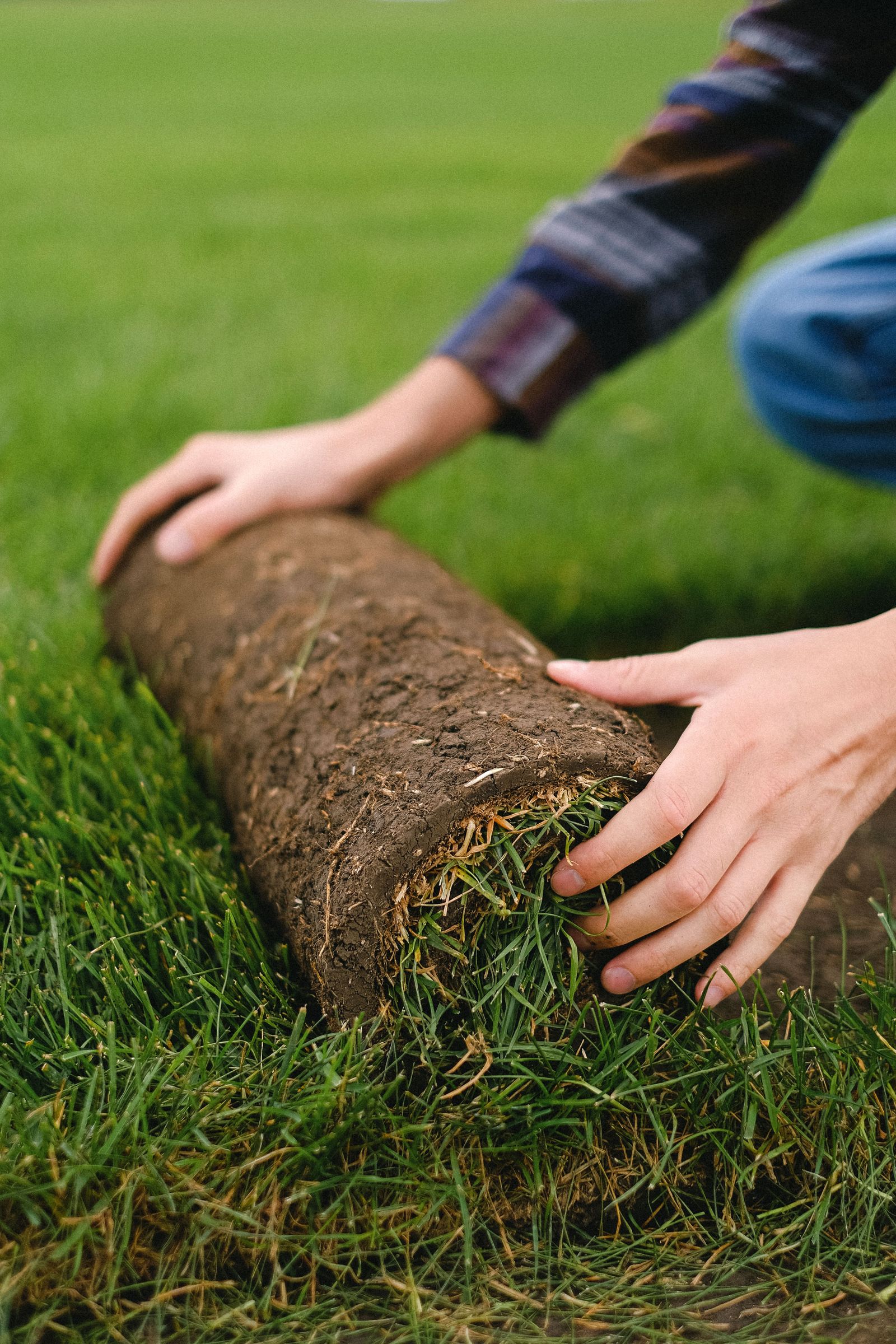
Photo: Anna Shvets / Pexels
Watering Volume Calculator: The Fresh Sod Lawn Audit
Fresh sod drinks on a taper: little and often at first, deep and rare once it roots. Enter your lawn length and width with a depth of 1 inch to size the sessions the taper is built from.
19.9 gallons
For 32 square feet at 1 inch deep. That is about 76 liters, or 10 trips with a standard 2 gallon watering can.
A rain gauge or a straight sided can set in the bed tells you when a sprinkler or soaker hose has actually delivered this depth. Time alone is a guess, because hose pressure varies from house to house.
The conversion is arithmetic, not opinion: one inch over one square foot is 144 cubic inches of water, and a US gallon holds 231 cubic inches, so each square foot at one inch takes 0.62 gallons.
Install Day: Water as You Lay, Soak Within the Half Hour
Sod starts drying the moment it is cut at the farm, and a pallet of rolls sitting in summer sun is already in trouble before it reaches the ground. The install day protocol is therefore about speed. Begin watering each finished section as you lay it rather than waiting for the whole lawn, and have the completed lawn thoroughly soaked within the first half hour of finishing: the sod wet through, and the top inch of soil beneath it wet as well. That first soak settles the rolls against the soil, eliminates the air pockets that dry roots from below, and buys the lawn its first day. Rolls that must wait, a delivery ahead of the crew, stay in shade, unrolled if they will sit for long, and misted; sod that heats in a rolled stack can be dead in the center of the roll within a day in hot weather. The seams deserve a word: butt them tight without overlapping and without stretching, because gaps open as the rolls dry and shrink, and a gapped seam line is a dried seam line, the first place the taper below fails.
Week One: Continuously Moist, in Short Sessions
The first week's law is that the sod never dries out. The roots are stubs sitting on the surface of the soil below, and they live entirely in the moisture of the sod's own soil layer and the top fraction of an inch beneath it, which the sun can dry in hours. Water daily, in short sessions that keep that layer moist without turning the site to mud: once a day in mild weather, two or three times a day in heat or wind, timed for morning and midday rather than evening where you can, though in a heat wave an evening session beats a dried lawn. The check is physical: lift a corner of a roll, and the underside and the soil beneath should both be moist. If the underside is dry, the sessions are too far apart or too short, and the sod will tell you the same thing a day later by curling at the edges and greying. Puddling is the one excess to avoid; the goal is a layer held at sponge moisture, not a swamp that floats the rolls and rots the crowns. Walk the new lawn as little as possible this week, and keep traffic, mowers, and dogs off it entirely.
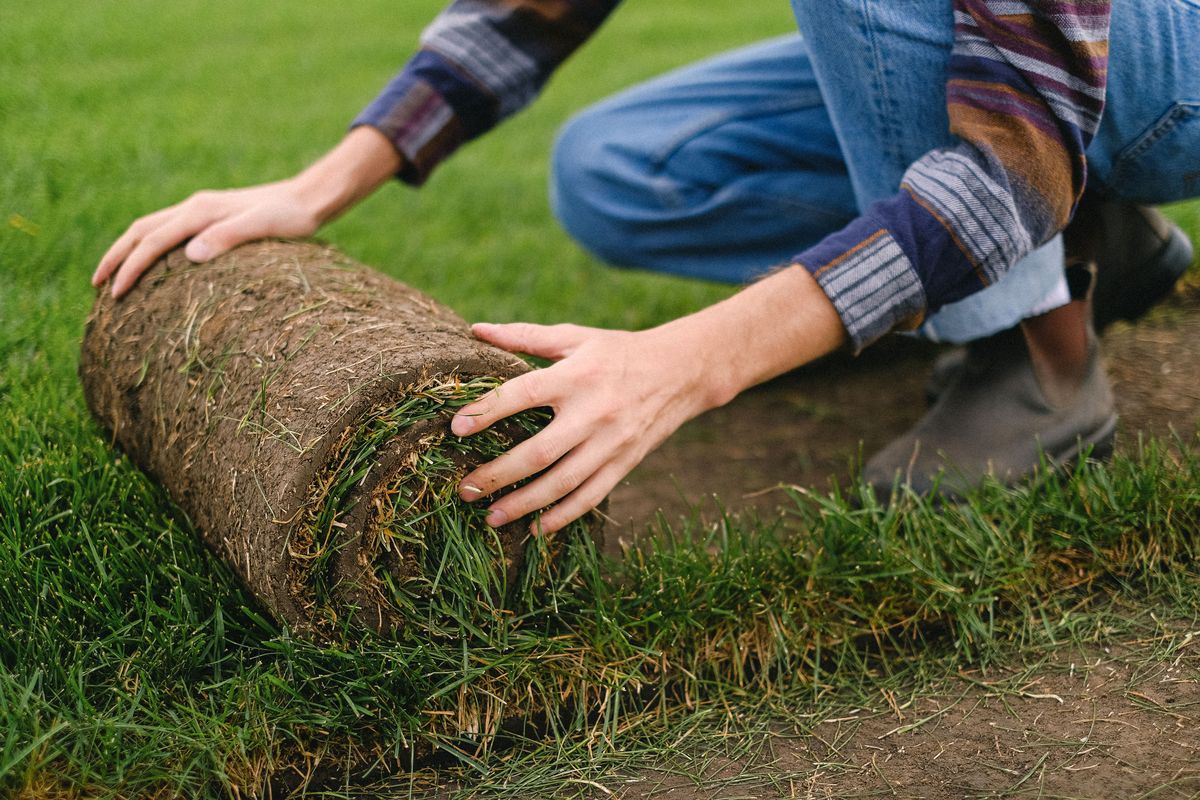
Weeks Two and Three: Stretch the Interval, Deepen the Drink
Week two is where the taper turns. Roots are growing down into the soil, and the watering should invite them down: water every other day, in a longer session that wets the soil an inch or two deep, so the moisture gradient pulls the roots after it. The corner lift check now starts to resist; a roll that lifted freely in week one begins to hold, which is the sound of the taper working. Week three stretches further, a deep soak every two to three days, wetting several inches, and by the end of it, on the Louisiana State timeline of about three weeks, the sod should resist lifting across the lawn and the watering can step down to the normal established rhythm: about an inch a week, deeply, in one or two sessions, the same budget the summer lawn guide on this site runs. Mowing joins the calendar in this window: the first cut when the grass reaches about a third taller than its keeping height, with a sharp blade, on a day the surface is firm, taking no more than the top third. A lawn rushed onto the established budget in week one browns at the seams; a lawn held on the week one rhythm into month two grows shallow roots and fungus. The taper is the treatment, and its timing is the skill.
The Heat Adjustment, the Rain Rule, and the Failure Signs
Weather edits the taper but does not cancel it. In a heat wave, week one sessions go to three a day and week two holds daily watering a few days longer; the taper stretches by days, not by principle. Rain counts when it actually wets the sod layer: a passing shower that dampens the surface is not a session, while a steady half inch is, and the corner check arbitrates. The failure signs read in both directions. Drying sod greys, curls at the edges, shrinks at the seams, and feels crisp; it answers fast if caught, with an immediate deep soak and a tightening of the sessions, and a section that has gone fully brown and crisp for days is usually dead rather than dormant, because sod without roots has no dormancy reserve. Drowning sod yellows, smells sour at the soil line, and grows fungus in the permanently wet layer; it answers to stretched intervals and morning only watering. Footprints that stay pressed into the lawn mean the soil beneath is saturated and the traffic should stop. Read the corner, read the color, and adjust the taper by a day at a time; fresh sod forgives small errors quickly and compounds large ones at the same speed.
Frequently Asked Questions
How often should you water new sod in the first week?
Daily, in short sessions that keep the sod and the soil directly beneath it continuously moist: once a day in mild weather, two or three times a day in heat or wind. The sod's roots are cut stubs living in the moisture of their own thin soil layer, which can dry in hours. Check by lifting a corner; the underside and the soil beneath should both be moist. Install day itself is heavier: water sections as you lay them and soak the finished lawn within the first half hour.
When can I stop watering new sod so often?
On the taper, over about three weeks, which Louisiana State University guidance gives as the rooting timeline. Week one is daily and light. Week two goes to every other day and deeper. Week three stretches to a deep soak every two to three days, and when the sod resists the corner lift check across the lawn, it has rooted and steps down to the established rhythm of about an inch a week. Heat stretches the taper by days; the corner check, not the calendar, gives the final verdict.
How do I know if my new sod is getting enough water?
Lift a corner of a roll. In the first weeks the underside of the sod and the soil beneath it should both be moist at every check. Dry undersides, edges curling, seams opening, and a grey cast to the grass are the thirst signs, answered by an immediate soak and tighter sessions. The opposite failure is just as real: sod that yellows in permanently wet soil, smells sour, or grows fungus is drowning, and its sessions need stretching, not supplementing.
When can I mow new sod for the first time?
In the second or third week, when the grass stands about a third taller than the height you intend to keep, and the sod has rooted enough to resist a gentle corner lift. Use a sharp blade, mow on a firm surface, and take no more than the top third of the grass in the pass. Mowing too early tears unrooted rolls; mowing too late scalps a lawn that grew shaggy. The first cut is also a taper milestone: a lawn ready to mow is a lawn ready for the week three watering rhythm.
Can new sod recover if it turns brown?
It depends on which brown. Sod that dried at the edges and seams but still shows green crowns and moist tissue at the base usually recovers with an immediate deep soak and a return to week one watering for a few days. Sod that has gone fully brown, crisp, and dry through the whole layer for days has usually died, because unrooted sod has no reserves and no dormancy to retreat into. The corner lift check tells you which case you have: living sod is heavy, moist underneath, and smells like soil; dead sod is light, dry, and papery.
Photo credits: Anna Shvets (Pexels); Anna Shvets (Pexels). Photos are served from this site; follow the credit to the library page for the original.