How Often to Water Grass Seed: The Week by Week Taper
By the Windchime Walker editorial team
Photo: Sóc Năng Động / Pexels
New grass seed lives or dies on a schedule, and the schedule is not the lawn schedule. An established lawn drinks deeply once or twice a week; a seedbed must never dry at all, because a germinating seed is a one way process: once the sprout emerges, a single drying out can kill it, and there is no recovery and no second chance inside that seed coat. So the seedbed weeks run on light, frequent water, and then, just as deliberately, taper toward the lawn schedule as roots deepen. Most watering failures with new seed are taper failures: gardeners either drown established seedlings by keeping the seed schedule too long, or parch sprouts by switching to the lawn schedule too early. This page gives the taper week by week, with the figures the extension sources agree on.
The numbers are unusually consistent across sources. Penn State and NC State TurfFiles figures, quoted in our research, put new seed at 2 to 4 waterings a day for 5 to 10 minutes each, keeping the top 1 to 1.5 inches of soil moist, totaling about an eighth to a quarter inch of water a day. The destination is the normal lawn schedule of 1 to 1.5 inches a week in 2 to 3 sessions, reached by about week 5 or 6. The Watering Calculator on this page sizes that established phase for your lawn's area, so the plan ends in gallons, not guesses.
Interactive tool
Watering Volume Calculator: From Seedbed to Lawn
Seedbed weeks run on light, frequent watering. Once the grass is established, the rule becomes about 1 inch a week. Enter your lawn size and a depth of 1 inch to see what that established watering actually is in gallons.
19.9 gallons
For 32 square feet at 1 inch deep. That is about 76 liters, or 10 trips with a standard 2 gallon watering can.
A rain gauge or a straight sided can set in the bed tells you when a sprinkler or soaker hose has actually delivered this depth. Time alone is a guess, because hose pressure varies from house to house.
The conversion is arithmetic, not opinion: one inch over one square foot is 144 cubic inches of water, and a US gallon holds 231 cubic inches, so each square foot at one inch takes 0.62 gallons.
The One Rule Under the Whole Schedule: The Top Inch Never Dries
Every phase below serves one physical fact: the seed and its first roots live in the top 1 to 1.5 inches of soil, and that layer must stay moist, not soaked, until the roots reach deeper. Test it with a finger or a screwdriver pushed into the seedbed: the soil at an inch down should feel like a wrung out sponge at all times during germination. Surface shine is not the test; a bed can glisten at dawn and be dust at the seed's depth by noon on a windy day. Water in the early morning when you can, since midday watering evaporates fastest and evening watering leaves the bed wet overnight, which fungi appreciate. In hot, windy weather, add a session rather than lengthening sessions; the goal is a top inch that never crosses into dry, and frequency, not volume, is what holds it there.
Weeks 1 to 2: Germination, 2 to 4 Light Waterings a Day
From sowing until the green haze appears, water 2 to 4 times a day for 5 to 10 minutes per session, enough to keep the top 1 to 1.5 inches moist without puddling or washing seed into drifts. The daily total lands around an eighth to a quarter inch of water, per the Penn State and NC State TurfFiles figures. Rain counts fully: a quarter inch of rain is the day's work done, and a day of drizzle may cover every session. Germination timing runs 1 to 3 weeks by species, ryegrass in about a week, fescues next, bluegrass last, so a mixed lawn greens unevenly and the schedule holds until the slowest seed you care about is up. Do not walk the bed more than necessary, and keep the straw, if you used it, in place; it is shading the moisture you are paying for.
Weeks 3 to 4: Sprouts Up, Begin the Taper
Once seedlings stand an inch or two tall, their roots are reaching below the surface layer, and the schedule steps down: water once a day, a little deeper, so the moisture front moves to about 2 inches. Miss a day in cool, cloudy weather and nothing is lost; the point of this phase is teaching the roots to chase water downward instead of waiting at the surface for the next sprinkle. If a hot, windy stretch arrives, step back up to twice a day without guilt; the taper is a direction, not a contract, and the top inch rule still governs. This is also the phase where the first mow approaches: when the grass reaches 3 to 4 inches, mow off the top third with a sharp blade, and let the mowing, not the calendar, confirm that the lawn has entered its next stage.
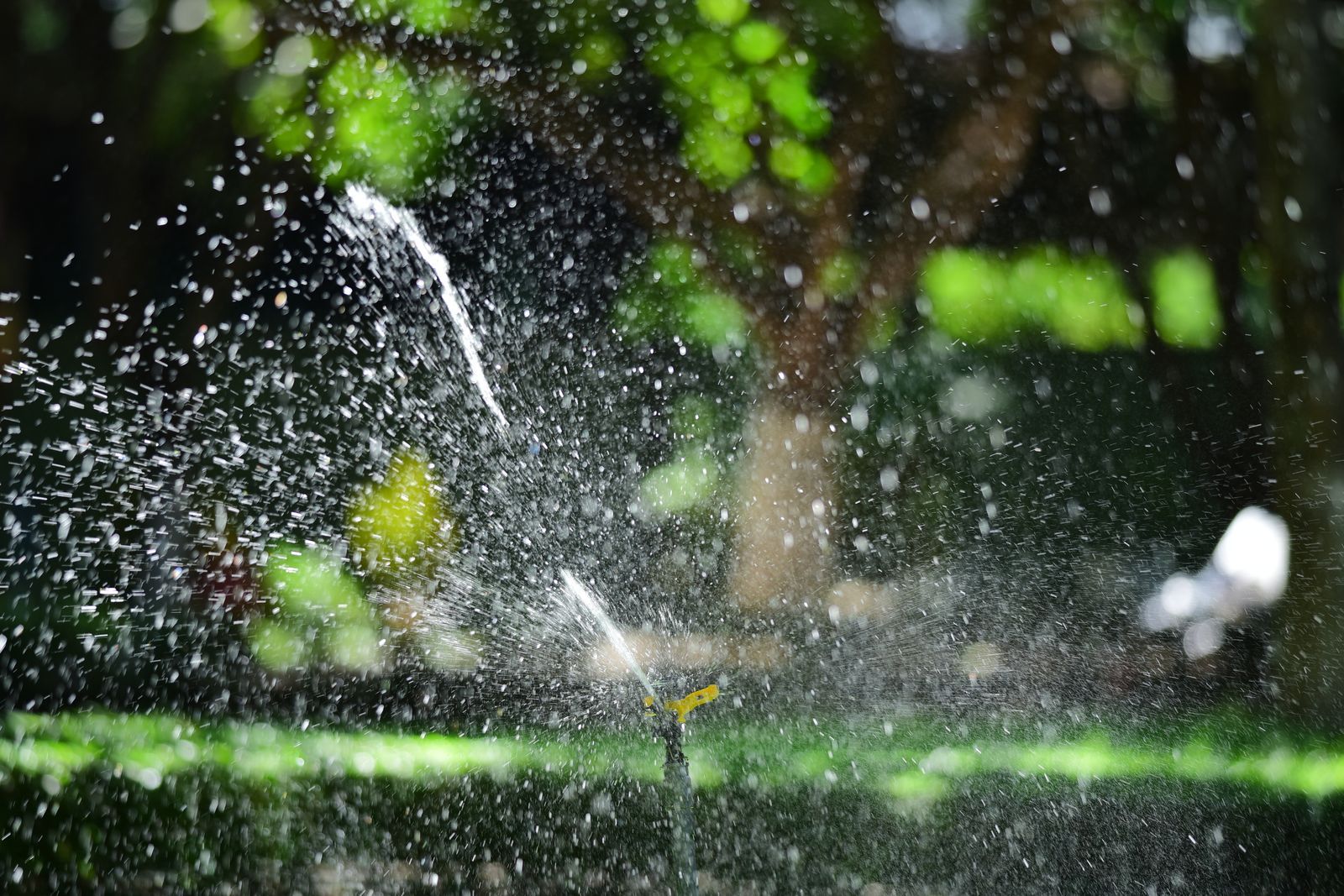
A sprinkler spraying water across a green lawn
Weeks 5 to 6: Every Other Day, Deeper, Reaching the Lawn Schedule
By week 5 or 6, the taper lands: water every other day, then twice a week, each time deeply enough to wet the soil several inches down, arriving at the established lawn's schedule of 1 to 1.5 inches a week in 2 to 3 sessions. The transition matters because the seedbed habits, followed forever, grow a shallow rooted, disease prone lawn that needs daily water to survive, the exact opposite of the goal. A lawn trained down through the taper roots deeply, and a deeply rooted lawn is the one that crosses a dry fortnight unbothered. Use the Watering Calculator on this page to convert your lawn's square footage and your target inches into gallons and sprinkler time, because from here on you are watering a lawn, with a lawn's numbers.
Weather Adjustments and the Two Failure Modes
Adjust for weather by the top inch test, not by hope. Hot, dry wind can double a seedbed's water loss in a day; add a midday session rather than flooding at dawn. A rainy week suspends the schedule entirely; seedbeds drown too, and standing water on a new bed suffocates seed as surely as drought kills it, so in a wet spell your job flips from watering to watching drainage. Cool, cloudy stretches slow evaporation and germination alike, and patience, not extra water, is the response.
The two failure modes, named plainly: drying out during germination, which kills sprouting seed outright and shows up as a bed that greens in the sprinkler's overlap zones and stays bare at the edges, a watering pattern printed in grass; and overwatering past the sprout stage, which keeps roots at the surface, invites damping off and fungus, and shows up as seedlings that yellow and melt in patches. The first is fixed by frequency, the second by the taper. Between them runs the narrow, well marked path of the top inch test, checked with a finger, morning and evening, for the first two weeks. Six weeks of that attention buys a lawn that needs almost none. That is the trade this whole schedule offers, and it is a good one.
Setting Up Watering You Can Actually Keep
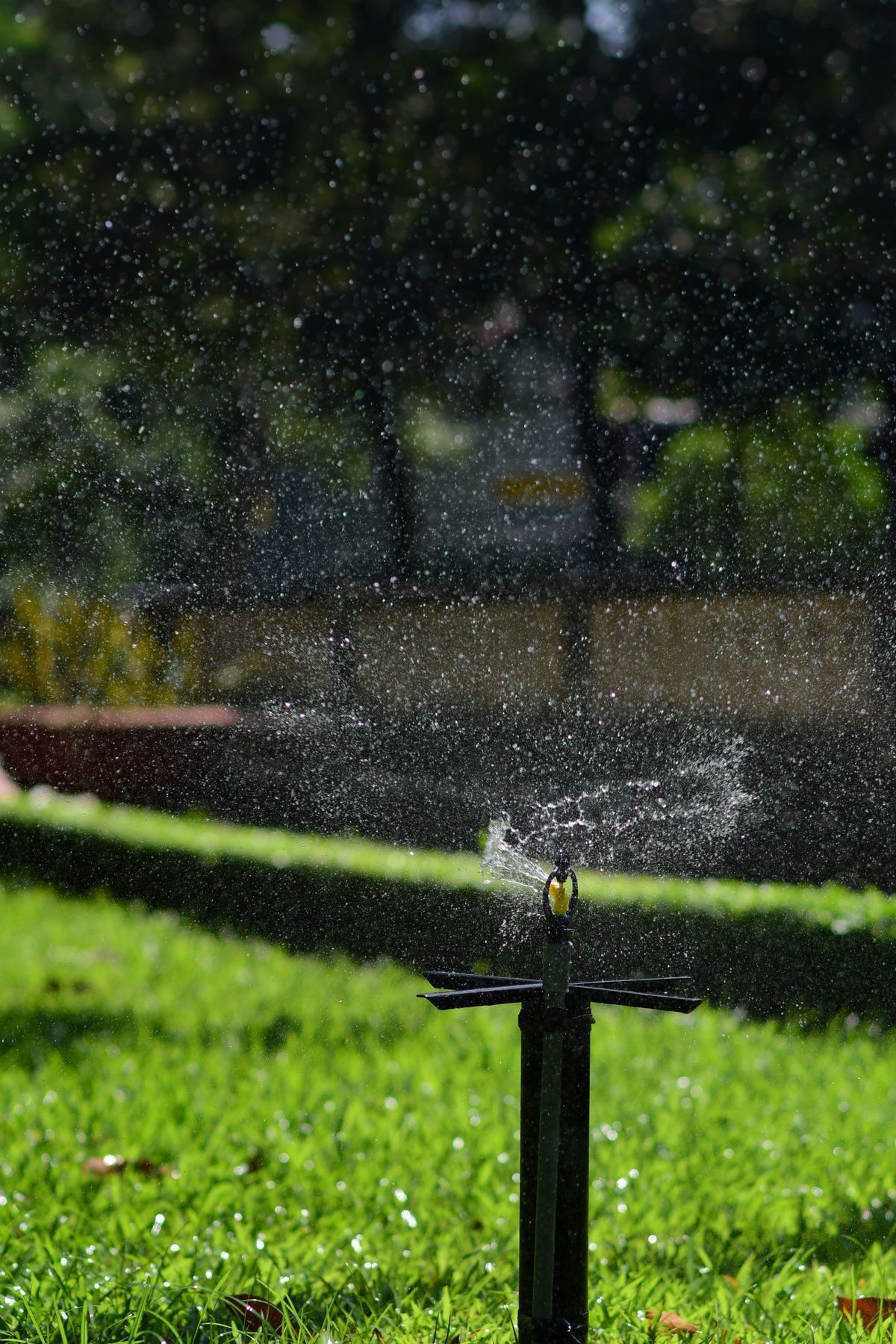
A schedule is only as good as the hardware delivering it, and seedbed watering fails most often at the sprinkler, not the intention. Choose a sprinkler whose pattern matches the bed's shape: an oscillating sprinkler for rectangles, a rotating or impact sprinkler for larger squares, and a simple soaker or gentle fan for small patches, because a seedbed wants rain, not a jet; any stream strong enough to move soil is strong enough to move seed, and the drifts it creates germinate as stripes. Place the sprinkler so its throw overlaps itself slightly at the bed's edges, since the dry fringe at a pattern's edge is where patchy germination is born, and test the setup before sowing, running it and walking the bed with the finger test at the corners.
Then measure the rate, once, with a row of straight sided cans across the bed: run the sprinkler for a set time, read the depth in the cans, and you know how many minutes deliver your eighth to a quarter inch. That single measurement converts every session in this article's schedule from a guess into a number, and it reveals the unevenness no eye can see, cans at the pattern's edge holding half the water of cans at its center. Timers earn their keep in this phase more than any other in gardening: a simple hose timer set for the morning sessions holds the schedule through workdays and weekends away, and a seedbed's two weeks of germination is precisely the fortnight a household cannot guarantee by hand. Between the measured rate, the matched sprinkler, and the timer, the schedule in this page becomes something the yard does for you, which is the difference between a plan and a hope.
Watering by Species: Why the Bed Greens Unevenly
A mixed seed bag germinates as a sequence, not an event, and knowing the order prevents two weeks of unnecessary worry. Perennial ryegrass is the sprinter, up in about a week, and it is included in many mixes partly as a nurse crop, holding the soil and shading the bed while the slower species wake. The fescues follow, germinating over the second week. Kentucky bluegrass is the marathoner, taking up to three weeks or a little more, and its seedlings are small and slow for weeks after that, which alarms beginners into reseeding over a lawn that is actually arriving on schedule. Keep the top inch moist until the slowest species you care about has germinated, and judge the bed at week four, not week one.
Warm season seed runs its own order on a warmer clock: Bermuda grass seed germinates in roughly one to two weeks in genuinely warm soil and grows fast once up, which is why its window opens in late spring, when the soil can hold that warmth. In all cases, the species sequence explains the patchwork look of a young lawn: the ryegrass zones and the bluegrass zones are the same bed at different speeds. The taper in this article is timed to the bed as a whole, beginning when the main stand is up and growing, and the late species catch the same deepening schedule as their roots reach down. Patience, measured moisture, and a refusal to reseed a bed that is merely young: those close the watering story, and by the second month the lawn joins the ordinary schedule of the established garden, needing this page no longer.
Frequently Asked Questions
How often should I water new grass seed?
During germination, 2 to 4 times a day for 5 to 10 minutes each session, keeping the top 1 to 1.5 inches of soil continuously moist, about an eighth to a quarter inch of water a day, per Penn State and NC State TurfFiles figures. The seedbed must never dry out; a germinating seed that dries mid sprout dies.
When do I reduce watering on new grass seed?
Begin tapering once seedlings stand an inch or two tall, around weeks 3 to 4: water once a day, a little deeper. By weeks 5 to 6, move to every other day and then twice a week, deeply, reaching the normal lawn schedule of 1 to 1.5 inches a week in 2 to 3 sessions. Following the seed schedule too long grows shallow roots and invites disease.
How much water does an established lawn need each week?
About 1 to 1.5 inches a week from rain and watering combined, given in 2 to 3 deep sessions, early in the morning. Use the watering calculator on this page to turn your lawn's area and target depth into gallons and sprinkler run time, since sprinklers deliver less than they appear to.
What is the best time of day to water grass seed?
Early morning is best: evaporation is low and the bed dries at the surface as the day warms, discouraging fungus. Midday watering evaporates fastest, and in hot, windy weather an extra midday session is still worthwhile to keep the top inch moist. Evening watering leaves the seedbed wet all night, which fungi prefer.
Can grass seed dry out for one day and still grow?
Before germination, a dry day merely pauses the process. After the sprout emerges, drying out can kill the seedling outright, because the young root cannot reach deeper moisture and the sprout cannot retreat into the seed. This is why the top 1 to 1.5 inches must stay moist through the whole germination window, 1 to 3 weeks depending on species.
Why is my new grass coming up in patches?
The commonest cause is uneven moisture: the bed greens where sprinkler coverage overlaps and stays bare where the top inch dried. Check the pattern against your sprinkler's throw, adjust coverage or add a session in the dry zones, and keep the schedule until the slowest species, often bluegrass at up to 3 weeks, has germinated. Thin spots that remain can be overseeded in the next prime window.
Photo credits: Sóc Năng Động (Pexels); Sóc Năng Động (Pexels). Photos are served from this site; follow the credit to the library page for the original.