A Japanese maple's watering answer depends on a question most guides never ask: how long has this tree been in the ground? A maple in its first year, with a root ball the size of a bucket trying to become a root system, drinks on a schedule three times as demanding as the same tree established, whose roots have colonized the surrounding soil. Blur those two cases, as most of the results do, and you get advice that drowns new trees on an established rhythm or bakes old ones on a new tree's neglect. The tree itself is shallow rooted, with fine roots concentrated near the surface under its canopy, which is why mulch is not decoration for this species but a watering tool. This page separates the cases: the first year gallon schedule, the established weekly rhythm with its depth check, the pot clock, and the leaf scorch diagnosis that separates thirst from wind and sun, because the same crisped leaf edge reports all three and the fixes differ. The in summer variant of this question folds into this page; summer is the stress case the whole system is built around.
Home / Lawn and Landscape Basics
How Often to Water a Japanese Maple: The First Year Schedule and the Established Rhythm
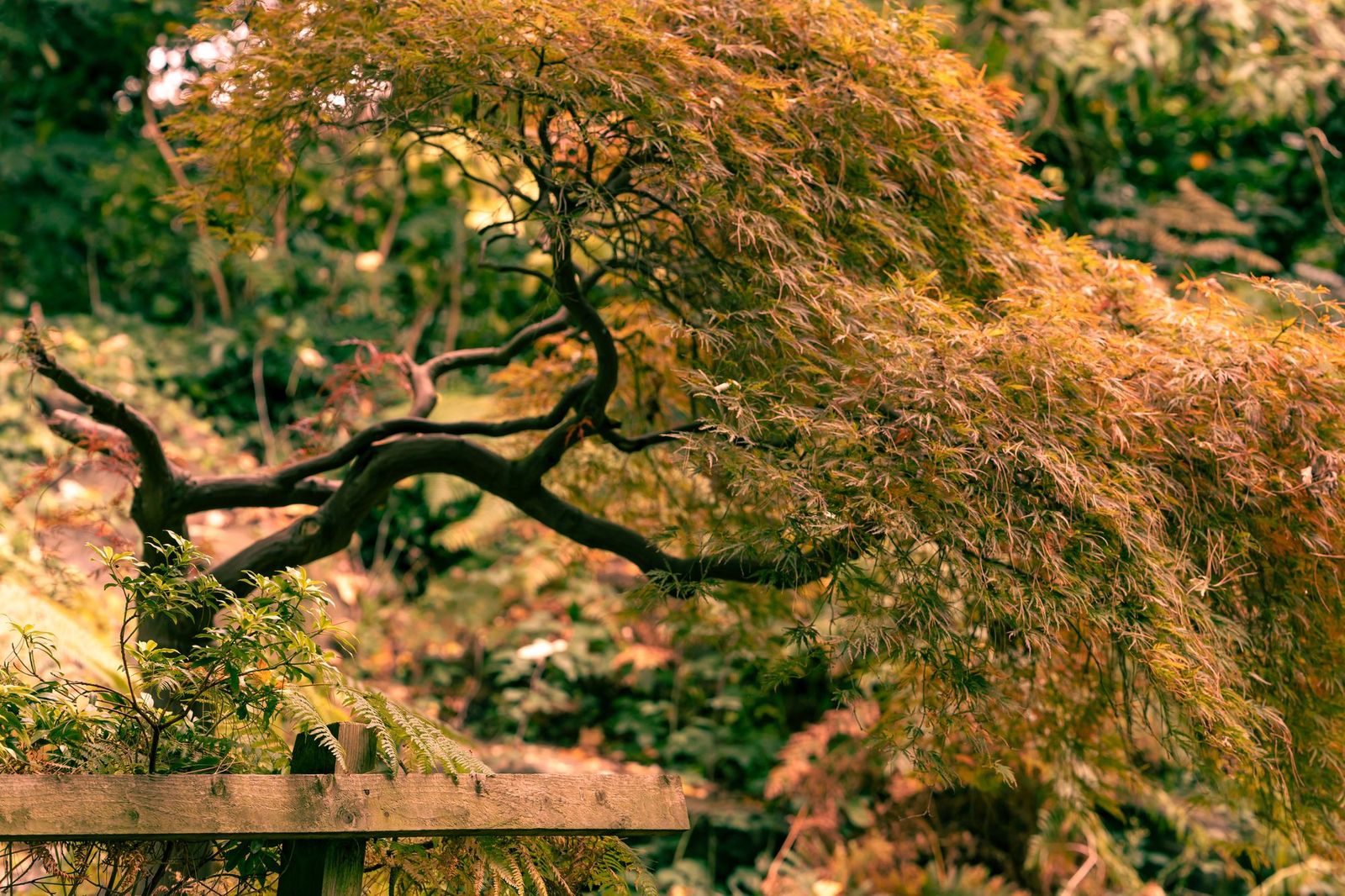
Photo: Karl Byron / Pexels
Watering Volume Calculator: The Japanese Maple Water Audit
A Japanese maple is shallow rooted, and its first year drinks about three times what an established tree needs. Enter the mulched root zone length and width with a depth of 1 inch to size one deep watering.
19.9 gallons
For 32 square feet at 1 inch deep. That is about 76 liters, or 10 trips with a standard 2 gallon watering can.
A rain gauge or a straight sided can set in the bed tells you when a sprinkler or soaker hose has actually delivered this depth. Time alone is a guess, because hose pressure varies from house to house.
The conversion is arithmetic, not opinion: one inch over one square foot is 144 cubic inches of water, and a US gallon holds 231 cubic inches, so each square foot at one inch takes 0.62 gallons.
The First Year: A Gallon Schedule
The detailed guide in the results gives the first year the structure it deserves, and this page adopts its shape. Week 1 after planting: water daily, 5 to 10 gallons a time, keeping the root ball itself moist while it is still a separate object inside your soil, because a root ball can dry out inside a damp bed, the gap between the two soils shedding water around it. Weeks 2 to 4: every 2 to 3 days, same deep drink, as roots begin leaving the ball. The rest of the first season: weekly, deep, with young trees in the guides running 10 to 15 gallons a week in the absence of rain. Deliver it slowly, a hose on a trickle at the trunk's drip zone or a soaker ring, so the water soaks the root zone 6 to 8 inches down instead of running off the surface. The calculator above sizes a 1 inch drink for the mulched root zone you enter; for a first year tree, think in gallons delivered to the ball, not inches over the bed, because the ball is the whole world the tree currently lives in. Rain counts when it is real rain; a summer shower that wets the mulch has not watered a root ball 8 inches down, and the depth check below is how you know.
Established Trees: The Weekly Inch and the Depth Check
An established Japanese maple, in the ground two or more years and growing steadily, runs on about 1 inch of water a week in summer, from rain or from you. The check is depth: push a finger or a probe 2 to 3 inches into the soil under the canopy, and water when that layer is dry, soaking until the root zone is moist 6 to 8 inches down. In decent soil with a mulch layer, that is one deep watering a week in dry weather, and none in a week of real rain. The established tree's enemies are the two extremes its shallow roots cannot escape: the lawn sprinkler pattern, a daily shallow wetting that keeps roots at the surface and the tree dependent, and the forgotten month in a drought, which this thin barked, fine leaved tree reports as scorched edges and early fall color in July. Deep and weekly trains the roots down and out; the tree that gets it becomes noticeably more drought tolerant by its third year, which is the whole arc of this page: the schedule is a training program, and graduation is a tree that mostly waters itself from the soil it has colonized.
Mulch: The Interval Stretcher
Every interval on this page assumes mulch, and without it every interval shortens. A Japanese maple's fine roots live in the top inches of soil, exactly where sun and wind strip moisture first, so 2 to 3 inches of bark or leaf mulch over the root zone, kept a few inches away from the trunk itself, is the difference between watering weekly and watering twice a week through a hot spell. Mulch also ends the mower and trimmer wounds that ring so many young maples, a care benefit disguised as a watering one. Replenish it as it thins, and never pile it against the trunk in a volcano, which holds moisture against bark that wants to be dry and invites the rot the watering system is trying to avoid. Growers sometimes ask whether the tree can simply be planted in the lawn and share its water; the lawn's shallow, frequent rhythm is close to the opposite of the deep weekly drink this tree wants, and the maple in the lawn is the one that scorches. Give the tree its own mulched circle and its own schedule.
Pots, and the Leaf Scorch Diagnosis
A Japanese maple in a container lives on the pot clock: in summer, water 3 to 4 times a week, checked daily, because the root zone is a few gallons of mix in the wind. Pot maples scorch faster, dry faster, and forgive less, and their winter risk inverts, a frozen root ball in a pot being far colder than roots in the ground. Now the diagnosis the whole page exists for. Leaf scorch, the browning and crisping of leaf edges and the tissue between veins, has three common authors. Thirst scorch comes with dry soil at the check, affects the whole canopy fairly evenly, and answers a deep watering within days as new growth comes clean. Wind scorch works the windward side hardest, often after a single hot dry blow, on soil that checks moist. Sun scorch works the exposed upper and southern leaves of a tree whose roots are compromised, newly planted, pot bound, or root damaged, and it persists no matter how much you water, because the roots cannot move the water the leaves are losing. Read the pattern before you pour: even and dry is water; one sided is wind; top down on a wet tree is roots, and the answer is shade cloth, patience, and mulch, not a flood that rots the roots you have left. Age, mulch, and that diagnosis: run them in order and the maple's water is a solved problem.
Frequently Asked Questions
How often should I water a newly planted Japanese maple?
On the first year schedule, which is three times the established rhythm. Daily for the first week, 5 to 10 gallons at a time, keeping the root ball itself moist; every 2 to 3 days through weeks 2 to 4; then weekly and deep for the rest of the first season, with young trees running 10 to 15 gallons a week when rain fails. Deliver it slowly so it soaks the root zone 6 to 8 inches down. The common error is watering the bed and missing the ball: a root ball can be dry inside damp soil, so check at the ball, not beside it.
How often does an established Japanese maple need water?
About 1 inch a week in summer, from rain or irrigation, delivered deep. Check the soil 2 to 3 inches down under the canopy and water when that layer is dry, soaking until the root zone is moist 6 to 8 inches deep. With a good mulch layer that works out to one deep watering a week in dry weather and none in a week of real rain. Avoid the lawn sprinkler pattern of daily shallow wetting, which keeps this shallow rooted tree's roots at the surface and makes it more drought fragile, not less.
Why are the edges of my Japanese maple's leaves brown and crispy?
That is leaf scorch, and it has three authors to separate before you act. Thirst: the soil checks dry, the whole canopy is affected fairly evenly, and a deep watering fixes the cause. Wind: the windward side is hit hardest, often after one hot dry day, on soil that checks moist. Roots: the top and sun side scorch on a tree that is newly planted, pot bound, or root damaged, and watering does not help because the roots cannot move water fast enough; that tree needs mulch, temporary shade, and time. Pouring more water on the second and third cases makes them worse, not better.
How often should I water a Japanese maple in a pot?
In summer, 3 to 4 times a week, checked daily. A container holds a few gallons of mix exposed to wind on all sides, so the root zone swings dry far faster than the ground ever does, and pot maples scorch quickly when the check is skipped. Water thoroughly to drainage, keep the pot mulched, and give afternoon shade in extreme heat if the pot can move. In winter the pot's risk inverts: the root ball freezes harder than ground roots, so shelter the pot in the coldest snaps and water sparingly when the mix thaws dry.
Does a Japanese maple need more water in summer?
Summer is the stress case, and the in summer version of this question is answered by the same system: the first year tree holds its gallon schedule through the heat, the established tree holds its weekly inch with the depth check run more often in heat waves, and the potted tree may need its 3 to 4 weekly drinks plus a daily check. What summer changes is the checking frequency and the cost of a miss, not the method. Mulch is the summer lever: a mulched root zone can double the interval, and it is cheaper than the water it saves.
Photo credits: Karl Byron (Pexels); Suzy Hazelwood (Pexels). Photos are served from this site; follow the credit to the library page for the original.