How Often to Water Lawn: Deep Soakings, Calibrated by Cans
By the Windchime Walker editorial team
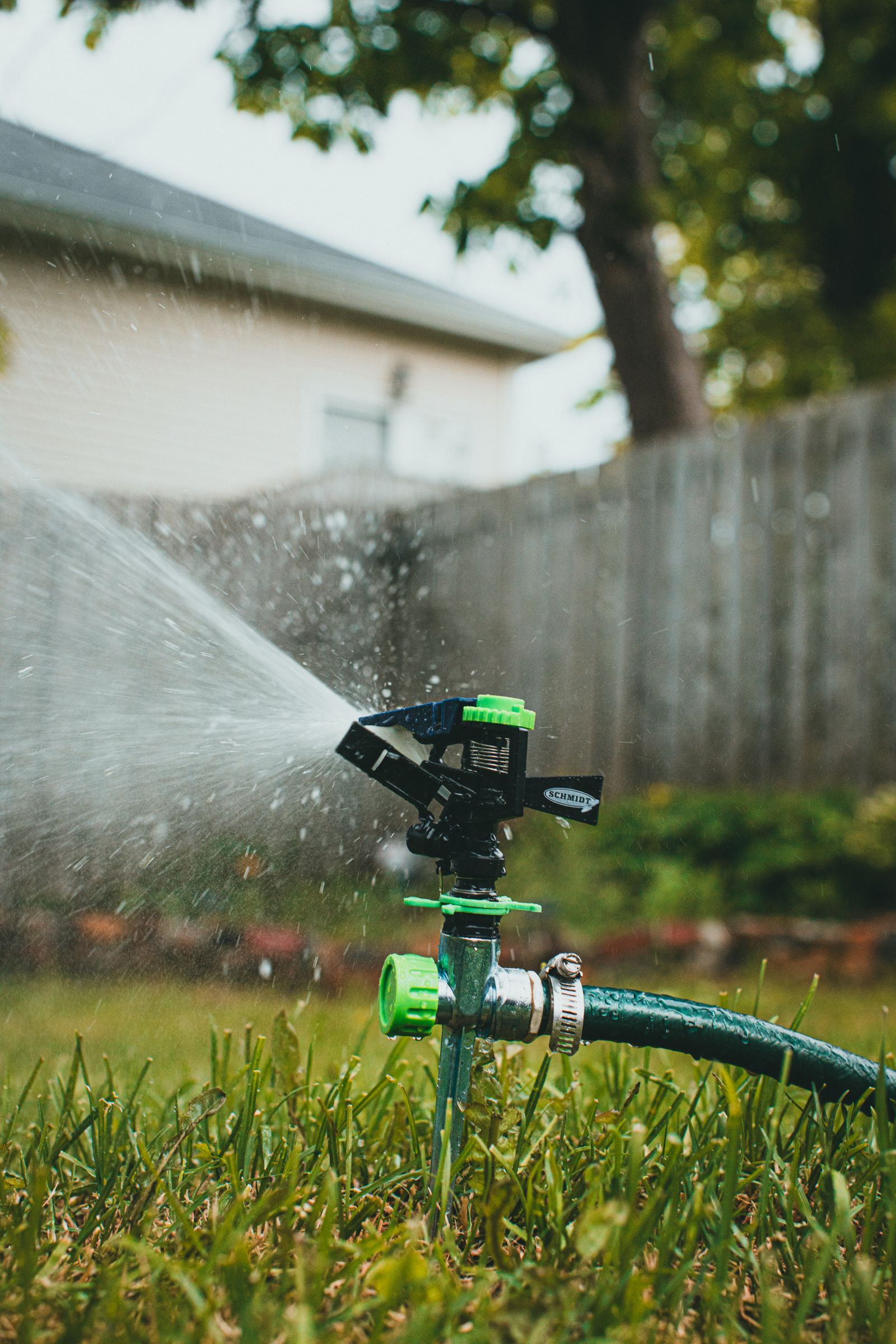
Photo: Jonathan Cooper / Pexels
How often to water a lawn is a question with a trap in it, because frequency is the least important variable and the one everyone asks about. What a lawn actually runs on is depth: how much water arrives in a session, and how far down it soaks. A lawn watered a little every day and a lawn watered deeply twice a week can receive the same weekly total and be different ecosystems by August, one shallow rooted and full of crabgrass, the other deep rooted and still green in a dry spell. This guide gives you the depth numbers, the session rhythm that delivers them, and the five minute test that tells you what your own sprinkler actually does, which is the piece of information almost no lawn owner has and every lawn decision needs.
The headline figure, from the University of Illinois Extension, is 1 to 1.5 inches of water per week for a cool season lawn, rain included. That range, delivered in two or three deep sessions, is the whole program for an established lawn. Everything below is how to hit it with your equipment, in your yard, and how to know you did.
The Watering Volume Calculator on this page converts the inches into gallons for your lawn's actual size, which is a sobering and useful number: an inch of water on 1,000 square feet is about 623 gallons. Enter your lawn's dimensions and the depth you aim for, and you will know what a proper watering costs and delivers, which tends to end both the daily sprinkle habit and the guilt about the water bill in a single reading.
Interactive tool
Watering Volume Calculator: Your Lawn in Gallons
A lawn wants about an inch of water a week, counting rain. Enter your lawn's length and width below and a depth of 1 inch to see how many gallons one full watering is, then split it across two or three deep sessions.
19.9 gallons
For 32 square feet at 1 inch deep. That is about 76 liters, or 10 trips with a standard 2 gallon watering can.
A rain gauge or a straight sided can set in the bed tells you when a sprinkler or soaker hose has actually delivered this depth. Time alone is a guess, because hose pressure varies from house to house.
The conversion is arithmetic, not opinion: one inch over one square foot is 144 cubic inches of water, and a US gallon holds 231 cubic inches, so each square foot at one inch takes 0.62 gallons.
The Depth Rule: Soak 6 to 8 Inches, Then Wait
Kansas State University's turf guidance gives the target under the ground: water until the soil is moistened 6 to 8 inches deep. That depth is where a healthy lawn's roots live, and watering to it, then waiting until the lawn needs it again, trains roots downward. Deep roots are drought insurance the plant builds itself; a root system in the top inch of soil experiences every hot afternoon as an emergency, while roots at 6 inches live in a cooler, moister world that changes slowly.
The waiting matters as much as the soaking. Let the surface dry between sessions. Roots grow toward moisture and air both, and soil that is perpetually wet at the top grows shallow roots, fungal disease, and the light and warmth at the surface that crabgrass seed needs to germinate. The rhythm for most established cool season lawns in summer lands at two or three sessions a week, fewer in cool or rainy weeks, and the lawn itself signals the timing: grass that needs water turns a dull blue green, holds footprints instead of springing back, and folds its blades along the midrib. Water when those signs appear, deeply, and you are watering on the plant's schedule rather than the calendar's.
The Can Test: Calibrate Your Sprinkler in Fifteen Minutes
No guide can tell you how long to run your sprinkler, because sprinklers differ wildly in output and most lawns receive water unevenly. The can test replaces guessing with your number. Set out several straight sided cans, empty tuna or cat food cans are the classic, at different distances within one sprinkler's throw. Run the sprinkler for 15 minutes. Measure the water depth in each can with a ruler. That is your sprinkler's rate: if the cans hold a quarter inch after 15 minutes, delivering a half inch session takes 30 minutes, and a full inch takes an hour. If the cans differ greatly, near cans deep and far cans shallow, your coverage is uneven and the far zones are why parts of the lawn struggle; overlapping sprinkler patterns or a second position for a movable sprinkler is the fix.
Repeat the test for each zone or sprinkler type you own, write the minutes per half inch on a note by the controller or the spigot, and the question of how long to water is answered permanently, for your equipment, in your water pressure. Recheck once a season; nozzles clog and pressure changes. Fifteen minutes of measurement replaces a summer of folklore, and it is the single most valuable quarter hour in lawn care.
When to Run It: Morning, and Why the Alternatives Lose
Water in the early morning, ideally finishing before 10 a.m., as Illinois Extension recommends. Morning watering loses the least to evaporation and wind, which pick up through the day, and it leaves the grass blades drying quickly in the rising sun. Evening watering is the seductive alternative, cool and calm, and it is the disease shift: blades that stay wet all night are an open invitation to the fungal diseases that spot and melt summer lawns. Midday watering wastes the most to the sun and wind, though it harms nothing but the water bill, and on a genuinely scorching day a light midday sprinkle can cool a stressed lawn without pretending to water it.
New seed and new sod break the morning rule in their own way, which is the next section's subject. For established turf, morning, deeply, two or three times a week, is the answer that extension services keep giving because it keeps being right.
Rain Counts: Keep a Gauge and a Simple Log
Every figure in this guide says including rain, and almost nobody knows how much rain their lawn actually received. Rain gauges cost a few dollars, and a straight sided jar or can in an open spot does the same job for free: read it after every storm, empty it, and write the number on the calendar by the door. The log changes behavior within a month. A week of dramatic thunderstorms often totals a third of an inch, far less than the theater suggested, while one quiet overnight rain can deliver the lawn's entire weekly inch and cancel two sprinkler sessions you would otherwise have run.
The log also settles arguments with the calendar. Watering on a fixed schedule through a rainy month is how lawns get fungal disease in June; skipping sessions because the gauge says the sky already paid is not laziness, it is the program working as designed. Pair the gauge with the can test numbers from earlier in this guide and you own the complete picture: what your sprinkler delivers per quarter hour, what the sky delivered this week, and what the lawn still needs from you, which is the only watering question there ever was.
The Exception: New Seed Wants the Opposite
Everything above is for established lawns, and a newly seeded lawn inverts all of it. Grass seed must stay moist to germinate, and a seedling's roots are a quarter inch long, living in the surface layer that deep watering abandons to dryness. New seed therefore wants light, frequent watering, enough to keep the top layer of soil constantly moist, sometimes two or three brief sessions a day in warm weather, until the grass is up and growing. As the seedlings establish over their first weeks, stretch the intervals and deepen the sessions gradually, walking the young lawn from the seedling rhythm to the adult one. New sod sits between the two: watered heavily at laying, kept moist beneath the slabs until roots knit into the soil, then moved onto the deep rhythm.
This exception is why lawn advice sounds contradictory. The neighbor watering daily is not wrong if his lawn is three weeks old, and you are not wrong watering twice a week if yours is three years old. The lawn's age sets the rules, and the transition between them, over the first season, is the part nobody writes on the seed bag.
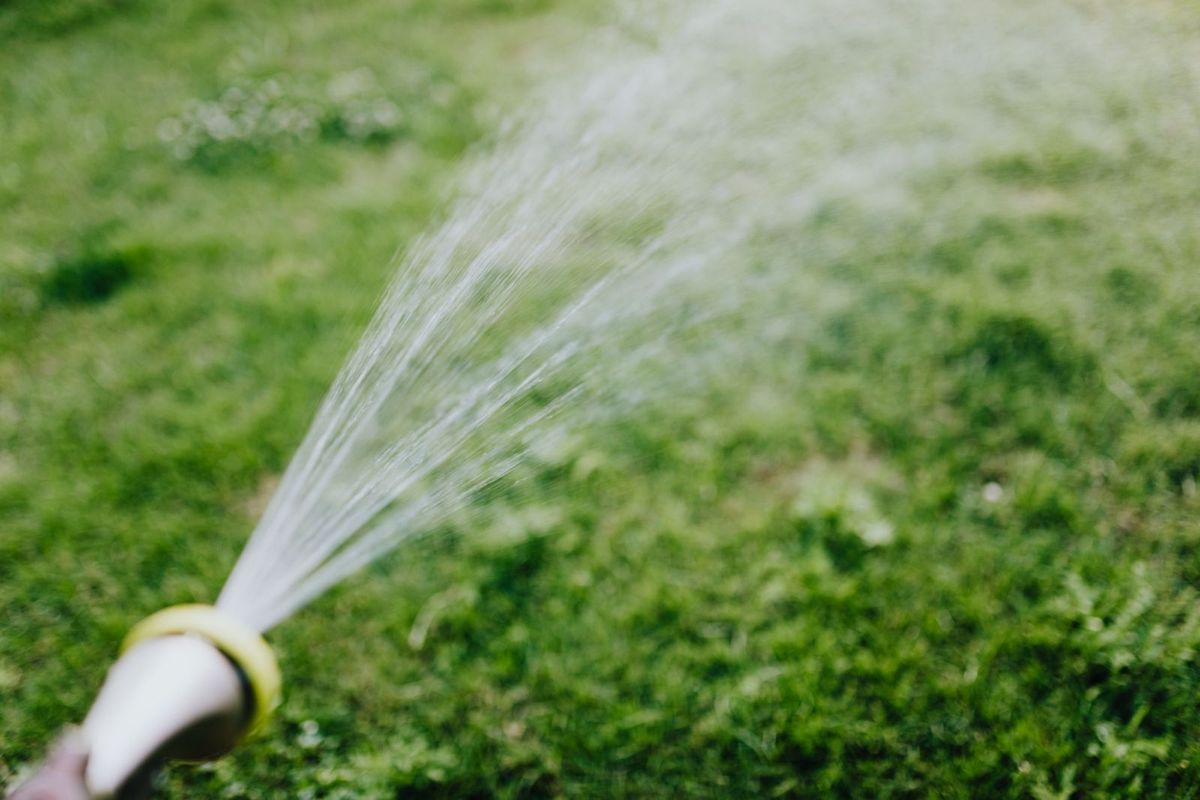
A garden hose spraying water onto a lush green lawn
Slopes, Edges, and the Spots the Average Forgets
The weekly average hides the lawn's problem children, and a good watering plan names them. Slopes shed water: a sprinkler session that soaks a flat lawn to 6 inches may run off a slope in minutes and soak it to one. The fix is cycle and soak, running the sprinkler in shorter bursts with rest periods between them, so each burst absorbs before the next arrives; the total minutes stay the same, only their arrangement changes, and the slope finally drinks what the flat lawn was getting all along.
Edges dry first, along driveways, sidewalks, and south facing walls, where reflected heat and thin soil conspire. These strips will show drought stress a week before the lawn's interior, and they are best treated as their own small zone: a few extra minutes from a hose or a moved sprinkler, rather than overwatering the whole lawn to rescue a border. Tree roots are the third thief: a lawn under a mature tree shares its water with a root system built over decades, and that lawn may honestly need the top of the 1 to 1.5 inch range while the open lawn thrives at the bottom. Judge each zone by its own signs, the dull color and the lingering footprint, and let the can test, run in the problem spot rather than the convenient one, set its minutes.
Dry Spells, Dormancy, and the Honest Choice
In a real drought, a cool season lawn faces a fork, and both branches are legitimate. Water it through, at the full 1 to 1.5 inches a week, and it stays green and growing at the price of the water bill. Or let it go dormant: cool season grasses evolved to brown and rest through dry summers and green up again when rain returns, provided the crowns stay alive, which takes only about a quarter inch of water every two or three weeks in most conditions. Dormancy is not death, and a brown lawn in August that greens in September is a plant strategy, not a failure.
The branch to avoid is the middle one: watering just enough, irregularly, to keep the lawn half awake and shallow rooted, the worst of both worlds at nearly the full price. Choose green or choose dormant, water deeply or barely, and the lawn will be fine either way. It is indecision, delivered through a sprinkler, that thins a lawn.
Frequently Asked Questions
How many inches of water does a lawn need per week?
For an established cool season lawn, 1 to 1.5 inches per week including rain, per the University of Illinois Extension. Deliver it in two or three deep sessions rather than daily sprinkles, soaking the soil 6 to 8 inches deep as Kansas State University guidance specifies, then letting the surface dry between sessions so roots grow downward instead of living at the surface.
How long should I run my sprinkler to get an inch of water?
Only the can test can tell you, because sprinkler output varies enormously. Set out straight sided cans in the sprinkler's pattern, run it 15 minutes, and measure the depth: that is your rate. If 15 minutes gives a quarter inch, an inch takes an hour. Write the minutes per half inch by your spigot or controller and recheck once a season.
What is the best time of day to water a lawn?
Early morning, finishing before about 10 a.m. Morning loses the least water to sun and wind, and the grass dries quickly as the day warms. Evening watering leaves blades wet all night, which invites fungal disease. Midday watering is wasteful but harmless to the grass itself.
Should I water my lawn every day?
No, not an established lawn. Daily light watering keeps only the surface moist, which trains shallow roots, weakens the grass in heat, and creates the warm wet surface that crabgrass seed and fungal diseases want. Two or three deep soakings a week are better in every way. The exception is newly seeded lawn, which needs the surface kept constantly moist with light, frequent watering until the grass establishes.
How do I know when my lawn needs water?
The lawn tells you: the color dulls to a blue green, footprints stay visible instead of the grass springing back, and blades fold along their centers to conserve moisture. Water deeply when those signs appear rather than on a fixed calendar. In cool or rainy weeks the signs may not appear at all, and skipping sessions the lawn does not need is correct care, not neglect.
Is a brown lawn in summer dead?
Usually not. Cool season grasses go dormant in drought, browning and resting while their crowns stay alive, and they green up when rain returns. About a quarter inch of water every two or three weeks keeps the crowns alive through dormancy. The damaging strategy is the middle one, watering irregularly just enough to keep the lawn half awake and shallow rooted. Choose to water it through properly, or let it rest.
Photo credits: Jonathan Cooper (Pexels); Kaboompics (Pexels). Photos are served from this site; follow the credit to the library page for the original.