A newly seeded lawn on bare soil is the most water dependent planting in the garden, and the least forgiving. The seed lies on or in the top half inch of a prepared seedbed with no canopy, no mulch of living grass, and no roots, exposed to every hour of sun and wind. NC State Extension's TurfFiles program, the authority this site follows for lawn water, sets the germination regime plainly: small, frequent applications that keep that top half inch continuously moist. This page runs the whole ladder from sowing day to established lawn: the germination weeks at several drinks a day, the seedling taper, and the arrival at the normal lawn budget. It owns the bare ground case specifically; the site's established lawn and sod pages own their materials, and the overseeding page owns seed sown into a living lawn, which is a different system with a canopy to help it.
Home / Lawn and Landscape Basics
How Often to Water New Grass Seed: The Germination Weeks and the Phase Ladder Down
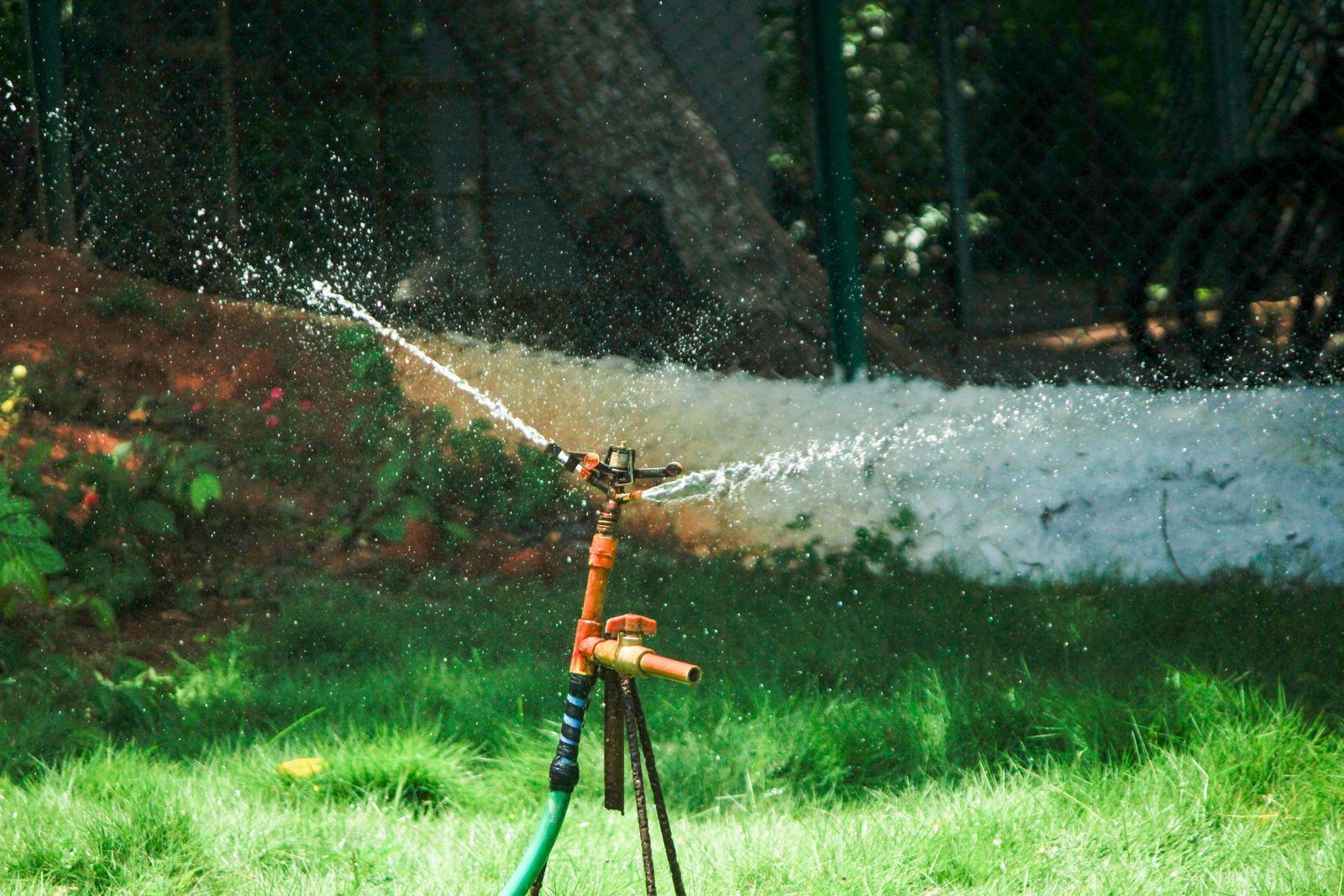
Photo: Saravanan Narayanan / Pexels
Watering Volume Calculator: The New Grass Seed Audit
New seed drinks in tenths of an inch, several times a day, where an established lawn drinks in inches. Enter your lawn length and width below and a depth of 1 inch to size the deep end of the ladder, then scale it down to the light sessions the germination phase runs on.
19.9 gallons
For 32 square feet at 1 inch deep. That is about 76 liters, or 10 trips with a standard 2 gallon watering can.
A rain gauge or a straight sided can set in the bed tells you when a sprinkler or soaker hose has actually delivered this depth. Time alone is a guess, because hose pressure varies from house to house.
The conversion is arithmetic, not opinion: one inch over one square foot is 144 cubic inches of water, and a US gallon holds 231 cubic inches, so each square foot at one inch takes 0.62 gallons.
The Germination Regime: Small and Constant
During germination, water 2 to 4 times a day, applying 0.1 to 0.15 inch per application, enough to wet the top half inch of soil and no more. The arithmetic is deliberate: the seed's whole world is that half inch, water below it is wasted, and water withheld from it for a single hot afternoon can end the germination of seed that has already swollen and split, because a germinating seed that dries mid process does not pause, it dies. Frequency therefore rules this phase, and the applications are sized to recharge the surface, not to soak the profile. The calculator above converts the small depths over your seeded area into gallons and minutes. The practical instruments are a timer on the sprinkler, because no one's schedule holds four sessions a day for three weeks, and a screwdriver or a finger, because the check is the top half inch's moisture at midday, the hour it is most likely to have dried. Slopes and sunny edges dry first and show the first failures; give them the extra pass the flat shade does not need.
The Ladder Down: Seedlings Change the Rules
As the seedlings emerge and root, the regime inverts by degrees. Once the stand is up and the roots are reaching below the surface layer, shift to once daily with a deeper drink, wetting the top inch or two, so the roots are invited downward. A week or two later, every other day, deeper again. The destination, reached as the young lawn is mowed and thickening, is the established budget: 1 to 1.5 inches a week in one or two deep sessions, the regime of the site's lawn watering pages. The taper is the training: a lawn kept on germination frequency grows roots that live in the top half inch and a stand that collapses in its first drought, while a lawn tapered too fast loses seedlings whose roots had not yet arrived at the deeper water. Read the stand, not the calendar: roots visibly anchoring, blades standing through a dry midday, and growth that needs mowing are the signals to take the next step down. Most cool season seedings complete the ladder in 6 to 8 weeks from sowing.
Timing, Seedbed, and the Mistakes That Look Like Watering
The seedbed does half the watering's work before the first session. Seed pressed into firm contact with soil, by rolling or raking in and treading, sits in the moisture film; seed lying loose on fluffy soil sits in dry air and no frequency saves it. A light mulch of straw over a bare seeding shades the surface and stretches every application, and on slopes it is the difference between seed that stays and seed that migrates in the first heavy watering. Water in sessions that the soil can absorb: on a slope or compacted seedbed, the 0.15 inch applied fast is runoff, so cycle the sprinkler, short bursts with rests, letting each drink enter before the next. The errors that present as watering failures are usually these three: seed sown into a loose, dry bed and watered faithfully to no effect; a regime of one deep daily soak that leaves the surface dry for twenty hours of every day during germination; and the taper skipped entirely, producing the shallow rooted lawn that the first summer edits. The regime itself, small and constant then deeper and rarer, is simple; the seedbed and the discipline are the build.
By Grass Type: Germination Windows Differ
The ladder's steps are the same for every cool season lawn, but the time spent on the first step is set by the seed. Perennial ryegrass germinates in about 5 to 10 days, the sprinter, and its surface needs the constant regime for the shortest window. Tall fescue runs about 7 to 12 days. Kentucky bluegrass is the marathon, 14 to 30 days to germinate, which means a month of keeping the top half inch moist, the regime at its most demanding and the reason bluegrass seedings fail in casual hands more than any other. Fine fescues sit between, roughly 7 to 14 days. Read the bag's blend, because most seed is a mixture and the window belongs to the slowest component you care about: a fescue and bluegrass blend is watered on bluegrass time, and the early fescue cover is a bonus, not the finish. Warm season seedings follow their own calendars and are outside this page's cool season scope.
Rain: Help, Hazard, and the Washout
Rain during the germination weeks is both the regime's best helper and its one real hazard, and the difference is intensity. A gentle rain or a day of drizzle counts as the day's sessions in full: check the surface, and if the top half inch is moist, the sprinkler stays off. A hard, driving rain on a bare seedbed is a different event: it moves seed, puddles it into the low spots, and can crust the surface as it dries, and a slope takes the worst of it. After a washout, wait for the stand to declare itself over a week rather than reseeding in panic; seed in place is tougher than it looks, and the genuinely bare patches can be patch seeded, with firm soil contact and a light straw cover, while the rest of the regime continues. The straw mulch earns its keep precisely here, holding the seed against the storm the forecast did not mention.
Frequently Asked Questions
How often should you water new grass seed?
During germination, 2 to 4 times a day, applying 0.1 to 0.15 inch per application, just enough to keep the top half inch of soil, where the seed lies, continuously moist, per NC State Extension's TurfFiles guidance. A germinating seed that dries out dies rather than pauses, so frequency rules this phase. As the seedlings root, taper to once daily with deeper drinks, then every other day, arriving at the established budget of 1 to 1.5 inches a week.
How long do I keep up the frequent watering?
Until the stand is up, rooted, and growing, which is 6 to 8 weeks for most cool season seedings, with the frequent surface regime lasting through germination itself. Germination windows differ by species: perennial ryegrass about 5 to 10 days, tall fescue 7 to 12, fine fescues 7 to 14, and Kentucky bluegrass 14 to 30 days. A blend is watered on its slowest component's schedule. Taper by the stand's signals, roots anchoring and blades standing through midday, not by the calendar alone.
Can you overwater new grass seed?
Yes, though the common failure is the opposite. Water that puddles, runs off, or keeps the seedbed saturated around the clock washes seed into drifts, rots seed in airless mud, and invites damping off disease. The regime's small applications exist for this reason: wet the top half inch, let the surface approach dryness, and recharge. On slopes, cycle the sprinkler in short bursts so each application enters the soil instead of leaving down the hill.
What is the difference between watering new seed and watering overseeding?
The surface they lie on. New seed on bare ground has no canopy: full sun and wind hit the seedbed directly, and the seed's moisture is entirely the watering's job, which is why this page's regime is the most demanding. Overseeding sows into a living lawn whose canopy shades the seed and holds humidity, and its regime, lighter and shorter, is the subject of the site's overseeding watering page. Sod is a third case again, rooted turf laid on soil, with its own deeper regime.
Why is my new grass coming up in patches?
Usually moisture geometry. The patches are where the surface dried during germination, the sunny edges, the slope tops, the sprinkler pattern's thin overlaps, or where seed sat loose on fluffy soil without soil contact. Seed that germinated and then dried is dead and does not resume, so the fix is a patch reseed with firm seed to soil contact, a light straw cover, and the germination regime run again on the patches. Check the sprinkler's actual coverage with cans before blaming the seed.
Photo credits: Saravanan Narayanan (Pexels); Animesh Srivastava (Pexels). Photos are served from this site; follow the credit to the library page for the original.