An arch trellis has to do two jobs that pull against each other: be light and open enough to look like a garden rather than a fence, and be rigid enough to carry a mature vine's weight in a summer storm, which is a sail full of wet leaves on a lever six feet tall. The three builds in this page solve that tension at three levels of cost and permanence. The cattle panel arch is the strong, fast answer and the one most working gardens use. The rebar arch is the cheap, elegant one for peas and annual vines. The wooden ladder arch is the carpenter's version, repairable and paintable. What none of them survives is lazy anchoring: every failed arch the results describe failed at its feet, racked or lifted because the posts were shallow or the panel was tied instead of clamped. Build any of the three, but anchor it like the storm is scheduled.
Home / Garden Projects and Outdoor Living
How to Build a Garden Trellis Arch: Cattle Panel, Rebar, and Wooden Ladder Systems
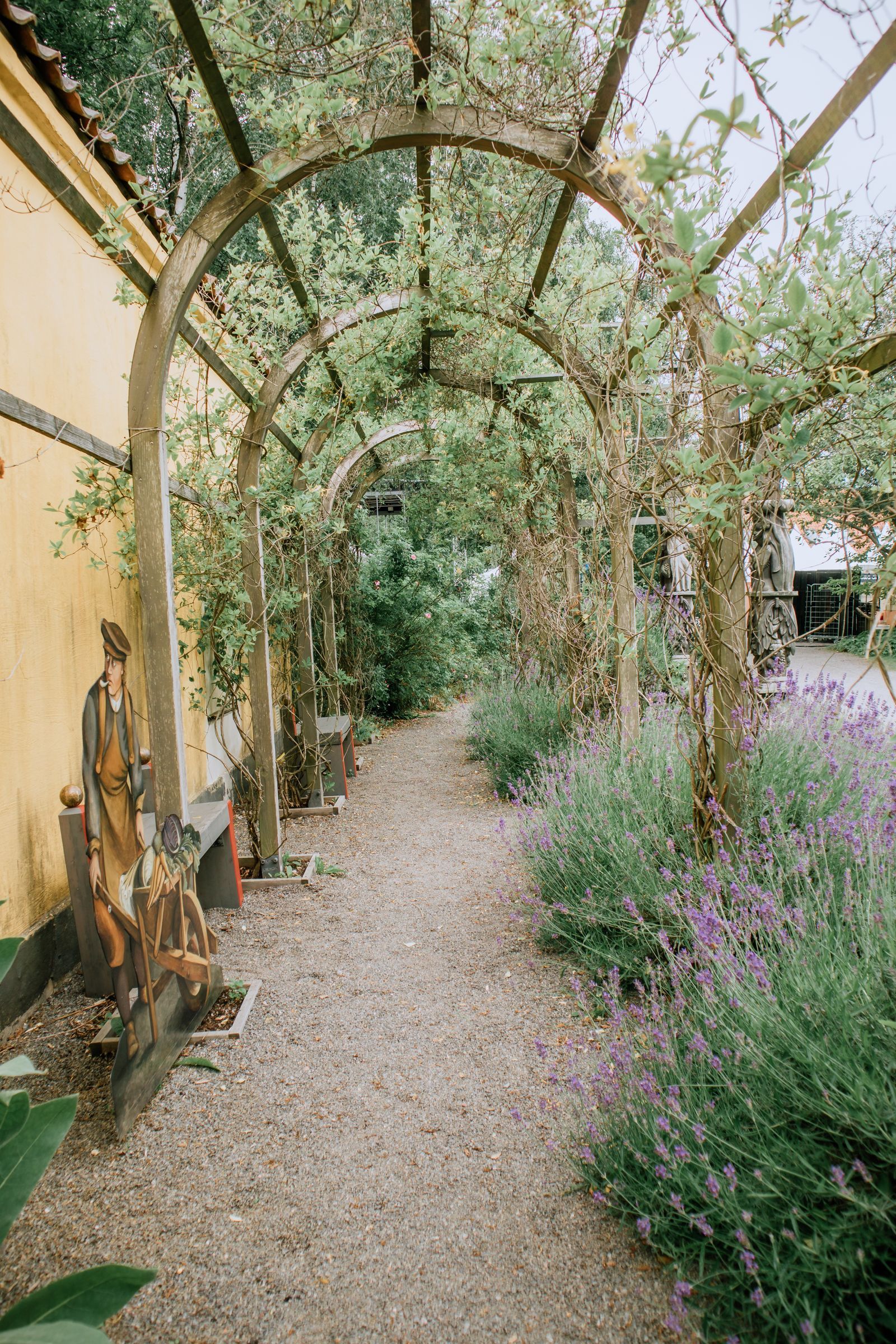
Photo: Pham Ngoc Anh / Pexels
Trellis Arch Build Checklist
Check off each step as you finish it. Your progress stays on this page.
0 of 8 complete
0% done
System One: The Cattle Panel Arch
Buy one cattle panel, 16 feet long and about 50 inches wide, galvanized, and two to four steel T posts. Drive the T posts in pairs where the arch's feet will stand, about 5 feet apart across the path, sunk at least 18 inches. Bend the panel into an arc between the post pairs, one end at a time, with a helper: the panel springs hard and this is the two person moment of the build. The geometry that results is the system's signature: a 16 foot panel bent across a 5 foot span rises to about 6.5 feet at the crown, tall enough to walk under with a basket, wide enough for a real path. Fix the panel to the posts with wire or clamps at several points per side, not one tie at the top of the post; the panel's spring is a stored force that works on a single tie all season. Cost runs about 50 dollars where panels are farm store priced, the build takes 1 to 2 hours, and the load rating is the best of the three systems: this is the arch for squash, gourds, hardy kiwi, and grapes, the vines that end arguments. It will not win a beauty contest on day one and will have disappeared under green by July.
System Two: The Rebar Arch
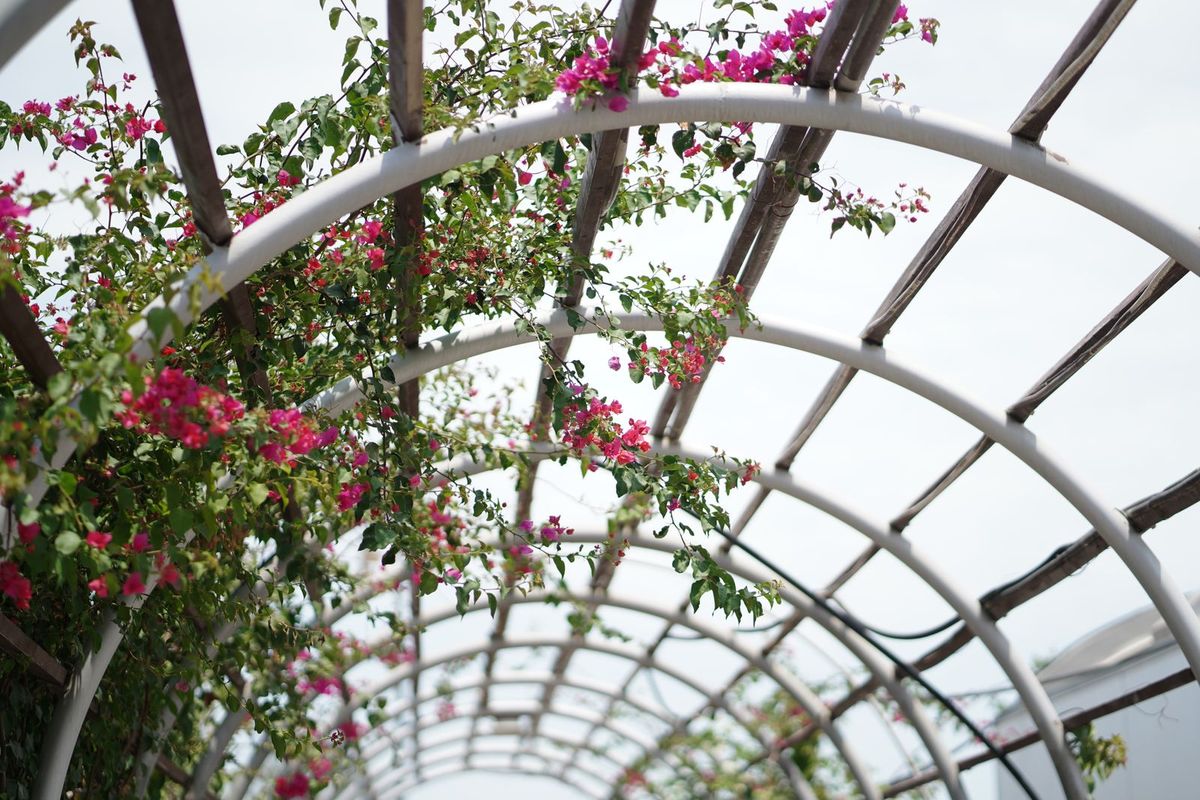
The rebar arch trades muscle for grace. Two lengths of half inch rebar, 20 feet each, are bent into matching arcs, and the trick that makes the build work is the jig: chalk the arch's full arc on a driveway or lawn, full size, and bend both bars against the same line so the pair matches. Set the bent bars as parallel ribs, feet sunk or sleeved into short pipes driven at the path's edges, and join the ribs with cross pieces of thinner rod, wire mesh, or twine lattice for the vines to climb. The span that results is lighter and narrower than the panel arch, and its honest loads are the annual and lighter perennial vines: peas, beans, morning glory, sweet peas, clematis. Its failure mode is spring and sway rather than collapse; an unbraced rebar pair racks sideways under a loaded vine, so the cross bracing is structural, not decoration. Cost is the lowest of the three and the tools are the lightest, which makes rebar the right answer for a season's arch, a rental garden, or a trial run before committing to the panel.
System Three: The Wooden Ladder Arch
The wooden arch builds like furniture: two ladder sides, each from 2x2 stock about 72 inches long with rungs, joined across the top by cross rails, forming an arbor roughly 7 feet tall. Sink the four posts about a foot into the ground, more in soft soil, and set them plumb before the top goes on, because a wooden arch racked at the posts cannot be persuaded straight afterward. Wood's virtues are repairability and finish: a rotted rung unbolts and replaces, the whole structure takes paint or stain to match the garden's other woodwork, and the flat members give twining and tying vines an easy grip. Its honest load is the middle class, roses, clematis, beans, jasmine, and its lifespan is set by the wood and the ground contact: use rot resistant stock or feet isolated on gravel, and expect to rebuild a rung or a post on a five to eight year rhythm. This is the arch for a front garden or a wedding photograph, where the structure shows all winter and has to earn its place bare.
Anchoring: Where Arches Actually Fail
Every system's post mortem in the results is the same story told three ways: the arch did not break, it moved. A panel arch tied at one point walked its posts loose with spring pressure. A rebar arch without cross bracing racked in the first storm under beans. A wooden arch sunk six inches in soft soil leaned a degree a month until the geometry went. The anchors are therefore specified per system but governed by one rule: the deeper and more mechanical the connection, the longer the arch. T posts sunk 18 inches or more and clamped at several points. Rebar feet sleeved into driven pipe, not pushed into soil, with cross bracing wired tight. Wooden posts a foot down minimum, tamped gravel at the base, deeper where the soil is soft or the site is windy. On a truly exposed site, any of the three gains from a ground anchor or a deadman on the windward side. The arch you anchor for the storm is the arch still standing, and still vertical, in its fifth season.
Planting the Arch
An arch earns its keep when the planting matches the structure. Plant at the feet, outside the path, one or two vines per side, and train the young growth onto the structure with ties until the plant's own climbing takes over; a vine that finds the ground or the path's edge first will grow there instead. Match the load honestly: the panel arch takes the heavy fruiting vines, squash and gourds and kiwi, and repays with shade over the path; the rebar arch takes the light annuals and is replanted each year; the wooden arch takes the perennial ornaments, roses and clematis, whose winter structure is part of the show. Two cautions from experience: a fruiting arch drops fruit, so the path under a squash arch is a harvest route, not a white gravel display; and an arch over a path needs its crown clearance kept, which means an annual prune of the vine that wants to close the tunnel at head height.
Frequently Asked Questions
What is the easiest garden arch to build?
The cattle panel arch, by a wide margin: one 16 foot galvanized panel bent between pairs of T posts sunk at least 18 inches, about 5 feet apart, gives an arch roughly 6.5 feet tall in 1 to 2 hours for about 50 dollars. It is also the strongest of the three systems on this page, carrying squash, gourds, and grapes. The one two person moment is the bend itself; the panel springs hard, so bend it with a helper and clamp it at several points per side.
How tall should a garden trellis arch be?
Tall enough to walk under with clearance for the vine's growth hanging down: about 6.5 to 7 feet at the crown is the working band. The cattle panel system lands at about 6.5 feet from a 16 foot panel on a 5 foot span; the wooden ladder arch builds about 7 feet from 72 inch sides. A crown under 6 feet becomes a duck under tunnel by midsummer, and the vine's annual growth must be pruned to keep the clearance.
How do I stop a garden arch from falling over?
Anchor it, because movement at the feet is how arches fail. T posts go at least 18 inches down and the panel is clamped at several points per side, not tied once. Rebar feet belong in driven pipe sleeves with cross bracing wired tight. Wooden posts go a foot down minimum, more in soft soil, on tamped gravel. On exposed sites add a ground anchor on the windward side. The structures themselves rarely break; they rack, lean, and walk loose from shallow feet.
What can I grow on a trellis arch?
Match the vine to the structure's load. Heavy fruiting vines, squash, gourds, hardy kiwi, and grapes, belong on the cattle panel arch. Light annuals, peas, beans, morning glory, and sweet peas, suit the rebar arch. Perennial ornamentals, climbing roses, clematis, and jasmine, suit the wooden arch, where their winter form is part of the display. Plant at the feet outside the path, one or two vines per side, and tie the young growth on until it climbs alone.
How long will a garden arch last?
The cattle panel is effectively permanent, galvanized steel on steel posts, measured in decades. Rebar rusts slowly and a braced rebar arch gives many seasons, though it is usually treated as the semi permanent option. The wooden arch's life is set by its ground contact: rot resistant stock and gravel isolated feet give five to eight years before a post or rung needs replacing, and wood's advantage is that the replacement is a repair, not a rebuild.
Photo credits: Pham Ngoc Anh (Pexels); Junaid A Yaraa (Pexels). Photos are served from this site; follow the credit to the library page for the original.