How to Build a Cold Frame for a Raised Bed: Sized to the Bed You Own
By the Windchime Walker editorial team
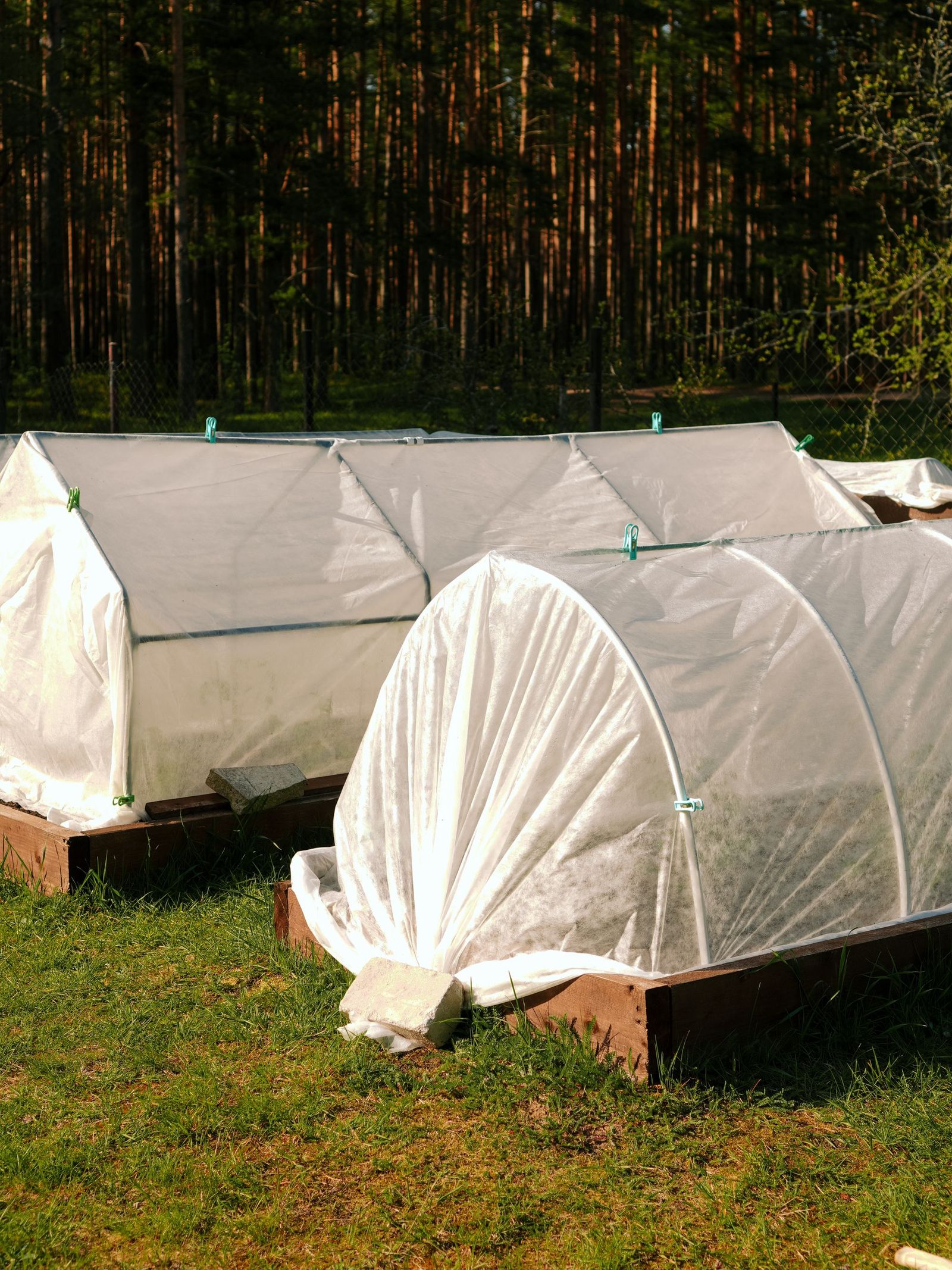
Photo: Nadin Sh / Pexels
A cold frame is a greenhouse with its ambitions correctly sized: a bottomless box with a glass or clear lid, sitting on the soil, trapping sun and blocking wind. Bolted onto the raised bed you already own, it becomes the cheapest season extension in gardening, worth roughly 4 to 8 weeks at each end of the year: salads and seedlings out weeks before the open garden allows, and greens harvested weeks after the first frosts have ended the unprotected beds. Most cold frame plans assume a freestanding frame on bare ground. This page builds the version that fits your raised bed, because that is the frame home gardeners actually need, and the fitting, the dimensions, the lid weight, the hinge side, is where such builds succeed or annoy.
The classic proportions govern, from the traditional design that NC State's guidance echoes: a back wall about 12 inches high, a front wall about 8 inches, so the lid slopes; a south or southeast exposure; and a width no more than 4 to 5 feet, so the middle can be reached without climbing in. Everything else is carpentry you already know from building the bed itself.
Interactive tool
Cold Frame Build Checklist
Check off each step as you finish it. Your progress stays on this page.
0 of 7 complete
0% done
Step 1: Measure the Bed, Then Decide Inside or Outside
Measure your raised bed's inside dimensions first, because the frame's size flows from them. Two mountings work. An inside fit frame drops into the bed and rests on the soil, its outside dimensions a whisker under the bed's inside dimensions; it is simple, stable, and steals a little growing room at the edges. An outside fit frame caps the bed like a lid, resting on the bed's top edges, its inside dimensions a whisker over the bed's outside dimensions; it keeps every inch of growing room and depends on the bed's frame for support. For most beds, the cap style is the better build: no soil contact for the frame's wood, no lost planting space, and the frame lifts off entirely in summer.
Write the dimensions down and design to them, including the lid: one lid for a short bed, two lids for a long one, because a single 8 foot lid is a sail that one person cannot manage gracefully, and a frame whose lid you dread opening is a frame that stays shut on the day it needed venting.
Step 2: Cut the Sloped Box
The frame is four boards: the back at about 12 inches tall, the front at about 8 inches, and two side boards cut with the slope between those heights along their top edge. Use rot resistant lumber or the same material as your bed; the frame lives outdoors in the wettest seasons. Mark the slope on the side boards by standing them against the front and back boards and drawing the line directly, rather than trusting arithmetic; assemble with exterior screws, check the box for square by its diagonals, and set it on the bed to confirm the fit before the lid exists.
The slope's direction is the design's whole point: the tall side stands at the back, the low side at the front, and the finished frame is oriented so the front faces south (southeast is acceptable, per NC State's exposure guidance), letting the low sun of spring and fall pour in while rain sheds off the lid toward the front, away from the bed's back edge. A frame installed backward, sloping north, is a sculpture; check the compass before the screws are final.
Step 3: The Lid, Light Enough for One Hand
The lid is a frame of its own, sized to overlap the box by a small lip on all sides, glazed with the clearest material your budget allows: twin wall polycarbonate is light, tough, and insulating, and it has largely replaced glass for home frames because it does not shatter and one person can lift it all day. Old storm windows are the traditional free option and work beautifully where the size happens to fit; glass's weight is its only sin, and it argues for smaller lids.
Build the lid frame from straight, light stock, with a crossbar on long lids to keep the glazing from sagging. The finished lid must pass the one hand test: you can lift and prop it with one hand while holding a seed tray or a harvest basket in the other. If it fails, split it into two lids or change the glazing; a cold frame is operated daily, and daily tools must be easy, or the daily routine dies by the second week.
Fresh green seedlings growing in a wooden planter box, seen from above
Step 4: Hinges, Props, and the Wind
Hinge the lid along the tall back edge, so it opens like a chest and the slope sheds water away from the hinge line. Hinges on the back also mean the open lid leans back against nothing and catches less wind than a lid hinged on a side. Wind is the cold frame's only violent enemy: an open lid is a wing, and a gust can tear it off or slam it onto the plants and the gardener. A chain or cord limiting the lid's travel, and a prop that locks rather than balances, are not accessories.
The prop is the daily tool: a notched stick, a length of wood with steps cut in it, or an automatic vent opener (a wax cylinder device that lifts the lid as the frame warms and closes it as it cools, no electricity, no attention). The automatic opener is the one upgrade this page endorses without reservation for gardeners who work away from home, because the venting rule in step 5 does not care about your schedule, and the opener never forgets a sunny day.
Step 5: Run It: The Venting Routine
A cold frame on a sunny day is a solar oven with plants in it. The rule from extension guidance and long practice: vent the lid when the outside temperature passes about 40 to 50 degrees, earlier on still, bright days, because the inside temperature on a calm sunny morning can run far ahead of the air outside and cook seedlings in an hour. Prop the lid a few inches on mild days, wide on warm ones, and close it in the late afternoon to bank the day's warmth for the night. On genuinely warm days the lid comes off or stands fully open; the frame's job in high spring is night protection only.
Watering changes under glass: rain does not reach the crop, so the frame's soil dries on your schedule, not the sky's, and the finger test becomes a daily habit while the frame is in use. Check seedlings in the frame twice a day in changeable weather, morning for venting, evening for closing and water, and the frame becomes a five minute ritual attached to leaving and returning. What grows in it: salad greens, spinach, and herbs started early; hardening off seedlings raised indoors, which is the frame's noblest use; and fall greens carried deep into the cold months, where a second inner cover on the coldest nights buys still more season.
Siting and Storage
Site the bed and frame together, since the frame inherits the bed's location: south or southeast exposure, no fence or hedge shadow at midday in the low sun months, and shelter from the prevailing wind that does not shade. A frame against a south facing wall gains the wall's stored warmth and loses the wind, the best microclimate a home garden offers.
In summer, the frame comes off or stands open and idle; store the lids flat under cover, because polycarbonate and glass both degrade in a season of being stepped around in the open. The box can stay on the bed as a low windbreak rim or store with the lids. Wood checked yearly for rot at the soil line, screws tightened, glazing washed in fall before the season starts (a clean lid is a brighter frame, and brightness is the entire product). Built once and stored decently, a cold frame serves for many years of stolen weeks at both ends of the season, which is the highest return on lumber in the garden after the raised bed itself.
What the Frame Teaches About Microclimate
A cold frame is worth building even if you never count its harvests, because it is the garden's clearest teacher of microclimate, the idea that conditions vary across a few feet and a few inches in ways a gardener can engineer. Inside the frame on a bright February morning, it is spring; outside it, winter; the difference is a sheet of clear material and four boards, and the gardener who has watched a thermometer prove it never thinks about "the weather" as one thing again. Every later skill (where the tender plant goes, why the wall side bed ripens first, what a fence's shelter is worth) is this lesson at larger scales.
The frame also teaches the gardener's most transferable habit: managing a threshold instead of a state. A greenhouse is kept at a temperature; a cold frame is kept from crossing two lines, freezing at night and cooking at noon, and the twice daily ritual of propping and closing is threshold management in its purest form. Seedlings hardened off in the frame learn the same lesson physiologically, adjusting to wind, direct sun, and cold nights in graduated doses, which is why frame hardened plants transplant without the sulk that kills tender indoor seedlings set straight into the open garden. The frame is a school for plants and gardeners simultaneously, and tuition is a few boards and a lid.
Size the ambition to the tool and the frame stays a pleasure: it is a season extender and a hardening school, not a winter greenhouse, and the gardener who asks it for January tomatoes in a cold climate will be disappointed by physics. Ask it for March salads, April seedlings that laugh at late frosts, and December spinach, and it will deliver those for a decade, asking only its five minutes morning and evening in return.
Frame Sizes for Common Beds, Worked Out
The standard beds make the arithmetic easy, and it is worth stating once. On a 4 by 4 foot bed, the cap style frame is a single lid of about 4 feet square at the outside, near the limit of the one hand rule if glazed in polycarbonate, and better built as two 2 by 4 lids if glass is the glazing. On a 4 by 8 foot bed, build two independent frames of 4 by 4 rather than one long structure: each gets its own pair of lids, each can be vented or removed separately, and the bed can run a frame on its spring half while its summer half stands open, a flexibility the single long frame cannot offer. On a narrow 2 foot bed against a wall, the frame leans its tall side to the wall itself in the classic lean to pattern, the wall storing the day's heat for the night, which is the warmest cold frame arrangement a home garden can build and the one that carries greens deepest into winter. In every case the reach rule governs: if you cannot touch the middle from a side, the frame is too wide, whatever the bed says.
Frequently Asked Questions
What size should a cold frame be for a raised bed?
Sized to your bed: measure first, then build an inside fit frame just under the bed's inside dimensions or, better, a cap style frame just over its outside dimensions resting on the top edges. Keep the width at 4 to 5 feet at most so the middle is reachable, per NC State guidance, and split long frames into two lids.
How tall are the walls of a cold frame?
The back wall stands about 12 inches and the front about 8 inches, with the sides sloped between them. The slope faces the lid south to catch low sun and shed rain. Taller frames suit taller crops but catch more wind and shade more at the back; the classic proportions suit greens and seedlings, the frame's main crops.
When do I need to vent a cold frame?
Whenever the outside temperature passes about 40 to 50 degrees, and earlier on still, sunny days, because the inside heats far beyond the outside air. Prop the lid in the morning, close it in late afternoon to bank warmth. An automatic vent opener handles the routine for gardeners away during the day.
Which direction should a cold frame face?
South, or southeast, per NC State's guidance, with the tall wall at the back and the lid sloping down toward the sun. The frame should sit clear of midday shadows in the low sun months and sheltered from the prevailing wind, ideally in the warm microclimate near a south facing wall.
What can I grow in a cold frame?
Early and late salad greens, spinach, herbs, and seedlings being hardened off from indoor starting, which is the frame's most valuable use. Expect roughly 4 to 8 weeks of season extension at each end of the year, more with an inner cover on the coldest nights.
Can a cold frame overheat and kill plants?
Yes, in an hour on a calm sunny day; that is the one violent risk in an otherwise gentle tool. The venting routine is the discipline the whole design depends on: prop early, close late, and use an automatic opener if your days are away from home.
Photo credits: Nadin Sh (Pexels); Damian Apanasowicz (Pexels). Photos are served from this site; follow the credit to the library page for the original.