How to Build a Raised Bed on Concrete: The Slab Bed System
By the Windchime Walker editorial team
Photo: Gene Samit / Pexels
A raised bed on concrete is not a raised bed that happens to sit on a patio. It is a bed with an impermeable floor, and that one fact rewrites four parts of the standard build: the soil cannot drain downward, the roots cannot escape downward, the slab takes the full weight of wet soil, and the concrete pumps summer heat into the mix from below. Build a framed bed by the ordinary rules and set it on a slab, and you get a shallow, hot, waterlogged box. Build it by the slab rules on this page and a driveway edge or a concrete yard grows like a garden. One clarification first, because the search results mix two projects: building a bed out of concrete blocks, with footings and mortar, is a masonry build with its own rules. This page is about placing a bed on an existing slab, which is what most patio, rental, and urban gardeners mean by the question.
Our framed raised bed pages assume soil underneath the bed. This page owns the slab, and the on concrete slab wording of the question is the same build.
Interactive tool
Raised Bed on Concrete Checklist
Check off each step as you finish it. Your progress stays on this page.
0 of 8 complete
0% done
Depth on a Slab: The Floor Sets the Number
In the ground, a shallow bed cheats: roots that run out of mix continue into the soil below, so a 6 inch bed can grow like a 10 inch one. On concrete there is no below. The mix depth you build is the entire root run the plant will ever get, which sets the floor for slab beds higher than garden beds: 12 inches minimum for vegetables and herbs, 18 inches for deep rooted crops and for anything you do not want to water twice a day, and 18 to 24 inches if the bed will hold perennials or small shrubs. Depth is also moisture insurance on a slab, because a deeper volume dries slower and swings less between waterings. The guides that put slab beds at 12 to 24 inches are right, and the right end of that range depends on the crop: salads and herbs at 12, tomatoes and peppers at 18, and nothing at the 6 inch depth that works over soil. Frame height is therefore the first decision, made from the crop list, before any lumber is cut.
Drainage and the Base: Water Must Leave Sideways
Water in a slab bed can only leave through the frame's base, evaporation, and the plants, so the build has to give it a path. Line the bottom with landscape fabric or geotextile, which holds the mix in while letting water pass; the Australian guidance for beds on pavers adds a layer of coarse aggregate, 3 to 4 inches of gravel or crushed material, under the mix as a drainage reservoir, which suits deep beds and very impermeable slabs. Never line a slab bed with plastic sheeting: it converts the bed into a bathtub, and the first heavy watering or storm fills it to the mix line with nowhere to go. Set the frame so water can weep out at the base rather than being dammed by a sealed edge, and think about where the outflow goes, because a bed that drains across a patio toward a door is a complaint in waiting. The fabric does double duty as slab protection, keeping soil and its staining moisture off the concrete, which matters to anyone renting: a bed lifted after two seasons on bare concrete leaves a dark rectangle that outlasts the tenancy.
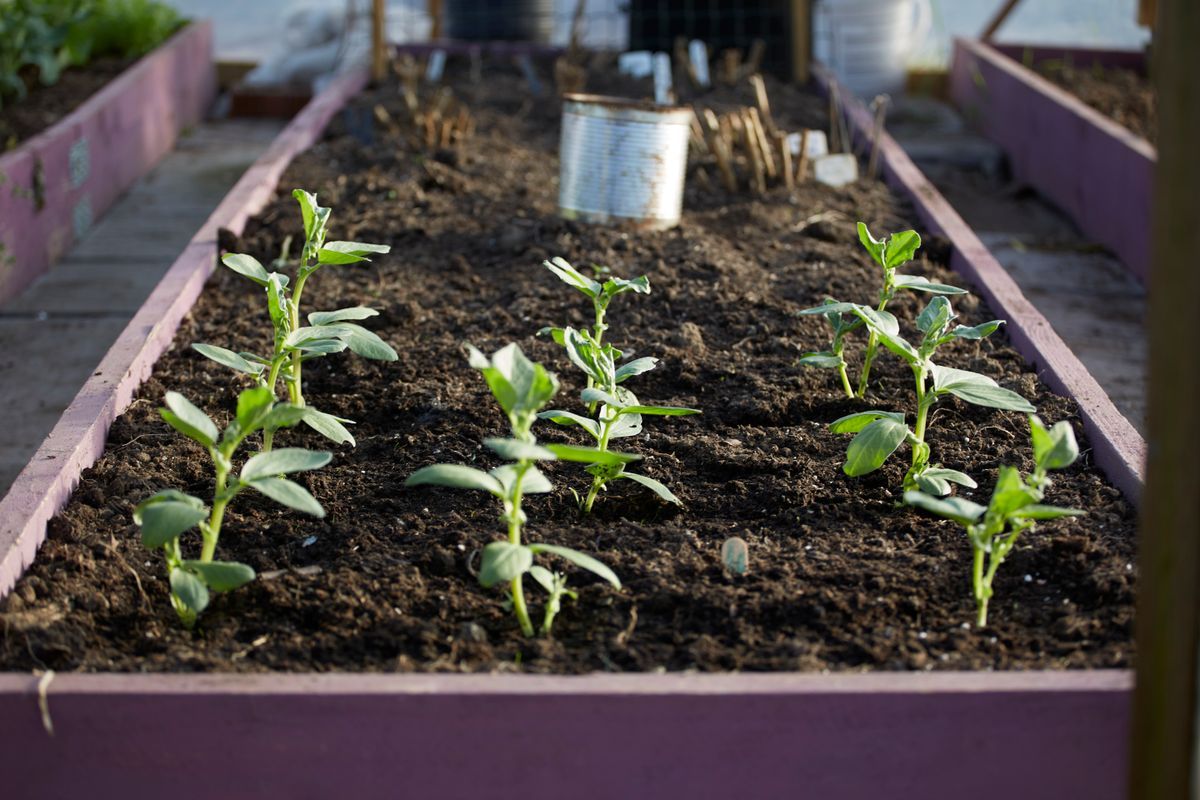
Young plants thriving in a raised garden bed
Weight: Estimate the Wet Bed Before You Fill It
Dry mix is light and lies to you. A 4 by 8 foot bed filled 12 inches deep holds about 32 cubic feet of mix, and wet, that mix runs roughly 75 to 100 pounds per cubic foot in place, which puts the soaked bed well over a ton, before the plants, the water in them, and you leaning on the edge. On a ground level slab that is almost never a structural problem; concrete on grade carries far more. On a balcony, a roof terrace, or an old slab of unknown build, it is the governing number, and it is why the checklist on this page asks for the estimate before the fill, not after the crack. The weight levers are depth and mix: every inch of depth across a 4 by 8 bed is another 150 to 250 pounds wet, and a mix lightened with perlite and coir weighs meaningfully less than a topsoil heavy blend. If the structure is in question, the answer is shallower beds, more of them, spread wider, and a word with whoever owns the slab.
Fill, Heat, and Watering on Concrete
Fill a slab bed with a raised bed mix, not garden soil: a light, free draining blend, topsoil and compost with perlite or bark for air, along the lines of the classic 60 percent topsoil, 30 percent compost, 10 percent aeration recipes the slab guides publish, adjusted by our container soil page if you are mixing your own. The slab's second personality is heat. Concrete stores the day's sun and returns it through the evening, which spring crops love and midsummer roots endure: a slab bed in a hot climate dries faster than the same bed on soil and its edges, where mix meets sunlit frame and slab, dry fastest of all. Manage it with a light colored mulch, which reflects rather than absorbs, with watering in the morning so the bed starts the heat loaded, and with the honest expectation that a slab bed in July drinks about a third more than its twin on the ground. In cool climates, reverse the sign: the slab is a heat bank that extends the season at both ends, one of the few free lunches in gardening, and worth placing the bed to catch.
Build Sequence and the Renter's Version
The build itself is an afternoon. Audit the slab first: level enough that the frame sits without rocking, sound, and draining somewhere acceptable. Choose the frame for the site: untreated or rot resistant lumber is the default, galvanized steel runs cooler looking and thinner, and masonry is the permanent version. Assemble the frame on the slab, line the base with fabric up the first few inches of the sides, add the aggregate layer if your depth and slab call for it, fill in stages watering each stage in so the mix settles evenly, and leave an inch of headroom below the rim so mulch and water stay in the bed. The renter's version changes only the protection layer and the exit plan: fabric under the whole frame footprint, a tray or aggregate base to catch the outflow, and a bed sized to be emptied by two people with a wheelbarrow in an hour. Built this way, the slab stops being the reason there is no garden and becomes what it secretly is: the best drained, warmest, most weed free site on the property, once you give it depth.
The First Season: What to Grow in a Slab Bed
Choose the first crops to teach you the bed, because a slab bed has a personality and the first season is how you learn it. Start with the crops that read clearly: lettuce and salad greens show thirst within hours and recover within minutes, making them living moisture gauges for the bed's drying pattern; radishes and bush beans grow too fast to suffer from your calibration errors; herbs at the edges tell you where the bed dries first, which is always the corners and the sun side. Tomatoes and peppers, the crops most slab beds are built for, go in once you know the watering rhythm, at the 18 inch depth, where their heat loving roots will use the slab's warmth exactly as intended. Keep a simple record the first season: how many days between waterings in each month, and which corner dries first. That record converts the second season's watering from guesswork into the schedule, and it is the difference between gardeners who say concrete beds are thirsty work and gardeners who say they are the easiest beds they own. Both are describing the same physics; only one of them measured it.
Frequently Asked Questions
How deep should a raised bed on concrete be?
At least 12 inches for vegetables and herbs, 18 inches for deep rooted crops, and 18 to 24 for perennials and small shrubs. On a slab the mix is the entire root run, with no soil below to cheat into, so slab beds run deeper than the same beds over soil.
Does a raised bed on concrete need drainage?
Yes, and it has to leave sideways. Line the base with landscape fabric or geotextile so water passes and mix stays in, add a coarse aggregate layer in deep beds, and let the base weep freely. Never line a slab bed with plastic, which turns it into a bathtub with no drain.
How much does a raised bed on concrete weigh?
A soaked 4 by 8 bed at 12 inches deep holds about 32 cubic feet of mix and runs well over a ton wet. Ground level slabs carry that easily; balconies, roof terraces, and old slabs need the estimate first, and shallower, lighter mixes if the structure is in doubt.
Can I put a raised bed on concrete if I rent?
Yes, with protection: fabric under the full footprint, a base that catches outflow, and a size you can empty in an hour. The fabric keeps soil moisture from staining the slab, which is the main damage a bed can do to a rented patio.
What soil should I use in a raised bed on concrete?
A light raised bed mix, roughly 60 percent topsoil, 30 percent compost, and 10 percent aeration such as perlite, never heavy garden soil alone. Expect to water about a third more than a bed on soil in summer, because the slab returns stored heat to the mix.
Photo credits: Gene Samit (Pexels); Ian Probets (Pexels). Photos are served from this site; follow the credit to the library page for the original.