How to Care for Zebra Grass: the Full Routine, and the Invasiveness Question Answered Honestly
By the Windchime Walker editorial team
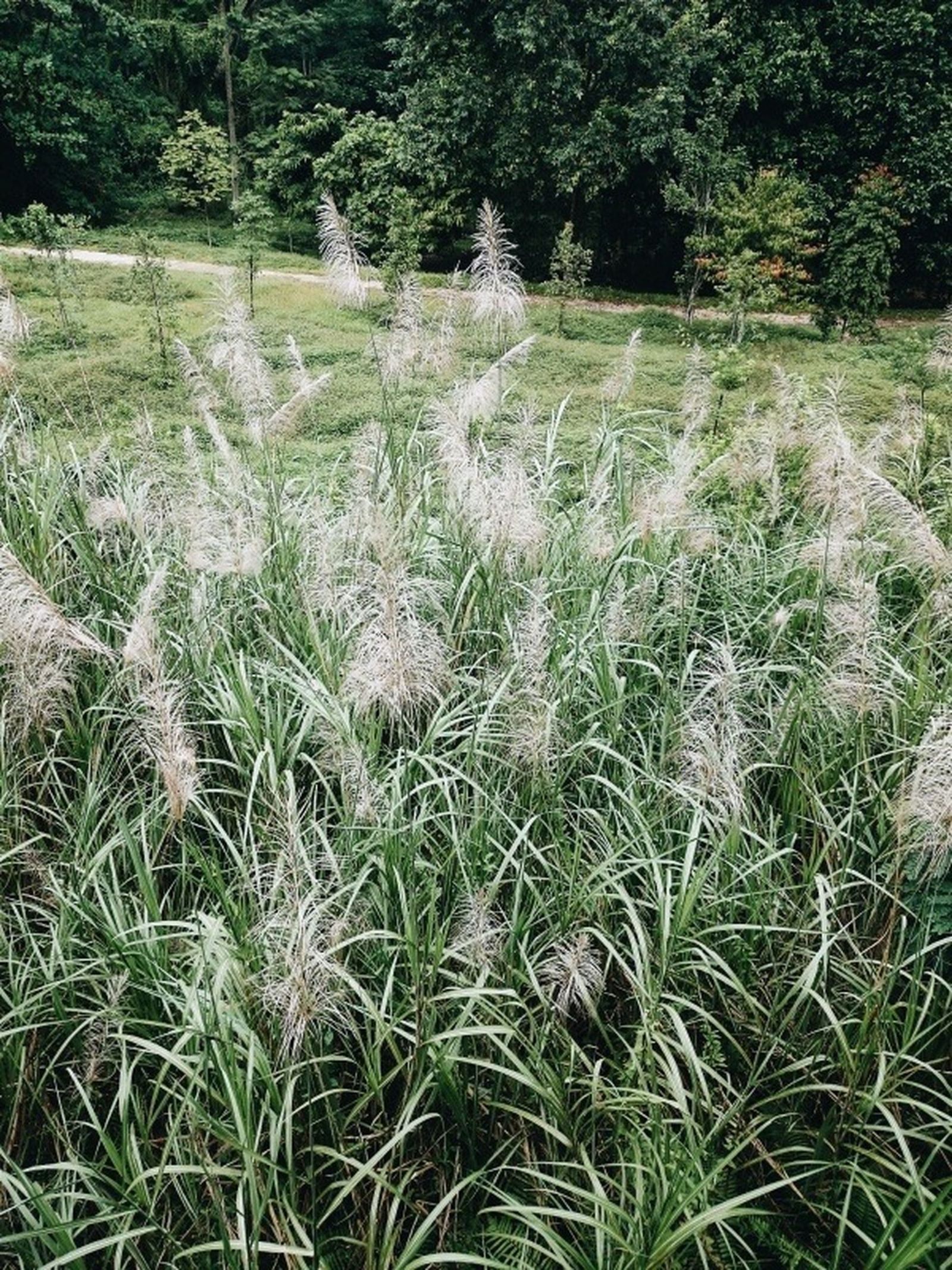
Photo: Stacey Koenitz / Pexels
Zebra grass, Miscanthus sinensis 'Zebrinus', is the ornamental grass with the unmistakable markings: broad blades banded with horizontal stripes of gold that appear as the plant grows into summer, on a fountain of foliage 5 to 8 feet tall. Care guides agree about almost everything in its routine, and they mostly agree to skip the one thing a responsible gardener needs to know, which is that its species has a record. This page does both halves: the routine, done properly, and the invasiveness question, presented as the genuine conflict it is, with the containment practices that let you grow the plant with your eyes open.
Our ornamental grass and lawn pages own their plants. This page owns zebra grass, routine and warning label together.
Interactive tool
Zebra Grass Care Checklist
Check off each step as you finish it. Your progress stays on this page.
0 of 8 complete
0% done
The Plant and Its Placement
Zebra grass is hardy in zones 5 to 9 and wants full sun, for two reasons that show up in the foliage. In sun, the golden banding develops strongly and the clump stands upright in its fountain shape. In part shade the bands fade toward plain green and the clump loosens and flops, which owners misread as a feeding problem. Plant it where the mature size is a feature rather than a negotiation: the clump reaches 5 to 8 feet tall and 4 to 6 feet wide, so spacing of 3 to 5 feet between plants is the working range, closer for a screen you want closed quickly, wider for specimens. It is a warm season grass, late to emerge in spring, which panics new owners every April; the crown is alive, the soil is cold, and the green shoots arrive when the soil warms, weeks after the daffodils. Mark the spot so the spring cleanup does not dig through it. Soil demands are modest, any reasonably drained ground, and the plant tolerates drought once established, clay once settled, and roadside conditions that shame fussier grasses.
Water and Feeding: a Light Hand, on Purpose
Water through the first season as you would any new perennial: deep drinks when the soil dries, enough to push roots down and out. From the second year, zebra grass is a drought tolerant plant that wants water only in long dry spells, and the gardener's error is generosity. Rich soil and regular feeding push soft, lush growth that flops by August, and excess nitrogen is the specific culprit; this is a plant whose wild ancestors grew in lean ground, and it stands best slightly hungry. Feed at most once in spring, a modest handful of balanced fertilizer or a compost mulch, and skip it entirely in good soil. The mulch itself is the better annual gift: 2 to 3 inches around the crown, kept off the center, holding moisture in the establishment years and feeding the soil slowly without pushing the plant. A clump that flops in its first year is usually young or shaded; a mature clump that flops in full sun is usually fed.
The Annual Cutback and Division
The year's one big job is the cutback, and its timing is the most asked question in this plant's care. Leave the foliage standing through winter: the dried fountain is the plant's winter architecture, it shelters the crown, and it is beautiful in frost. Cut it down in late winter or early spring, before the new shoots emerge, because cutting after emergence clips the new growth's tips and the plant wears the haircut all season. Cut the whole clump to a stubble; sources put the height anywhere from 4 to 10 inches, and the honest reading is that anything in that band works, with the lower end tidier and the upper end a little kinder to the overwintering insects that shelter in the stems. The foliage is sharp enough to warrant gloves and long sleeves, and a hedge trimmer or a tied bundle cut with shears makes the job fast: tie the clump with twine first, cut below the tie, and carry away a sheaf instead of an armload of loose blades. Division comes every few years, in spring just as growth starts, when the clump's center dies out into a ring or the plant outgrows its space: dig, split with a spade or an old saw through the woody crown, replant the vigorous outer pieces, and compost the dead center. Division is also, not incidentally, part of the containment system in the next section.
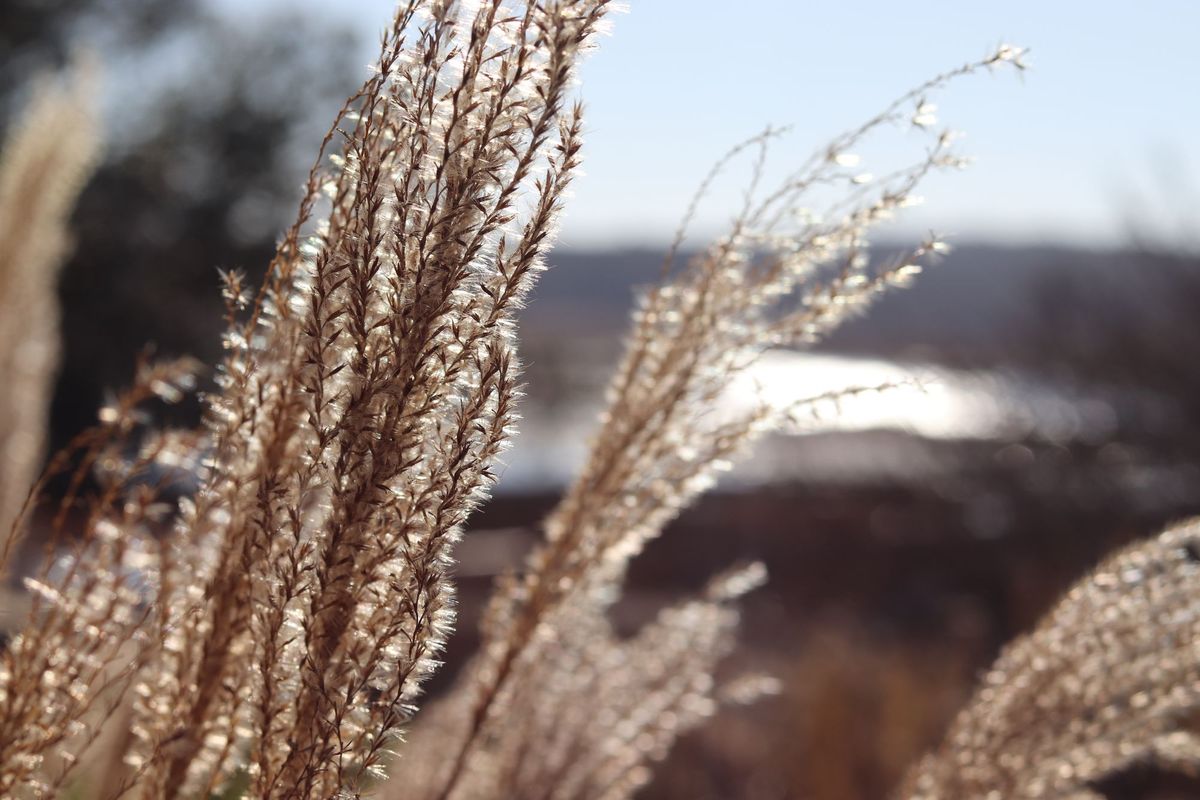
Chinese silver grass glowing in low sunlight
The Invasiveness Question, Presented as the Conflict It Is
Now the half the care guides skip. Miscanthus sinensis as a species self seeds, and it has naturalized in parts of the United States. The sources conflict about the cultivar, and the conflict deserves daylight rather than a verdict smoothed over. The Spruce warns that zebra grass can spread and is often considered invasive. State level sources list Miscanthus sinensis as invasive in parts of North Carolina, Virginia, and Pennsylvania, and note that 'Zebrinus' is not reliably sterile: a cultivar that sets little viable seed in one climate can set more in another, and seed from a zebra grass can cross with other Miscanthus plantings nearby. Against that, other sources describe the cultivar as effectively sterile and safe to plant. Both cannot be wholly right, and the variation by climate is probably why both exist. The responsible practice does not require resolving the botany; it requires three habits. Check your state and county lists before planting, because the plant's status is a local fact, and do not plant it at all where it is listed or where your garden borders wild ground, roadsides, or waterways it could colonize. Deadhead the plumes in fall before they shatter if your plant sets seed heads freely, cutting the flower stalks as part of the winter tidy rather than leaving them to broadcast. Divide and contain on schedule, since a clump managed every few years is a garden plant, while a clump abandoned for a decade at a woodland edge is a colonization project. Grown in a maintained garden, in a region where it is not listed, with its seed heads managed, zebra grass is a defensible and magnificent plant. Planted carelessly at the wild edge in a listed state, it is the kind of decision other people weed for years. The checklist below includes the containment habits in the routine, where they belong.
Using Zebra Grass Well: Screens, Specimens, and Companions
Grown with the containment habits in place, zebra grass earns its keep in three roles. As a seasonal screen it is unmatched for speed: planted at the close end of its spacing range along a property line or around a patio, it closes into a banded green wall by midsummer, holds it through fall, and asks to be cut once a year, where a hedge asks for trimming three times and a fence asks for money. The screen's honest limits are the winter months, when the cut stubble screens nothing, and the first spring weeks, so place it where the off season exposure does not matter, or back it with an evergreen layer where it does. As a specimen it is a fountain with stripes, best given the full width it wants and a dark backdrop, an evergreen hedge or a shaded fence, against which the golden bands read at a distance. In a mixed border it belongs at the back, where its height is structure and its late season plumes, silvery pink fading to white, are the border's autumn event. Companions that hold their own beside it are the sturdy late perennials: coneflower, Russian sage, sedum, and asters, planted at a respectful distance from the clump's expanding crown. What it should not neighbor is anything delicate or anything in a wild planting, for the reasons the invasiveness section gave. Used in its roles, in its regions, with its seed heads managed, it is one of the great cheap dramas of the garden, eight feet of banded fountain for the price of a one gallon pot and one annual haircut.
Frequently Asked Questions
Is zebra grass invasive?
The honest answer is that sources conflict. Miscanthus sinensis is listed as invasive in parts of North Carolina, Virginia, and Pennsylvania, and 'Zebrinus' is not reliably sterile, while other sources call the cultivar safe. Check your state list before planting, do not plant it beside wild ground where it is listed, deadhead the plumes, and divide on schedule.
When do you cut back zebra grass?
In late winter or early spring, before new shoots emerge. Leave the foliage standing through winter for its looks and for crown protection. Cut the clump to a stubble of roughly 4 to 10 inches; tie the clump with twine first and wear gloves, because the leaf edges are sharp.
How far apart do you plant zebra grass?
Three to 5 feet apart. The mature clump runs 5 to 8 feet tall and 4 to 6 feet wide, so closer spacing closes a screen faster and wider spacing suits specimen plants. Full sun is part of the spacing decision: shade fades the golden bands and makes the clump flop.
How often does zebra grass need water?
Through the first season, deeply whenever the soil dries, to establish the roots. After that, only in long dry spells. Established zebra grass is drought tolerant, and overwatering and overfeeding both push the soft growth that flops in late summer.
Why is my zebra grass flopping over?
Usually shade, youth, or food. Part shade fades the bands and loosens the clump; young clumps flop until the crown matures; and excess nitrogen grows soft blades that cannot stand. Full sun, patience, and a light feeding hand, a compost mulch rather than fertilizer in good soil, are the fixes.
Photo credits: Stacey Koenitz (Pexels); Craig Picariello (Pexels). Photos are served from this site; follow the credit to the library page for the original.