How to Care for Zoysia Grass: Its Own Calendar, Not the Generic One
By the Windchime Walker editorial team
Photo: Володимир Король / Pexels
A zoysia lawn cared for with generic lawn advice is a good lawn being slowly argued out of its nature. Zoysia is a warm season grass, growing by stolons and rhizomes into one of the densest mats in the lawn world, and its virtues, softness, toughness, low appetite, are inseparable from its two traps: it wants feeding on a warm season schedule that looks wrong to anyone trained on bluegrass, and it builds thatch under that beautiful density with silent industry. This page is zoysia's own calendar, month by month in spirit, at this site's standard source for lawn guidance, NC State Extension's TurfFiles, whose zoysia recommendations sit at the lean end of the published ranges.
Our lawn feeding guide owns both families' calendars side by side, and our lawn watering guide owns established watering generally. This page owns zoysia alone, for the homeowner who has one, or inherited one, and is done guessing.
Interactive tool
Zoysia Care Calendar Checklist
Check off each step as you finish it. Your progress stays on this page.
0 of 8 complete
0% done
Know Your Grass: What Zoysia Is Doing All Year
Zoysia grows when it is warm, roughly zones 6 to 10, and sleeps when it is cold. In spring it greens up late, after the cool season lawns have been green for weeks, and that lateness is nature, not a problem to feed away. Through summer it grows densely and comparatively slowly, which is why it needs less mowing and less feeding than its neighbors. In fall it stops growing as nights cool and goes dormant and brown with the first frosts, staying brown all winter, which is also nature. A zoysia owner's year therefore has an active season with a beginning (full green up) and an end (about 6 to 8 weeks before the first fall frost, the last sensible feeding moment), and a dormant season in which the correct care is almost entirely to leave it alone and keep feet and traffic gentle on the sleeping mat.
Mowing: 1 to 2.5 Inches, on the One Third Rule
Zoysia's mowing band is 1 to 2.5 inches, lower than the cool season standard, because the plant's dense, fine growth supports a close cut and a close cut keeps the mat tight. Within the band, choose by your mower and your honesty: the low end wants a reel mower or a sharp rotary and a level lawn, and scalping a bump at 1 inch wounds the plant; the high end forgives an uneven yard and a busy owner. The one third rule governs every cut: never remove more than a third of the blade at once, which on zoysia's slow growth means the mowing rhythm is calmer than a bluegrass lawn's but the penalty for a missed fortnight followed by a scalping is paid in thatch and shock. Keep the blade sharp; zoysia's tough leaf blades tear whitely under a dull edge, and a zoysia lawn with pale, frayed tips is showing you a mower problem, not a grass problem.
Watering: About an Inch a Week, and Drought Is a Signal System
Zoysia's water rule is about 1 inch a week, deeply and infrequently, in active growth, and its drought tolerance is genuine: the plant is built to slow down and wait out dry spells that panic thinner lawns. Learn its thirst signals rather than watering by the calendar: leaf blades folding and rolling lengthwise, a blue gray cast over the lawn, and footprints that stay pressed in the mat instead of springing back. Those signs, in active growth, are the watering day announcement. Water in the early morning, deeply enough to wet the root zone, and then let the lawn dry toward the signals again. In dormancy, zoysia wants essentially no irrigation in most climates; a brown winter lawn being watered is a lawn being billed for nothing.
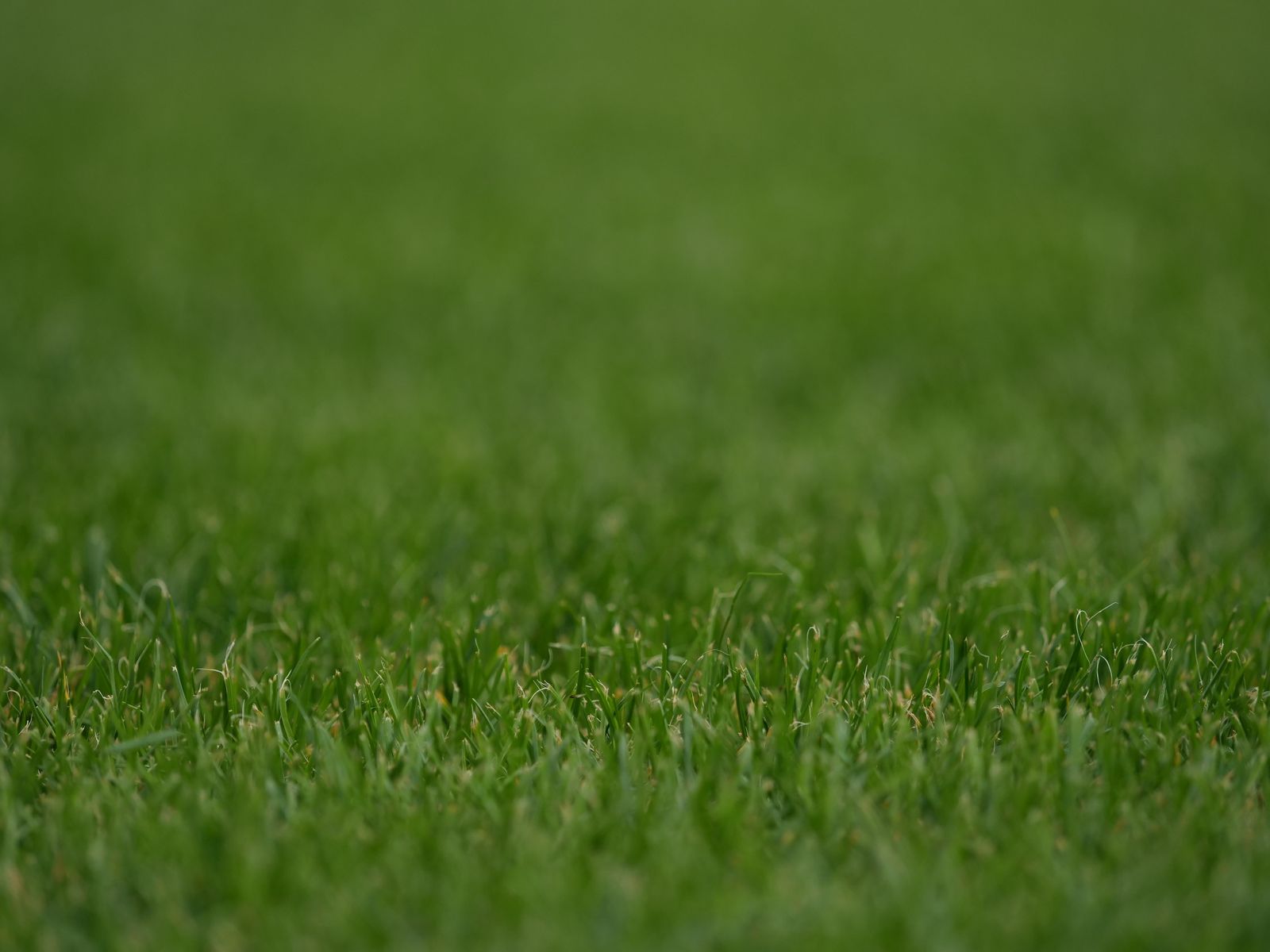
A dense green lawn in close view, showing a tight grass mat
Feeding: Lean Nitrogen, Only in Active Growth
Here is the first trap, sprung in spring and fall by well meaning owners with cool season habits. Zoysia is fed only while it is actively growing: beginning at full green up, never on a half awake lawn in early spring, and ending about 6 to 8 weeks before the first fall frost, so the plant hardens into dormancy instead of being pushed into tender growth that winter kills. Feeding a dormant brown zoysia lawn in fall, the winterizer habit imported from bluegrass country, is the single most common zoysia mistake in America, and it buys tender growth, disease invitation, and nothing else.
The amount is the second half of the lesson. Published zoysia nitrogen guidance ranges from about 1 to 2 pounds per 1,000 square feet per year at the lean end, where NC State TurfFiles sits and where this site stands, up to 2 to 4 pounds in some guides. This page follows the lean end on principle: zoysia evolved a low appetite, excess nitrogen grows thatch and disease pressure faster than it grows beauty, and a lean fed zoysia lawn is denser, slower, and calmer than a pushed one. A soil test before any program, and no single application beyond about a pound of nitrogen per 1,000 square feet, are the guardrails. If your zoysia looks hungry, confirm with the test before believing it; pale zoysia is more often thirsty, shaded, or thatch bound than starved.
Thatch: The Signature Problem, Checked With a Knife
Thatch is the layer of living and dead stems and roots woven between the green and the soil, and zoysia's dense stolon mat manufactures it steadily. A thin layer is normal and even protective; past about 1/2 inch it becomes a sponge that holds water at the surface, shelters disease, and lifts the crowns away from the soil they root in, so the lawn goes spongy underfoot and scalps at heights it used to take cleanly. Check with a knife: cut a small wedge of lawn and measure the brown layer between green and soil. Past about 1/2 inch, dethatch, and the timing is the discipline: in late spring, when the grass is in full active growth and can heal fast, never in dormancy and never heading into winter. A vertical mower or power rake, followed by collecting the debris (there will be a humbling amount), and a return to the lean feeding that slows the thatch's return. Dethatching a zoysia lawn on a cool season calendar, in fall, opens the mat exactly when the plant cannot close it, and winter walks in.
Dormancy, Weeds, and the Year's Edges
Winter brown is dormancy, not death, and the winter rules are protective boredom: keep heavy traffic off the frozen or dormant mat where you can, and do not fertilize, dethatch, or renovate a sleeping lawn for any reason the calendar offers. Some owners overseed zoysia with ryegrass for winter green; it is a legitimate cosmetic choice with a spring cost, since the rye competes with zoysia's green up and must be managed out as the zoysia wakes, and beginners with a healthy zoysia lawn should admire the idea on other people's lawns for a year or two first. Weed pressure on a dense zoysia mat is naturally low, because occupancy is the best herbicide; the thin spots where weeds enter are the owner's to thicken by fixing the cause, shade, compaction, or thatch, rather than by escalating chemistry. Spring green up is gradual and patchy by nature, green arriving in the warm spots first; judge the lawn at full green up, not at the first warm weekend, and let the calendar on this page, lean food, right height, deep water, late spring dethatching, carry the year.
Establishing Zoysia: Plugs, Sprigs, and Sod
Since zoysia rarely starts from seed, its lawns begin as living pieces, and each form has its own economics. Sod is the instant answer and the expensive one: a full mat from day one, watered deeply while its roots knit, with the seams and edges as the vulnerable points in its first weeks. Plugs are the patient standard: small squares of zoysia set into prepared ground in a grid, kept watered through their first season while the stolons run outward and knit the grid into a mat, a process that takes a full growing season in most yards and rewards the wait with sod's result at a fraction of sod's price. Sprigs, individual runners planted in shallow furrows, are the cheapest and slowest route, a commercial method that home gardeners with time and a large area sometimes adopt. All three share the establishment rules that matter: plant only into the warm season so the grass grows from the day it lands, never let new pieces dry out in their first weeks, keep traffic off until the mat resists a tug, and feed nothing until the new lawn is growing on its own roots. A zoysia lawn established this way in late spring is a lawn by fall; established lazily in the heat of August with forgotten watering, it is a grid of green islands in a sea of weeds, because the weeds did not forget anything. Choose the form by your budget and your season length, and then give it the one thing all three forms spend: water and time, in that order.
Zoysia Under Trees and Under Feet
Two questions follow every zoysia lawn home. The first is shade: zoysia tolerates light shade better than Bermuda, its warm season rival, but it thins steadily as shade deepens, because no warm season grass photosynthesizes on a cool season ration. A zoysia lawn under growing trees is a lawn on a slow countdown, and the owner's honest options are to raise and thin the canopy to return the light, or to accept the thinning edge and convert the deepest shade to beds and groundcover before the weeds convert it for you. The second is traffic: zoysia's dense mat takes foot traffic and play well in active growth, better than most of its family, but it recovers from damage slowly because its growth is slow, and it takes its worst damage in dormancy, when a worn path across a brown lawn has no growing season left to heal in and shows until spring. Route winter feet on paths where you can, repair worn spots with plugs at green up rather than seed that does not exist, and remember that this grass's whole bargain is patience exchanged for durability: it is slow to build, slow to heal, and slow to need anything from you once established, which for the right owner is not a flaw list but the entire point.
Frequently Asked Questions
How short should I mow zoysia grass?
Between 1 and 2.5 inches, following the one third rule at every cut. The low end wants a sharp blade and a level lawn; the high end forgives bumps and busy schedules. Keep the blade genuinely sharp, because zoysia's tough leaves tear and pale under a dull mower, which looks like a grass problem and is a mower problem.
How much fertilizer does zoysia need?
Very little, and only in active growth. NC State TurfFiles guidance, this site's standard, sits at the lean end of the published range at about 1 to 2 pounds of nitrogen per 1,000 square feet per year, with no single application over about 1 pound. Start feeding at full green up and stop 6 to 8 weeks before the first fall frost. Never fertilize a dormant brown lawn.
Why is my zoysia brown in winter? Is it dead?
It is dormant, which is the warm season family's nature: zoysia greens up late in spring, grows through summer, and goes brown with the first frosts until spring. Winter care is to leave it alone, keep heavy traffic off it, and resist feeding or dethatching a sleeping lawn. Judge its health at full spring green up, not before.
How often does zoysia need water?
About 1 inch a week in active growth, deep and infrequent, and less than almost any other lawn in drought, where it slows and waits. Water when the plant signals: leaf blades folding lengthwise, a blue gray cast, footprints staying in the mat. In winter dormancy it needs essentially no irrigation in most climates.
When should I dethatch zoysia?
When the thatch layer passes about 1/2 inch, measured by cutting a small wedge and looking at the brown layer between the green and the soil, and only in late spring when the grass is in full active growth and heals fast. Never dethatch heading into winter. Lean feeding afterward slows the thatch's return.
Can I overseed zoysia for winter color?
You can, with ryegrass, and it is a cosmetic choice with a real cost: the rye competes with zoysia's spring green up and must be managed out as the zoysia wakes. On a healthy zoysia lawn, especially a first one, enjoy the honest winter brown for a year or two before signing up for the spring negotiation.
Photo credits: Володимир Король (Pexels); Olivier Alfaiate (Pexels). Photos are served from this site; follow the credit to the library page for the original.