Most wind chimes do not fail because they are bad chimes. They fail because they are hung in dead air, too close to a wall, or from a hook that was never going to hold them. A chime is a wind instrument. Hang it where the wind cannot reach it and it will be silent garden jewelry. Hang it where it bangs a railing on every gust and it will be noise. The whole job of hanging a chime well comes down to placement first, hardware second, and a short check at the spot before you drill anything.
This guide walks through placement in the order you should decide it: wind exposure, height, clearance for the longest tube, and hearing distance for you and for your neighbors. Then it covers the four hanging methods, branch, screw hook, bracket, and shepherd's hook, and when each one works. Bring your chime outside with you and work at the actual spot. That is what the checklist is for.
Use the Wind Chime Placement Checklist below at the spot you have in mind, before you commit to a hole or a hook. Tick each item as you verify it with the chime in hand: wind, height, clearance, swing, and sound distance. If a spot fails an item, move the chime and run the checklist again. Two minutes with the checklist saves a season of silence or clatter.
Interactive tool
Wind Chime Placement Checklist
Check off each step as you finish it. Your progress stays on this page.
0 of 6 complete
0% done
Placement First: Wind Exposure Decides Whether It Sings
A chime needs moving air, and not all outdoor air moves the same way. Corners of houses, gaps between fences, and the open edge of a porch tend to funnel a breeze. The middle of a sheltered patio, a deep covered porch, and the lee side of a dense hedge can sit in still air even on a breezy day. Before you hang anything, stand at your candidate spot on a day with a light wind and hold the chime up by its hanging ring at the height you plan. Watch the sail, the flat piece at the bottom that catches the wind. If the sail stirs and the striker taps the tubes within a minute or two of ordinary breeze, the spot has wind. If nothing moves, the spot does not, no matter how pleasant it is to sit in.
Aim for steady, moderate air rather than the windiest point in the yard. A chime in a wind tunnel slams in every gust, tangles its cords, and wears out its striker. A chime that moves in a normal breeze and rests in calm air gives you the sound you bought it for. Watch the spot at different times, too. Many yards have a reliable afternoon breeze from one direction and still mornings. Hang for the breeze you will actually be home to hear.
Keep the chime out of roof drip lines and away from sprinklers if you can. Constant dripping water spots metal tubes, rots wooden parts and cords, and can keep a chime damp for days. A little weather is expected for an outdoor chime. A gutter drip aimed at it all winter is not.
Height: Set It for Ears, Wind, and Safety
A practical hanging height for most chimes puts the top of the chime at about 5 to 7 feet above the ground or deck. That range does three things at once. It lifts the chime into moving air above patio furniture and plantings. It places the sound near ear level for people sitting nearby, so the tone carries without needing volume. And it keeps the tubes above head height on a path or deck edge, so nobody walks into them.
Adjust within that range for the chime itself. A large, deep toned chime with long tubes hangs lower in effect, because its tubes extend well below the hook. Measure the full hanging length of your chime, hook to the bottom of the sail, and make sure the lowest point still clears heads, railings, and plants below it. A small, light chime can sit a little higher and will need the extra exposure, because light strikers need cleaner wind to move.
Never hang a chime where people must pass directly under it at head height, such as centered over a doorway or a narrow gate. Move it to the side of the opening, where it is heard as people pass rather than met by a forehead.
Clearance: Room for the Longest Tube to Swing
Clearance is the step beginners skip, and it is the difference between a chime and a nuisance. When wind moves a chime, the whole assembly swings and the tubes swing within it. If a tube can reach a wall, a post, a window, or a railing, it will eventually strike it, usually at night, usually repeatedly. The sound of a tube hitting a house is not music, and the dents are permanent.
Use this clearance rule: hang the chime so it has open space in every direction it can swing, at least the length of its longest tube plus a hand's width, and about 2 feet of open space in all directions is a good working target for a typical porch chime, as the top placement guides for this query also advise. Check it physically. Hang the chime, then push it gently in each direction, north, south, east, and west, and watch the tubes. Nothing should come close to touching. Check below as well as sideways. A chime above a railing can swing down and strike the rail cap even when its side clearance looks fine.
Glass deserves special care. Keep chimes well clear of windows and glass doors. A swinging metal tube in a storm gust can crack glass, and a chime hung just outside a window will sound much louder inside that room than it does on the porch, which matters for the next section.
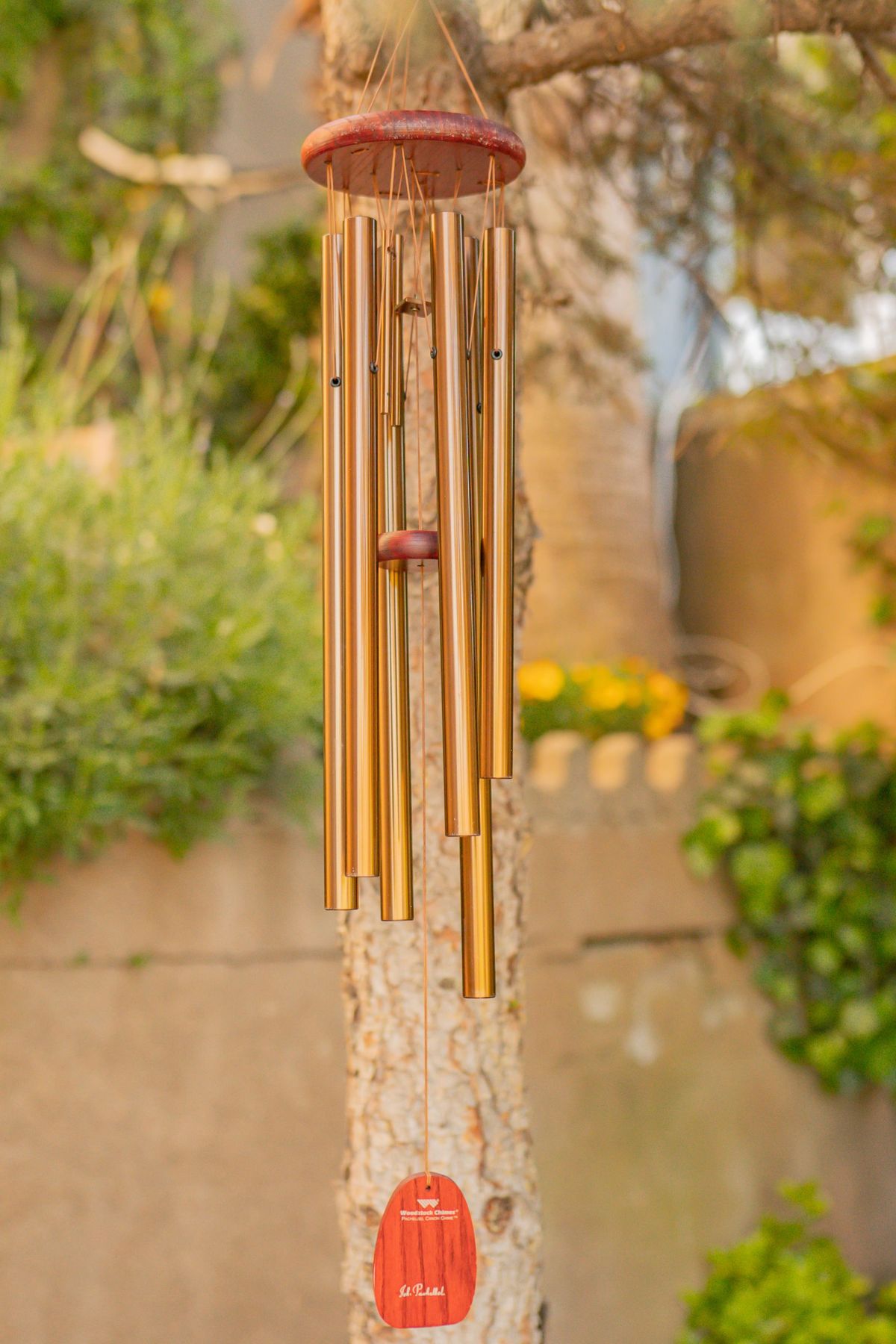
Close view of a wind chime hanging outdoors among greenery
Hearing Distance: Pleasant for You, Fair to Your Neighbors
Sound is the point of the object, so place it where the people who want to hear it spend time: near a porch chair, a kitchen window you open, a garden bench, or a hammock. A chime hung at the far end of the yard for looks alone will rarely be heard and rarely be enjoyed. At the same time, be honest about how far the sound travels. Metal chimes, especially large ones with deep tubes, carry surprisingly far on a quiet evening, and sound reflects off hard walls and fences, which can aim it at a neighbor's bedroom window even when the chime faces your yard.
Neighbor etiquette for chimes is simple, and it is mostly about night:
Hang the chime on the side of your porch or yard that faces away from the closest neighbor windows when you have the choice.
Keep it away from the shared fence line if your yards are small. A few feet of distance and a planting bed between the chime and the fence softens what your neighbors hear.
Learn how to quiet your chime at night or in storms. Many chimes let you slide the striker or clapper up, clip the sail, or fit a simple silencer that holds the tubes apart. If yours does not, bring it in on storm nights. A chime you can silence is a chime nobody complains about.
If a neighbor does mention the chime, treat it as information, not an argument. Moving a hook by a few feet, choosing a softer toned spot under a porch roof, or quieting it after an hour you agree on solves nearly every chime dispute that exists.
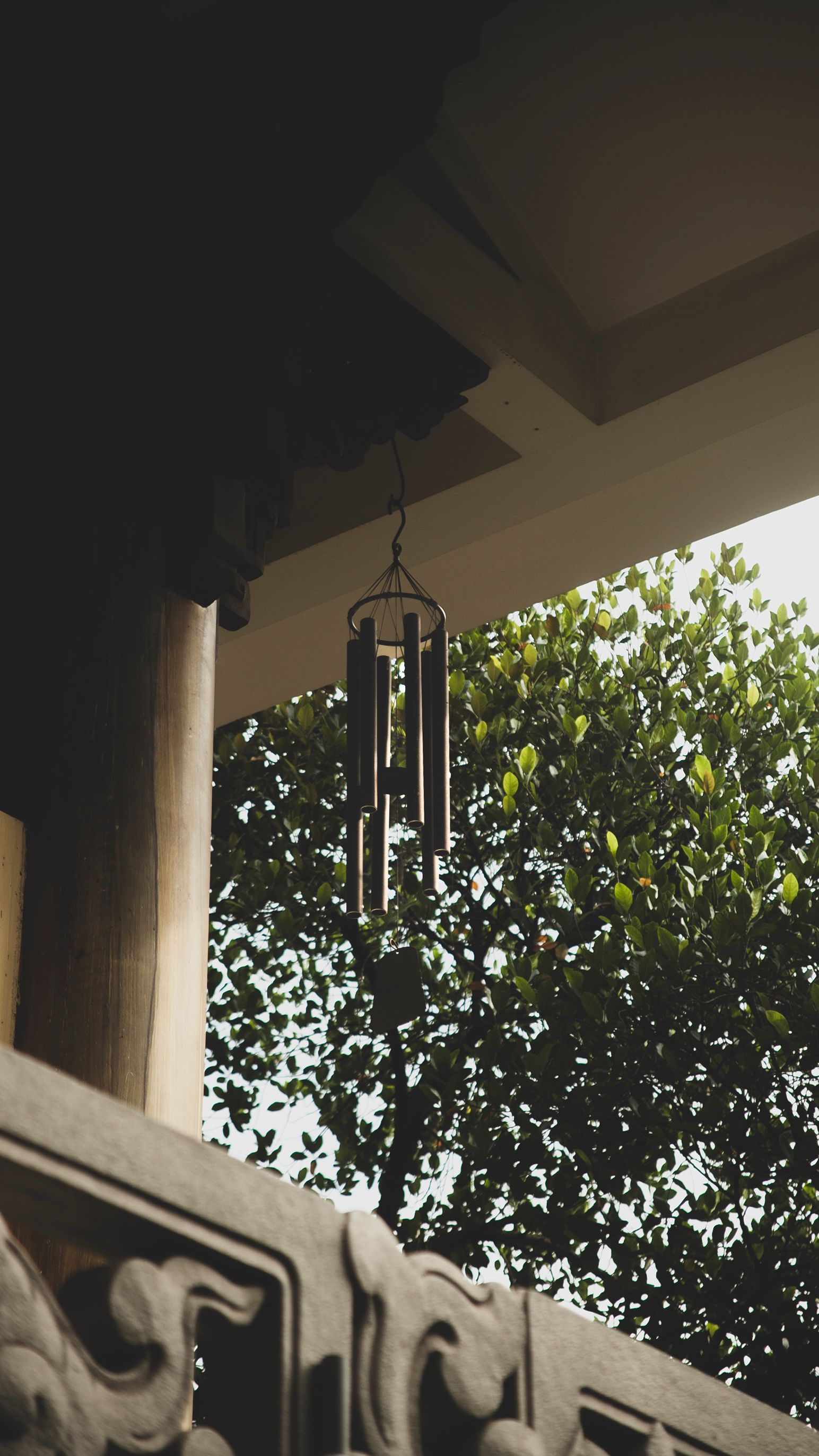
Under a porch roof, sound softens and the chime lasts longer out of direct weather. In the open, on a branch or a shepherd's hook, the same chime sounds brighter and louder. Use that difference on purpose. A big chime that is too much in the open is often just right under a roof edge, and a small chime lost under a deep porch often comes alive on a hook in the garden.
The Four Hanging Methods, and When Each Works
Branch
A sturdy, live tree branch is the classic garden hanger and the best choice when you want the chime in the garden itself, away from the house. Choose a branch thick enough to carry the chime without sagging, high enough for your clearance, and clear of leaves that would brush the tubes. Protect the tree and the cord: do not loop bare wire or thin cord directly over bark, where it can cut in as the branch grows. Use a wide strap, a padded loop, or an S hook over the branch, and check it each season as the branch thickens. Branches sway in storms more than any other support, so give a branch hung chime extra clearance.
Screw Hook
A screw hook into solid wood is the strongest, neatest porch solution. It works in a porch ceiling joist, a beam, or an eave, anywhere you can reach sound wood. Drill a pilot hole slightly smaller than the threaded shank, then turn the hook in by hand until the threads are fully in the wood and only the hook shows. The pilot hole matters: it keeps the wood from splitting and it lets the hook seat fully. Two warnings decide whether this method holds. First, the hook must be in solid wood, not in thin siding, soffit board, or drywall. If you cannot find a joist or beam where you want the chime, use a bracket instead. Second, match the hook to the weight. A large metal chime is heavier than it looks, and an outdoor rated hook in stainless or coated steel will outlast a bright indoor hook that rusts and stains the ceiling.
Bracket
A wall bracket or plant hanger bracket screws to a post, a wall stud, or a fence post and reaches outward, which solves two problems at once: it finds solid wood on a vertical surface, and its reach holds the chime away from the wall for clearance. Brackets are the right choice when the ceiling has no joist in the right place, when you want the chime beside a door or window rather than above it, and for renters who are allowed screws in a fence post but not in the house. Use exterior screws into the post or stud, hang the chime from the bracket tip with its ring or a short S hook, and run the same swing test you would anywhere else. A bracket that flexes under the chime's weight will bounce in wind and work its screws loose, so choose a bracket rated for more than your chime weighs.
Shepherd's Hook
A shepherd's hook, the tall metal stake with a curved top sold for hanging baskets, is the no tools, no drilling option. Push it into open ground where you want the chime, hang, and listen. It works best for small to medium chimes in the garden, by a path, or near a bench, and it is the easiest method to move when you are still deciding on a spot. Its limits are real: tall hooks sway and can lean or pull over in soft ground under a heavy chime, and a large chime on a hook often lacks clearance from the hook's own pole. Keep heavy chimes off shepherd's hooks, set the hook deep and firm, and check that the chime cannot swing into the pole itself.
Method
Best for
Watch out for
Branch
Garden placement away from the house
Cord cutting into bark, extra storm sway
Screw hook
Porch ceilings and beams, heaviest chimes
Must hit solid wood, needs a pilot hole
Bracket
Posts and walls, renters with post access
Flex under weight, screws must hit a stud or post
Shepherd's hook
Trying a spot, small chimes, no drilling
Leaning in soft ground, pole clearance
After It Is Up: Listen, Adjust, and Care for It
Leave a new chime up for a day or two and listen on purpose at different times: morning calm, afternoon breeze, and after dark from inside the house, including from the room nearest the chime. Most placement problems announce themselves in that first listen. Tubes ticking a post mean you need inches more clearance. Silence on a breezy day means the spot is sheltered and the chime needs open air or a lower, lighter sail position. Sound that is pleasant on the porch and harsh indoors means the chime is too close to that window or wall, and a move of a few feet along the beam will usually fix it.
Care is light but real. Wipe tubes down when they look dull or spotted, check cords each spring for fraying where they pass through holes, and take the chime down or silence it ahead of severe storms and high winds. In winter, in cold climates, bringing a wooden or bamboo chime under cover extends its life by seasons, while most metal chimes can stay out if their cords are sound. A chime that is placed well and looked at twice a year will sing for a very long time.
Frequently Asked Questions
Why is my wind chime silent most of the time?
Almost always, the spot is sheltered. Porch centers, lee walls, and dense plantings block the light, steady breeze a chime needs. Hold the chime up at the spot on a breezy day and watch the sail. If it barely stirs, move the chime to a porch corner, a roof edge, a branch, or a shepherd's hook in open garden, and hang lighter chimes a little higher where air moves more freely.
How high should I hang a wind chime?
Hang most chimes so the top sits about 5 to 7 feet above the ground or deck. Then check the full hanging length of your chime: the bottom of the sail should still clear heads, railings, and plants below. Large chimes with long tubes need the lower end of that range checked carefully, because their tubes reach well below the hook.
How much clearance does a wind chime need?
Give it open space in every direction it can swing, about 2 feet in all directions for a typical porch chime, and at minimum the length of its longest tube plus a hand's width. Hang it, push it gently north, south, east, and west, and confirm no tube can touch a wall, post, window, railing, or plant. Check downward swing toward rail caps as well as sideways swing.
Can I hang a wind chime without drilling holes?
Yes. A shepherd's hook in open ground needs no tools and suits small to medium chimes. A sturdy tree branch with a wide strap or S hook also needs no holes in the house. For porches, clamp style hooks made for railings and gutters exist for light chimes. Keep heavy chimes on screwed hardware into solid wood, because no clamp or hook stake matches that strength.
How do I keep my wind chimes from annoying my neighbors?
Hang the chime on the side of your yard away from the closest neighbor windows, keep it off the shared fence line, and learn to quiet it at night by lifting the striker, clipping the sail, or fitting a tube silencer, or bring it in during storms. Distance, a porch roof overhead, and a quiet hours habit solve nearly every complaint. If a neighbor raises it, moving the hook a few feet usually settles the matter.
Photo credits: The Old Path White Clouds (Pexels); furkanfdemir (Pexels). Photos are served from this site; follow the credit to the library page for the original.