How to Level a Lawn: Topdress the Shallow, Lift the Deep
By the Windchime Walker editorial team
Photo: Alan Miller / Pexels
A bumpy lawn is more than an eyesore. The mower scalps the high spots and floats over the dips, so the grass is cut at three different heights in one pass; water pools in the hollows and the high spots bake; and ankles learn the yard's topography the hard way. Leveling fixes it, and leveling is two different jobs wearing one name. Choosing between them is a matter of depth, measured honestly: shallow unevenness is topdressed away in thin layers over a few weeks, while deep hollows need the turf lifted, the ground corrected underneath, and the grass put back. Use the topdressing method on a deep hole and you bury the grass and make a grave. Use the lifting method on a shallow dip and you have done surgery where a bandage belonged.
This guide covers both methods, the mix that fills them, the season when the work succeeds, and the tool you can leave at the rental shop: the roller, which compacts soil beautifully and levels it barely at all.
The Topdressing Volume Calculator on this page, which is this site's soil calculator set to leveling work, turns your dips into a materials order: enter the length, width, and depth of the areas you are filling and it returns the volume of leveling mix to buy or blend, so the project is one trip rather than three.
Interactive tool
Topdressing Volume Calculator: How Much Leveling Mix?
Enter the length and width of the dip or area you are leveling and the depth you plan to add, in thin layers. The calculator returns the volume of leveling mix to buy, so the grass is never buried and the job never runs short.
32.0 cubic feet of soil
That is 1.19 cubic yards in bulk, or about 22 bags at 1.5 cubic feet or 16 bags at 2 cubic feet.
Filling a new bed with a 60/40 mix: 19.2 cubic feet of topsoil and 12.8 cubic feet of compost.
Loose soil settles after the first few waterings. Most gardeners add roughly a tenth more than the raw volume and top the bed up in the second season.
The math is plain geometry: length times width times depth. One cubic yard is 27 cubic feet. Bag counts are rounded up, because a half filled bed helps no one.
Step 1: Diagnose the Dips, and Find Out Why They Exist
Walk the lawn after rain if you can, when the hollows announce themselves as puddles, or lay a long straight board or a taut string across suspect areas and measure the gap beneath it. Garden guidance in the UK, where lawn leveling is a national pastime, treats dips up to about 2.5 centimeters, roughly an inch, as topdressing territory, and deeper ones as lift and fill work. Mark the shallow ones and the deep ones differently, chalk or flags, because they will be fixed on different days by different methods.
Then ask why the dip is there, because a dip with a cause will return if you only fix the surface. The common causes: a buried stump or root rotting away and taking the soil down with it over years; a trench from a past utility or drainage job settling; a leaking pipe washing soil away, which announces itself with a dip that is also suspiciously lush; an old tree's root flare zone subsiding; or simple frost heave and traffic compaction in a high use path. A rotting stump's hole can be filled and will settle again as the rot continues, more slowly each time. A leak must be fixed at the pipe, not at the lawn. Diagnose first, or you will level the same hole every spring and call the lawn stubborn.
Step 2: Shallow Dips, Topdress in Thin Layers
For dips under about an inch, topdressing is the whole method: spread a leveling mix over the low area in a thin layer, work it down into the grass, and let the grass grow up through it. The discipline is the layer's thickness: a quarter to a half inch at a time, no more, with the grass tips always visible above the mix. Grass buried deeper than that cannot photosynthesize its way out and dies under the fill, converting your dip into a bald patch at a lower altitude. Two or three thin applications, a few weeks apart while the grass is actively growing, walk a shallow dip up to level without ever harming the lawn.
Work the mix in with the back of a rake or a stiff broom, sweeping it off the high grass and down into the hollow until the blades poke through everywhere. Water it in to settle the mix into contact with the soil. Then wait for growth before judging; a topdressed dip looks worse for a week, like a muddy rumor in the lawn, and then the grass comes through and the surface reads flatter than it has in years. Patience between layers is not optional garnish on this method. It is the method.
Step 3: The Mix, and Why Recipes Disagree
Ask five lawn keepers for a topdressing mix and you will get five ratios, and they are all defensible because the mix's job is simple: fill the dip with something that resembles soil, drains, and feeds a little. The recipes in circulation include 3 parts sand, 2 parts topsoil, 1 part compost; Bob Vila's guidance runs 2 parts sand, 2 parts topsoil, 1 part compost; another common blend goes 60 percent sand, 30 percent topsoil, 10 percent compost. The pattern beneath the disagreement is stable: sand for leveling and drainage, topsoil for body, a minority of compost for life.
For a beginner, the simple version works: equal parts coarse sand and good topsoil, with a shovel of compost in each barrow if you have it. Two warnings matter more than the ratio. Use coarse or sharp sand, never fine play sand, which sets almost like cement in a lawn. And match your soil: on heavy clay, lean sandier; on sand already, lean toward topsoil and compost, because adding sand to a sandy lawn is decorating. Screen out lumps and stones as you spread; the mix should fall through the grass, not sit on it in clods.
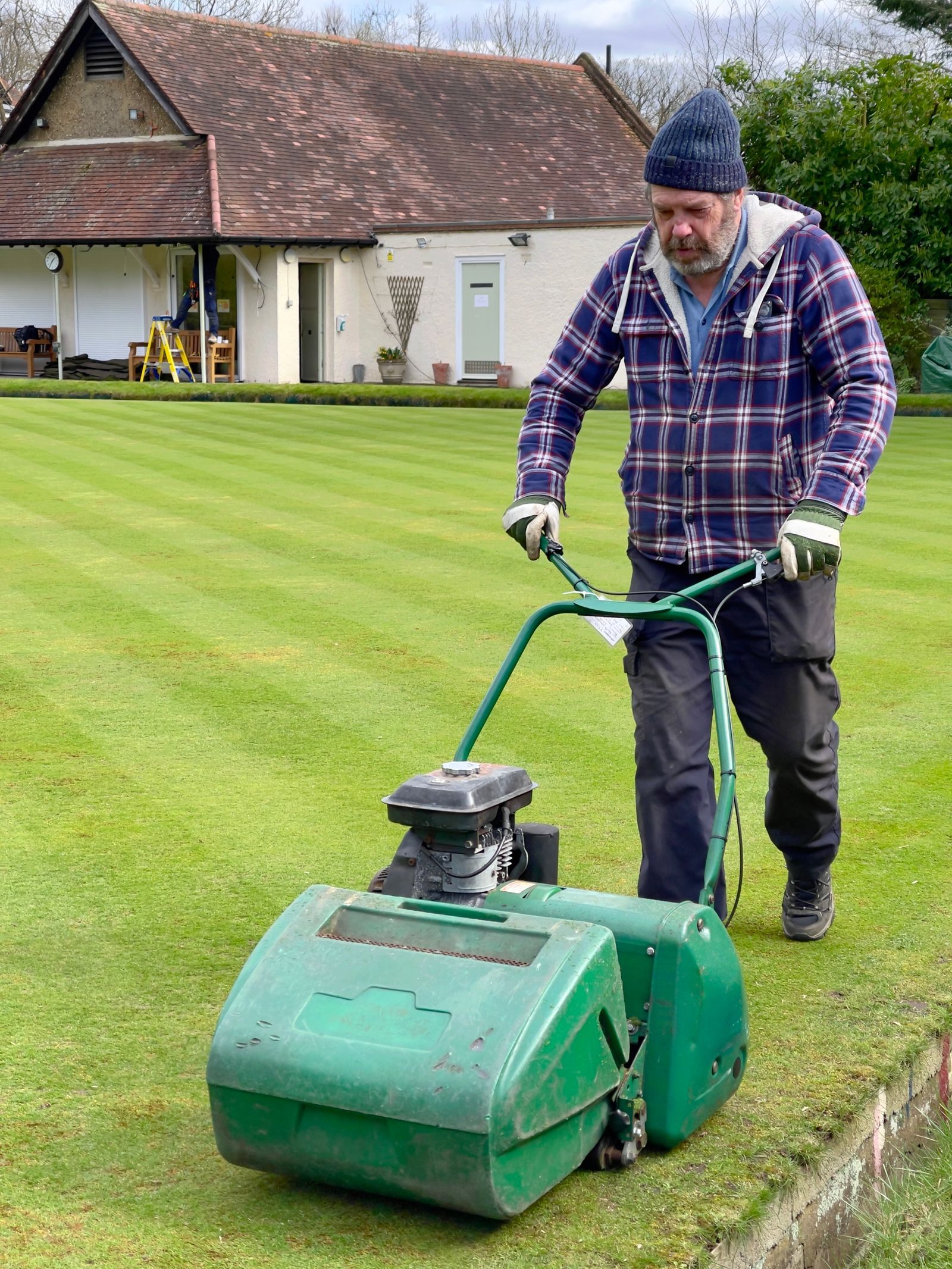
A person mowing a lawn on a sunny day
Step 4: Deep Hollows, Lift the Turf and Correct the Ground
For a hollow deeper than about an inch, lift the grass and fix the ground beneath it. Cut an H shape into the turf over the dip with a spade or edging tool: a line across the middle and one down each side. Peel the two flaps of turf back like opening a book, folding them away from the hollow. They will survive this for the hour the job takes, especially if you keep them shaded and sprinkle them in hot weather.
Now correct the ground, which is the actual repair. For a dip, add your leveling mix or plain topsoil to the exposed soil, firm it gently, and aim slightly proud of level, because fill settles: a hollow filled dead level today is a shallow dip by autumn. For a hump, the mirror operation, remove soil from beneath the flaps until the board laid across reads level. Then fold the turf back, press it into full contact with the soil, no air pockets beneath it, water it deeply, and keep it moist for a couple of weeks while the cut edges knit. Stay off it during the knitting. A relaid flap watered faithfully disappears into the lawn within a month; a relaid flap allowed to dry at the edges announces its outline in brown for a season.
Large areas of general unevenness, the whole lawn rolling like a frozen sea, are a bigger decision: repeated seasonal topdressing will improve them year by year, while a full renovation, stripping, grading, and reseeding, is a project with a project's price. Most lawns are honestly served by the slow road, a topdressing each spring or fall, because grass grows up through thin layers happily and the lawn never leaves service.
Step 5: Time It to Growth, and Skip the Roller
Level when the grass is growing, in spring or early fall for cool season lawns, because every method in this guide depends on grass growing through, up, or back together. Topdressing a dormant lawn buries it for the winter; lifting turf in a drought asks cut roots to knit without water. Early fall is the connoisseur's choice, with warm soil, cool air, and no weed seed competition, but spring works perfectly well and has the advantage of your enthusiasm.
And leave the roller at the shop. Rolling a bumpy lawn is the folk remedy that survives every debunking, and its physics are against it: a roller presses high spots down by compacting them, which damages the soil structure roots need, and does nothing at all to raise the lows, which are the actual problem in most lawns. Leveling is addition and subtraction of soil, not compression of it. The one honest use of a light roller in this whole project is pressing relaid turf flaps into contact with their soil, and your feet, shuffling carefully, do that job nearly as well.
Aftercare: The First Month After Leveling
Leveling is finished in an afternoon and completed over a month, and the aftercare decides which of those you got. Water topdressed areas lightly and often enough to keep the mix settled and the grass growing through it; the mix that dries into a crust delays the grass and invites the wind to redistribute your work. Keep traffic off lifted turf flaps entirely for the first couple of weeks, and off heavily topdressed patches as much as the household allows, because a footprint in fresh fill is a new dip with your name on it.
Mow with a little mercy at first: let topdressed grass grow slightly longer than usual before the first cut, so the blades pushing through the mix are strong enough to survive the mower, and raise the deck a notch over relaid turf until its edges have knitted. Watch for the settling that every fill performs as it wets and compacts; a dip that returns at half its depth after a month is not a failure but the material asking for its second layer, which is the planned next step of the thin layer method rather than a surprise. Mark your calendar for it when you finish the first pass, in the same season while growth is strong, and the lawn will be measurably flatter by the time the season ends than any single heroic weekend could have made it.
Finally, feed the lawn on its normal schedule and overseed any spot where the grass came through thin. Leveling stresses grass the way any renovation does, and a lawn that is fed and thickened afterward forgives the disturbance and hides the seams. The straight board test, run again in a month, is the honest report card: gaps shrinking, puddles gone, and a mower that travels the yard like it is crossing a floor.
Frequently Asked Questions
How deep a dip can I fix by topdressing?
About an inch, applied in layers of a quarter to a half inch at a time, a few weeks apart, with the grass tips always showing through the mix. Grass buried deeper cannot grow out and dies. Deeper hollows need the turf lifted: cut an H into the grass, peel the flaps back, add or remove soil underneath, and relay the turf, watering it while the edges knit.
What is the best topdressing mix for leveling a lawn?
Recipes vary, 3 parts sand to 2 parts topsoil to 1 part compost is common, Bob Vila's guidance runs 2 to 2 to 1, and others go heavier on sand, but the pattern is stable: sand for leveling and drainage, topsoil for body, compost as a minority for life. A simple equal mix of coarse sand and topsoil with some compost works for most lawns. Use coarse sand, never fine play sand, and lean the mix toward your soil type.
When is the best time of year to level a lawn?
While the grass is actively growing: spring or early fall for cool season lawns. Topdressing needs grass to grow up through each thin layer, and lifted turf needs growth to knit its cut edges back together. Early fall is ideal, warm soil and cool air with little weed pressure, but spring works well too. Never level a dormant or drought stressed lawn.
Will rolling my lawn make it level?
No. A roller compacts high spots down, damaging soil structure as it goes, and does nothing to raise the low spots, which are most of the problem. Leveling works by adding soil to hollows and removing it from humps, not by compression. The roller's only legitimate role here is pressing relaid turf into contact with the soil beneath it, a job your feet can do.
Why does the same dip keep coming back?
Because the cause is still working. A rotting buried stump or root keeps subsiding as it decays, a settled trench keeps compacting, and a leaking pipe keeps washing soil away, the last often marked by suspiciously lush grass over the dip. Fix leaks at the pipe. For rotting wood and settling fill, top up the dip each season; it will settle less each time as the cause exhausts itself.
How much leveling mix do I need?
Measure each area you are filling, length by width by the depth of fill, remembering that shallow dips take several thin layers rather than one deep one. The calculator on this page converts those measurements into a volume to buy or blend. Order a little extra: fill settles as it is watered in, and a project stopped one barrow short of the last dip is a project that levels all but one corner.
Photo credits: Alan Miller (Pexels); Magic K (Pexels). Photos are served from this site; follow the credit to the library page for the original.