Birds are particular customers. A bird bath can be beautiful, expensive, and permanently empty if it breaks their rules, because a small bird bathing is a small bird at its most vulnerable, wet, flightless for a moment, and thinking like prey. The baths that stay busy obey the birds' logic instead of the gardener's taste: shallow water with sure footing, a clear view of approaching danger, escape cover a short flight away, and water clean enough to drink. Get those four right and almost any vessel works. Get them wrong and even marble fails.
This guide builds the classic two piece bird bath, an upturned terracotta pot with a wide saucer on top, in under an hour for very little money, then covers the placement and care that decide whether birds move in. The Bird Bath Setup Checklist on this page gathers the build, the siting rules, and the cleaning rhythm into one list you can tick off from the hardware store to the first customer.
Interactive tool
Bird Bath Setup Checklist
Check off each step as you finish it. Your progress stays on this page.
0 of 6 complete
0% done
Why Shallow Wins: The Bird's Rules
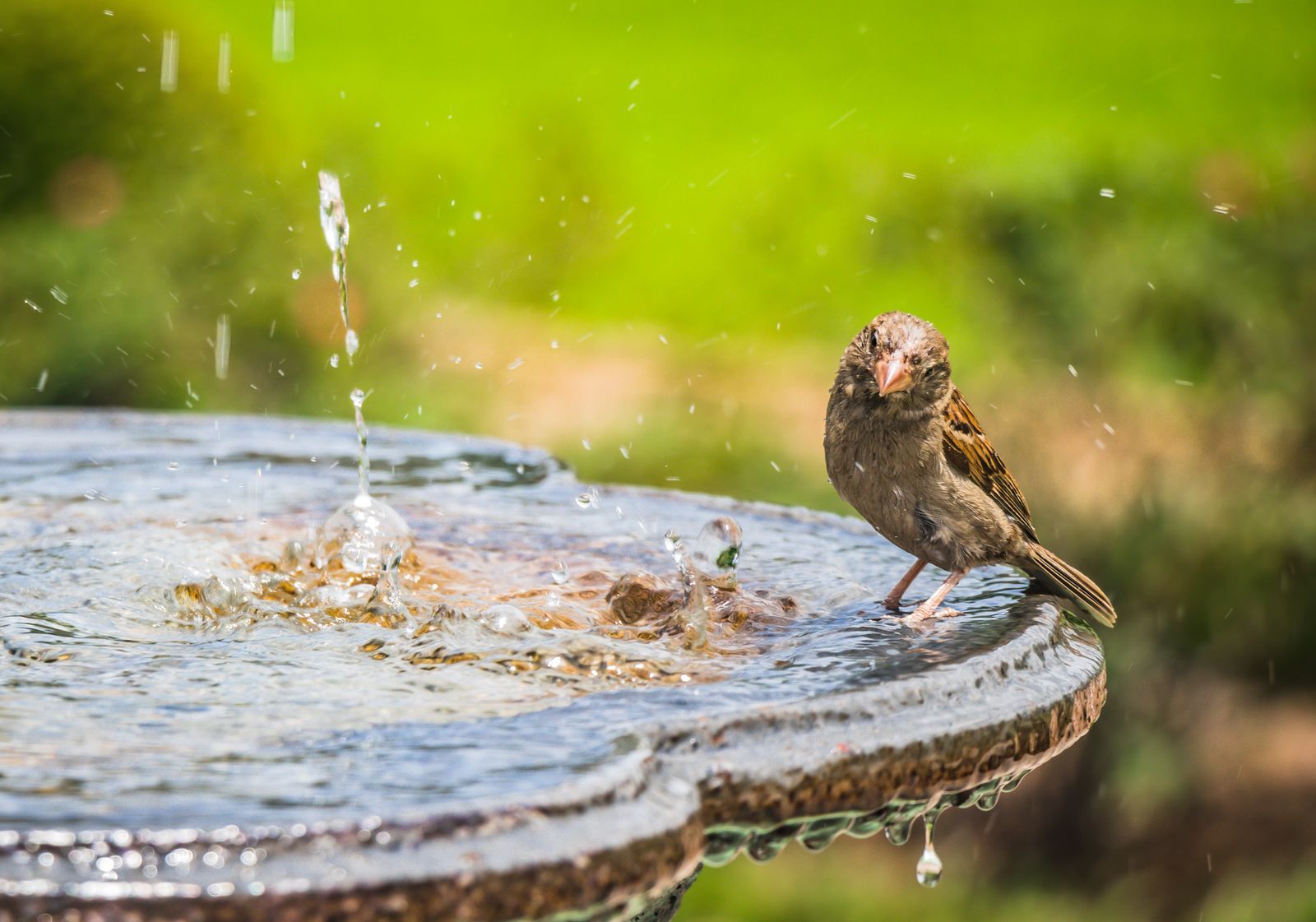
Start with the water itself. Birds bathe in puddles in the wild, and their ideal bath imitates one: water about 1 to 2 inches deep at the deepest point, sloping gently from a dry rim to the middle, so a bird can walk in to the depth it chooses, belly deep for bathing, ankle deep for drinking. Most commercial bird baths are too deep and too slick, with steep sides and a glazed surface that offers no grip, and birds vote against them by bathing in the puddle on your driveway instead.
Footing is the second rule. A rough surface, stone, concrete, unglazed terracotta, lets small feet grip. A slick one makes birds skittish, and rightly: a bird that slips into deep water with wet feathers is in real danger. If your vessel is smooth, the fix is built into this guide: a layer of stones and gravel in the bottom, which creates the shallow, grippable, puddle like floor birds trust.
The third and fourth rules are about place and cleanliness, covered in their own sections below, because they matter as much as the bath itself: cover within a short flight, and water changed and scrubbed on a rhythm, since a dirty bath spreads disease among exactly the birds you built it for.
The Build: A Pot, a Saucer, and an Hour
You need three things: a sturdy terracotta flower pot, a wide terracotta saucer that sits securely on the pot's upturned base and overhangs it like a tabletop, and outdoor adhesive or a steady hand if the saucer balances well. Larger and heavier is better at every step: a big saucer gives birds room and choices of depth, and a heavy base resists tipping in wind and under the landing weight of larger birds.
Build it in this order. Choose the pot's height by your site: a bath standing at about knee height is easy to clean and watch, and cats have a harder time ambushing at height, though height alone does not make a bath cat proof; placement does that, below. Turn the pot upside down on your chosen spot and check it stands dead steady, adjusting the ground beneath until it does, because every wobble now is a spill later. Set the saucer on top, centered, and check the balance with a firm nudge. If it rocks, a ring of outdoor adhesive or a bead of silicone between pot and saucer makes the marriage permanent; if it sits like a stone, gravity is a sufficient contractor.
Fill the saucer with a layer of clean pebbles or coarse gravel, concentrating them toward one side to create a beach: a slope from dry stone at the rim down into the water. Add one larger flat stone near the middle as a drinking island, a perch at water level where a bird can stand and sip without getting wet at all. Then fill with water to a depth of 1 to 2 inches at the deep end. Stand back. You have built a puddle with architecture, which is precisely what the customers ordered.
Placement: Cover Near, Danger Visible
Where the bath stands decides its clientele. Birds want two things that sound contradictory: open sight lines around the bath, so nothing can sneak up unseen, and escape cover, shrubs or a tree, within a short flight, a few yards away, so a threatened bird has somewhere to dive. A bath in the middle of a lawn with no cover nearby feels like a stage to a small bird. A bath tucked inside dense shrubs feels like an ambush with a water feature. The sweet spot is a bath in the open with cover at a short flight's distance.
Think about your windows too, selfishly and rightly: a bath placed where you can watch it from the kitchen or the porch will give you more pleasure per dollar than any other object in the garden, and a watched bath is also a maintained bath, because you will see when it is empty or green. Keep it out from under bird feeders' direct fallout if you can, since seed hulls and droppings foul the water faster, and away from the places cats habitually stalk from; if neighborhood cats are a real pressure, height, openness, and a bell on the cat you own are the practical defenses, and a bath you cannot site safely is better not offered at all.
The Care Rhythm: Refill Often, Scrub Weekly
A bird bath is a commitment measured in minutes. The water evaporates, splashes out with every bath, and collects dust, algae, and worse. Refill it as needed, daily in hot weather, because a bath that is empty at the hour the birds come is a bath they stop checking. Every few days, dump what is there, rinse, and refill fresh rather than topping up indefinitely; fresh water also defeats mosquitoes, which need still water standing for days to breed, so a bath on this rhythm never becomes a nursery.
Once a week, scrub. Empty the bath, scour the surfaces with a stiff brush and plain water, rinse well, and refill. Algae's green film is mostly cosmetic, but the scrub also removes the biofilm where bacteria and the organisms that spread bird diseases live, and shared water is exactly how sick birds infect healthy ones at garden scale. Skip soap and chemicals entirely; a brush and elbow work, and residue is a risk birds did not agree to. If a visibly sick bird has been using your bath, take it out of service for a thorough scrub and a few days dry, which is the standard kindness to the rest of the flock.
In freezing weather, the rules change. Ice can crack terracotta and concrete, so either bring the saucer in, turn it over so it cannot hold water, or keep water moving and thawed with a small purpose made bath heater where winters are mild. Never add anything to the water to stop it freezing. A dry bath in a hard winter harms no bird; they find water in snow and seeps, and your bath returns with the thaw, uncracked, for another season of customers.
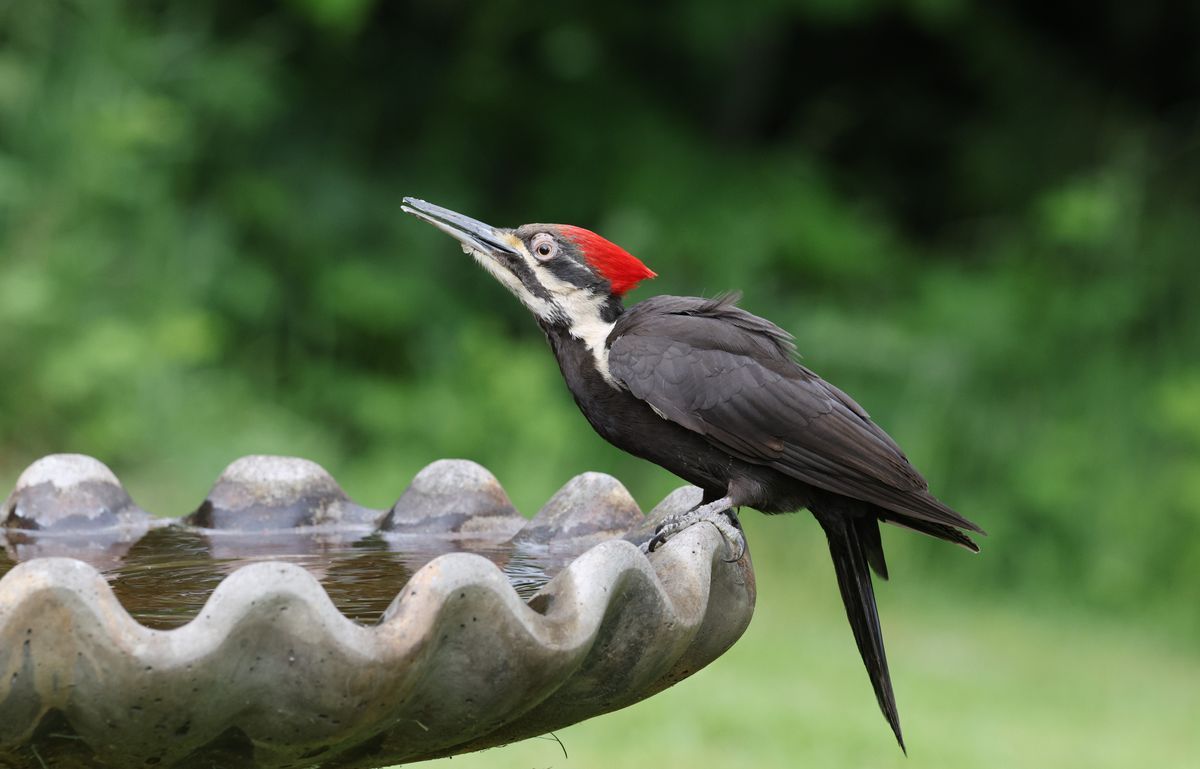
A pileated woodpecker drinking from a birdbath in a green garden, proof that the shallow and clean rules work
Variations: Ground Baths, Drippers, and Bought Baths
The pot and saucer is the classic, but the rules bless many vessels. A ground level bath, a wide shallow dish set into a bed or a hollowed stone, serves ground feeding birds and other wildlife most faithfully of all, because it is a true puddle; it wants the same stones, depth, and scrubbing, and a watchful eye if cats patrol. A dripper or gentle mister above any bath multiplies its visitors many times over, because moving water is audible advertising to birds, and a slow drip from a hose or a purpose made dripper is the single most effective upgrade this guide can offer. Hummingbirds, especially, prefer moving water and leaf bathing in a fine spray to any still bath.
If you buy instead of build, shop by the birds' rules, not by ornament: shallow, rough textured, gently sloping, heavy, and easy to scrub. A plain concrete bath that meets the rules will host more birds in a week than a glazed ceramic sculpture hosts in a year. Add the stones and the beach to a bought bath exactly as to a built one, because the rules are the product; the vessel is only the packaging.
The First Customers, and What They Teach You
Expect a scouting period. Birds find a new bath by watching other birds, so the first visitor matters more than the first week: one confident robin bathing is an advertisement the whole neighborhood trusts. Keep the water fresh through the scouting period even when nobody seems to come, because the inspection visits happen when you are not looking, and an empty or filthy bath fails the inspection silently.
Once established, watch who comes and adjust. Small birds only may mean the water is too deep at the edges; add stones. Splashing crowds at one hour suggest a second bath would be used, placed apart from the first, because dominant birds guard water. No visitors for weeks, with the rules obeyed, usually means the placement is wrong, too exposed or too enclosed, and moving the bath a few yards changes everything. The birds will grade your work daily, in the only currency that matters, which is attendance.
Safety: Cats, Windows, and Sick Birds
Three responsibilities come with the pleasure. Cats first: a bird bath concentrates birds at a predictable place, which is a gift to a hunting cat, so site the bath where cats cannot lurk within pouncing range of it, keep your own cat indoors or belled where you can, and accept that in a garden patrolled by a determined hunter, a bath on a tall, isolated stand, or no bath, is the ethical choice. The birds did not agree to be bait.
Windows second: birds flushed from a bath fly fast and low, and a large window in the flight path to the escape shrubs is a collision waiting to happen. Site the bath either close enough to windows that birds cannot build speed, or far enough that they can maneuver, and break up reflections on problem glass with decals or screens; the bath you watch from the kitchen should not be the window that harms its customers.
Sick birds third: shared water and feeders are where bird diseases pass between individuals, and the gardener's duty is the scrubbing rhythm in this guide, plus the willingness to close the bath for a deep clean and a dry rest when you see a lethargic, fluffed, visibly unwell bird using it. That brief closure protects the whole flock, and the healthy birds return within days of reopening. A bird bath is a small public utility, and like any utility, it runs on maintenance, not on good intentions.
Frequently Asked Questions
How deep should the water in a bird bath be?
About 1 to 2 inches at the deepest point, sloping gently from the rim so birds choose their own depth. Birds bathe in puddles, not pools, and deep, steep sided baths are the main reason commercial baths sit unused. Add a layer of pebbles and a flat stone island to any bath to create shallow footing and a dry drinking perch, and small birds will use it with confidence.
How often should I clean a bird bath?
Rinse and refill every few days, and scrub with a stiff brush and plain water about once a week. Dump old water rather than topping up forever, which also prevents mosquitoes from breeding. Skip soap and chemicals; the scrub removes the biofilm where disease spreads between birds. If a visibly sick bird has used the bath, scrub it thoroughly and let it dry for a few days before refilling.
Where is the best place to put a bird bath?
In the open, where birds can see danger coming, with shrubs or a tree a short flight away for escape cover. Too exposed and birds feel like targets; tucked inside dense cover and they fear ambush. Place it where you can watch it from a window, both for the pleasure and because a watched bath gets refilled. Keep it out from directly under feeders, whose debris fouls the water.
Why are no birds using my bird bath?
Work the checklist: water too deep or the surface too slick, placement too exposed or too hidden, water stale, or simply too new, since birds find baths by watching other birds and scouting takes time. Add stones for footing, keep it 1 to 2 inches deep and fresh, and consider a dripper, because moving water attracts birds from a remarkable distance. Moving the bath a few yards fixes most stubborn cases.
What do I do with a bird bath in winter?
Protect it from ice damage and never add anything to the water to stop freezing. Terracotta and concrete can crack when water freezes in them, so bring the saucer indoors, turn it upside down so it cannot collect water, or use a purpose made bath heater in milder winters to keep a small area thawed. A dry bath during a hard freeze harms no bird; they drink from snow and seeps until your bath returns with the thaw.
Can I use a metal or glazed ceramic dish instead?
Yes, with the footing fixed. Smooth and slippery surfaces are what birds distrust, not the material itself, so line the bottom with pebbles and gravel to create grip and shallow zones, and keep the depth at 1 to 2 inches. Metal baths heat up in strong sun, so site them with some shade in hot climates. Whatever the vessel, the rules are the same: shallow, rough, clean, and near cover.
Photo credits: Jeswin Thomas (Pexels); Veronika Andrews (Pexels). Photos are served from this site; follow the credit to the library page for the original.