Most garden paths fail underground, in the part nobody photographs. The finished pictures in the idea galleries show gravel and stepping stones; the failures, stones that rock, gravel that migrates into the lawn, a surface that puddles and heaves, were all decided in the excavation and the base, weeks before the surface went down. This site's garden path ideas article owns the idea bank: the layouts, the looks, the widths as design choices. This page owns the build: the sequence from a worn dirt track to a path that survives rain, mowing, and winters. The method is the same whatever surface you choose, because a path is a shallow road, and roads are built in layers. Mark it, dig it to the depth your surface demands, compact a real base, make the fabric decision by material, set stones to a walking stride, and restrain the edges. Skip a layer and the path will tell you which one, usually within a season.
Home / Garden Projects and Outdoor Living
How to Make a Garden Path: The Build Method, From Hose Line to Edge Restraint
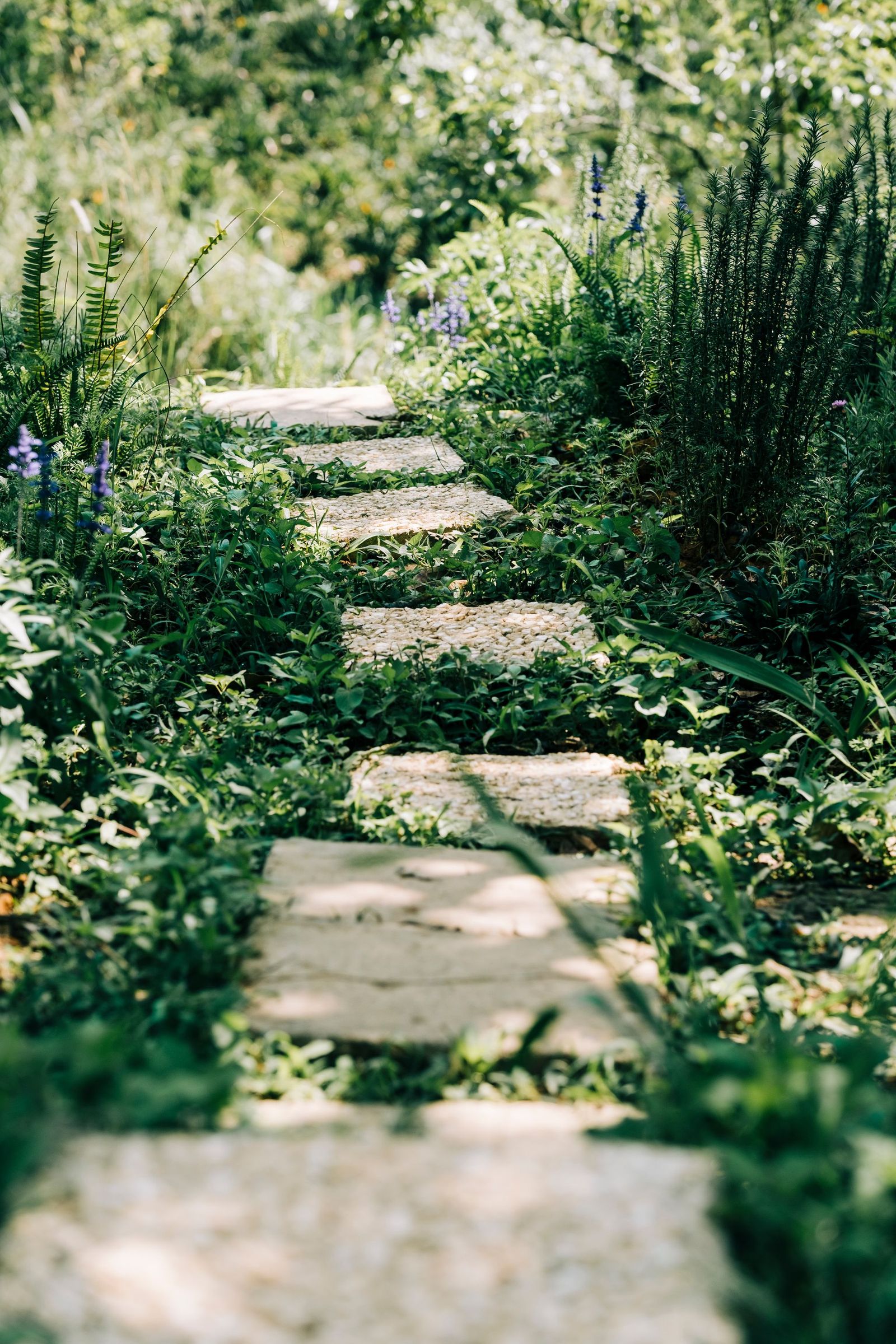
Photo: Kha Ruxury / Pexels
Garden Path Build Checklist
Check off each step as you finish it. Your progress stays on this page.
0 of 8 complete
0% done
Layout and Width: The Hose Decides
Mark the line with a garden hose, not a string: a hose lies in the natural curves people actually walk, and a path that fights the walking line will be shortcutted across the lawn within a month, leaving you with two paths, one of them mud. Walk the hose line for a day, adjust it, live with it, then mark the edges with spray paint or a spade cut and remove the hose. Width is a traffic decision, and the specifications match this site's path ideas article because both come from how bodies move: about 2 feet for a side path used one person at a time, 3 feet for a route a loaded wheelbarrow travels, and 4 feet where two people walk together, to the compost, to the bench, around the house. A main route built at side path width is a daily irritation that no surface quality fixes. Consider also where the path's water goes and what crosses it: a mower that must cross needs stones flush with grade, and a path across a slope needs a plan for the runoff it will inevitably collect and carry.
Excavation and Base: Where Paths Are Actually Built
Dig to the depth your surface demands: 3 to 4 inches for gravel or wood chips, deeper for pavers, which need their base plus the paver's own thickness and still finish at grade. What comes out matters less than what goes in. The base is crushed stone, angular material that locks together, laid and compacted in layers, never dumped loose in one lift: a single loose lift compacts unevenly under traffic and the path develops the dips and humps that puddle. Tamp each layer, by machine for a long path or by hand tamper for a short one, and give the finished base a slight crown or a gentle cross slope so the path sheds water to its edges instead of holding it. The fabric decision is made by material, and the guides split honestly: landscape fabric under gravel, yes, because it keeps the gravel from migrating down into the base and the soil while letting water through; under wood chips, usually no, because chips are meant to decay into the soil and be renewed, and fabric turns that renewal into a excavation. Under stepping stones, fabric is optional and mostly skipped, since each stone sits on its own bed.
Surfaces and the Stride Setting
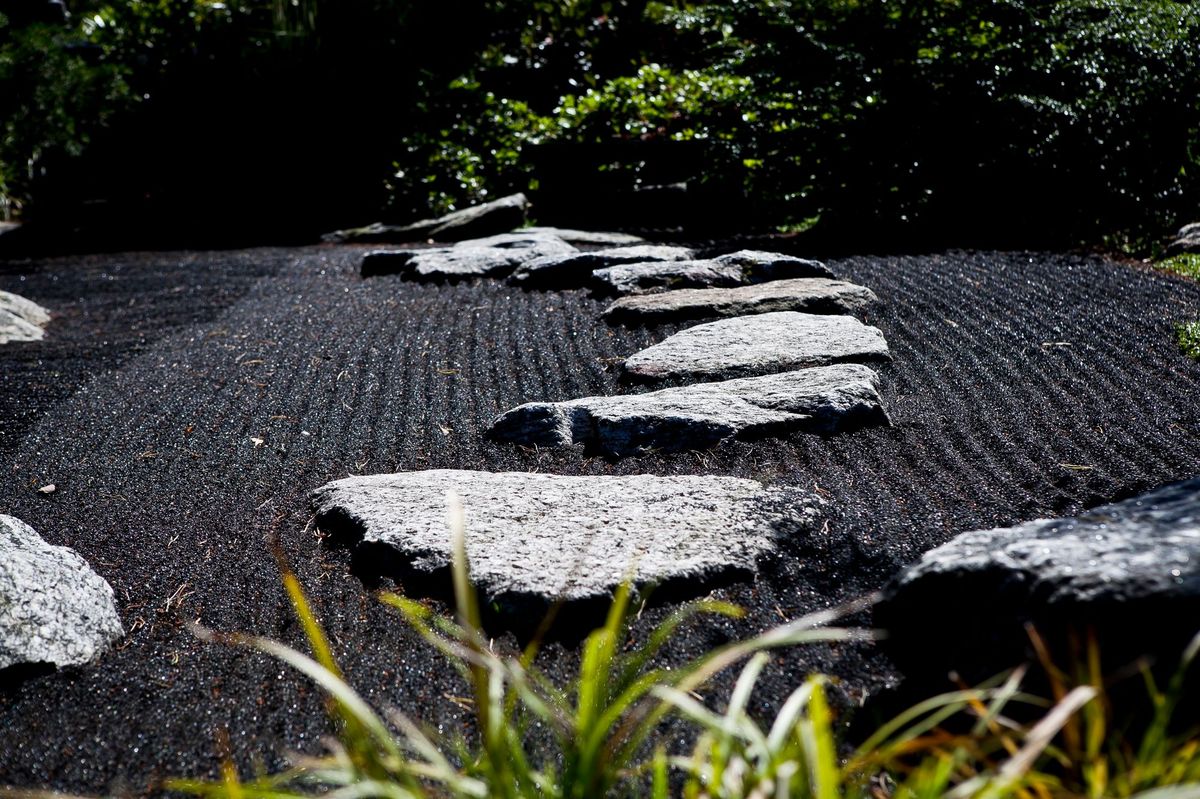
Gravel is the forgiving surface: cheap, draining, easy to top up, and noisy enough to announce visitors, set at 2 to 3 inches deep over the base, with the smaller angular grades packing tighter than round pea gravel, which rolls underfoot like ball bearings and travels everywhere. Wood chips are the soft, temporary surface for garden interiors, renewed annually as they decay, and honest about it. Stepping stones carry the stride rule: set them about 24 inches center to center, the natural pace of an average adult, and test the spacing by walking it, because a stride set wrong makes every crossing a small hop or a shuffle forever. Each stone is bedded individually on sand or stone dust, tamped and leveled, its top flush with grade anywhere a mower crosses and slightly above the surrounding soil elsewhere so it sheds water and stays findable. Pavers are the committed surface: the deepest dig, the most exacting base, and the only surface that reads as architecture, worth it on the front walk and wasted on the compost run. In every material, the edges decide the finish: a restrained edge, steel, aluminum, stone, or a soldier course of brick, keeps the surface in the path and the lawn out of it, and a path without one dissolves at the margins within two seasons, gravel in the grass, grass in the gravel, and the line gone.
Drainage, Maintenance, and the Honest Ledger
A path is a shallow channel whether you planned it as one or not, so plan where its water goes: the crown or cross slope sheds it, and at the low end it needs somewhere legal to land, a bed, a gravel pit, a swale, never the neighbor's foundation or the middle of the lawn it will drown in stripes. On a slope, interrupt a gravel path with occasional stone or timber checks across the line, or the first hard rain will deliver your surface to the bottom of the hill in an afternoon. Maintenance is modest and real: gravel gets topped up every few years and raked back from the edges after storms, chips get renewed annually, stones get rebedded when one starts to rock, and weeds that seed into any surface get pulled while they are small, which is a monthly five minutes rather than a rescue. That ledger is the material decision the idea galleries frame as taste: gravel is cheap to build and cheap to keep, chips are cheapest to build and annual to keep, pavers cost the most to build and the least to keep, and stones sit between. Choose with the ledger open, dig the full depth, compact in layers, and set the stride by walking it. A path built in that order is the one still level, dry, and findable in ten years, which is the only review a path ever really gets.
Frequently Asked Questions
How wide should a garden path be?
By traffic: about 2 feet for a side path one person uses, 3 feet for a route a loaded wheelbarrow travels, and 4 feet where two people walk side by side. These match this site's garden path ideas specifications because both derive from how bodies actually move. The common failure is a main route built at side path width, which no surface quality redeems. Mark the line with a hose and walk it before digging; a path that fights the natural walking line gets shortcutted across the lawn within a season.
How deep do I need to dig for a gravel path?
Three to 4 inches of excavation for gravel or wood chips, deeper for pavers, which need the base plus the paver thickness and must still finish at grade. Into the dig goes a crushed stone base, compacted in layers, never dumped loose in one lift, because a loose base compacts unevenly underfoot and the path develops dips that puddle. Give the base a slight crown or cross slope so the path sheds water. The digging and compacting are the build; the surface is the decoration.
Should I put landscape fabric under a garden path?
Under gravel, yes: it stops the gravel migrating down into the base and soil while letting water drain through. Under wood chips, usually no: chips are meant to decay into the soil and be renewed each year, and fabric turns that renewal into an excavation job. Under stepping stones it is optional and usually skipped, since each stone sits on its own bed of sand or stone dust. The guides split on this because the right answer genuinely depends on the surface, and anyone giving one answer for all paths is selling fabric.
How far apart should stepping stones be?
About 24 inches center to center, matching the natural stride of an average adult. Set a run of stones, walk it at your normal pace, and adjust before bedding them finally: a stride set too wide forces a hop, too narrow forces a shuffle, and either error is walked a thousand times a year. Bed each stone on sand or stone dust, leveled individually, top flush with grade where a mower must cross and slightly proud of the soil elsewhere so it sheds water and stays visible.
Why is my gravel path disappearing into the lawn?
Missing edge restraint, almost always. A path without a defined edge, steel, stone, brick, or timber, dissolves at its margins: gravel migrates out underfoot and on mower wheels, lawn creeps in, and within two seasons the line is a rumor. The second cause is a skipped or thin base, where gravel churns down into soil under traffic. The fix for an existing path is to cut a clean edge, install restraint along it, rake the surface back inside the line, and top up to 2 to 3 inches of angular gravel, which packs tighter and travels less than round pea gravel.
Photo credits: Kha Ruxury (Pexels); Terje Sollie (Pexels). Photos are served from this site; follow the credit to the library page for the original.