How to Overseed a Lawn in Fall: The Window, Counted Back from First Frost
By the Windchime Walker editorial team
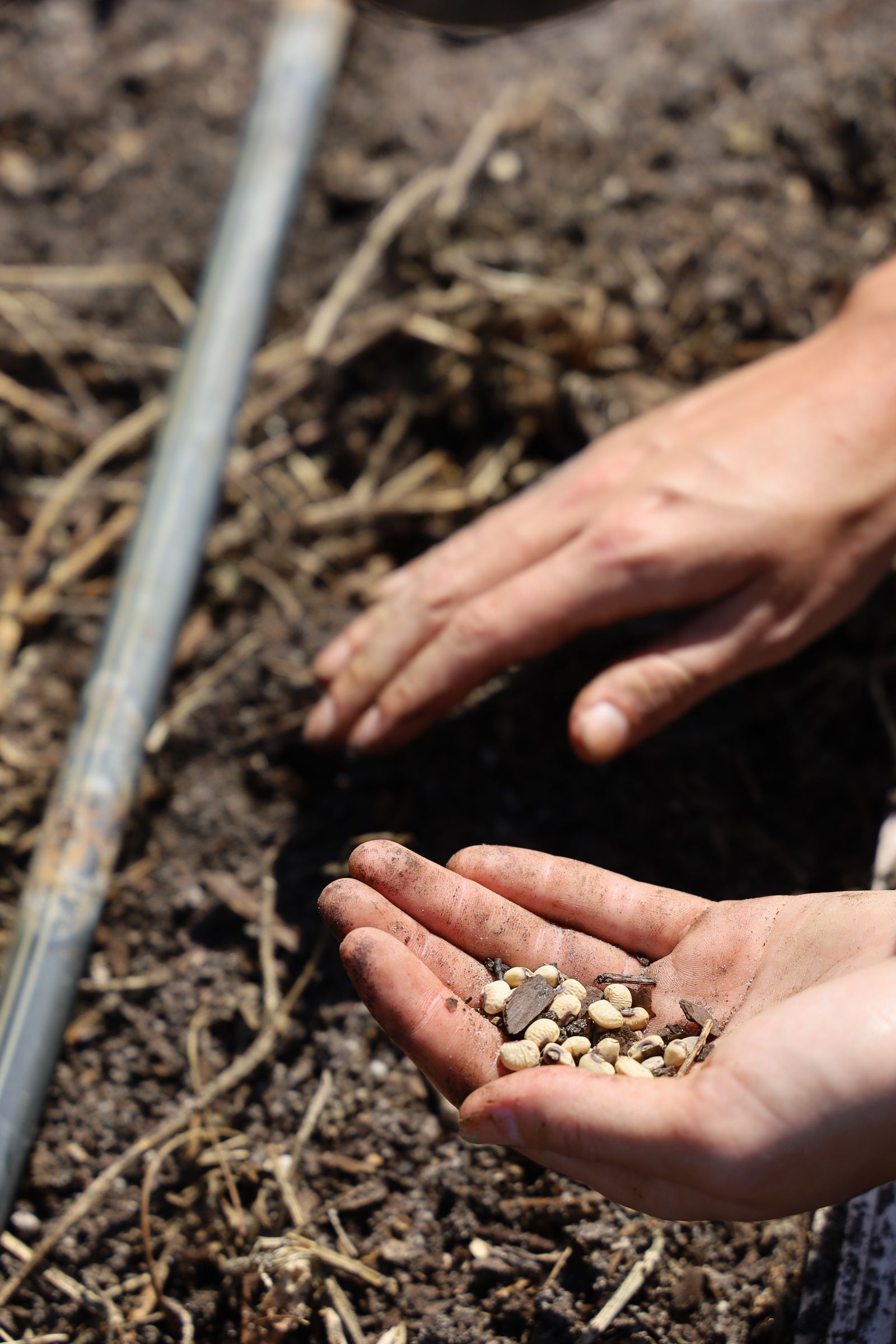
Photo: Joice Rivas / Pexels
Spring gets the glory and fall does the work. The best overseeding window of the year for a cool season lawn is the one nobody advertises, late summer into fall, when the soil is warm, the air is cooling, the weed seeds have finished their year, and the new grass gets two cool growing seasons before it ever meets a summer. But the fall window is a countdown with a hard end, and the whole job, from the first mow to the last leaf, is a calendar exercise. This page runs fall overseeding by its dates, so the window is used rather than admired.
Our overseeding guide owns the method year round, and our aeration and seeding aftercare guide owns the post job weeks for a full renovation. This page owns the fall window itself: the count back, the seeding weekend, and the season of aftercare that fall specifically demands.
Interactive tool
Fall Overseeding Checklist
Check off each step as you finish it. Your progress stays on this page.
0 of 9 complete
0% done
The Window Math
Two numbers set the window. The soil temperature for cool season germination is 50 to 65 degrees F, warm enough to sprout seed promptly, cool enough that seedlings are not scorched. And the countdown: seed should be in the ground at least 45 days, about 6 weeks, before the first frost, so the new plants root deeply enough to winter well. Translate those into the regional calendar and the familiar windows appear: from about mid August in the far north, through September in most of the cool season belt, to early October in the transition zone. Our grass seed timing guide teaches the soil thermometer method that localizes this to any yard; the fall overseeder's version is simple: when nights cool and the soil thermometer reads in the sixties and falling, the window is open, and the frost date says when it closes.
Why Fall Beats Spring
Fall overseeding
Spring overseeding
Soil
Warm from summer; germination is fast
Cold; germination waits and straggles
Air
Cooling; seedlings grow roots without heat stress
Warming; summer arrives at young grass
Weeds
Annual weeds are finishing; little competition
Crabgrass germinates alongside your seed, and pre-emergent blocks both
Runway
Fall and the following spring before the first summer
One spring before the first summer
Verdict
The main event
The patch job and the second chance
The spring column is not useless; it is where bare spots get patched and thin lawns get their second chance. But the year's real overseeding, the one that changes the lawn, belongs to fall, and a gardener who can only overseed once should spend the seed in September's window rather than April's hope.
The Seeding Weekend, in Order
Mow low. Take the lawn down shorter than usual, toward 2 inches, and bag or rake the clippings, so seed can reach the soil instead of nesting in the canopy. Expose soil. Dethatch or rake hard where thatch is thick; the seed that lands on thatch germinates into air and dies politely, unnoticed, which is the silent failure of most overseeding. Aerate where compacted. Core aeration before seeding is the highest value machine rental in lawn care: the holes are seed shelters with perfect soil contact, and our aeration aftercare guide covers the full renovation version of the job. Spread in two passes. Divide the seed in half and walk it in two directions at right angles, at the overseeding rate, about half the new lawn rate: tall fescue at roughly 4 to 5 pounds per 1,000 square feet, bluegrass at 1 to 1.5, perennial ryegrass at about 5. Species first, per our seed guide, and the brand check from our brand guide if the bag is new to you. Press for contact. Roll it, rake it lightly in, or walk a small lawn thoroughly; seed to soil contact is the difference between the rate you spread and the stand you get. Water light and often. Keep the seedbed evenly moist with light sessions, two or three a day in dry weather, until germination, then taper toward deeper and less frequent as the roots go down.
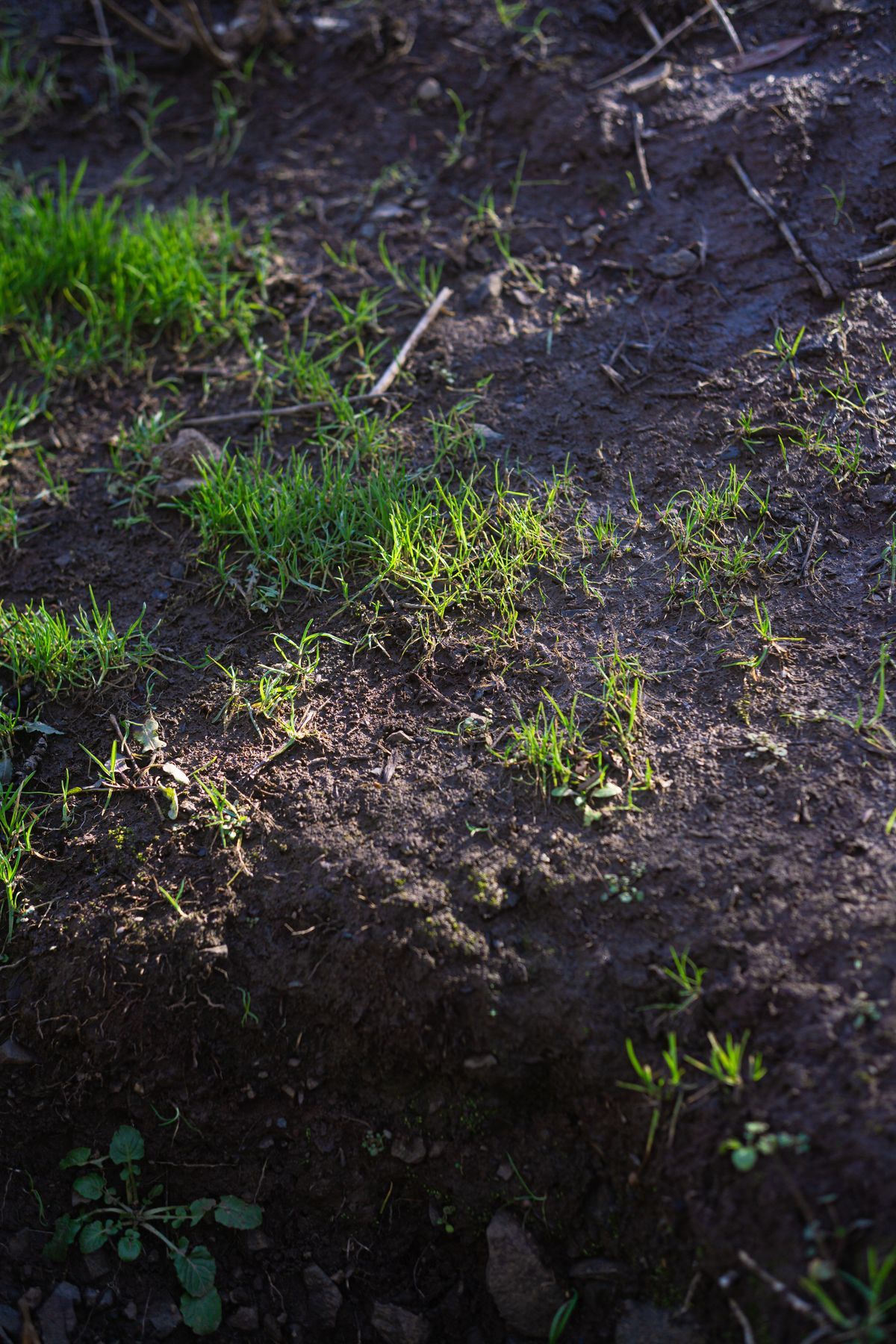
New grass seedlings sprouting from dark soil
The Germination Watch, by Species
Species
Days to germinate
What to expect
Perennial ryegrass
5 to 10
The early green haze; nurse cover for the slow species
Tall and fine fescues
7 to 14
The steady middle; the lawn visibly thickens in week two and three
Kentucky bluegrass
14 to 21, sometimes 30
The test of faith; do not reseed at day 10, water and wait
The watch matters because each species' silence means something different. Rye absent at day 10 is a watering problem. Bluegrass absent at day 10 is Tuesday. Mixed seed, the usual case, comes up as a relay: rye first and fast, fescue behind it, bluegrass filling in through the month, and the lawn's true verdict arrives at the first mow, not the first sprout. Mow when the new grass reaches about 3 to 4 inches, with a sharp blade, taking the top third, and keep traffic gentle until that first cut is behind you.
Leaves and the Last Mowings: Fall's Own Aftercare
Fall overseeding's unique enemy arrives on schedule in October: leaves, falling onto seedlings too young to tolerate a smothering blanket. Manage them actively. Blow or rake leaves off the seeded area gently and often, mulching them with the mower only when the layer is light and the seedlings are up and growing; a wet mat of whole leaves left a week will erase a strip of new grass as completely as drought would. Continue mowing the whole lawn at the normal rhythm, dropping the height gradually toward the season's final cut at about 2.5 to 3 inches for most cool season lawns, and keep watering the new areas in dry falls until the ground approaches freezing, because roots keep growing in cool soil long after the top has slowed, and that root growth is the entire point of the fall window.
The Missed Window: Dormant Seeding, Honestly
If the countdown beats you, there is a legitimate rescue with a real price, and this page will sell it to you straight. Dormant seeding means spreading seed in late fall or winter, once soil temperatures drop below about 40 degrees F, cold enough that the seed cannot germinate and simply waits in the soil for spring. It works, and extension services in the northern states describe it plainly. The price is spring: the seed wakes alongside the crabgrass, and the pre-emergent herbicide that would stop the crabgrass would stop your grass seed too, so a dormant seeded lawn fights its first summer with weeds the chemical route is closed to. There is also attrition: some seed rots, washes, or feeds the birds across a winter. Dormant seeding is the honest late plan, better than a spring rush and worse than the fall window, and it should be chosen knowingly, at a slightly heavier rate to cover the winter's losses, with the crabgrass trade off accepted in advance rather than discovered in June.
One exception closes the page: warm season lawns do not overseed in fall for permanence at all. The southern fall seeding is annual ryegrass sown for winter color over dormant Bermuda or zoysia, a cosmetic season that dies in the spring heat by design. It is a fine tradition and a different job; do not mistake its seed or its calendar for the cool season work above.
Frequently Asked Questions
When exactly should I overseed in fall?
Count back at least 45 days, about 6 weeks, from your average first frost, and check that soil temperatures are in the 50 to 65 degree F band. In practice that is mid August in the far north, September across most of the cool season belt, and into early October in the transition zone.
How much seed does fall overseeding take?
About half the new lawn rate: roughly 4 to 5 pounds of tall fescue per 1,000 square feet, 1 to 1.5 pounds of Kentucky bluegrass, about 5 pounds of perennial ryegrass. Spread it in two passes at right angles for even coverage, and press it into soil contact afterward.
Do I need to aerate before fall overseeding?
Where the soil is compacted, yes, and it is the single highest value preparation: core holes give seed shelter and soil contact, and compacted ground is the usual reason a lawn is thin in the first place. On loose, healthy soil under a merely thin lawn, a hard rake and low mow can be preparation enough.
How do I handle leaves falling on new seedlings?
Actively and gently: blow them off or rake them away often, and never let a wet mat of leaves sit on new grass for days. Light leaf cover can be mulched with the mower once seedlings are up and growing. Smothering is fall overseeding's signature loss, and it is entirely preventable with a blower and ten minutes.
My new grass has not come up after 10 days. Did it fail?
Depends on the species. Ryegrass should show in 5 to 10 days and its absence means check the watering. Fescues run 7 to 14 days. Kentucky bluegrass takes 14 to 21 days, sometimes 30, and reseeding it at day 10 is the classic waste of good seed. Keep the seedbed moist and let each species keep its own calendar.
Is dormant seeding a real option if I miss the fall window?
Yes, with its price understood: sow after soil drops below about 40 degrees F so seed waits for spring, at a slightly heavier rate to cover winter losses. The trade off is that spring pre-emergent herbicide is off the table, since it would block your seed along with the crabgrass, so the young lawn faces its first summer with more weed pressure than a fall seeded one.
Photo credits: Joice Rivas (Pexels); chickenbunny (Pexels). Photos are served from this site; follow the credit to the library page for the original.