Clover overseeding succeeds or fails on contact and moisture, not on the seed, because clover seed is tiny, hard coated, and asked to start life in the thatch layer of an established lawn that would rather keep it out. The system that beats those odds is unglamorous: mow the lawn shorter than it has ever been mowed, open the surface so seed reaches soil, spread the seed at an honest rate with a carrier so the small seed spreads evenly, press it in, and then hold the top inch of the lawn moist for the 2 to 3 weeks the seed needs to germinate and root. This page runs that system with its numbers flagged where the results disagree, because clover seeding rates sprawl more than almost any figure in this batch. It also states the exclusions plainly: recent herbicide and pre emergent applications block the project outright, and a warm season lawn is a failure case no technique fixes. Run the checklist above as the work order.
Home / Lawn and Landscape Basics
How to Overseed a Lawn with Clover: The Rate, the Short Mow, and the Two Week Moisture Window
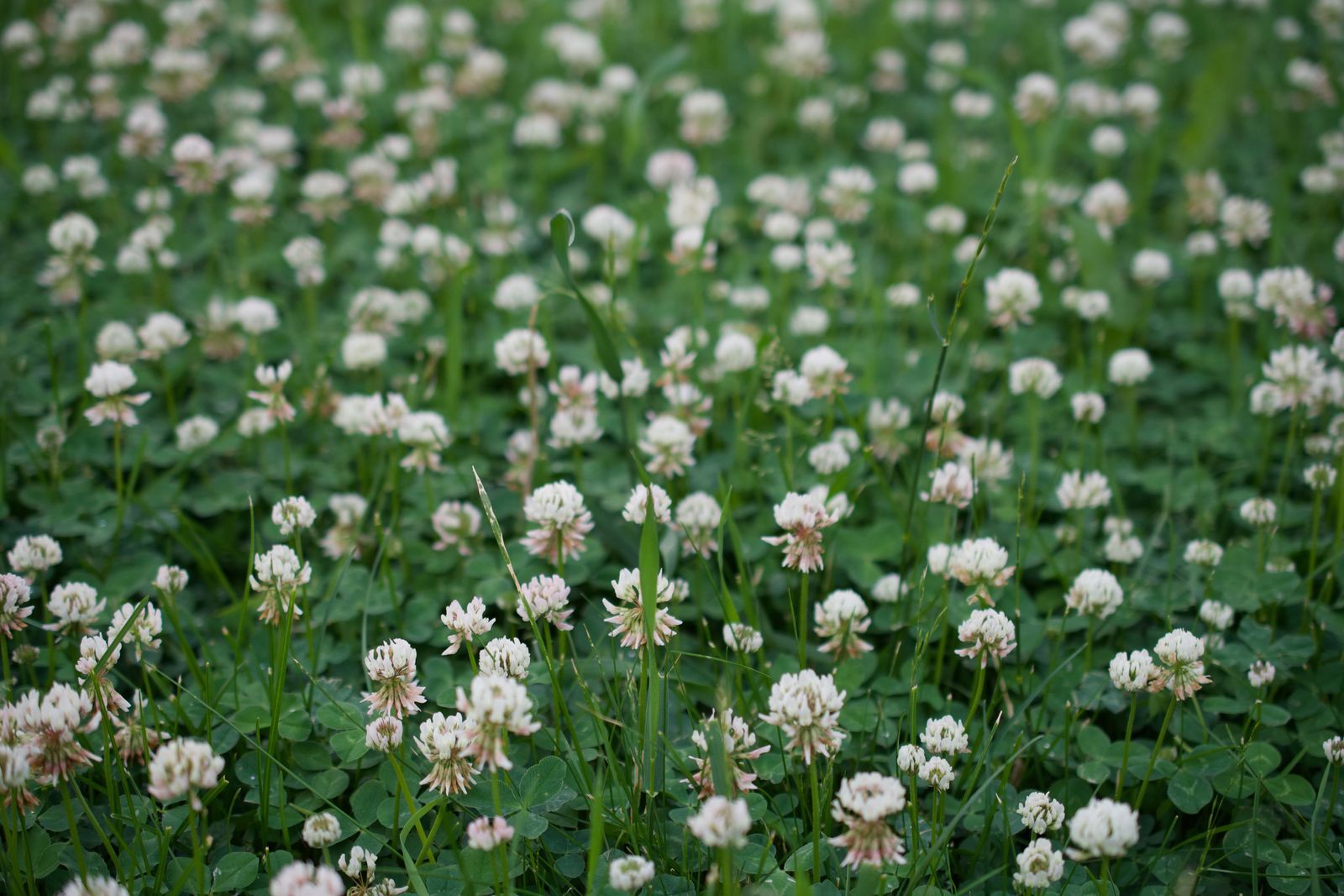
Photo: Tom Kowalsky / Pexels
Clover Overseeding Checklist
Check off each step as you finish it. Your progress stays on this page.
0 of 8 complete
0% done
The Seed: Dutch White Standard, Microclover Premium, and the Rate Sprawl
Dutch white clover is the standard lawn clover for good reasons: it is a true perennial, spreads by stolons into gaps, tolerates mowing at lawn height, fixes its own nitrogen, and its white flowers feed bees in a way that has become the point of the exercise for many lawns. Microclover is the bred alternative, smaller leaved, blending more invisibly into turf, flowering less, and costing notably more per pound; it is the premium choice for a lawn that wants clover's function with less of clover's look. The rate is where this page owes you the sprawl honestly. The results run from about 1 to 2 ounces per 1,000 square feet for overseeding into an existing lawn, through several sources at 2 to 4 ounces, to 4 to 8 ounces for a pure clover stand with no grass. Read as a ladder it resolves: overseeding is the thin end, because the seed only needs to fill a grass matrix, not create a surface, and this page's verdict is 1 to 2 ounces per 1,000 square feet for the overseed case, toward 2 where the lawn is thin and the clover share is meant to be substantial. More seed than that in an overseed buys crowding among the clover seedlings themselves. Buy inoculated seed or seed with its rhizobium coating where offered; clover's nitrogen fixing depends on the partnership, and most lawn soils that have not grown clover recently cannot be assumed to supply the bacteria.
The Preparation: The Shortest Mow of the Year
Clover seed that lands in thatch dies in thatch, so the preparation is an assault on the layer between seed and soil. Mow the lawn down to 1.5 to 2 inches, shorter than its normal height, and bag the clippings rather than mulching them back, because the goal is an open surface. Rake vigorously or run a dethatcher over the lawn to tear the thatch mat and expose soil in the thin places; the standard this page sets is that you should see soil across the lawn, in streaks and patches at minimum, before any seed is spread. Core aeration is the premium step and the best single addition to the system: the holes give seed a sheltered, soil contact microsite by the thousand, and an aerated, overseeded lawn establishes clover visibly better than a merely raked one. Bare and thin patches deserve a scratch of loose soil over them. All of this is also why timing matters: early fall is the prime window in cool season country, warm soil for the seed, cool air for the seedlings, and the summer's annual weeds dying rather than germinating against it, with early spring the acceptable second. A lawn treated with pre emergent herbicide in the same season is not a candidate at all, because the chemical that stops crabgrass stops clover with perfect impartiality, and broadleaf weed killers must be weeks in the past and further weeks in the future.

The Sowing: Sand as Carrier, the Press, and the Moisture Window
Clover seed is small enough that spreading 2 ounces across 1,000 square feet evenly by hand is nearly impossible, and the carrier trick solves it: mix the seed with dry sand, several cups of sand to the seed for a batch, and the visible sand stream shows you exactly where seed has fallen and where it has not. Broadcast in two passes at right angles at half rate each, the standard insurance against stripes. Then press: a lawn roller at light weight, the back of a rake worked over the surface, or simply walking the area thoroughly, because seed to soil contact is the variable the whole preparation served. Then the moisture window opens, and it is the daily discipline of the project: the top inch of the lawn stays moist for 2 to 3 weeks, which in practice means light watering once to three times a day depending on weather, never a deep soaking that floats seed into drifts, and never a missed hot day that dries the germinating seed at its one vulnerable moment. Germination runs 7 to 14 days in warm soil. The first mowing waits until the new growth reaches about 4 inches and takes it only to 3, with a sharp blade and dry conditions, because a dull blade at lawn height pulls seedlings out by their week old roots. From there the clover is on its own program, and the lawn's care changes around it, which is the final section's subject.
Living with the Result: The Lawn After Clover
A clover lawn is a different lawn to keep, and the differences are mostly gifts with two honest costs. The gifts: the clover fixes nitrogen and shares it, so the lawn's fertilizer need falls, often to nothing beyond fall feeding of the grass; the lawn stays greener in summer dry spells, because clover roots and holds where grass sulks; and the flowers feed bees from late spring onward, which is either the point or a problem depending on the household's bare feet and bee sting allergies, and should be decided with eyes open. The costs: broadleaf weed control is over, permanently, because every product that kills dandelions kills clover, so the lawn's weed strategy becomes mowing, density, and tolerance; and clover wears worse than grass under heavy traffic, thinning on paths and play lines where the grass component has to carry the load alone. Expect the clover share to build over 1 to 2 seasons rather than arrive in one: stolons spread into gaps each year, the nitrogen dividend compounds, and a lawn overseeded once and then left to the system becomes a grass clover mix that largely maintains itself. The failure case deserves its sentence: into a warm season lawn, Bermuda or zoysia country, overseeded clover competes in the wrong season and reads as a weed in a dormant winter lawn, and the honest advice there is not to start. Mow it short, open the soil, spread it thin with sand, press it, and keep it moist: clover does the rest at its own unhurried, generous pace.
Frequently Asked Questions
How much clover seed do I need to overseed a lawn?
About 1 to 2 ounces per 1,000 square feet for overseeding into an existing lawn, toward the 2 ounce end where the lawn is thin and you want a substantial clover share. The published figures sprawl wider, 2 to 4 ounces in several sources, and 4 to 8 ounces describes a pure clover stand with no grass, a different project. More seed than the overseed rate crowds the clover seedlings against each other rather than filling the lawn faster. Mix the seed with dry sand as a carrier so the small seed spreads visibly and evenly.
When is the best time to overseed with clover?
Early fall is the prime window in cool season lawn country: the soil is warm for germination, the air cools for the seedlings, and annual summer weeds are dying rather than competing. Early spring is the acceptable second window. Never overseed into a lawn treated with pre emergent herbicide that season, because it blocks clover exactly as it blocks crabgrass, and keep broadleaf weed killers weeks away on both sides of the sowing. Germination runs 7 to 14 days in warm soil once the seed is down and kept moist.
What is the difference between Dutch white clover and microclover?
Dutch white is the standard: a stolon spreading perennial with white flowers, full clover function, nitrogen fixing, bee forage, and the classic clover look in the lawn. Microclover is a bred smaller leaved type that blends more invisibly into turf, flowers less, and produces a lawn that reads as grass from a distance; it costs notably more per pound and is the premium choice where appearance is the priority. Both fix nitrogen and both end broadleaf weed control, since the herbicides that kill lawn weeds kill clover too.
How do I get clover seed to actually take in an existing lawn?
Contact and moisture. Mow the lawn to 1.5 to 2 inches and bag the clippings, rake or dethatch until soil shows across the lawn, and core aerate if you can, since the holes are perfect seed shelters. Broadcast the seed mixed with sand in two half rate passes, press it in with a light roller or by walking it, and then keep the top inch moist with light watering one to three times a day for 2 to 3 weeks. Wait for the first mow until growth reaches 4 inches, and cut only to 3 with a sharp blade.
Will clover take over my lawn?
It will build steadily rather than conquer. Overseeded clover spreads by stolons into gaps and thin places over 1 to 2 seasons, reaching a grass clover balance set by mowing, traffic, and shade rather than by the seeding rate alone. It thins under heavy traffic where grass carries the load, and it greens up the lawn's dry summer patches. What it does end is chemical broadleaf weed control, permanently, because those products cannot distinguish clover from dandelion. The takeover to expect is of the fertilizer budget, which falls toward zero as the nitrogen fixing compounds.
Photo credits: Tom Kowalsky (Pexels); Wyxina Tresse (Pexels). Photos are served from this site; follow the credit to the library page for the original.