Kentucky bluegrass is the lawn grass of the northern imagination, dense, dark, and self repairing, and it is also the slowest common lawn grass to start from seed. That combination ruins more seedings than any pest: the method is simple, the wait is not, and most failures are abandonment dressed as failure, a seeding declared dead at day 12 by a gardener who did not know the seed was still waking up. This site's how-to-plant-grass-seed owns the general method for all species. This page owns bluegrass alone, its calendar, its rates, and the patience plan its long germination demands.
Home / Lawn and Landscape Basics
How to Plant Kentucky Bluegrass Seed: The Patience Plan

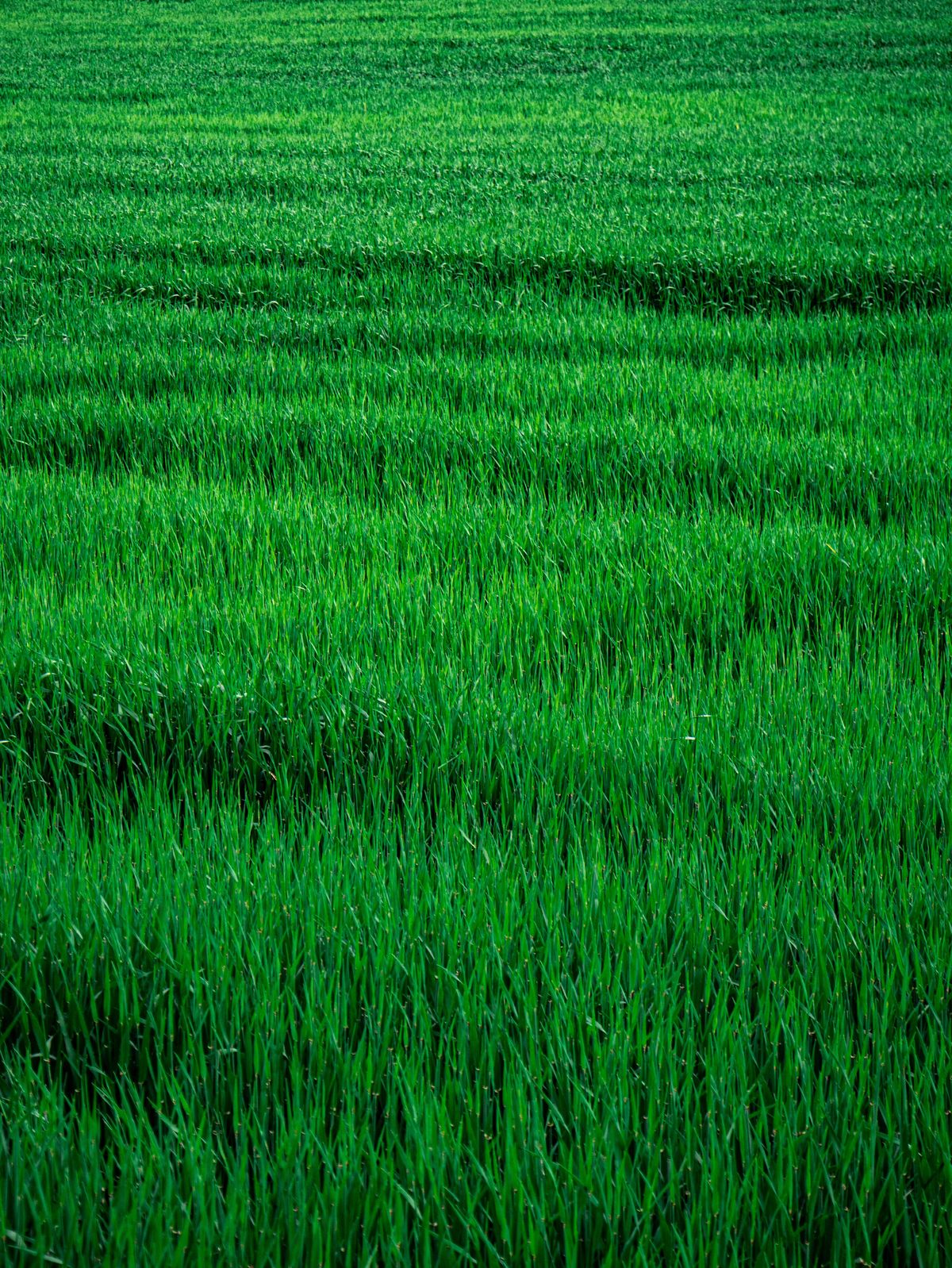
Photo: Vitalii Kwink / Pexels
Interactive tool
Kentucky Bluegrass Seeding Checklist
Check off each step as you finish it. Your progress stays on this page.
0 of 8 complete
0% done
The Calendar: Late Summer Is the Bluegrass Season
Bluegrass wants soil at 50 to 65 degrees Fahrenheit and time: time to germinate, which takes 14 to 30 days, and time to establish before stress arrives. That arithmetic makes late August to mid September the best seeding window in most northern lawns, because the soil is warm for germination, the air is cooling for the seedlings, weed pressure is falling, and the plants have the whole fall to root before winter, then the whole spring before summer. Spring seeding is the legitimate second window, run as early as the soil enters the band, with the spring overseeding cautions this site covers elsewhere: the seedlings will meet summer young, and some loss is the price. Summer seeding of bluegrass is not a window at all; it is a way to feed birds expensively. Whatever the window, prepare the bed the same way: soil test first, because bluegrass has a stated preference, pH 6.0 to 7.0 per Kansas State University's guidance, and correcting pH with lime or sulfur takes weeks to act, so the test belongs a month ahead of the seed.
The Rate, and Why the Sources Sprawl
Published seeding rates for bluegrass sprawl from 1 to 3, 2 to 3, and 3 to 4 pounds per 1,000 square feet for a new lawn, and the sprawl is mostly a labeling problem: the figures are quoted variously for pure bluegrass seed and for blends in which bluegrass is only a fraction of the bag. This page's working standard is 2 to 3 pounds of pure Kentucky bluegrass per 1,000 square feet for a new lawn, the middle of the honest range, with overseeding into an existing lawn at about half that. If you are sowing a blend, do the fraction arithmetic: a blend that is 50 percent bluegrass by weight, sown at 4 pounds, delivers 2 pounds of bluegrass, which is in range; the same blend sown at 2 pounds delivers 1 pound, which is a thin seeding that will show it. Read the seed tag, not the bag's front, and note the germination percentage as well, because bluegrass seed lots vary and an old lot at 70 percent germination needs its rate adjusted upward by the same math. More seed past the top of the range buys nothing; overcrowded bluegrass seedlings compete, stay spindly, and invite disease, which is the rare case of a lawn problem caused by generosity.
Seedbed and Sowing: A Quarter Inch Is the Law
Bluegrass seed is small and its energy reserves are small with it, so depth discipline decides the seeding before weather gets a vote. Prepare a fine, firm seedbed: rake the surface smooth, remove debris, and roll or tread it until a footprint sinks no more than about a quarter inch. Sow in two passes at right angles at half rate each, which evens the pattern, then cover the seed no deeper than a quarter inch, a light raking or a thin topdressing of peat or fine compost, and firm it into seed to soil contact with a roller or by walking it in. Seed buried half an inch or deeper, the top of the range some guides quote, germinates late, weakly, or not at all; treat the quarter inch as the standard and the half inch as the outer limit in loose sandy soil only. A light straw mulch on slopes holds both seed and moisture; on flat ground in the fall window, most seedings need no mulch at all.
The Germination Month: Water and Weed Discipline
Now the patience plan, the part this species is actually testing. Bluegrass germination runs 14 to 30 days across the guides, and the sprawl within that is temperature and seed lot, not error: a warm late August seeding may show in 2 weeks, a cool spring one may take the full month, and individual seeds in the same bed germinate across the whole span, so the lawn comes up in waves. Keep the seedbed continuously moist the entire time, light watering once or twice a day as weather demands, never letting the surface dry hard, and never soaking it into puddles that float the seed into clumps. The second discipline is weeds. A month of moist, bare, fertile soil grows every weed seed in it, and your bluegrass bed will look, at day 20, like a weed patch with grass rumors. This is normal and it is where seedings get destroyed by kindness: no herbicide touches a bluegrass seeding until the new grass has been mowed several times and is established, which in practice means the following season for most products. Hand pull the obvious weeds, mow the patch high when the grass reaches it, and trust the species: bluegrass spreads by rhizomes, underground stems that knit the lawn together and fill gaps through its first full season, so the thin, weedy looking bed of October is routinely the dense lawn of the following June. Judge a bluegrass seeding at 6 months, not at 6 weeks.
First Mow and the First Season
Mow when the new grass reaches about 3.5 to 4 inches, cutting it back to 2.5 to 3.5 inches, with a genuinely sharp blade, because a dull blade does not cut seedlings, it pulls them out of a seedbed their roots have barely gripped. Mow dry, mow gently, and leave the clippings if they are fine. Through the first season, hold the mature bluegrass habits in draft form: water deep and infrequent once establishment allows, feed on the fall centered schedule a soil test sets, and keep traffic light on the new areas through their first summer if the seeding was a spring one. Bluegrass also has a famous survival trait worth knowing before your first drought: it goes dormant and brown in dry heat and greens up again when water returns, which is the rhizome bank doing its work. A dormant bluegrass lawn is not a dead one, and the gardener who knows that does not rip out in August the lawn that would have returned in September.
Frequently Asked Questions
How long does Kentucky bluegrass seed take to germinate?
Fourteen to 30 days, depending on soil temperature and the seed lot, with warm soil at the fast end and cool spring soil at the slow end. Guides quoting 14 to 21 days and guides quoting 21 to 28 are both describing real seedings in different conditions; plan for the full month and be pleased if yours is faster. The seedbed must stay continuously moist for the entire period, which is the real work of a bluegrass seeding, and germination arrives in waves rather than all at once, so a patchy look at 3 weeks is a lawn still arriving, not a lawn failing.
How much bluegrass seed do I need per 1,000 square feet?
Two to 3 pounds of pure Kentucky bluegrass seed for a new lawn, and about half that, 1 to 1.5 pounds, for overseeding into existing turf. If you are sowing a blend, adjust by the bluegrass fraction on the seed tag: a half bluegrass blend needs roughly double the bag rate to deliver the same bluegrass. Published rates sprawl from 1 to 4 pounds largely because some quote pure seed and others quote blends; the pure seed standard here is the number to anchor on. Do not exceed the range to be safe; overcrowded seedlings compete and disease follows.
When is the best time to plant Kentucky bluegrass seed?
Late August to mid September in most northern lawns: soil still warm enough, in the 50 to 65 degree band, for germination, air cooling for the seedlings, weed pressure falling, and a full fall and spring for the plants to establish before their first summer. Spring is the second window, seeded as early as soil conditions allow, accepting that young plants meet summer heat sooner. Avoid summer seeding entirely; the seed germinates into stress it cannot yet handle, and the same bag sown 6 weeks later becomes a lawn instead of a loss.
How deep should bluegrass seed be planted?
No deeper than a quarter inch, and a half inch is the absolute outer limit in loose soil. Bluegrass seed is small with small reserves, and deep burial is a leading cause of the seeding that never appears. Rake or topdress the seed in lightly, then firm the bed with a roller or by treading it, because seed to soil contact matters as much as depth: seed sitting on the surface in good contact with moist soil outperforms seed buried an inch down in loose dry tilth. Keep the surface moist until germination completes.
Why does my new bluegrass lawn look thin and weedy?
Because it is young, and bluegrass is slow by design. A month of moist bare soil grows weeds faster than bluegrass germinates, so every bluegrass seeding passes through an ugly phase where weeds are winning on points. Do not spray herbicide on a new seeding; most products cannot be used until the grass is established and mowed several times. Hand pull, mow high at 3.5 to 4 inches down to 2.5 to 3.5, and wait: bluegrass spreads by rhizomes and knits itself dense across its first full season. The correct judgment date for a bluegrass seeding is about 6 months after sowing.
Photo credits: Vitalii Kwink (Pexels); Amaury Michaux (Pexels). Photos are served from this site; follow the credit to the library page for the original.