Rain Barrel: Your First Barrel, Sited, Built, and Winterized
By the Windchime Walker editorial team
Photo: Ann Hannes / Pexels
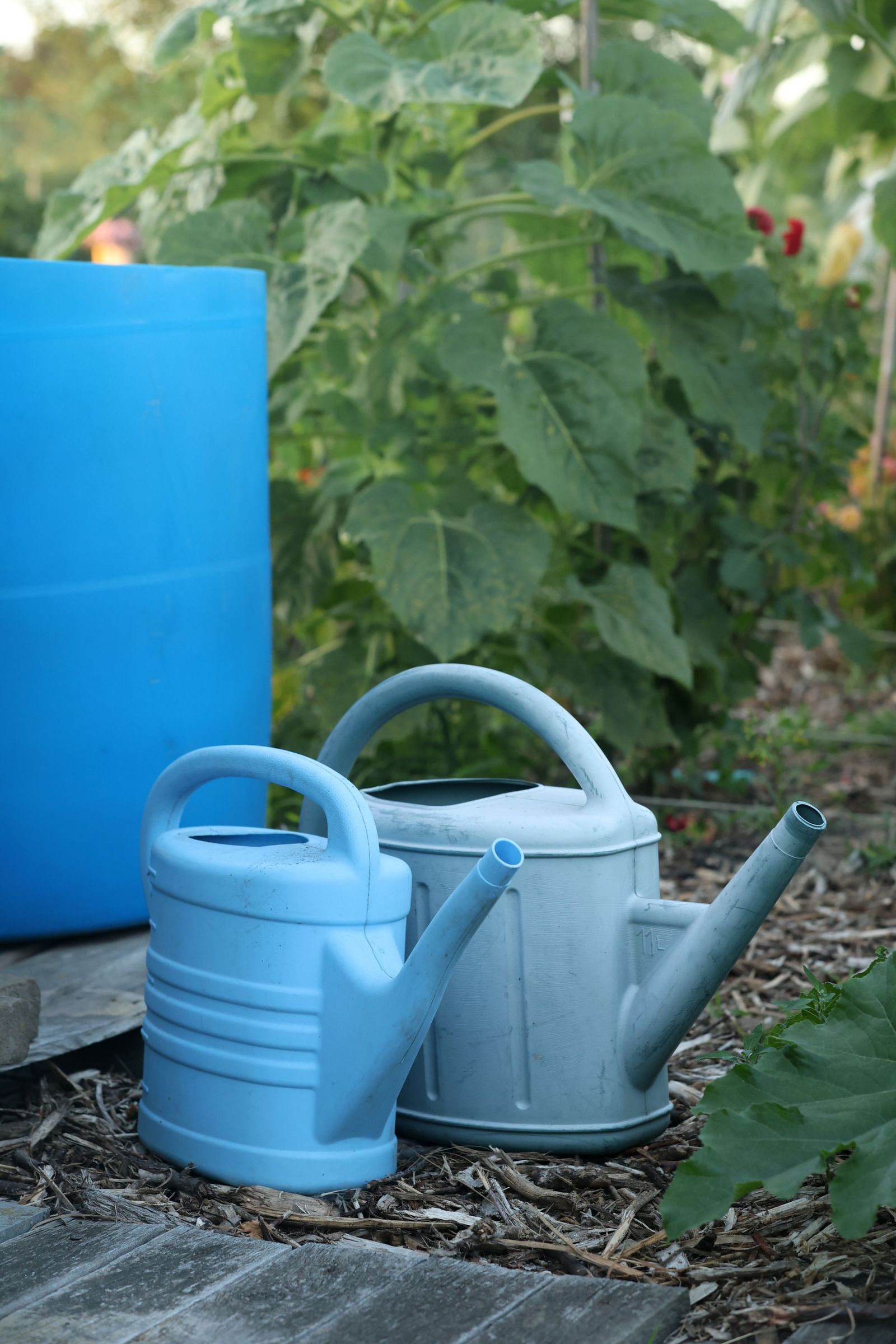
A rain barrel is the simplest machine in the garden: a roof, a downspout, a barrel, and gravity doing the work that a pump does elsewhere. It is also a project where the details decide whether you built a water supply or a mosquito nursery standing against your foundation. This page builds the first barrel end to end, in the order the decisions actually occur: how much water your roof offers, where the barrel stands and how high, how the water gets in and the overflow gets out, the screening discipline that keeps it legal and pleasant, and the winter routine that keeps it from splitting. The barrel itself is the easy part, and it is purchased; everything else on this page is judgment.
Start with the math, because it sizes the whole project. Texas A&M's widely published figure: one inch of rain falling on one square foot of roof produces about 0.62 gallons of runoff. A modest 500 square foot roof section feeding one downspout therefore offers roughly 300 gallons in a one inch rain, which means a single 55 gallon barrel fills early in any real storm and the overflow system is not an accessory; it is half the design. Barrels are for watering cans and garden hoses between rains, not for capturing the storm, and a gardener who understands that on day one builds the overflow properly instead of discovering its importance during a downpour.
Interactive tool
First Rain Barrel Checklist
Check off each step as you finish it. Your progress stays on this page.
0 of 7 complete
0% done
Step 1: Choose the Downspout and the Stand Site
Pick the downspout by the garden it will serve: the barrel belongs near the beds it waters, because water carried in cans travels poorly and a barrel far from its garden is a sculpture. The site needs a level, firm pad (pavers, gravel, or concrete) that will not settle, because a full 55 gallon barrel weighs about 460 pounds, and a leaning full barrel is a slow motion accident. Check what the overflow will do at this site before committing: it must travel away from the house, and Rutgers cited guidance in our research puts overflow discharge at least 6 feet from the foundation, further with a basement, because a barrel that dumps its surplus against the wall has inverted its purpose.
Height is the second decision, made now because the stand is built to it: raise the barrel 12 to 24 inches on a stand of concrete blocks or a sturdy timber frame. The height buys two things: room to fit a watering can under the spigot, and water pressure, because a barrel's pressure is gravity alone and every inch of elevation is a small raise. A barrel on the ground can only be dipped from; a barrel on a stand can fill a can in seconds and push a short hose or a soaker line at a gentle flow. Do not expect sprinkler pressure from any stand a homeowner should build; that expectation is a pump's job description.
Step 2: The Barrel and Its Fittings
Use a food grade barrel, 55 gallons being the standard size, new or verifiably food used, and clean it thoroughly; a barrel with a chemical past has no garden future. Purpose made rain barrels arrive with fittings installed and are worth their premium for a first build; a plain food grade barrel takes three fittings you install yourself: a spigot near the bottom (drilled, sealed, and threaded carefully, since this joint lives under permanent water pressure), an overflow port near the top on the side away from the house, and the inlet at the top where the diverter delivers water.
Fit the overflow with a hose or pipe of generous diameter, because the overflow must carry the full downspout flow once the barrel is full, which in a storm is a river by garden standards. Route it to the discharge point you chose in step 1, downhill and away. Every fitting gets a gasket or sealant and a leak test with a hose before the first storm does the testing for you at a less convenient hour.
Step 3: The Diverter, the Part That Makes It Civilized
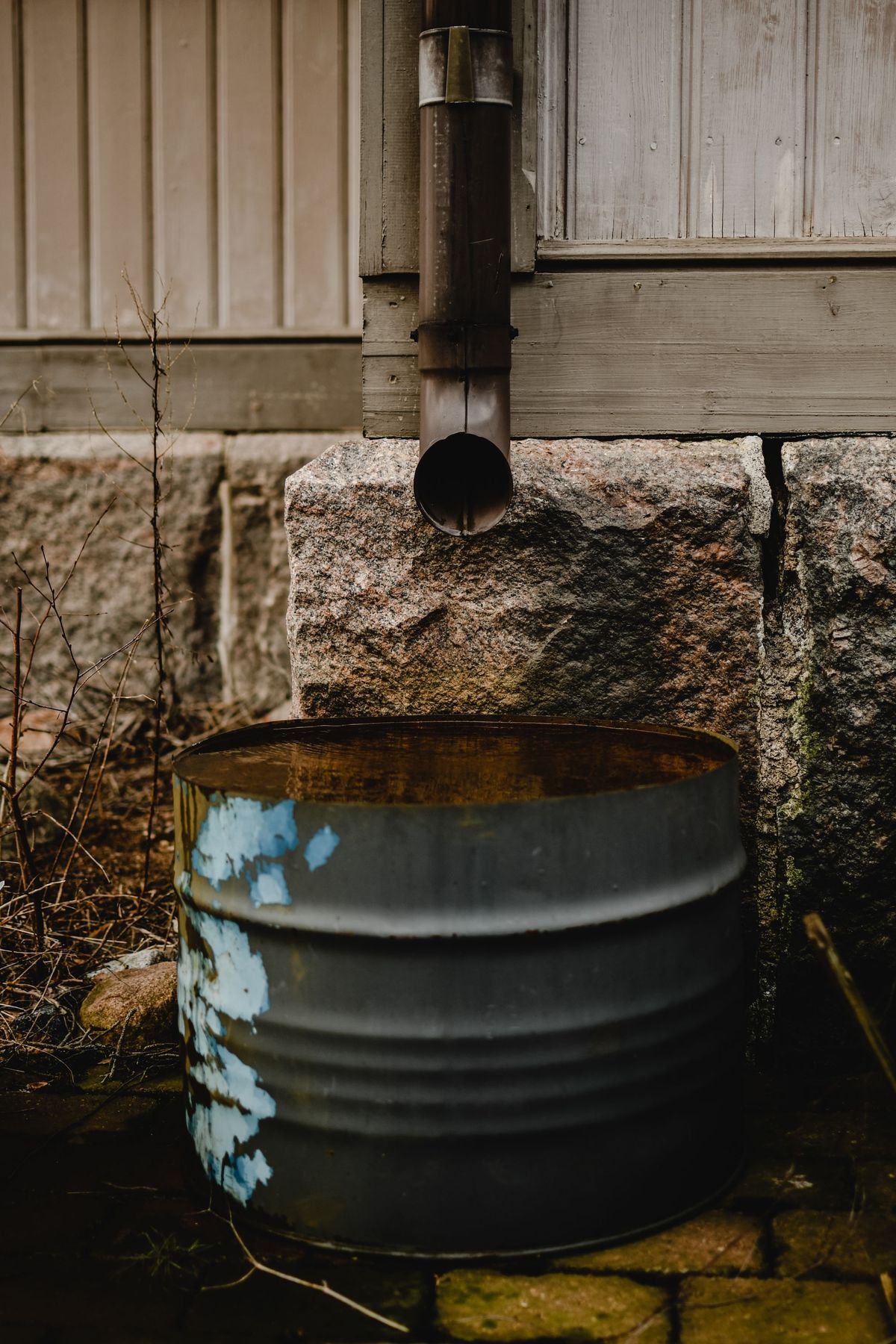
A downspout diverter kit is the component that separates a rain barrel system from a barrel under a cut downspout. The diverter installs into the downspout at barrel height: it routes water sideways into the barrel while the barrel needs filling, and once the barrel is full, it sends the rest of the flow down the downspout's original path automatically. When winter comes, a diverter closes the barrel off entirely. The alternative, cutting the downspout and aiming it into an open barrel top, works until the first clog, the first freeze, and the first mosquito convention, which is to say it works briefly.
Install the diverter level, at the height the kit specifies relative to the barrel's inlet, and keep the downspout's original drainage path intact below it. If your house has no gutters or the downspout is unreachable, a rain chain into a barrel is a partial solution for light rain areas; know that heavy rain overwhelms it and site the overflow accordingly.
A downspout and barrel standing beside a wooden house wall
Step 4: Screen Every Opening, Without Exception
Mosquitoes are the rain barrel's regulatory and domestic weak point: a female mosquito needs only a bottle cap of still water, and an unscreened barrel is a resort. Every opening gets fine mesh screening, secured so it cannot sag or slip: the inlet, the overflow port, and any vent or lid gap. Check the screens when you check the barrel, monthly in mosquito season, and repair tears the week you find them. A screened barrel produces water; an unscreened one produces complaints, and in some jurisdictions, citations. The discipline is total or it is nothing, because one open overflow port undoes three screened fittings.
The water itself is garden water, with rules: it is for the garden, the lawn, and outdoor washing, never for drinking, and vegetables are watered at the soil, not over the edible parts, with produce washed as always. Roof runoff quality varies with roofing material and local fallout; the conservative, standard guidance is to use barrel water on ornamentals and at the base of vegetables, and to keep it off leafy greens you eat raw if your roof is old or treated. Stated plainly, those rules cost the gardener nothing and keep the barrel what it should be, a convenience rather than a question.
Step 5: Use It Like a System, Winterize It Like a Pipe
In season, the barrel's rhythm is simple: draw water regularly (a barrel used is a barrel whose water stays fresh), keep the spigot exercised, and peek at the screens and the overflow path after big storms, when debris moves. If the water ever smells stagnant, use it up on the lawn, rinse the barrel, and refill with the next rain; a barrel in regular service rarely gets there.
Before hard freezes, winterize: drain the barrel completely, disconnect it from the diverter (or close the diverter and open the spigot), and leave the spigot open so no trapped water can split a fitting. Store the barrel upside down or under cover if it stays outdoors, or move it to a shed; ice expanding in a sealed, full barrel is strong enough to split heavy plastic, and it does so every winter in gardens where this step was postponed. In spring, reconnect, rinse, check the screens and seals, and the system returns to service in an hour. The barrel you winterize is the barrel you own for a decade; the one you forget is a spring purchase.
Two Barrels, Then a System
One barrel teaches the rhythm, and most gardeners who install one well start planning the second by the second month, because the arithmetic of step one's roof math guarantees the first barrel overflows through every real rain. Linking a second barrel is the standard expansion: the first barrel's overflow port connects to the second barrel's inlet, so the pair fills in sequence and the final overflow, now carrying only what two barrels cannot hold, exits through the second barrel's overflow to the discharge route. The stands, screens, and winterizing all double with the barrel count, and the discipline that made one barrel pleasant is what keeps two barrels from becoming a project you resent.
Beyond two barrels, be honest about the curve: each additional barrel stores the same 55 gallons and rains do not consult your capacity, so the returns diminish while the plumbing compounds. Gardeners who need serious volume graduate to a cistern, a different and larger conversation. For the vegetable garden's ordinary thirst, one or two barrels, drawn down regularly and refilled by ordinary rains, cover the watering can economy of a home garden completely, and the overflow, properly routed, handles the rest of the sky without drama. The system is complete when the gardener stops thinking about it, which is the correct ambition for infrastructure: the barrel fills, the cans fill, the screens hold, the winterizing takes ten minutes, and the garden drinks last week's rain on this week's driest day.
Rain Chains, Soaker Lines, and the Barrel's Manners
Two finishing touches separate a system from a barrel. The first is delivery: a short length of soaker hose laid from the spigot through the nearest bed turns the barrel from a dipping station into slow irrigation, gravity feeding a gentle seep along the row while you do something else. It will not run far or climb, and it stops when the barrel empties, which is its own kind of honesty about how much water a roof gives. The second is appearance, which matters more than purists admit: a barrel painted or screened to sit quietly against the house, on its neat stand, with its overflow routed invisibly to the garden, gets maintained; an ugly barrel in the way gets resented, and resented infrastructure is unmaintained infrastructure by the second season. Build it tidy, keep the screens invisible and intact, and the barrel becomes what it should be, a piece of the house's plumbing that happens to feed tomatoes.
Frequently Asked Questions
How much water can one rain barrel actually catch?
A 55 gallon barrel fills fast: at about 0.62 gallons per square foot of roof per inch of rain (the Texas A&M figure), a 500 square foot roof section yields roughly 300 gallons in a one inch rain. The barrel is a between rains supply for cans and hoses, and the overflow system carries the rest, which is why it is designed as carefully as the barrel.
How high should a rain barrel stand?
Twelve to 24 inches on a level, solid stand. The height fits a watering can under the spigot and adds gravity pressure. A full barrel weighs about 460 pounds, so the pad and stand must be firm and level; a leaning full barrel is a hazard, not a project.
Will a rain barrel give me hose pressure?
Gentle flow, not sprinkler pressure. A raised barrel fills cans quickly and feeds a short hose or soaker line slowly. Expecting pressurized spray from gravity alone disappoints; if your watering style needs pressure, the barrel's job is filling cans, and it does that job well.
How do I keep mosquitoes out of my rain barrel?
Screen every opening with fine mesh, inlet, overflow, and vents, secured so it cannot sag, and inspect the screens monthly in season. One unscreened opening undoes the rest. A properly screened barrel breeds no mosquitoes at all.
Can I drink rain barrel water or use it on vegetables?
Never drink it. Use it on the garden and lawn, watering vegetables at the soil rather than over edible parts, and wash produce as always. On old or treated roofs, keep barrel water to ornamentals and the base of plants. The rules are standard and cost nothing to follow.
What do I do with the barrel in winter?
Drain it fully before hard freezes, disconnect or close the diverter, and leave the spigot open so trapped water cannot split fittings. Store it upside down, covered, or in a shed. Ice in a sealed full barrel splits heavy plastic; the ten minute winterizing is the difference between a decade of service and a spring replacement.
Photo credits: Ann Hannes (Pexels); Eva Bronzini (Pexels). Photos are served from this site; follow the credit to the library page for the original.