Where to Hang Wind Chimes: The Spots That Sound Good and Stay Welcome
By the Windchime Walker editorial team
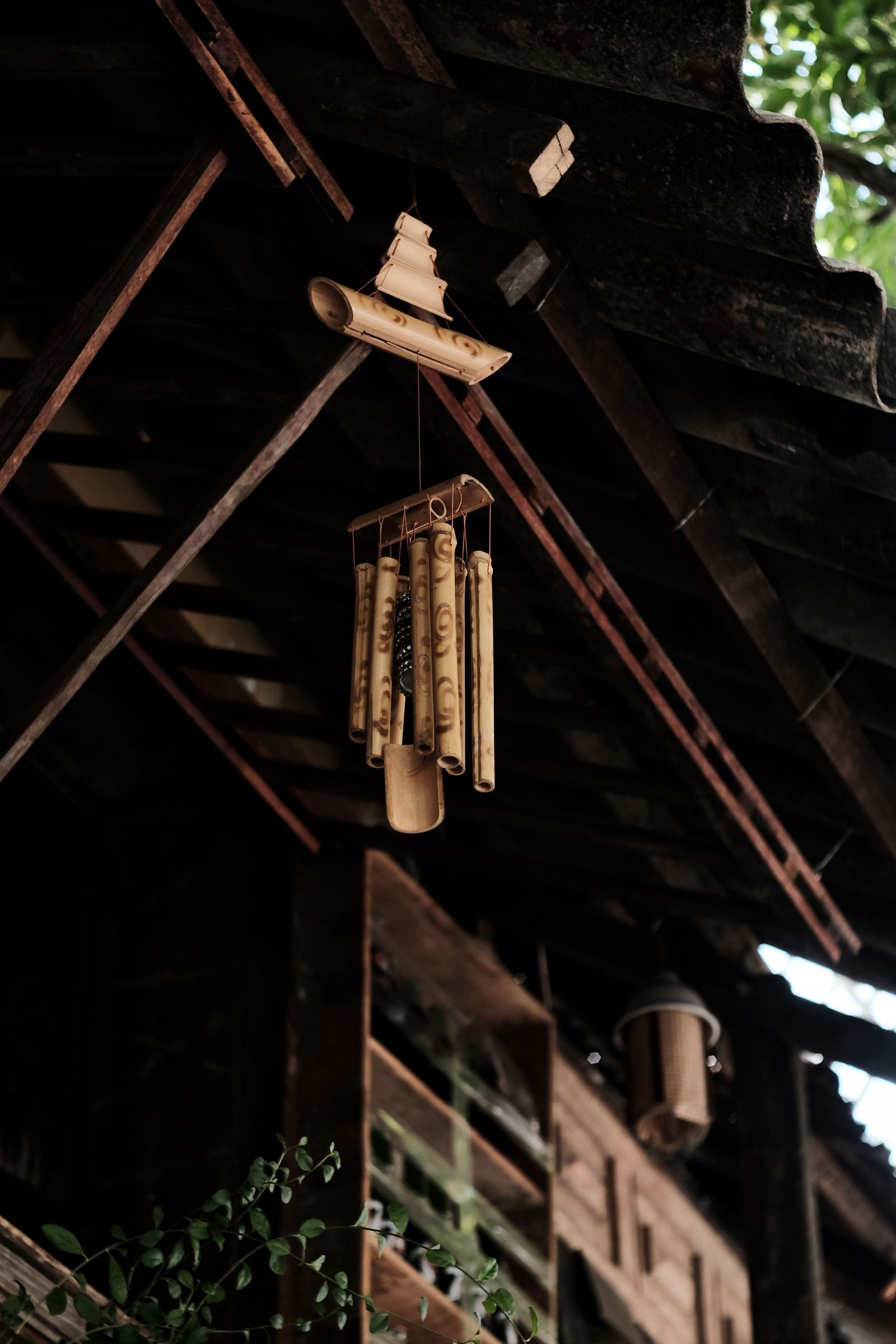
Photo: Nguyen Huy / Pexels
A wind chime in the wrong spot is silent, tangled, or a neighborhood incident, and the same chime in the right spot is the sound a house makes when it is happy. The difference is not luck. A chime is an instrument played by moving air, and hanging one well is a placement decision with rules: air first, clearance second, ears third, and only then tradition and taste. This page makes that decision in that order, for every kind of home, and gives the placement traditions many owners ask about, feng shui and vastu, their own fair section rather than mixing them into the physics.
Our guide to hanging wind chimes outside owns the methods and hardware, hooks, screws, and branch straps. This page owns the prior question: where.
Interactive tool
Wind Chime Spot Checklist
Check off each step as you finish it. Your progress stays on this page.
0 of 7 complete
0% done
The Four Rules Every Spot Must Pass
Moving air. A chime sounds when air moves through it, so the spot needs airflow, not shelter: corners where breezes turn, the open edge of a porch, a gap between buildings, a branch in the open. The still center of a deep porch and the dead air corner between two walls are where chimes go to be decorative and mute. Clearance. The chime swings as it sounds; give it at least its own full length of clear space below its hook and about 6 inches of swing room on every side, clear of walls, railings, screens, and the heads of people passing. A chime that taps a wall in gusts is a chime being damaged while it annoys. Hearing line. You should be able to hear the chime from where you actually sit, a porch chair, a kitchen window, a garden bench, or it is an instrument playing to no one. Weather sense. Wooden and bamboo chimes age fast in full weather; a spot under an eave's edge gets air and sheds the worst rain, which is why it wins the ranking below.
The Ranked Spots, by Home Situation
Covered porch eave, near the open edge: the gold standard. Hang it from the eave or a beam near the porch's open side, where breezes arrive but rain mostly does not, high enough that the sail clears heads on the steps. This is the spot most chimes in most houses should occupy, and the one to try first when a chime disappoints elsewhere. Pergola or gazebo beam. Open on all sides, air from every direction, and a structure built for hanging things; the chime sounds often here, so choose your deeper toned chime for it if the seats are close. Tree limb. The garden classic: choose a limb thick enough to hold the chime in a gust, hang it where the canopy lets air through, and expect the sound to carry pleasantly and the chime to weather faster; check the strap or cord each season as the limb grows. Deck rail or shepherd's hook. Workable and movable, which suits renters; keep the swing clear of the rail itself. Apartment balcony. Hang near the open rail, not against the sliding door, use a smaller, higher toned chime, and read the neighbor section below twice, because balcony sound carries to balconies above and below with startling fidelity. Inside, by a window that opens. A legitimate spot for a small chime: it sounds when the window is open and the curtain moves, and stays silent otherwise, which some owners count as the feature.
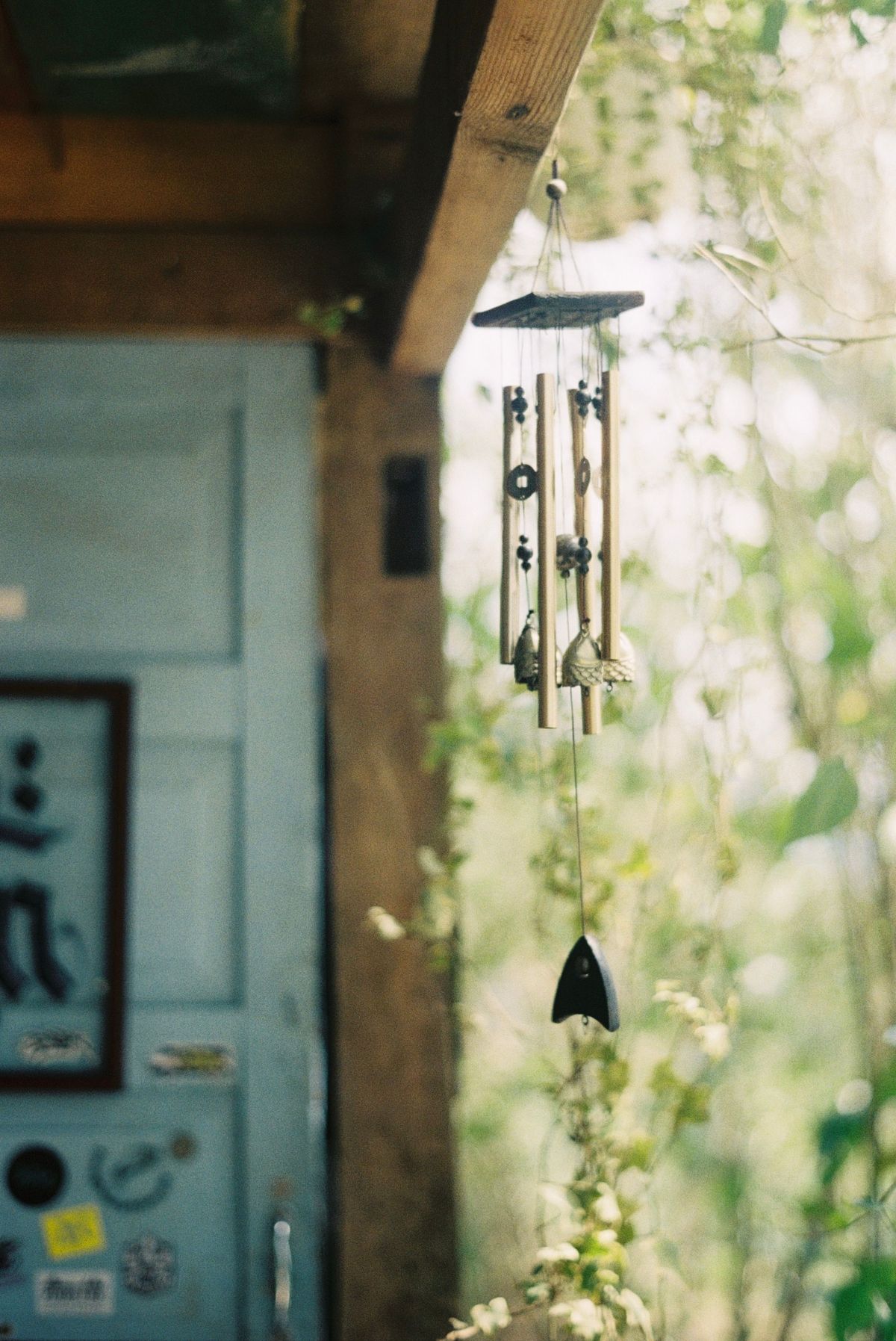
A wind chime hanging in a leafy outdoor space
The Spots to Refuse
Never hang a chime directly over a bed, a desk, or a favorite chair: sound you cannot move away from becomes noise on a schedule you do not control, and the 3 a.m. gust front does not consult you. Never hang one in a dead air corner and then blame the chime. Never hang a large, deep toned chime close to a property line shared with a neighbor's bedroom window, however legal it may be; chime courtesy is measured in the distance to the nearest pillow that is not yours. And never hang a heavy chime from a hook you have not tested with more than the chime's weight, because the gust load, not the still load, is the one that pulls hooks out, a point our hanging methods guide covers in hardware detail.
Neighbors, Volume, and the Night
The etiquette of chimes is simple and worth stating on a page about placement: your chime is your neighbor's ambient sound, chosen by you. Choose placement so the chime is heard most clearly on your own ground; a chime at the far garden fence is a gift to the street and a presence in the neighbor's yard. In close housing, smaller chimes with higher, softer tones carry less offense than large deep ones, and many owners of big chimes bring them in, or tie the sail up, on storm nights and during a neighbor's garden party season of outdoor sleeping, small courtesies that keep the peace for years. If a neighbor does complain, the cheap and honorable fixes are moving the chime to the house's other side, shortening its hours by tying the sail at night, or swapping to a softer clapper; all three beat a feud over an instrument whose entire purpose is pleasantness.
The Tradition Section: Feng Shui and Vastu Placement
Many owners hang a chime partly for its traditional meanings, and those traditions have their own placement logic, presented here as the traditions state it, to apply or not as you wish. In feng shui practice, chimes are used to move and soften energy at transitions, and the classic placements are the front entrance, hung to the side of the door rather than directly over the head of someone passing, a garden corner that feels stagnant, and the end of a long hallway indoors. Material and direction are paired in the tradition: metal chimes with the west, northwest, and north areas, wood and bamboo with the east and southeast, and the number of rods carries meaning, with five rods a common choice for clearing and six or eight for welcome. In vastu practice, chimes are placed to bring sound and movement to quiet zones: near the entrance, in the northwest or west of a home or garden, and in living areas rather than bedrooms, with metal favored for the west and northwest and wood for the south and southeast. Both traditions agree with the physics on two points worth noticing: hang the chime where air and people move, and not over a bed or a seat. Owners who follow a tradition usually choose the spot that satisfies both systems at once, a porch eave by the entrance being the classic overlap, and that overlap is a fine way to decide.
Height, Sound, and the Final Adjustment
Hang the chime so its tubes sit roughly at or above ear height of a standing person where possible: sound radiates cleanly, the sail hangs below into the moving air, and the chime stays out of the reach of children and the curiosity of dogs. Then live with it for a week before declaring the placement final. Every spot has a wind personality that a single afternoon misrepresents: the porch that is still on Tuesday sings on Friday when the weather turns. If the chime sounds too rarely, move it toward the corner and the open edge before concluding anything about the chime; if it sounds too often and too loud, a few feet toward shelter, or a softer clapper fitted as our repair guide describes, usually settles it. Placement is the chime's volume knob and its on switch both, and it is adjusted by moving the hook, which is the cheapest adjustment in all of home ownership.
Seasonal Moves: Storms, Winter, and Guests
The right spot is not a permanent spot, and the owners who keep chimes for decades move them on a small calendar. Before a forecast storm with real wind, take the chime down or tie the sail up so the clapper rests: a chime in a gale does not make music, it takes damage, swinging into walls and tangling cords that a calm week would never tangle. In cold climates, wooden and bamboo chimes last years longer if they winter indoors or under deep shelter, because freeze and thaw cycles split bamboo and lift finishes in a way that summer rain never does; metal chimes tolerate winter outdoors in most regions and their owners often leave one out deliberately for the winter garden's sake. For guests, the adjustment is social rather than meteorological: a chime near the guest room window that delights the household can be the sound a visitor remembers unkindly, and moving it for a weekend, or tying the sail at night, is a host's small courtesy that costs nothing. The hook stays; the chime travels. That is the mature relationship with placement: the spot is chosen well once, then adjusted forever, a few feet and a few seasons at a time.
Frequently Asked Questions
Where is the best place to hang a wind chime?
The covered porch eave near its open edge is the gold standard: breezes arrive there, rain mostly does not, and the sound reaches the porch and the rooms behind it. It passes all four rules, moving air, clearance of the chime's length plus about 6 inches of swing, a hearing line to where you sit, and weather sense, better than any other common spot.
How high should I hang a wind chime?
So the tubes sit around or above a standing person's ear height, with the whole chime, sail included, clearing heads, railings, and walls by a comfortable margin and at least 6 inches of swing room on every side. High enough to be safe and heard, low enough that the sail still catches the moving air below the hook point.
Can I hang wind chimes in a tree?
Yes, it is a classic garden spot. Choose a limb strong enough for the chime plus a gust, hang where air moves through the canopy, and expect faster weathering than under an eave. Check the strap or cord each season, because the limb grows and the bark can chafe the hanger.
Where should wind chimes go for feng shui or good luck?
In feng shui tradition, by the front entrance (to the side of the door, not over heads), in a stagnant garden corner, or at a hallway's end indoors; metal chimes pair with the west, northwest, and north, wood and bamboo with the east and southeast. Vastu places them near entrances and in the northwest or west, in living areas rather than bedrooms. Both traditions agree with the practical rule against hanging a chime over a bed or seat.
My wind chime never makes sound. What is wrong with the spot?
Almost always dead air: the chime is in a sheltered corner or the still middle of a deep porch where breezes do not reach. Move it toward the open edge, a corner where air turns, or a gap between structures, and give it a week of varied weather before judging. If it sounds when you move the sail by hand, the chime is fine and the spot is the whole problem.
Are wind chimes rude to neighbors?
They can be, and placement decides. A large deep chime near a neighbor's bedroom window is a presence in their house; a smaller, higher toned chime on your home's far side is a pleasure mostly on your own ground. Tying the sail up on storm nights, choosing softer clappers, and moving the chime when asked are the courtesies that keep chimes welcome on a street.
Photo credits: Nguyen Huy (Pexels); stayhereforu (Pexels). Photos are served from this site; follow the credit to the library page for the original.