10 Gardening Tools for Beginners: The Exact Kit, in the Order to Buy It
By the Windchime Walker editorial team
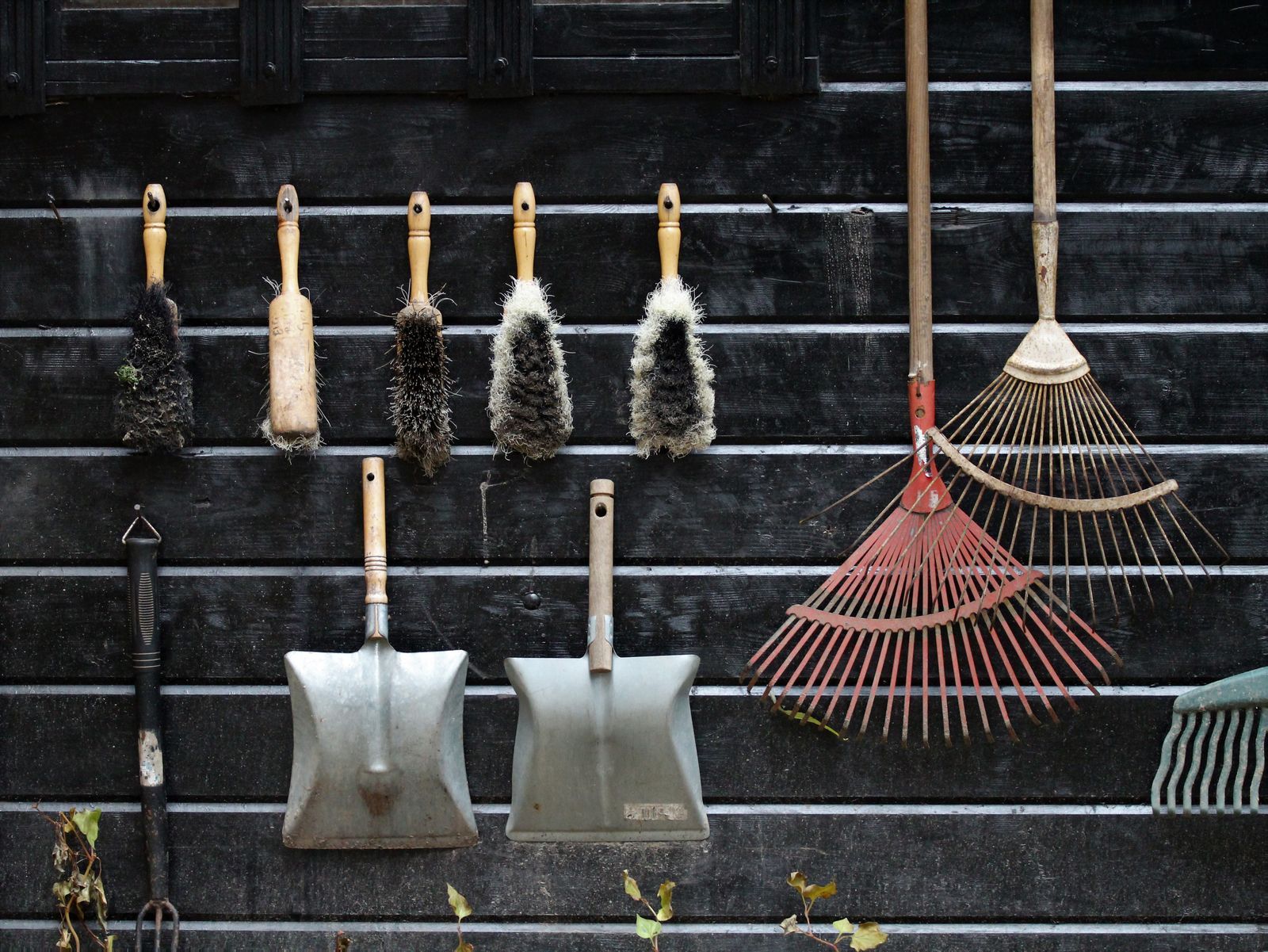
Photo: hans middendorp / Pexels
Ask ten gardeners what a beginner needs and you will hear the same ten tools, because the first season only asks for ten jobs: digging small holes, cutting stems cleanly, protecting hands, moving soil, loosening soil, leveling soil, clearing leaves, watering gently, watering deeply, and hauling things. The beginner aisle knows this and still manages to sell a thirty piece kit in a cheerful roll, most of it bent or broken by July. This page is the numbered kit itself: exactly ten tools, in the order a first season asks for them, each with the quality test that tells a tool that lasts from a tool that photographs well.
Our garden tool buying guide owns the deep buying advice, brands, and materials in depth. This page owns the list and the order: what the ten are, which five to buy before the first planting, and which five can wait until the job that needs them shows up.
Interactive tool
The 10 Tools Checklist
Check off each step as you finish it. Your progress stays on this page.
0 of 9 complete
0% done
The Ten at a Glance
#
Tool
The job it owns
Buy it
1
Hand trowel
Planting every transplant and bulb
Now
2
Bypass pruners
Every clean cut on a living stem
Now
3
Gloves
thorns, blisters, and wet soil
Now
4
Watering can
Pots, seedlings, and the gentle soak
Now
5
Spade
Edging, digging, and dividing
Now
6
Digging fork
Loosening soil without slicing roots and worms
When the bed is compacted
7
Bow rake
Leveling and grading soil before sowing
When you prepare a real bed
8
Leaf rake
Leaves and light debris, fall and spring
When the first leaves fall
9
Hose with watering wand
Deep watering of beds at soil level
When beds outgrow the can
10
Wheelbarrow or garden cart
Compost, soil, mulch, and harvest hauling
When the loads get heavy
The First Five: Buy These Before the First Planting
1. Hand trowel. The most used tool in a beginner's kit, in the soil every planting day. The quality test is one look at the neck: a trowel cast or forged from a single piece of metal, blade and handle flowing together, will outlive you. A blade welded or riveted to a separate handle, or worse, a plastic neck, bends the first time it meets a root or a stone, and every cheap kit trowel fails at exactly that joint. Depth markings etched on the blade are a genuine bonus for bulb planting.
2. Bypass pruners. Pruners come in two mechanisms and the difference decides whether your plants heal or fester. Bypass pruners pass two curved blades past each other like scissors and leave a clean cut on living stems. Anvil pruners press a blade onto a flat pad and crush as they cut, which is acceptable on dead wood and a wound on living wood. For a beginner's ten, the pruners are bypass, sized to your hand, with a blade you can sharpen or replace. They cut every stem up to about three quarters of an inch; beyond that is saw work, and forcing pruners through thick wood is how blades twist.
3. Gloves. One pair is a compromise; the honest kit has two kinds in one line item. A leather palmed pair for thorns, rough wood, and barrow work, and a snug nitrile coated pair for wet soil and seedling work, where you need to feel what your fingers hold. The fit test is simple: you should be able to pick up a single seed or a coin from a table while wearing them. Gloves that fit like oven mitts get taken off, and gloves that are off protect nothing.
4. Watering can. A can of about two gallons with a removable rose, the sprinkler head that breaks the stream into gentle rain. Seedlings and fresh sowings are washed out of the soil by a hard stream and floated away by a flood; the rose is the difference between watering a seedbed and rearranging it. Two handles, one for carrying and one for tipping, save your wrist by June. The can owns pots, seedlings, and everything near the house; the hose takes over where the can's trips become a commute.
5. Spade. A spade is not a shovel, and the distinction is the flat edge: a spade cuts a clean bed edge, slices sod, digs a square planting hole, and divides a perennial with a straight chop. The pointed shovel is for moving loose material, and most garages already own one, which is why the spade makes this list and the shovel does not. Test: a steel blade, a D or T handle that suits your grip, and a footrest edge wide enough for a boot.
The Second Five: Buy Them When Their Job Arrives
6. Digging fork. The fork loosens soil the way a spade cannot: pushed in and levered back, it lifts and cracks a compacted bed while leaving roots, worms, and soil structure mostly intact, where a spade slices through all three. It is also the tool that harvests potatoes and lifts perennials for dividing. Buy it when you meet your first compacted bed or your first autumn of lifting and dividing, which for most beginners is season one, just not week one.
7. Bow rake. The short, stiff tined rake with a flat head is the soil finishing tool: it grades a bed level, breaks the last clods, and pulls a shallow furrow for sowing. A bed raked level waters evenly and germinates evenly; a bed left lumpy does neither. Buy it the week you prepare a real in ground bed or level a raised bed's surface for sowing.
8. Leaf rake. The wide fan rake is useless in soil and irreplaceable on the lawn and paths: leaves, grass clippings, and light debris, gathered without tearing turf. It earns its place in fall, and again in spring cleanup. Buying it in April because it was on the list is how sheds fill with tools waiting for a season; buy it when the first leaves fall.
9. Hose with a watering wand. When the beds outgrow the can, the hose arrives, and the wand is what makes it a gardening tool rather than a car wash: a long neck that delivers a soft shower at soil level, under foliage, without blasting soil or wetting leaves that would rather stay dry. Length of hose is measured by walking your farthest bed with a tape, not by the optimistic number on the box.
10. Wheelbarrow or garden cart. The last purchase and the one your back will vote for. A single wheel barrow handles rough ground and tight paths and dumps where you tip it; a two or four wheel cart is steadier on flat ground and kinder to beginners with heavy loads of soil and stone. Buy it when the compost, mulch, and soil start arriving in quantities measured in loads rather than bags.
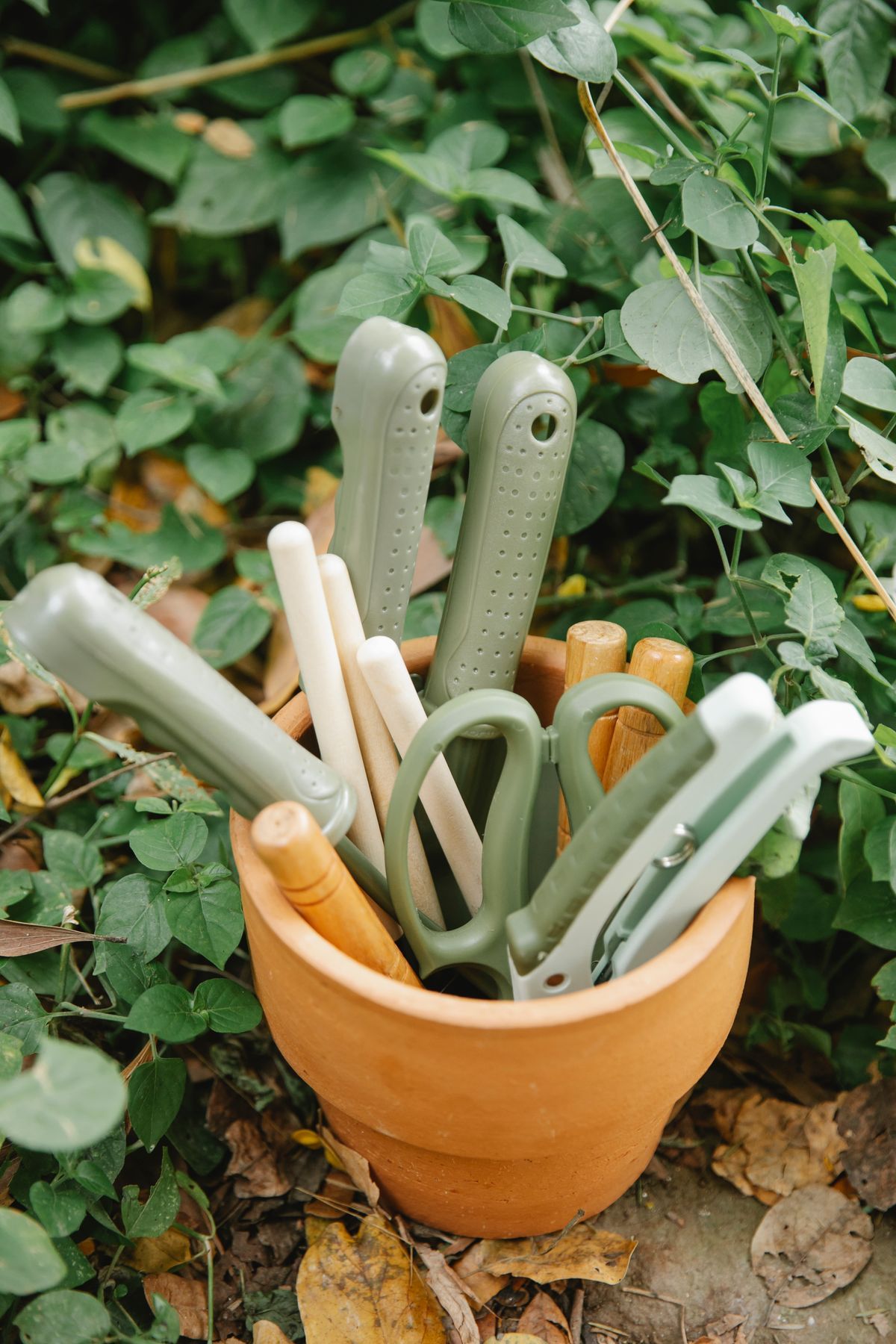
Hand trowels and forks with green handles gathered in a terracotta pot
The Kit by Garden Type
The ten bend a little by the garden you actually have. A container gardener on a balcony works the first five daily and may never need the bow rake, leaf rake, or spade at full size; a hand fork and a smaller can serve better, and the barrow becomes a sturdy bucket. A raised bed gardener needs the trowel, pruners, gloves, and can from day one, the bow rake in miniature for leveling the bed surface, and the hose sooner than most, because beds dry faster than ground. An in ground gardener is the full ten in order, with the fork and spade earning their keep from the first bed breaking. Read the list against your ground before you read it against your wallet: the right kit is the ten jobs your garden asks for, and no garden asks for all ten on the same weekend.
What to Skip in Year One
The beginner aisle's profits live in the tools this list leaves out. Skip the matched thirty piece kits, whose price is spread so thin that every tool in them is the weak version. Skip the specialty single crop tools, the bulb planters that a trowel replaces, the weed pullers in four competing designs, and every battery gadget until the hand version has proven the job is frequent enough to motorize. Skip the kneeler if a folded towel survives your first month, and skip the tool belt until you notice yourself walking back to the shed mid job more than twice a session. Every skipped gadget is the budget for buying the ten in their strong versions, and that trade, fewer tools bought better, is the whole economics of this page.
Care That Makes the Ten Last
A good tool bought once is only cheap if it is kept, and the keeping is ten minutes a month. Wipe blades clean and dry after use, because a trowel or spade stored dirty in a damp shed rusts at the soil line where it works hardest. Scrub sap and soil from pruner blades, sharpen them when they start to tear rather than cut, and put one drop of oil on the pivot when the action stiffens; a bypass pruner maintained this way cuts cleanly for decades. Wooden handles that dry and rough get a wipe of boiled linseed oil once a year and stop splitting. Hoses drain before a freeze and store out of sun, and the watering can empties rather than winters full of ice. None of this is a hobby in itself; it is the small print on the bargain this page recommends, in which you buy ten tools once instead of thirty tools repeatedly.
Frequently Asked Questions
What is the single most important tool for a beginner?
The hand trowel, by hours of use: it plants every transplant, digs every bulb, and weeds every small bed. Buy it in its one piece forged or cast form and it is also the tool most likely to be handed to the next beginner you know, still straight, decades from now.
Should I buy a tool kit or buy tools one at a time?
One at a time, in the order on this page. Kits spread their price across every piece, so the trowel and pruners you use daily end up as weak as the gadgets you never touch. Buying singly lets each purchase be the strong version of a tool whose job you have already met.
What is the difference between bypass and anvil pruners?
Bypass pruners pass two curved blades past each other and cut living stems cleanly, the way scissors cut. Anvil pruners press one blade down onto a flat pad and crush the stem as they cut. Use bypass on everything alive; keep anvil, if you own one, for dead wood only.
How much should the ten tools cost?
Prices move, but the shape of the budget does not: the first five in their strong versions cost roughly what one cheerful thirty piece kit costs, and the second five are bought across the season as their jobs arrive. The expensive version of this list is buying the weak version of everything twice.
Do I need different tools for raised beds?
Mostly the same ten, at slightly smaller scale: the trowel, pruners, gloves, and can are identical, the bow rake becomes a hand rake for leveling the bed surface, and the spade and fork matter less because bed soil starts loose. The hose with a wand matters more, since raised beds dry out faster than in ground soil.
When is a wheelbarrow worth it for a small garden?
When material starts arriving by the load instead of by the bag: a cubic yard of compost or mulch is dozens of bucket trips and one barrow's honest work. Small gardens with bagged inputs can honestly skip it for years; the moment you order bulk, buy the barrow first and the bulk second.
Photo credits: hans middendorp (Pexels); Gary Barnes (Pexels). Photos are served from this site; follow the credit to the library page for the original.