Beginner Gardening Guide: The One Reference Page for Your First Season
By the Windchime Walker editorial team
Photo: Pew Nguyen / Pexels
Every beginner gardener ends up with the same problem by June: the advice is scattered across seed packets, videos, neighbors, and half remembered rules, and none of it agrees. This page is the opposite of that. It is the single reference for your first season, the numbers and decisions in one place, organized for looking things up fast while your hands are dirty. Other pages on this site walk you through a first season week by week or teach the five big concepts slowly. This one is the chart on the shed wall.
Everything here uses the standards this site uses everywhere else, drawn from university extension publications: the University of Georgia Cooperative Extension Circular 963 for vegetable spacing, North Dakota State University Extension H1139 for seed starting dates, and the extension watering rule of about 1 inch of water a week for most beds. Where guides disagree, this page says so and tells you which standard we follow. Bookmark it in April, and expect to still be using it in September.
Interactive tool
Beginner Gardening Guide Checklist
Check off each step as you finish it. Your progress stays on this page.
0 of 8 complete
0% done
The Five Numbers That Run a Garden
Almost every gardening decision reduces to five numbers: sun hours, water depth, spacing, frost dates, and planting depth. Get these five right and most plants forgive the rest. Get one badly wrong and no amount of fertilizer fixes it. Learn these first; everything else in this guide hangs off them.
Sun. Full sun means at least 6 hours of direct sun on the spot, measured on a real day, not estimated from a window. Fruiting crops (tomatoes, peppers, cucumbers, squash) want 8 or more hours and sulk below that. Leafy crops (lettuce, spinach, kale, herbs) manage on 6 and appreciate afternoon shade in hot weather. Roots and peas sit in between at about 6. A spot with fewer than 6 hours is a shade garden, and it should be planted with shade plants on purpose rather than vegetables on hope.
Water. The working rule is about 1 inch of water a week for an established bed, counting rain, delivered deeply so it soaks down to the roots rather than wetting the surface daily. New seedbeds and fresh transplants are the exception: they need light, frequent moisture until they are established, then they graduate to the deep and infrequent rule. The finger test governs all of it: push a finger into the soil to the second knuckle; dry there means water, moist there means wait.
Spacing. Plants are spaced for their mature size, not their seedling size. The tray looks sparse on planting day and crowded by July if you cheat, and crowded plants share air badly, which is how fungal disease moves in. The quick table below is this site's standard; the spacing planner on our crop guides runs the same figures for your exact bed.
Frost dates. Your average last spring frost and first fall frost are the two dates your whole calendar hangs from. Seed starting counts back from the last frost; season length counts down to the first. Find yours once, write them on this page's checklist, and every timing question gets easier.
Depth. The seed packet rule of thumb, sow about twice as deep as the seed is wide, covers most cases, and the exceptions are printed on the packet. Transplants go in at the depth they grew in the pot, with tomatoes the famous exception: they root along a buried stem and go in deep on purpose.
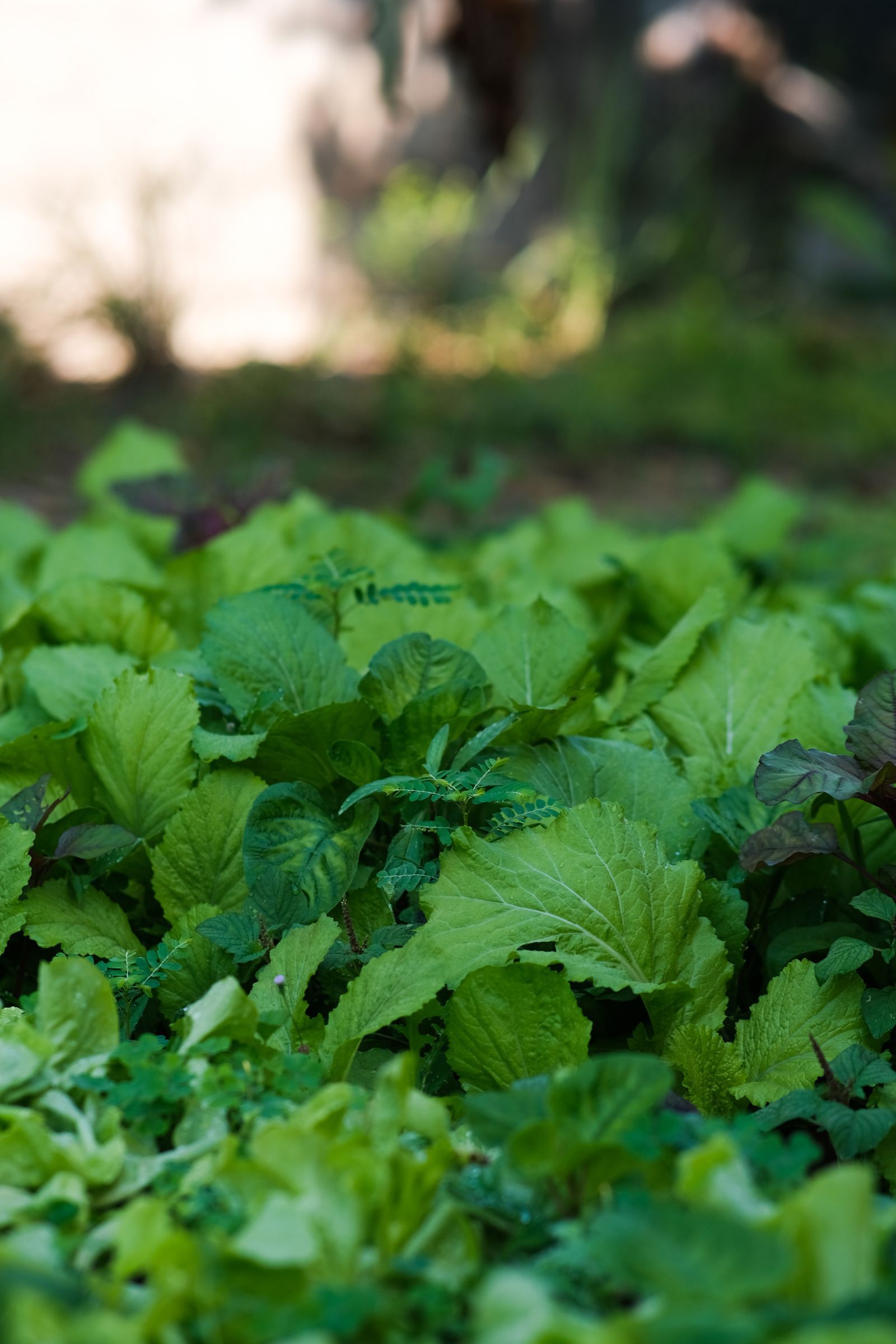
A vibrant patch of leafy greens growing in an outdoor garden
The Quick Tables
Sun by crop type
Crop type
Examples
Direct sun needed
Fruiting
Tomato, pepper, cucumber, squash, melon
8 or more hours
Leafy
Lettuce, spinach, kale, chard, most herbs
About 6 hours, afternoon shade welcome in heat
Roots and pods
Carrots, beets, peas, beans
About 6 hours
Shade tolerant
Lettuce in summer, mint, parsley, hostas and shade flowers
Under 6 hours, planted on purpose
Spacing for the common first crops (this site's extension standard)
Crop
Between plants
Between rows
Notes
Tomato
24 inches
48 inches
University of Georgia Circular 963
Pepper
24 inches
36 inches
Circular 963
Cucumber
12 inches
36 to 60 inches
12 inches on a trellis
Lettuce
8 to 12 inches
18 to 36 inches
Sow little and often
Carrots
2 to 3 inches after thinning
18 to 36 inches
Thin without mercy
Bush beans
2 to 4 inches
36 inches
Succession sow every 2 to 3 weeks
Corn
12 to 18 inches
36 inches
Always in a block, never a row
Basil
12 inches
18 to 36 inches
University of Maryland Extension
The season in one view
Season
The jobs that matter
Early spring
Soil test, compost on beds, sow peas and spinach, start tomatoes indoors 6 weeks before last frost
After last frost
Transplant warm crops 2 weeks after frost for tomatoes, mulch once soil warms, sow beans and squash
Midsummer
Water deeply, harvest little and often, sow a second round of beans and lettuce, watch leaf undersides
Fall
Sow garlic after the first killing frost, clean up spent crops, sow cover or mulch bare beds, write down what worked
The Decision Order for a First Garden
First, the spot. Sun first, water second, convenience third: a bed you can reach with a hose and see from a window gets tended; a perfect bed at the far end of the yard gets neglected. Check drainage by standing there after rain. Standing water an hour later means a raised bed or a different spot.
Second, the size. Start smaller than your ambition. A single 4 by 8 foot bed, or a few pots, grown well teaches more than a quarter acre of weeds. Every bed should be 4 feet wide or less if you reach from both sides, 2 feet or less from one side, so you never step on the soil you loosened.
Third, the soil. Loosen to about a spade depth, work in 2 to 4 inches of compost, and get a soil test before adding anything beyond compost. Most vegetables are happy at a pH between 6.0 and 7.0; the test tells you yours and what, if anything, to correct. Mulch after planting, 2 to 3 inches deep, kept clear of stems.
Fourth, the short list. Three to five plants you will actually eat or pick, matched to your season: cool weather crops (peas, lettuce, spinach, carrots) in cool weather, warm weather crops (tomatoes, peppers, beans, squash) after frost. A short list grown well beats a long list grown thin, every season, for every beginner.
Fifth, the rhythm. Gardens run on small regular attention: a finger test before watering, a look under leaves while you are there, weeds pulled while they are small enough to pinch out, harvests taken little and often. Fifteen minutes three times a week outperforms a heroic monthly Saturday, because problems are cheap when they are small.
The Mistakes This Guide Exists to Prevent
Planting everything on the first warm weekend is the classic: a warm spell in March is not spring, and warm season crops set out early sit and sulk in cold soil even when frost misses them. The frost date, plus a week or two of patience for the tender crops, is the discipline.
Watering a little every day trains shallow roots and wet leaves; water deeply, then wait, then check. Crowding is the third: seedlings look lonely at final spacing and it feels wrong, and by July the crowded bed proves why the table says what it says. The fourth is feeding without a test: compost first, test second, and specific fertilizers only when a result or a clear symptom asks for them. The fifth is quitting in August: gardens look tired in late summer because the spring crops are done, not because you failed; the fall garden (lettuce, spinach, garlic) is the quiet second season most beginners never plant.
Keeping Notes, the Unglamorous Superpower
One page of notes per season, dates and outcomes, is worth more than any tool you can buy. When you sowed, when it sprouted, what yielded, what failed and your best guess why. Next year's garden is planned from those notes, not from a catalog. The checklist on this page ends with the note habit on purpose: the gardener who writes things down stops repeating the same first year.
Reading a Seed Packet Without a Dictionary
The packet is a compressed instruction sheet, and four lines on it do most of the work. Days to germination tells you how long to keep the seedbed moist before worrying. Days to maturity counts, for most crops, from transplanting or from sprouting, and the packet usually says which; it is how you know whether a crop fits between your frost dates. Planting depth and spacing repeat the tables above in miniature, crop by crop. The packed for year stamp matters more than any of it: fresh seed germinates at the rate the packet promises, and old seed is a false economy that costs you the two weeks you spend waiting for plants that are not coming. When a sowing fails, the order of suspects is old seed, wrong depth, and a seedbed that dried out once, in that order.
The Honest Short List of Tools
Beginners are sold tool sets; gardeners own about six tools. A trowel that passes the one piece test, blade and handle joined with no wobble. Bypass pruners, not anvil type, for cutting live stems. A watering can or a hose with a gentle wand, because a jet of water excavates seedlings. Gloves that fit well enough to stay on. A bucket, which carries tools, weeds, and harvests in turn. And a hoe or a hand weeder for the small and early stage of the weed war. Everything beyond that list should be bought when a specific job asks for it, not before; the buy later list written down in the checklist on this page is what keeps a first season's budget pointed at plants and compost, where it produces something.
Your First Season, Realistically
Expect the garden to look sparse in May, promising in June, abundant in July, and tired in August, and expect that arc in your second and fifth years too, because it is the garden's rhythm, not your report card. Expect one crop to fail for reasons you will only half understand, and one crop to produce absurdly beyond your need for it; zucchini and lettuce take turns holding the second title. Expect the harvest to arrive in gluts that require giving food away, which is not a failure mode but the oldest social function a garden has. The gardener's skill that compounds is not any technique on this page; it is showing up, looking closely, and writing it down. Do those three and the numbers above will carry you.
Frequently Asked Questions
What is the very first thing a beginner should do?
Pick the spot by sun: at least 6 hours of direct sun, reachable by a hose, and not holding standing water after rain. Then start small, one bed or a few pots, loosen the soil, work in 2 to 4 inches of compost, and plant a short list of three to five crops matched to the season.
How much water does a garden need each week?
About 1 inch a week for established beds, counting rain, given deeply so it soaks to the roots. Seedbeds and new transplants need light, frequent moisture until established. Always confirm with the finger test: dry at the second knuckle means water, moist means wait.
How far apart should I plant vegetables?
At this site's standard (University of Georgia Circular 963): tomatoes 24 inches apart, peppers 24, cucumbers 12 on a trellis, lettuce 8 to 12, carrots thinned to 2 to 3, bush beans 2 to 4, corn 12 to 18 in rows 36 inches apart and always in a block. The full table is above.
When do I start seeds indoors?
Count back from your average last spring frost. Tomatoes start indoors 6 weeks before that date and go outside about 2 weeks after it, per North Dakota State University Extension H1139. Peppers need longer, 8 to 10 weeks. Many crops (beans, squash, lettuce, carrots) are better sown directly outside.
What soil do vegetables want?
Loose, drained soil with compost worked in, 2 to 4 inches on a new bed, and a pH between about 6.0 and 7.0 for most vegetables. Get a soil test before adding lime, sulfur, or specific fertilizers; compost is the one amendment that is almost never wrong.
What if my garden spot gets less than 6 hours of sun?
Plant it as a shade garden on purpose: leafy greens in summer, herbs like mint and parsley, and shade flowers will do honest work there. Fruiting vegetables under 6 hours grow leaves instead of fruit, and no fertilizer changes that math. Move the vegetables to the sun you have, even if it means pots on a patio.
Photo credits: Pew Nguyen (Pexels); Greta Hoffman (Pexels). Photos are served from this site; follow the credit to the library page for the original.