Beginner Gardening Kit: What a Real Kit Contains, and When to Skip the Box
By the Windchime Walker editorial team
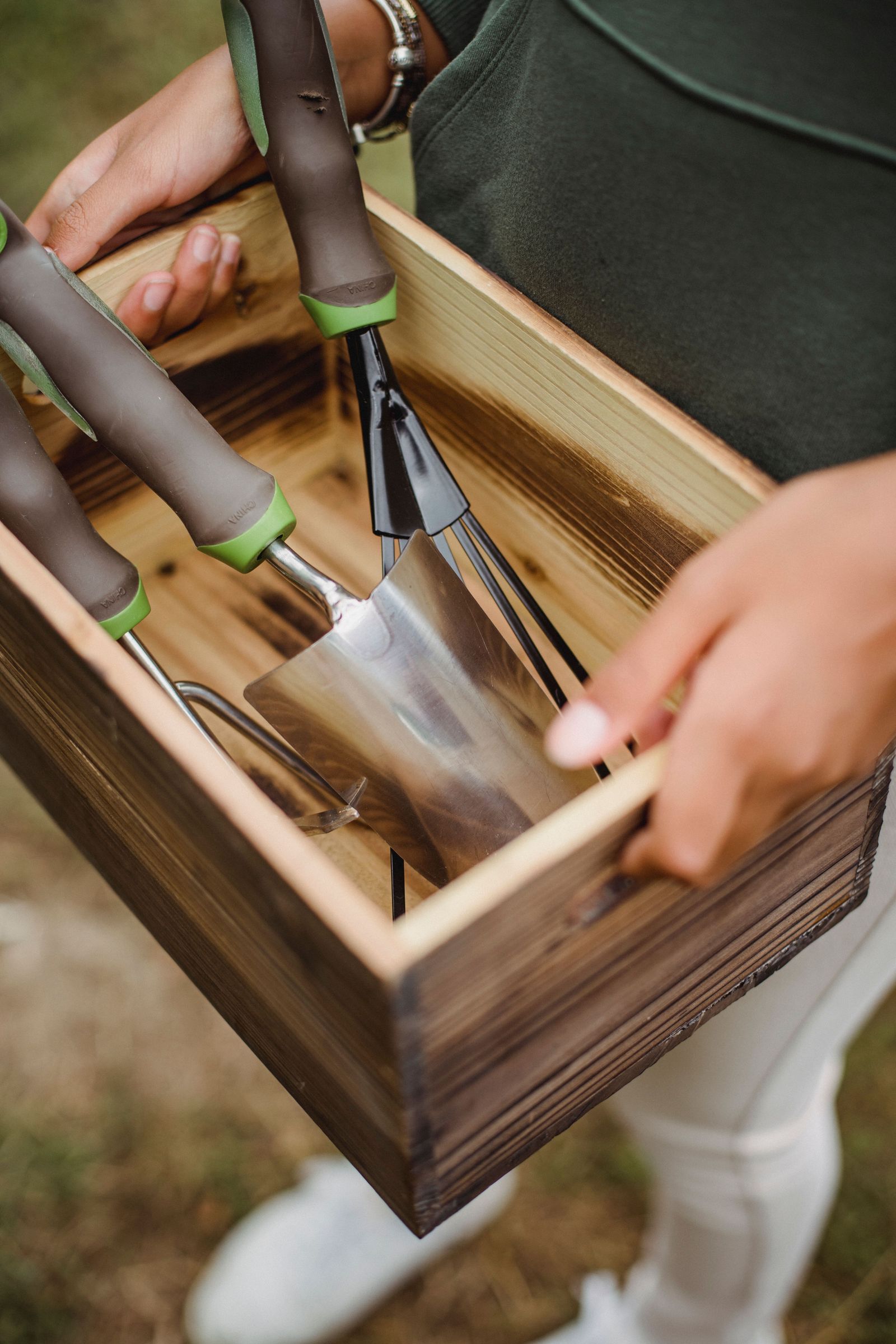
Photo: Zen Chung / Pexels
Type "beginner gardening kit" into any store and two different products answer. One is a boxed set of hand tools, sold by piece count. The other is a seed starter kit of trays and pods. This page is about the first one, the tool box, because that is the purchase a new gardener agonizes over: is the box a smart shortcut, or a dozen mediocre tools in a nice tote? The honest answer is that it depends on what is actually in the box, and the box rarely tells you plainly. This page teaches you to audit it.
Our 10 gardening tools for beginners article owns the exact numbered kit and the order to buy it in, and our best garden tools guide owns tool buying in depth. This page owns the boxed kit decision itself: how to read a kit listing, what it must contain, what it never contains, and when to walk past the box and piece together five good tools instead.
Interactive tool
Beginner Kit Checklist
Check off each step as you finish it. Your progress stays on this page.
0 of 7 complete
0% done
What a Real First Kit Must Contain, by Job
Forget piece counts for a moment and think in jobs. A first season of gardening, in beds, borders, or containers, asks for exactly five jobs from hand tools, and a kit earns its price only if it covers all five with tools you would keep.
Job
Tool that does it
What good looks like
Digging planting holes and transplanting
Hand trowel
One piece or solidly joined blade and handle, no wobble at the neck
Cutting stems, deadheading, light pruning
Bypass pruners
Bypass action (two curved blades), not anvil; cuts a pencil thick stem cleanly
Loosening soil and weeding between plants
Hand cultivator or hand fork
Tines that do not flex when you press them against a table edge
Slicing weeds below the surface
Hand weeder or hori hori knife
A blade that reaches the root, not just the leaves
Protecting the gardener
Gloves
Fit that lets you feel a seed; snug fingers, not oven mitts
Everything beyond those five is a bonus, and some of it is genuinely useful: a transplanter trowel with depth marks, a kneeling pad, a tote or bucket to carry it all. But a kit that covers the five jobs with honest tools beats a kit that covers three jobs and pads the count to twenty pieces with twine, plant labels, a spray bottle, and a pair of scissors you already own in a kitchen drawer.
The Piece Count Audit
Piece count is the headline number on every kit box, and it is marketing arithmetic. Run this audit on any listing before you compare prices. Count the pieces, then subtract: the storage tote or bag itself (often counted), the gloves (one pair, sometimes counted as two), twine, twist ties, plant markers, and any tool duplicated in a second size. What remains is the tool count, and on a typical "12 piece" kit the honest tool count is five or six. On a "46 piece" seed and tool bundle it can be lower, because the count swallows seed packets, pods, and labels by the dozen.
Then check the steel, because this is where cheap kits quietly fail. Kit tools are commonly stamped from thin aluminum or soft steel that bends the first time a trowel meets compacted soil or a root. The one piece test from the listing photos helps: tools cast or forged as a single piece, or with a blade that runs full tang into the handle, survive; tools with a thin neck where blade meets a hollow handle are the ones that snap in June. If the listing will not show you the neck of the trowel, that is information too.
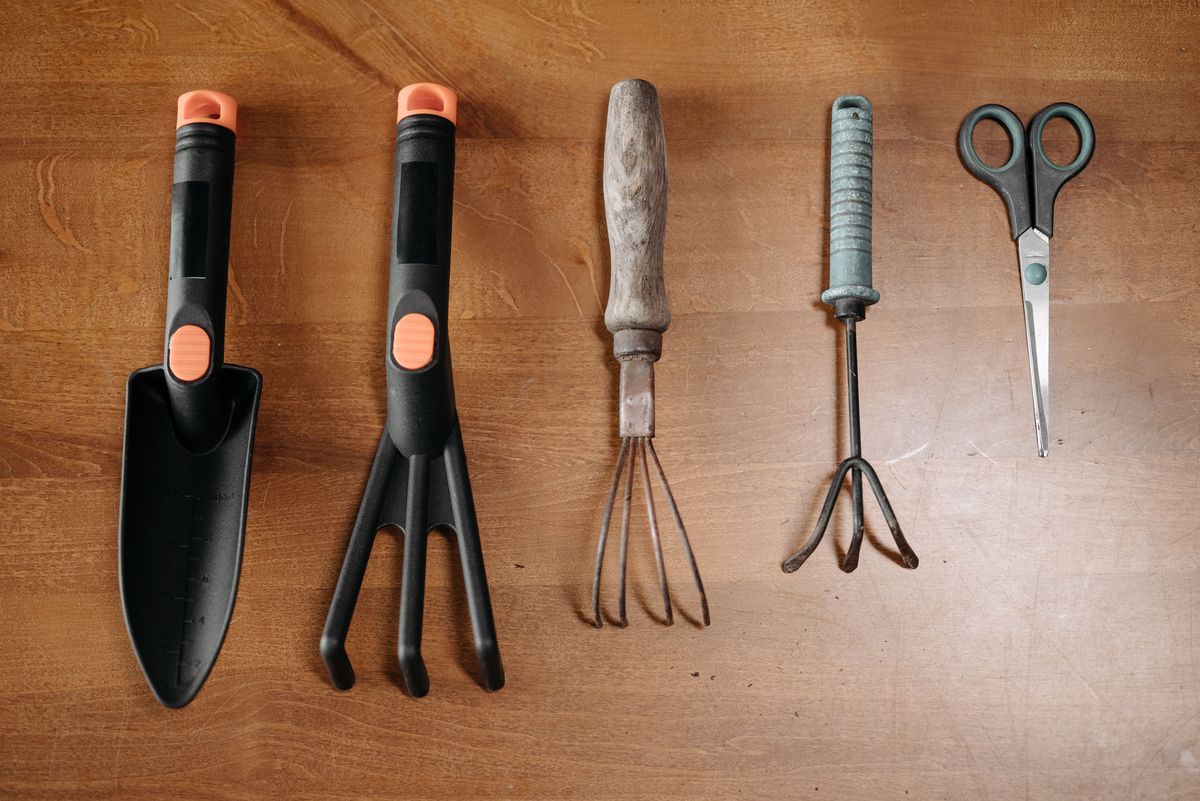
A set of garden hand tools arranged on a wooden surface
What Every Box Leaves Out
No hand tool kit, at any price, contains the long handled half of a beginner's kit, because it does not fit in the box. Budget for these separately or the kit's price is a down payment, not a total.
A spade or shovel. Beds get dug, edges get cut, compost gets turned. A short handled border spade is the beginner's version.
Water delivery. A hose with a gentle watering wand, or a watering can of at least 2 gallons for container growers. Plants die of thirst within reach of a beautiful tool tote.
A rake or hoe, if you garden in ground. One of the two; a bow rake for leveling beds, a hoe for weeding rows.
Consumables. Potting mix or compost, mulch, plant food, and the seeds and plants themselves. These routinely cost more in season one than the tools do.
A kneeler or pad. Knees are the beginner's first injury. A ten dollar pad prevents it.
Kit Versus Pieced Together, Honestly
A decent boxed kit runs roughly the price of two or three good individual hand tools. Piecing together the five core tools at mid quality costs noticeably more, and buys you three things the box cannot: each tool chosen for your hand size, steel that survives clay soil, and replacements bought one at a time when something actually wears out, which for good tools is measured in years.
The box wins on two real grounds. First, the gift: a kit is a complete, presentable start for someone else, and completeness is the point of a gift. Second, the container or balcony gardener whose whole garden is five pots: their five jobs are real but light, the duty is gentle, and mid grade kit steel is honestly sufficient for potting mix, which never fights back the way garden soil does. In ground gardeners in clay should piece together. Everyone should piece together the pruners at minimum if the kit's pruners are anvil type or flimsy, because bad pruners crush stems and invite disease on every cut.
The Two Boxes Worth Buying, as Types
Without naming brands, the kits that earn their price share a shape. The first is the small honest kit: five to seven real tools, one piece or full tang construction visible in the photos, bypass pruners, gloves you would choose separately, and a tote you would actually carry. The second is the starter bundle aimed at seed growers that pairs modest hand tools with trays and a propagator, bought knowing the tools are the junior half of the value. The kits to refuse share a shape too: counts above twenty pieces, tools photographed only as a group so no neck or blade can be inspected, and pruners described without the word bypass.
The Other Kit: Seed Starter Kits Are a Different Purchase
Because the same search sells both, settle the confusion before it costs you money. A seed starter kit (trays, cells, pods, a humidity dome, sometimes a heat mat and a small light) contains no tools at all and is judged by completely different tests: cell size matched to the crop, a dome that vents, trays sturdy enough to lift when full of wet mix, and pods or mix you would choose on their own merits. If you are starting tomatoes, peppers, or basil from seed this spring, that kit may be the better buy of the two, and our seed starting guides own its details. The tool kit question only matters once something is growing. Listings that bundle both into one giant piece count are exactly the listings the audit above exists for: price the tool half and the seed half separately in your head, and pay for the half that is actually good.
Fit: the Test No Listing Can Do for You
One more audit runs in the store or on the doorstep, and it decides more seasons than steel does. Pick up the trowel and close your hand. Your fingers should wrap the handle with the blade pointing where your hand points, without your wrist bending to aim it. Squeeze the pruners one handed, ten times: if your hand aches at ten, it will mutiny at the two hundredth cut of a real pruning session. Small hands are the worst served by kit tools, which are molded to an average that fits few people well, and they are the strongest argument for piecing together: a trowel and pruners bought individually can be chosen in genuinely small sizes. Arthritis and grip weakness argue the same way, toward individual ergonomic tools. If the kit is a gift for someone whose hands you know are small, or strong, or stiff, the kindest version of the gift is a card that buys the audit in person.
Making Kit Tools Last
Whatever you buy, kit tools die of neglect more often than of work. The five minute end of day habit doubles their life: knock soil off before it dries on, dry the blades before they go back in the tote (a wadded rag lives in the tote for this), and store the tote under cover rather than on the ground where the damp gets it. Once a season, scrub rust spots with a scouring pad, wipe blades with a drop of any household oil on the rag, and tighten any handle screw that has worked loose. Pruners deserve one more step: sap wiped off after each use keeps the bypass blades closing fully, and a blade that no longer closes fully crushes instead of cuts. These habits are free, and on mid grade steel they are the entire difference between a kit that lasts one season and one that lasts five.
Your First Season With the Kit
However you buy, sequence the season. The trowel and gloves work from day one. The cultivator earns its place the first time weeds thread between seedlings. Pruners start with deadheading and come into their own at the first real prune. By midsummer you will know which tool your hand reaches for and which has never left the tote; that knowledge, not any listing, is what should direct the one or two individual upgrades you make in season two. A kit, read this way, is not a mistake or a shortcut. It is a sampler, and the gardener who audits it first gets the value without the bent trowel.
Frequently Asked Questions
Is a boxed gardening kit worth it for a beginner?
It can be, if the box covers the five core jobs (digging, cutting, loosening, weeding, hand protection) with tools that pass the one piece test, and if your gardening is light duty, such as containers. In ground gardeners, especially on clay, usually get better value piecing together five mid quality tools, because kit steel is the first thing heavy soil exposes.
How many pieces should a beginner kit have?
The piece count is the least useful number on the box. Audit it: subtract the tote, gloves, twine, ties, and labels, and count real tools. A kit with six honest tools beats a 46 piece bundle whose count is mostly consumables. Five core tools that cover the five jobs is a complete kit.
What is missing from every gardening kit?
The long handled and consumable half of gardening: a spade, a hose or watering can, often a rake or hoe, plus soil, compost, mulch, seeds, and plants. Budget for them separately; in a first season the consumables alone can cost more than the tools.
Are the tools in beginner kits good quality?
Mixed, and the trowel tells the truth. Look for one piece or full tang construction and bypass pruners, and be suspicious of thin necks where blade meets handle and of listings that never show a tool close up. Mid grade kit tools are fine for potting mix and light beds; heavy soil finds their limits fast.
Should I buy a kit or individual tools?
Buy the kit if it is a gift, or if you garden only in containers and the kit passes the audit above. Piece together if you garden in the ground, have strong hands or small hands that need specific fits, or already own one or two good tools the kit would duplicate.
What should I upgrade first after a season with a kit?
Whatever your hand reached for most. For most beginners that is the trowel or the pruners: buy those two individually at real quality, keep the rest of the kit working, and let the kit retire one tool at a time over several seasons rather than replacing it wholesale.
Photo credits: Zen Chung (Pexels); ROCKETMANN TEAM (Pexels). Photos are served from this site; follow the credit to the library page for the original.