Best Flowers for Beginners: A Shortlist That Fills One Bed All Season
By the Windchime Walker editorial team
Photo: Senna Doe / Pexels
Flower lists for beginners usually fail in the same way: twenty four beautiful names, no plan, and a reader who buys six of them at random and gets a bed that blooms for three weeks in June. The flowers themselves are rarely the problem. The forgiving annuals that lead every honest list, zinnias, marigolds, sunflowers, cosmos, and nasturtiums, really are easy. What a beginner needs is not a longer list but a shorter one with a job assigned to each flower, assembled into one bed that starts blooming in early summer and is still going at frost. That is what this page does.
The bed plan below assumes a sunny spot, because flower gardening is honest about light: nearly all the easy bloomers want full sun, 6 or more hours of direct light. In part shade, swap the plan's annual core for impatiens and begonias and lean on the perennials. Every flower named also carries its sowing method, direct sown where it grows or started as a purchased plant, because half of beginner flower failure is a seed started the wrong way at the wrong time.
The First Flower Bed Checklist on this page turns the plan into a shopping and sowing list in order. Three of the picks, marigolds, zinnias, and sunflowers, have full growing guides on this site, linked from the bed plan, so each flower's depth lives one click away.
Interactive tool
First Flower Bed Checklist
Check off each step as you finish it. Your progress stays on this page.
0 of 6 complete
0% done
The Annual Core: Five Flowers, Five Jobs
Annuals live one season and bloom their hearts out doing it, which is why they carry a beginner bed. Give each one a job and the bed designs itself.
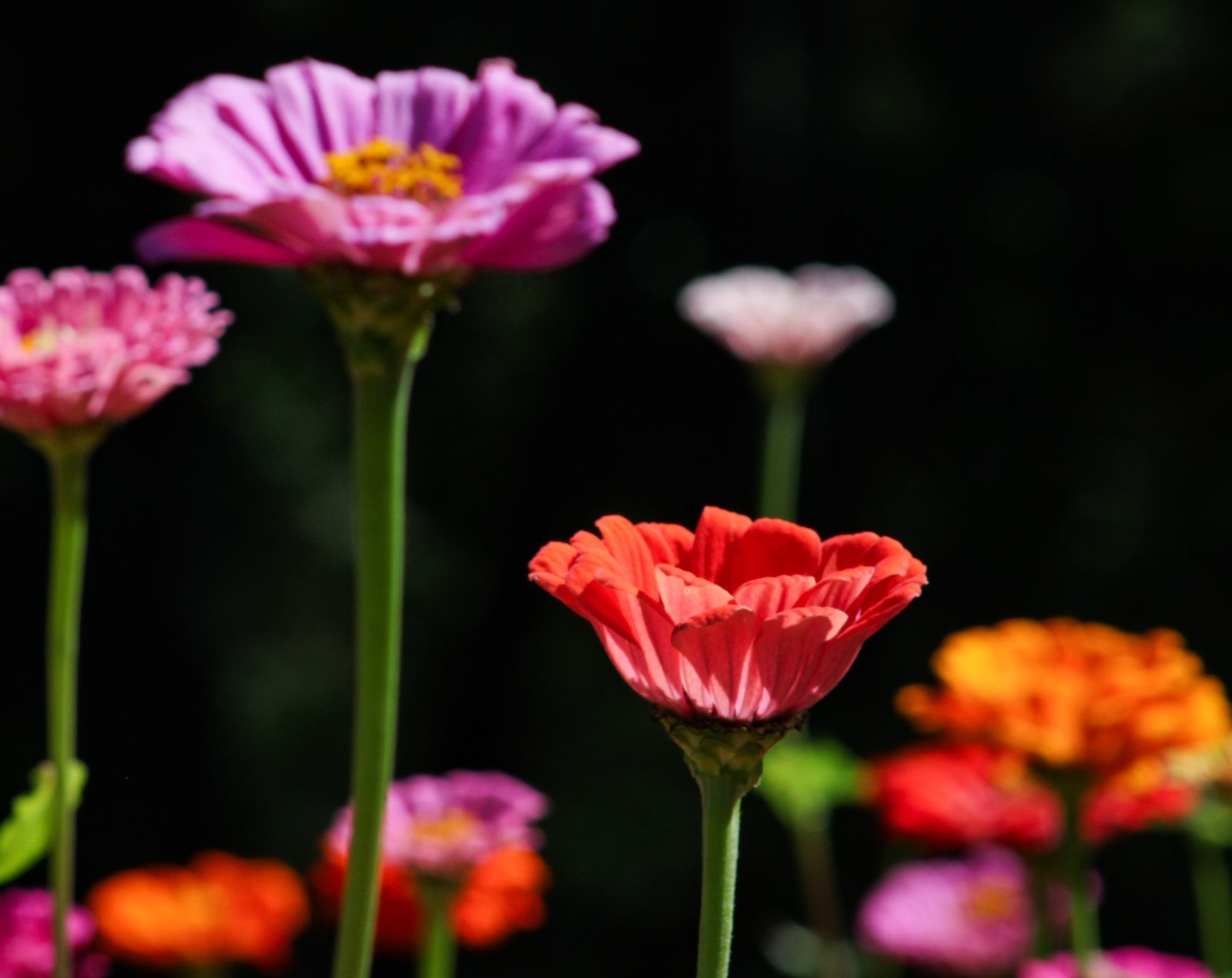
Zinnias are the cut flower and the middle height. Sow them directly in the bed after the last frost, when soil is warm; they dislike transplanting and germinate fast in warm ground. They bloom from early summer to frost in every color but blue, stand 1 to 3 feet depending on variety, and cut beautifully. Deadhead, or better, cut bouquets, and the plants branch and rebloom. Our full zinnia guide covers spacing and the mildew management that is their one weakness.
Marigolds are the edge. Low, tidy, and in bloom from planting to frost, marigolds line the front of the bed and the paths through the vegetable garden. Buy them as transplants for instant effect or sow indoors a few weeks early; direct sowing works but starts the show later. Their strong scent is part of their folklore as companion plants, and whatever you believe about that, their season long reliability is fact. Our marigold guide has the varieties and care in full.
Sunflowers are the height and the back wall. Sow the seed where it will grow, after frost, at the back of the bed or along a fence, and stand back. Even the mid sized varieties give the bed a skyline, the birds get a late season feast, and no plant in the garden makes a beginner feel more successful by August. Our sunflower guide covers the staking and seed saving details.
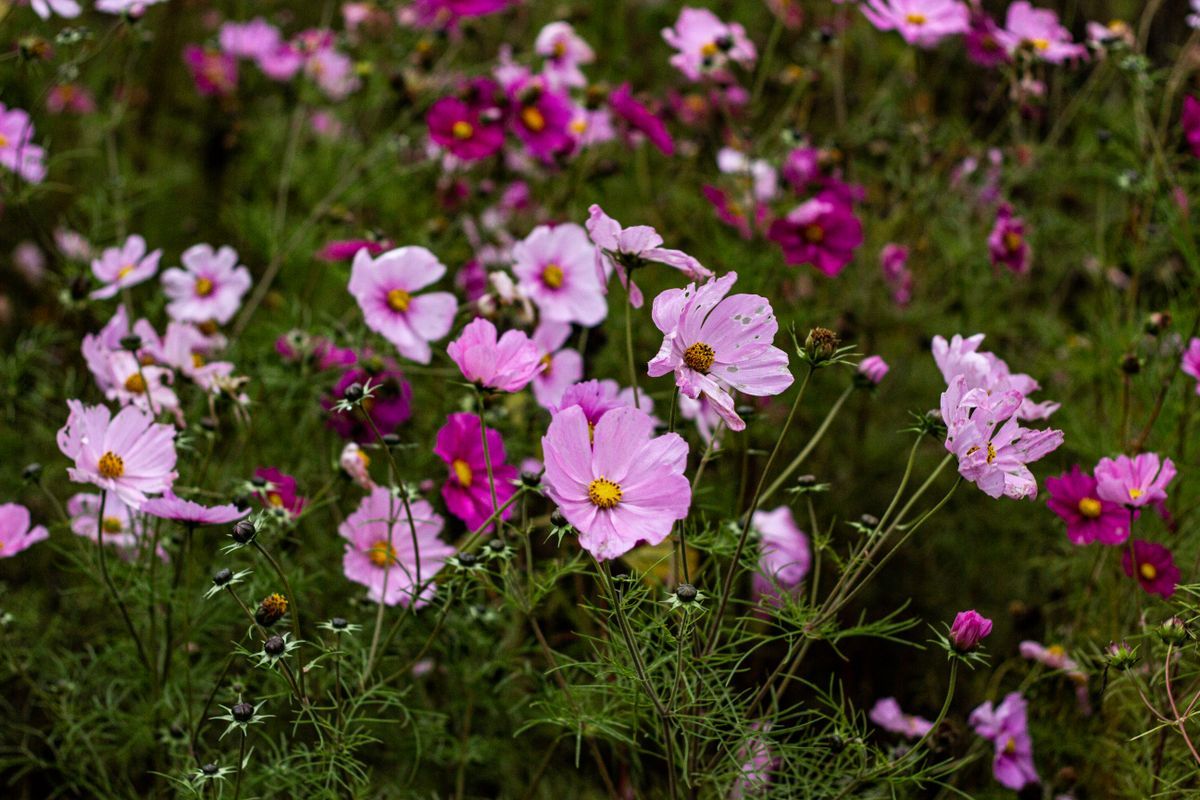
Cosmos are the airy filler. Feathery foliage and daisy flowers on tall, loose plants that weave between the others and make the bed look designed rather than planted. Direct sow after frost, in average to poor soil, and then leave them alone: rich soil and fertilizer produce leaves at the expense of flowers. They self sow politely, so year two's cosmos may be free.
Nasturtiums are the spiller and the salad. Mounding or trailing, they soften the bed's front corners and containers, bloom in hot colors, and their flowers and leaves are edible with a peppery bite. Direct sow the large seeds after frost; they prefer poor soil like cosmos and resent rich feeding. In many gardens they also draw aphids away from other plants, a trap crop role that is a bonus, not a promise.
The Perennial Backbone: Plant Once, Bloom for Years
Annuals carry the first season; perennials carry the garden. Plant two or three forgiving perennials in the same bed and they return larger each year while the annuals fill the gaps around them.
Coneflower is the beginner perennial standard: drought tolerant once established, blooming midsummer in purple, pink, or white, beloved by butterflies, and handsome as standing seed heads in winter if you leave them for the birds. Black eyed Susan brings gold daisies from midsummer on, tolerates lean soil and neglect, and seeds itself gently around the bed. Daylilies are the nearly indestructible option, a clump of grassy leaves and summer trumpets that survives decades of indifference and multiplies until you divide it and give plants away. Buy perennials as potted plants, one of each to start, water them through their first season, and they are infrastructure after that.
The Bed Plan, Assembled
Picture a sunny bed about 4 feet deep, against a fence or in the open with a clear back edge. Along the back, sunflowers in a loose row, sown after frost. In front of them, cosmos scattered in drifts, direct sown the same week. The middle band is zinnias, sown in two batches a few weeks apart so the bloom succession overlaps. The front edge is marigolds, set out as transplants for immediate color. The corners get nasturtiums to spill. Then place the perennials as permanent anchors: a coneflower at each end of the middle band, black eyed Susans in a group of three off center, a daylily clump where the bed meets the path. Water the whole bed deeply once a week in dry spells, deadhead the zinnias and marigolds when you pass with morning coffee, and the bed blooms from early summer until frost with perhaps twenty minutes of care a week.
Pink and purple cosmos flowers blooming against green foliage
The Honest Skip List, For Now
Part of beginner advice is what to leave for later. Roses are wonderful and are not beginner flowers: they want pruning knowledge, disease vigilance, and a planting day done precisely, which is why this site gives rose planting its own guide and keeps roses off this list. Dahlias are the same story, a tuber crop with a season of specific rules, glorious and worth graduating to, with their own guide here as well. Delphiniums, lupines, and foxgloves, the cottage garden spires of the catalogs, are short lived, fussy about climate, and disappointing in most beginners' first attempts. Skip them this year without regret. The bed above will be in bloom while the delphinium bed is being researched, and gardening confidence is built out of flowers that actually open.
Start with the plan, keep the list short, and let one successful bed teach you the rhythm of sowing, deadheading, and cutting. Next year's list can grow by the flowers you admired in other people's gardens this year, now that you know what a season of bloom actually asks of the gardener: very little, if the flowers were chosen forgiving and given their jobs.
The Bed's Care Calendar, Month by Month
A planned bed still needs its small recurring jobs, and they are few enough to list by the season's rhythm. At planting, in spring after the frost, the work is soil and water: a layer of compost worked into the top of the bed, the perennials planted and watered in, the annual seed sown, and the whole bed mulched once seedlings are up, keeping mulch a hand's width from stems. Through early summer, the job is water in dry spells, a deep soaking once a week rather than daily sprinkles, and the first deadheading as the earliest flowers fade, which teaches the zinnias and marigolds to branch instead of setting seed.
Midsummer is the bed's peak and its easiest season: cut flowers for the house twice a week, which is deadheading with a reward, watch the sunflowers for the lean that asks for a stake, and water deeply when a week passes without rain. Late summer brings the honest chores: cosmos may flop and want a loose support or a firm trim, mildew may appear on zinnia leaves in still, humid weather and is managed by airflow and watering at the base, and the perennials, coneflower especially, begin setting the seed heads that feed birds if you leave them standing. At frost, the annuals end; pull them to the compost, leave the perennial seed heads standing for winter interest and the birds, and spread a fresh layer of compost or shredded leaves over the bed as its winter blanket. That is the whole calendar. A beginner who performs it has done everything a flower bed of this kind requires, and the bed will look tended, because it was, in about twenty minutes a week.
Year Two: The Bed Grows Up
The second year of the beginner bed is where the plan proves itself. The perennials return, larger, and begin claiming the space the annuals filled around them, so the annual sowing shrinks to the true gaps: a drift of cosmos here, zinnias where a perennial is still small, nasturtiums at the corners as always. Cosmos and zinnias may also return uninvited from self sown seed, and the gardener's job becomes editing, thinning the volunteers to the spacing the plan intended and composting the rest without sentimentality. The sunflowers stay an annual decision, sown fresh where the skyline wants them.
Year two is also when one new flower earns its place, added to the bed by the gardener who now knows the bed's light, soil, and thirst from a full season of evidence. Add a single graduate flower if you like, a small dahlia planting using this site's dahlia guide, or a rose planted properly by its own guide, and the bed steps up in ambition by exactly the amount your experience supports. That is the rhythm this page recommends overall: a forgiving plan, honestly kept, expanding by one new skill a year. Five seasons of that rhythm produces a garden that visitors assume took talent. It took a shortlist, a calendar, and flowers chosen to forgive.
Frequently Asked Questions
What are the easiest flowers for a beginner to grow?
Zinnias, marigolds, sunflowers, cosmos, and nasturtiums are the reliable five: fast, forgiving, and in bloom from early summer to frost in a sunny bed. Sow zinnias, sunflowers, cosmos, and nasturtiums directly where they will grow after the last frost; marigolds can be bought as transplants for instant color. Each is covered in depth in its own guide on this site.
Should beginners start flowers from seed or buy plants?
Both, by flower. The big seeded annuals, sunflowers, cosmos, nasturtiums, and zinnias, grow easily and cheaply from seed sown outdoors. Perennials such as coneflower, black eyed Susan, and daylilies are bought as potted plants, because seed takes years to reach blooming size. Marigolds work either way; transplants simply start the show earlier.
How do I keep a flower bed blooming all summer?
Assign jobs and successions. Combine long blooming annuals (zinnias, marigolds, cosmos) with perennials that peak at different times, sow zinnias in two batches a few weeks apart, and deadhead or cut flowers regularly, which forces the plants to branch and rebloom. A bed planned this way blooms from early summer to frost with about twenty minutes of care a week.
What flowers should beginners avoid?
Roses and dahlias are the popular two to postpone: both are wonderful, and both carry a season of specific rules, covered in their own guides on this site. Delphiniums, lupines, and foxgloves are also poor first choices, being short lived and climate fussy. The forgiving annuals and perennials build confidence and bloom while you learn.
Do beginner flowers need fertilizer?
Mostly no. The forgiving annuals bloom best in average soil, and cosmos and nasturtiums actually flower less in rich, fertilized soil, producing leaves instead. A layer of compost worked in before planting is enough for the bed. Perennials appreciate the same compost each spring. Overfeeding is a more common beginner error than underfeeding.
How much sun do these flowers need?
Full sun, 6 or more hours of direct light, is the assumption behind the whole list. In part shade, replace the annual core with impatiens and begonias and lean on shade tolerant perennials. Be honest about your spot's hours before buying; a sun lover in shade stretches, flops, and barely blooms, and no care corrects a light mismatch.
Photo credits: Senna Doe (Pexels); Natalia Sevruk (Pexels). Photos are served from this site; follow the credit to the library page for the original.