Best Indoor Houseplants for Beginners: Matched to Your Windows, Not to a Photograph
By the Windchime Walker editorial team
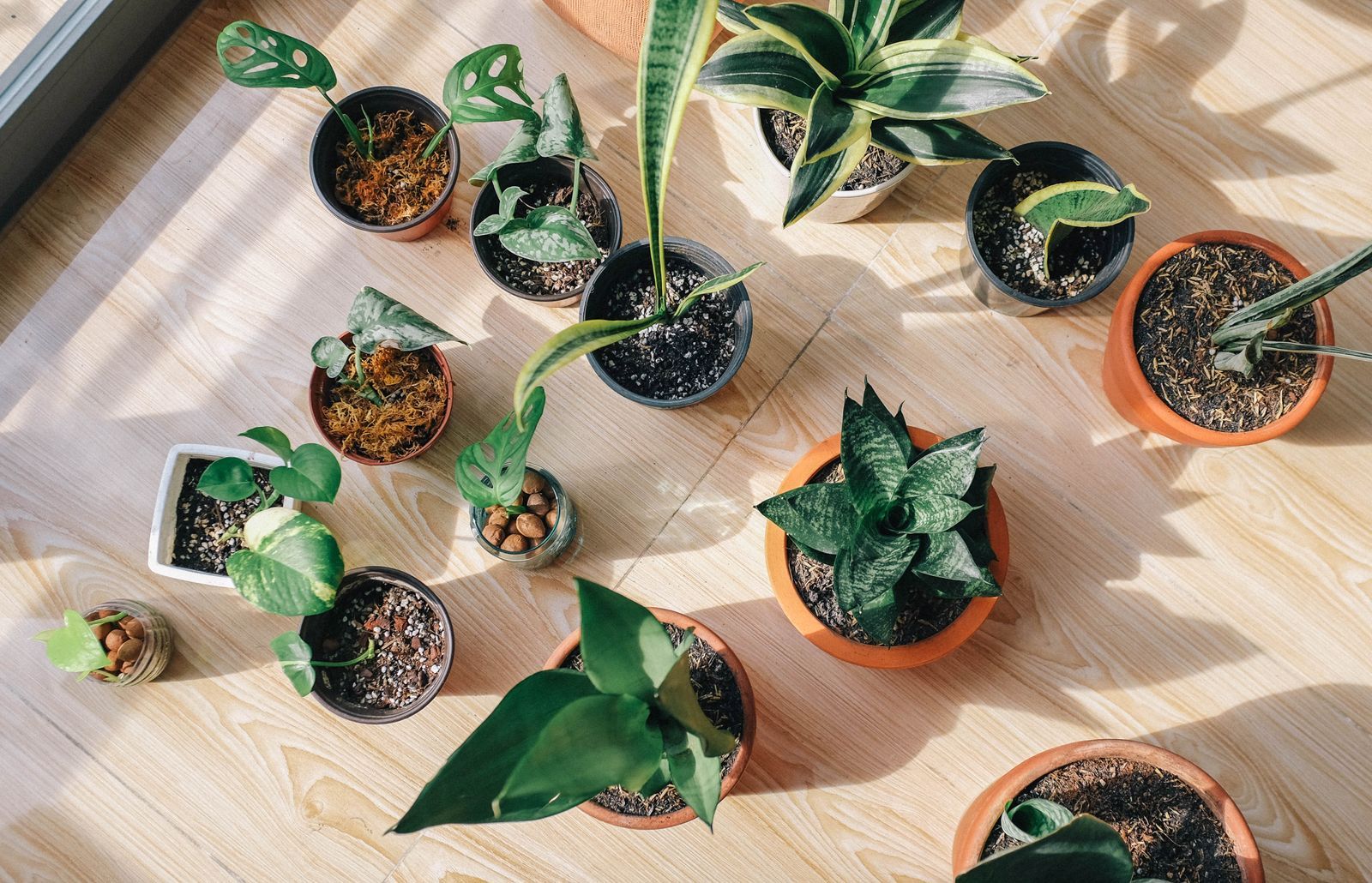
Photo: Huy Phan / Pexels
Every beginner houseplant list on the internet names the same eight forgiving plants, and beginners still kill them, because the list answers the wrong question. The plant was never the hard part; the room is. A snake plant in a north facing bathroom and a snake plant on a south windowsill are living two different lives, and the beginner who shops by photograph discovers this one yellow leaf at a time. This page keeps the famous shortlist and changes the order of operations: your windows and your watering habits choose first, and the plants are matched to the conditions you actually have.
Our first houseplant match guide owns the general first plant decision, our plants by room guide owns placement room by room, and our low light guide owns the dim corner in depth. This page owns the indoor collection as a system: start with three conditions, not ten plants, and let the collection grow by what survives your house.
Interactive tool
First Indoor Houseplants Checklist
Check off each step as you finish it. Your progress stays on this page.
0 of 8 complete
0% done
Light First: Your Window Is a Budget
Light is the first limiting factor indoors, the point University of Georgia extension guidance makes and every experienced grower repeats: more houseplants die of dim rooms and kind watering than of any pest. Read your windows as budgets. A south or west window is the bright budget, strong light a few feet back from the glass, where sun lovers and flowering plants can live. An east window is the middle budget, gentle morning sun that suits most of the forgiving list. A north window, or any spot more than about 8 feet from a window, is the low budget, where only the true shade tolerators hold their health, and where the honest choices narrow to cast iron plant, Chinese evergreen, ZZ plant, and a snake plant growing slowly and asking little. Measure your ambition by your dimmest intended spot, because collections expand toward the empty corner, and the corner is always darker than the sill.
The Shortlist, Sorted by Situation
Your situation
The plant
Why it wins there
Its indoor failure mode
Forgetful waterer, bright spot
Snake plant
Stores water in its leaves; thrives on neglect
Rot from watering on a schedule it never asked for
Forgetful waterer, dim spot
ZZ plant
Rhizomes bank water and energy for months
Slow rot in wet, dark soil; yellowing stems
You want trailing growth
Pothos
Fast, forgiving, propagates in a jar of water
Legginess in low light; leaves shrink along the vine
You want easy abundance
Spider plant
Babies on runners; tolerates most rooms
Brown leaf tips from salts and dry air, cosmetic only
You want flowers indoors
Peace lily
Blooms in middle light; dramatic and readable thirst
Collapse wilt if let go fully dry; it recovers, but the habit costs leaves
Dim corner, any waterer
Chinese evergreen
Bred for offices and malls; color in low light
Cold drafts and wet feet yellow it fast
The unkillable corner filler
Cast iron plant
The Victorian survivor; darkness and drought tolerant
Almost none; grows so slowly it is accused of being plastic
Trailing, softer than pothos
Heartleaf philodendron
Gentle vines, heart leaves, easy cuttings
Sparse vines in the dark; wants the pothos treatment with more light
Read the failure mode column as the real content of this page. Each of these plants is easy in the sense that its needs are simple; each is killed in one specific, predictable way, usually water given too often in a room too dim, the two errors multiplying each other. Match the plant to your light, then water by the soil check, and the famous forgiving list finally forgives.
The Three Plant Starter Collection
Do not buy ten plants. Buy three, one per condition, and learn your house on them for a season. Take one neglect proof anchor, a snake plant or ZZ plant, for the spot farthest from your daily path. Take one grower, a pothos or spider plant, for your best window, because a beginner needs visible growth to stay interested and these two provide it weekly. Take one chosen plant for the room you live in most, the peace lily if you want flowers, the Chinese evergreen if the room is dim, the philodendron if you want green over the bookshelf. Three plants teach you your light, your water rhythm, and your attention span, at a price that forgives the lesson. The collection that survives to month six earns its expansion; the ten plant haul that fails by month two teaches only guilt.
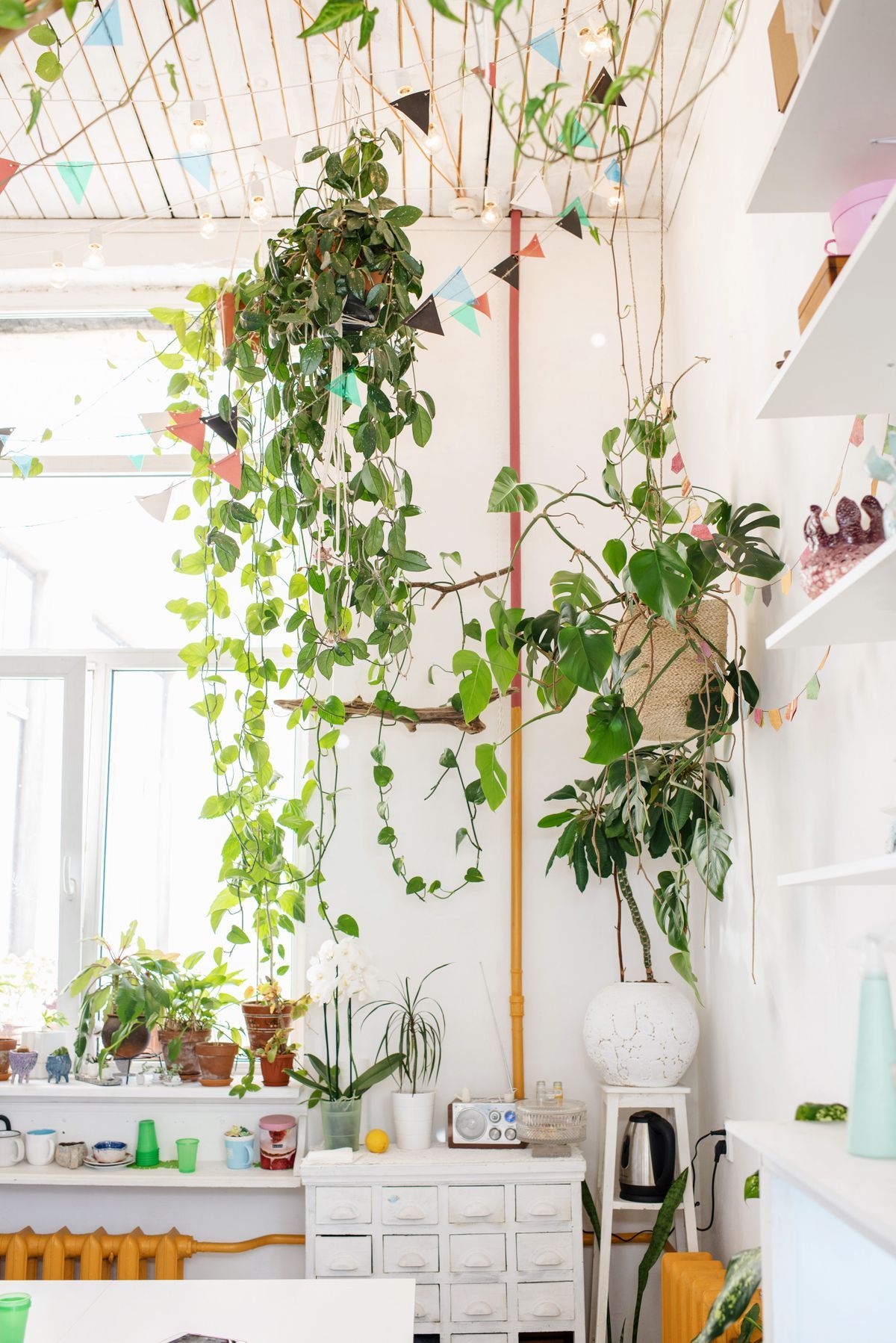
A bright room filled with houseplants on shelves and hanging planters
The Rules That Keep the Whole Collection Alive
Drainage is law. Every pot drains, every saucer gets emptied, and no plant stands in water. The decorative outer pot without a hole is a display case, not a home: keep the plant in its draining nursery pot inside it, and lift it out to water, or accept the rot schedule that standing water keeps. More beginner plants die in beautiful pots than in ugly ones, for exactly this reason.
Water by check, not calendar. The interval belongs to the pot, the plant, and the season, and our houseplant watering chart gives the per plant intervals with their dryness checks in full. The habit to build is the check itself, a finger or a skewer in the soil, on a regular day; the water follows the evidence.
Respect the dry air. Heating and air conditioning pull the moisture from indoor air all winter and summer, and the plants nearest the vents live in a desert wind. Move plants out of the blast, group them so their leaves humidify each other, and expect brown tips on the sensitive ones to be the house talking, not the plant failing.
Feed lightly, in season. A half strength balanced feed a few times in spring and summer, none in winter, is the whole program for this list. Indoors, overfeeding burns more roots than hunger ever starved, because salts build in pots that are never rained on; a yearly flush of clear water through the soil resets the account.
The First Month: A Care Rhythm That Teaches the House
New collections die of attention in week one and neglect in week four, so give the first month a rhythm instead of a mood. On one fixed day a week, walk the collection with a skewer and a watering can and perform the check on every plant, watering only the ones whose soil says so; the fixed day is for checking, never automatically for watering, and it takes ten minutes for a starter collection. Once a week is also the turning rhythm: a quarter turn for each plant near a window, so growth stays even instead of leaning into a permanent bow toward the light. Once in the month, look at the undersides of leaves and the stem joints, because the indoor pests, spider mites, mealybug, scale, announce themselves quietly there and are a soap and water problem early and a despair later. And once in the month, lift each pot and feel its weight, calibrating the hand that will eventually do the watering check by heft alone. At the month's end you will know which of your rooms is bright, which corner is a desert of vent air, and which plant drinks like it is training for something. That knowledge, not the plants, is the first month's real harvest.
Repotting: The Beginner's Unforced Error
The forgiving list forgives small pots far longer than beginners believe. A plant goes up one pot size, about 2 inches wider, only when roots circle the bottom or emerge from the drainage hole and the plant dries out suspiciously fast, and spring is the season for it. The classic error is the generous repot, a small plant gifted a huge pot as a kindness, after which the soil volume dwarfs the roots, stays wet for weeks, and rots them in the dark. When you do repot, use a mix with real drainage, perlite or bark visible in it, water the plant in its new home once, thoroughly, and then return it to the check rhythm rather than to a convalescent's daily sips. Most of the eight plants on this page would rather be slightly crowded and correctly watered than spacious and drowned, which is the indoor garden's whole philosophy in one sentence.
Frequently Asked Questions
What is the easiest houseplant for a beginner?
The snake plant in decent light, or the ZZ plant in dim light, by a wide margin: both store water against your forgetfulness, tolerate a range of rooms, and die of only one thing, chronic overwatering. If you want visible growth to encourage you, add a pothos, which grows fast enough to forgive visibly.
How many houseplants should a beginner start with?
Three: one neglect proof anchor, one fast grower for your best window, and one chosen plant for the room you live in most. A season with three teaches your light and your habits; ten at once turns every mistake into a collection wide event and teaches nothing except the cost.
Why do my houseplants keep dying?
The autopsy almost always reads the same: too little light multiplied by too much water. A plant in a dim room drinks slowly, the soil stays wet, and roots rot in the dark. Move the plant brighter or water far less, and check the soil's dryness before every watering instead of following a schedule.
Do houseplants need drainage holes?
Yes, without exception in this house. A pot without drainage holds a hidden reservoir that rots roots silently, and the plant declines for weeks before the cause is found. Use the pretty pot as an outer cache pot and keep the plant in a draining pot inside it.
Which houseplants are safe around pets?
None of the famous eight should be assumed safe: pothos, snake plant, ZZ plant, peace lily, and philodendron are all listed toxic to cats and dogs by the ASPCA, while spider plant and cast iron plant are listed non-toxic. Our cat safe indoor plants guide builds the whole beginner plan around a chewing cat, with the verified safe shortlist and placement rules.
How much light do houseplants actually need?
More than most rooms offer away from windows. Within a few feet of a south, west, or east window, most of the forgiving list thrives; across the room or in a north window, only the low light tolerators, cast iron plant, Chinese evergreen, ZZ, and snake plant, hold their health. A plant stretching thin and pale toward the window is asking, plainly, for more.
Photo credits: Huy Phan (Pexels); Ksenia Chernaya (Pexels). Photos are served from this site; follow the credit to the library page for the original.