Best Indoor Plants for Beginners With Cats: The ASPCA Checked Shortlist
By the Windchime Walker editorial team
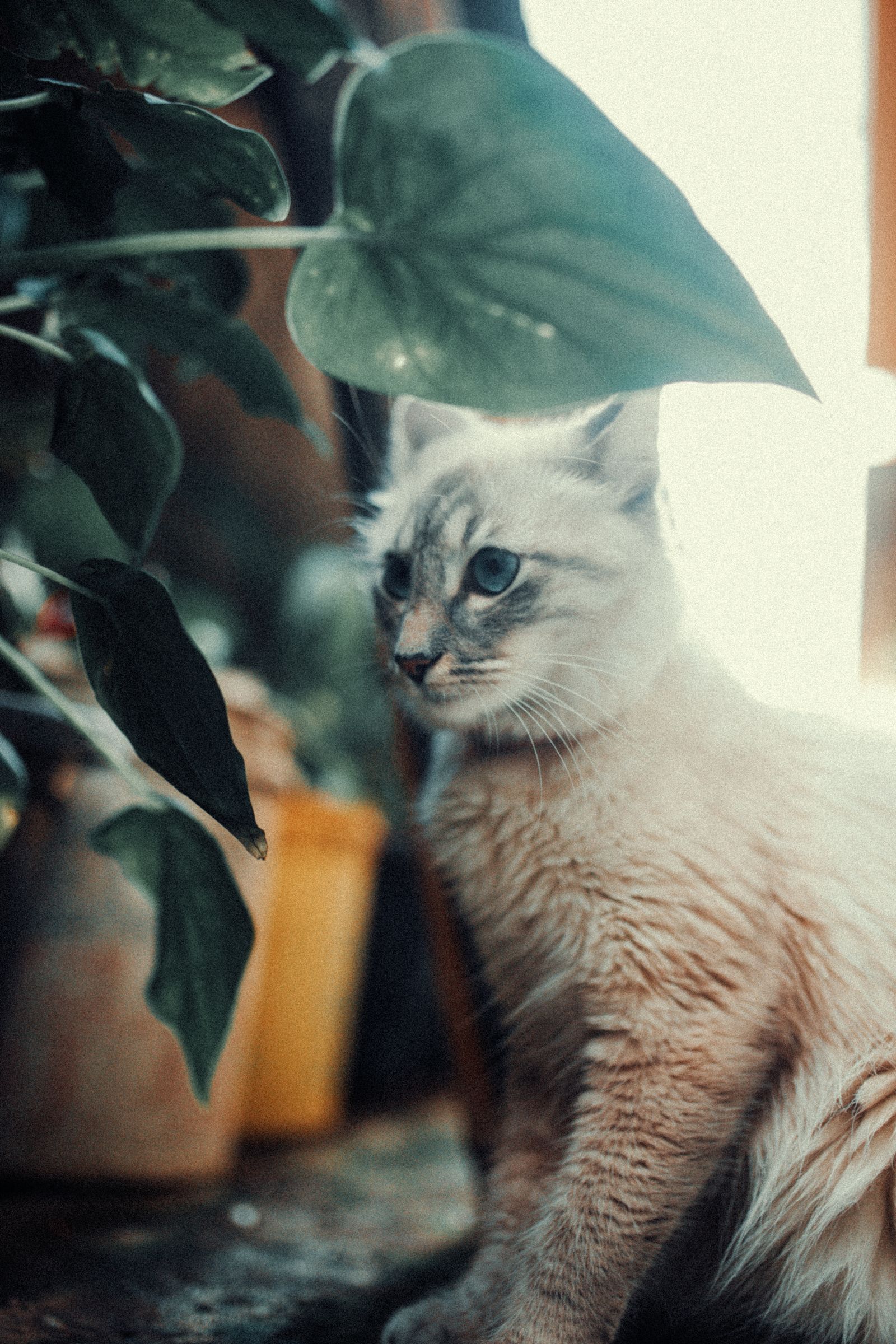
Photo: Toni Ferreira / Pexels
The beginner with a cat shops with two lists that contradict each other. The easy plant list leads with pothos, snake plant, and ZZ plant, and the cat safe list bans all three. This page resolves the contradiction in the only trustworthy order: safety first, verified against the ASPCA's toxic and non-toxic plant list by scientific name, because common names lie and store tags guess, and then ease, because a safe plant you kill teaches nothing. Every plant below is both: listed non-toxic to cats by the ASPCA, and genuinely forgiving for a first time grower.
Our indoor houseplants guide owns the general collection for homes without a chewing audience. This page owns the cat safe subset, the placement discipline that goes with it, and the honest handling of the toxic plants already in your house.
Interactive tool
Cat Safe First Plants Checklist
Check off each step as you finish it. Your progress stays on this page.
0 of 8 complete
0% done
The Safe Shortlist, Sorted by Light and Care
Plant
Scientific name to verify
Light
Care note
Spider plant
Chlorophytum comosum
Bright to medium
The beginner's friend; babies on runners, endlessly propagatable
Parlor palm
Chamaedorea elegans
Medium to low
The classic tolerant palm; slow, graceful, patient
Areca palm
Dypsis lutescens
Bright
Bigger and thirstier than parlor palm; a statement plant
Boston fern
Nephrolepis exaltata
Medium, humid
Wants moisture in air and soil; the diva of this list
Calathea and prayer plant
Calathea and Maranta species
Medium to low
Patterned leaves that fold at night; wants steady moisture
Peperomia
Peperomia species
Medium to bright
A whole genus of small, varied, easy plants
Cast iron plant
Aspidistra elatior
Low to medium
Nearly unkillable; darkness and drought tolerant
African violet
Saintpaulia species
Bright, no wet leaves
Flowers indoors for the careful waterer
Haworthia
Haworthia species
Bright
The safe succulent look, a rosette without the echeveria risk profile
Money tree
Pachira aquatica
Bright to medium
Braided trunk, fast growth, forgiving
Hoya
Hoya species
Bright
Waxy vines and fragrant flowers for the patient
Verify by the scientific name on the ASPCA list before purchase, because the trade reuses common names shamelessly: more than one plant answers to money plant, and not every fern is a Boston. The check takes one minute per plant and is the entire safety system of this page; everything else is placement and habit.
The Remove First List
True lilies are the emergency. Lilium and Hemerocallis species, the Easter, tiger, Asiatic, and day lilies of bouquets and gardens, can cause fatal kidney failure in cats from small exposures, a warning the FDA repeats because cats have died from pollen alone. In a cat household the rule is absolute: no true lilies indoors, in any arrangement, at any height, because pollen falls. This is the one non negotiable line in the article.
The calcium oxalate beginners go up or out. Pothos, snake plant, ZZ plant, peace lily, and heartleaf philodendron, the famous five of every beginner list, carry insoluble calcium oxalate crystals that burn the mouth and gut of a chewing cat. They are not in the lily class of danger, but a beginner with a cat has no reason to start with them when the safe list above is this good. If they are already in the house and loved, they move to genuinely unreachable ground, a closed room or a high shelf the cat demonstrably cannot reach, which is a shorter list of places than most owners first assume.
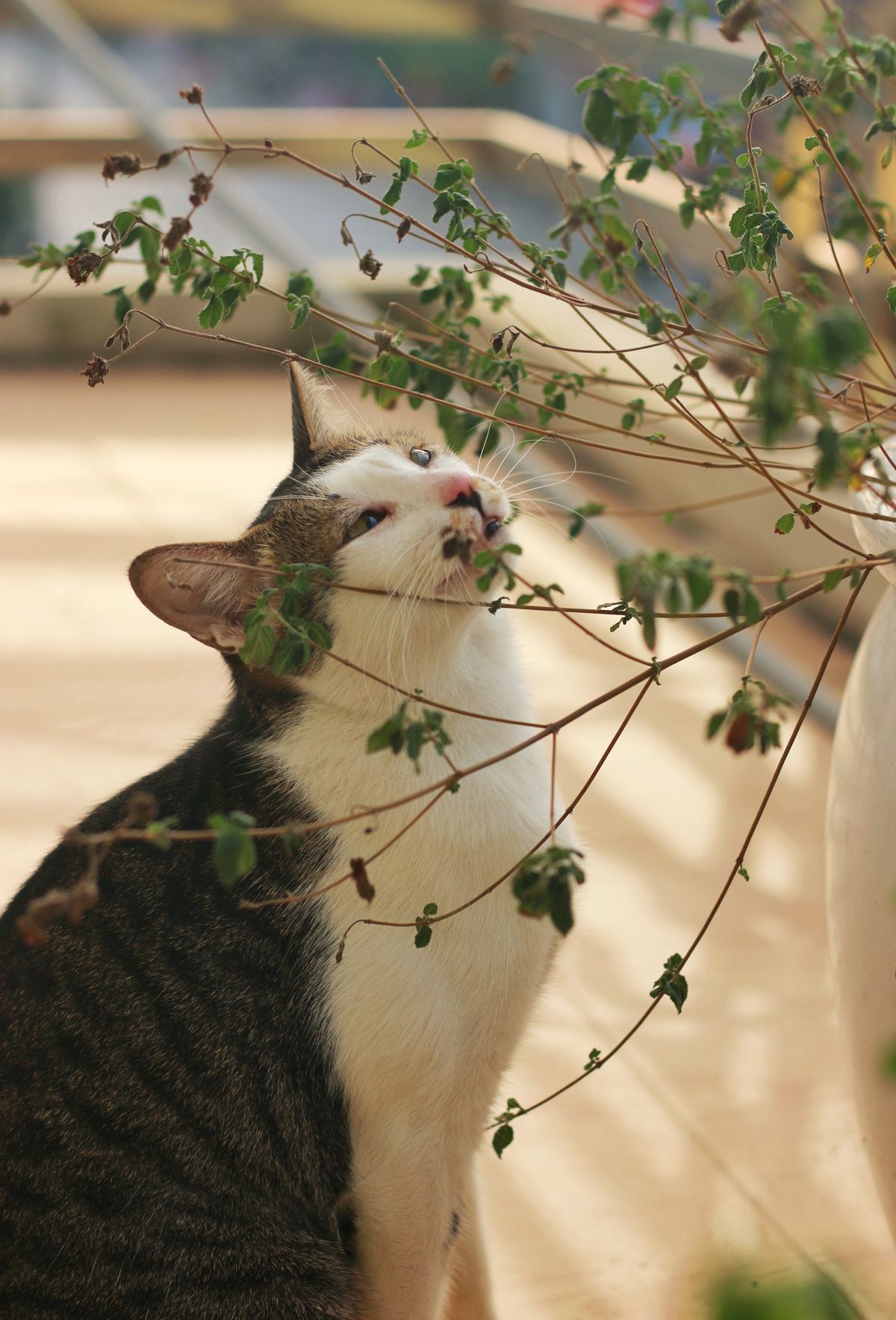
A tabby cat sniffing the leaves of a houseplant
Placement Rules for a Cat That Jumps and Chews
Assume the cat can reach anything you can reach without a ladder, because it can, at 3 in the morning, silently. Safe ground is hanging planters, high shelves with no launch furniture nearby, and closed rooms; a tabletop beside a sofa is a serving tray. Weight the pots: a light pot on a shelf edge is a physics lesson, and ceramic shards plus soil plus a startled cat is the full tuition. Keep the tempting textures in mind, because cats chew strategically: the grass like fronds of palms and spider plants invite exactly the chewing you are planning around, which is fine, since those are the safe ones, and is the strongest argument for leading the collection with them. The plant the cat is allowed to chew should be the plant the cat wants to chew.
The Cat Grass Decoy
Grow the decoy on purpose: a shallow pot of cat grass, oat, wheat, or barley grass from seed, placed where the cat already likes to sit and chew, refreshed every few weeks as it gets ragged. A cat with its own legal greenery chews the houseplants measurably less, and the grass pot costs pennies and grows in a week. Position it as an upgrade, not a punishment: near the sunny sill, at cat height, in the open, while the collection lives higher and further. Some cats will still sample everything once; the safety list exists for exactly that audit.
Non-Toxic Does Not Mean Edible
Read the ASPCA verdict correctly. Non-toxic means the plant carries no known poison for cats; it does not mean a belly full of leaves is food. Any plant material can cause vomiting or stomach upset in quantity, soil and fertilizer add their own risks, and a cat that vomits repeatedly, stops eating, or hides after a chewing session needs a vet, list or no list. The safe list buys you freedom from panic, not freedom from attention. And keep the saved numbers where the plants are: your vet, and the ASPCA animal poison control line, because the one time you need them is not the time to search.
A Room by Room Starter Plan
Assemble the first collection by room, because rooms differ in light and in cat traffic, and the plan below spends the safe list where each plant and each cat actually live. The sunny living room, usually the cat's headquarters, takes the spider plant in a hanging planter, where its runners dangle as an approved toy, and a parlor palm in the corner, tall enough to read as furniture and tough enough for the address. The kitchen sill takes a peperomia and the cat grass decoy side by side, the legal and the merely tolerated, and most cats settle the question themselves in favor of the grass. The bathroom, humid and often dim, is fern and calathea country, the two moisture lovers on the safe list, provided the window gives them medium light; a windowless bathroom gets a cast iron plant and no apologies. The bedroom takes the money tree or a hoya on the dresser, out of the pillow's blast radius. Start with four or five plants across these rooms, one per condition, exactly as the general collection rule advises, and expand only after a season proves which rooms your cat patrols and which it ignores.
The First Month With a Chewing Cat
Expect an audit. In the first weeks the cat will sample, sniff, and sit in things, and the owner's job is observation rather than warfare. Note which plants draw real chewing rather than a single investigative bite; move those up or into hangers first, and put the decoy grass nearer the scene of the crime. Redirect without drama, because a cat scolded at a plant learns to chew it at night. Watch the litter box and the appetite as your early warning system, and remember the standing rule: a verified non-toxic plant plus a cat that vomits once is an observation, while the same cat vomiting repeatedly, hiding, or refusing food is a vet call, plant list notwithstanding. By the second month the household usually reaches its treaty: the cat owns the grass pot and the spider plant's runners, the collection owns the heights, and the beginner owns a shelf of green that nobody has to worry about, which was the entire point of choosing from the safe list in the first place.
Frequently Asked Questions
Which popular beginner plants are toxic to cats?
The famous five: pothos, snake plant, ZZ plant, peace lily, and heartleaf philodendron are all listed toxic to cats by the ASPCA, carrying calcium oxalate crystals that burn the mouth and digestive tract. They are the backbone of most beginner lists, which is why a cat household needs its own list rather than an edited version of the standard one.
What is the most dangerous plant for cats?
True lilies, Lilium and Hemerocallis species, by a distance: small amounts, including pollen groomed from fur, can cause fatal kidney failure in cats, per the FDA's warning. No other common houseplant is in this class. In a cat home, lilies do not come indoors at all, including in gift bouquets.
What is the best first plant for a beginner with a cat?
The spider plant: listed non-toxic by the ASPCA, tolerant of beginner watering, happy in medium light, and attractive to cats in the safest possible way, since its grassy leaves are the ones cats most want to chew and can. The cast iron plant is the runner up for dim rooms, and the parlor palm for a bigger statement.
How do I verify a plant is safe before buying it?
Check the ASPCA toxic and non-toxic plant list by the plant's scientific name, not its common name, because common names are shared between safe and toxic plants. If the label gives only a common name and the store cannot supply the scientific one, that plant waits until you can identify it properly.
My cat already chewed a plant. What should I do?
Identify the plant. If it is a true lily, treat it as an emergency and call your vet or the ASPCA poison control line immediately, even with no symptoms. For calcium oxalate plants, expect mouth irritation and drooling and call the vet for guidance. For a verified non-toxic plant, watch for stomach upset that persists, and call if it does.
Will a cat grass pot really protect my other plants?
It reduces chewing substantially, because much houseplant chewing is a cat seeking greens, texture, or boredom relief, and a legal pot of grass at cat height answers all three. It is a decoy, not a force field, which is why it pairs with the verified safe list and honest placement rather than replacing them.
Photo credits: Toni Ferreira (Pexels); Le Thanh Huyen (Pexels). Photos are served from this site; follow the credit to the library page for the original.