The best houseplant for a beginner is not a species. It is a match: between the light your home actually has, the watering style you honestly have, and a plant built to thrive under exactly those conditions. Beginners shop the other way around. They fall for a plant at the store, carry it home to a room it was never suited for, and then blame their thumbs when it declines. The plant was fine. The match was wrong.
This guide reverses the shopping. First you score your home: the brightest spot you can offer a plant, and the watering style you know you will actually keep. Then you choose from a shortlist of six genuinely forgiving houseplants, each labeled with who it suits, what it tolerates, how it usually dies, and a pet safety note drawn from the ASPCA's plant listings, the same source the best incumbent guides cite. Match first, and the keeping gets easy.
Work through the First Houseplant Match Checklist on this page as you read. It walks the scoring, your light, your watering honesty, your pet situation, and ends with a plant chosen on evidence instead of hope. One well matched plant teaches you more, and lives longer, than a shelf of impulse purchases.
Interactive tool
First Houseplant Match Checklist
Check off each step as you finish it. Your progress stays on this page.
0 of 5 complete
0% done
Step One: Score Your Brightest Spot
Stand where the plant will live and be honest about the light. Plant light is measured in what the plant can see: a spot directly on a sunny sill, a spot a few feet from a bright window, and a spot across the room are three different worlds, and they decide which plants can live with you.
Score it simply. Bright means a sill or a spot within a couple of feet of a sunny window, where direct sun falls for part of the day. Medium means a few feet back from a bright window or near an east window: no direct sun on the leaves, but the room is clearly daylit and a plant there can see the sky. Low means across the room, a north window, or a hallway: light a person finds pleasant and a plant finds dim. Most homes have all three, and most beginners overestimate their score by one level, because human eyes adjust and leaves cannot. When in doubt, score down. Every plant on the shortlist lists the lowest light it truly tolerates, so a conservative score still finds you a match.
Step Two: Confess Your Watering Style
The second score is about you. The forgetter waters when the plant reminds them, sometimes weeks late, and travels without arranging plant care. The routine keeper can hold a weekly habit, a watering round on a set day, checking each plant and watering the thirsty ones. The hoverer loves their plants daily and waters at every visit, which is the most dangerous style of the three, because more houseplants die of overwatering than of every other cause combined.
There is no shame in any score, because the shortlist has a plant for each. There is only danger in lying about it. A forgetter with a fern is a tragedy in slow motion; a forgetter with a snake plant is a success story. A hoverer with a succulent will love it to death by Christmas; a hoverer with a peace lily, which drinks freely and complains visibly when thirsty, will thrive. Match the plant to the person you are, not the person the plant store imagines.
Step Three: Note the Pets
If a cat or dog shares your home, pet safety is part of the match, not an afterthought. The ASPCA maintains the standard listings of plants toxic and non toxic to pets, and the shortlist below carries each plant's status from those listings. Toxic does not always mean deadly; for most common houseplants it means the plant causes mouth irritation, drooling, or stomach upset if chewed, which is misery enough. The pet safe picks on the list are genuinely safe, and a home with a determined plant chewing cat should choose from them or place toxic plants truly out of reach, which with cats means higher than you think.
The Shortlist: Six Plants That Forgive
Plant
Light it tolerates
Watering style it suits
How it usually dies
Pet note (ASPCA)
Pothos
Medium to low
Routine keeper or forgetter
Overwatering in a dark corner
Toxic to cats and dogs if chewed
Snake plant
Low to bright
Forgetter
Overwatering, especially in low light
Toxic to cats and dogs if chewed
Spider plant
Medium to bright
Routine keeper
Rarely dies; brown tips from dry air or salts
Non toxic to cats and dogs
Heartleaf philodendron
Medium to low
Routine keeper
Overwatering
Toxic to cats and dogs if chewed
ZZ plant
Low to medium
Forgetter
Overwatering
Toxic to cats and dogs if chewed
Peace lily
Medium to low
Hoverer
Underwatering neglect; root rot if kept soggy
Toxic to cats and dogs if chewed
Pothos is the default first houseplant for good reason. It trails or climbs, tolerates medium and even low light, signals thirst mildly rather than dramatically, and propagates from cuttings in a jar of water so easily that one plant becomes a household supply. It suits the routine keeper and even the forgetter, asking only that its soil dry between waterings. Keep it from pets, and it will outlive furniture.
Snake plant is the forgetter's champion: upright, architectural, storing water in its thick leaves and rhizomes, content in low light and unbothered by a month of neglect. Its one vulnerability is kindness: watered often, especially in dim light where it drinks slowly, its roots rot. Plant it, water it rarely, and let it be the most reliable object in your home. It is toxic to pets if chewed, though its tough, upright leaves attract less chewing than most.
Spider plant is the pet safe pick and the family friendly one: non toxic per the ASPCA, cheerful in medium to bright light, and generous with babies that dangle on long stems and root in a pot of mix with no skill required. It suits the routine keeper, tolerates missed waterings by sulking rather than dying, and its worst common flaw is brown leaf tips from dry air or fertilizer salts, a cosmetic issue cured by a flushing watering. If pets or small children share your home, start here.
Heartleaf philodendron is pothos's close cousin in behavior: trailing, tolerant of medium to low light, happiest with a weekly check and water when the top of the soil dries. It grows a touch faster and softer than pothos and fills a hanging basket beautifully. Same warning, twice earned: it is the overwatered plant in most postmortems, and it is toxic to pets if chewed.
ZZ plant is the low light specialist, with glossy leaflets on stems rising from potato like rhizomes that store water against drought. It suits forgetters and dark corners that defeat everything else, growing slowly and asking almost nothing. Overwatering is its only real enemy; a ZZ in low light may want water less than once a month in winter. It is toxic to pets if chewed, so place it where the household's animals do not graze.
Peace lily is the hoverer's plant and the great communicator: it wants consistent moisture, rewards attention with white blooms, and when it is thirsty it droops theatrically, then recovers within hours of watering, which makes it the best teacher on this list. It tolerates medium to low light. Its failure mode is the opposite of the others: a forgetter's peace lily spends its life in a cycle of collapse and rescue and eventually stops recovering. Toxic to pets if chewed, so the hoverer with cats should hover over a spider plant instead.
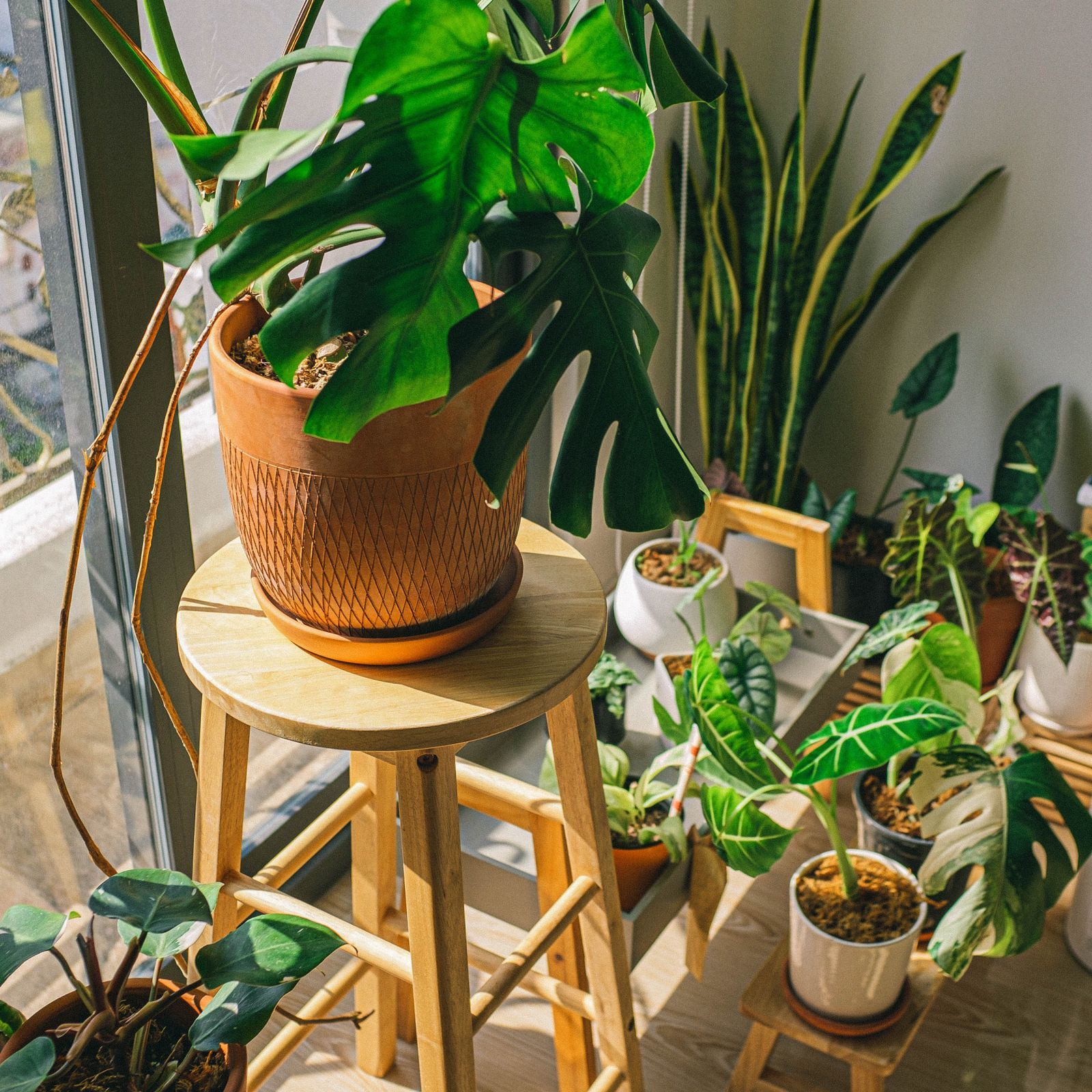
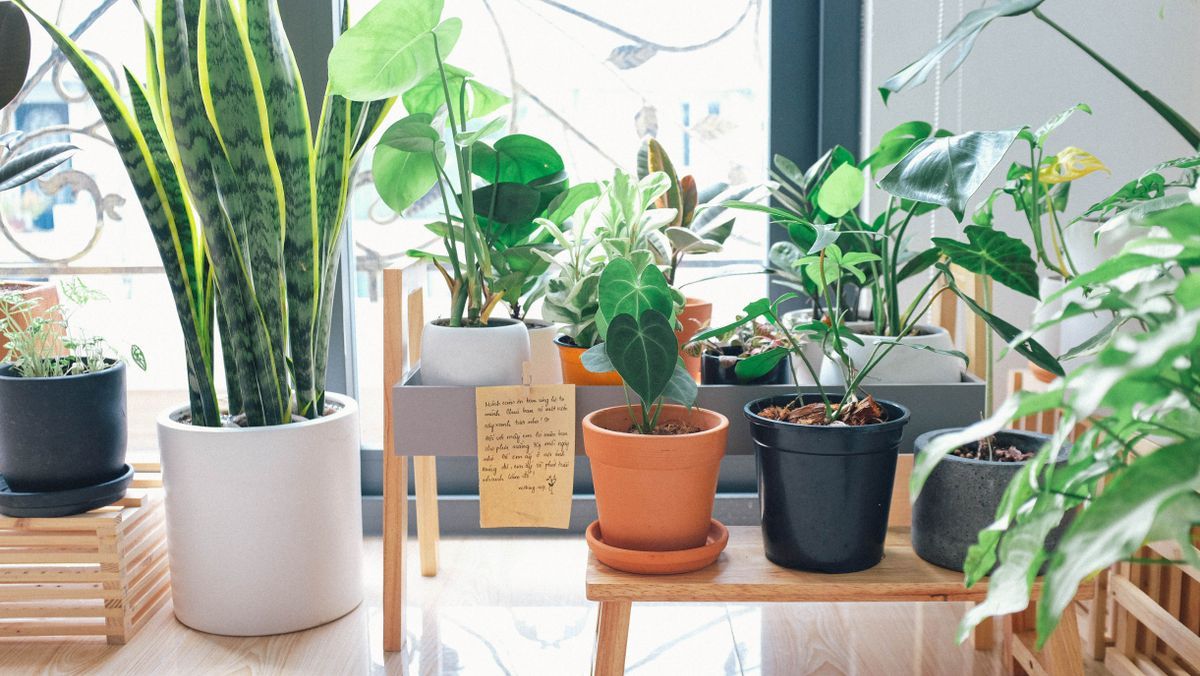
A collection of houseplants in pots arranged by a window, the medium light most homes can honestly offer
How to Buy a Healthy Plant
The match can still be lost at the store, so inspect before you buy. A good plant has firm, evenly colored leaves, new growth at its tips, and no spots, webbing, or sticky residue. Turn a leaf over: the undersides are where pests ride home. Check the drainage holes for roots that are white and firm rather than black and mushy, and avoid any plant whose soil smells sour. A slightly root bound plant is fine and will enjoy its first repotting; a plant with insects is a problem you are purchasing.
Skip the largest, most dramatic specimen in your first season. A modest plant in a small pot costs less, adapts to your home faster, and grows into its space under your conditions rather than a greenhouse's. Growth you witness teaches you the plant. Growth you bought only has to be maintained, and maintenance without understanding is where beginners get into trouble.
The First Two Weeks at Home
Quarantine a new plant away from your other plants for its first couple of weeks if you have a collection, because store pests declare themselves in that window and one infested purchase can seed a household outbreak. Set the plant in the spot you scored for it, water it by the finger test, an inch of dry soil at the top before watering for most of this shortlist, and resist two urges: the urge to repot immediately, which the plant does not need unless it is truly root bound, and the urge to feed, which a freshly bought plant, recently fed at the nursery, does not want. Just observe. Two weeks of looking teaches you the plant's normal, and normal is the baseline every future diagnosis compares against.
Then the plant joins your weekly round, the ten minute habit of looking, testing, watering thoroughly, rotating, and checking undersides that the houseplant care guide on this site lays out in full. A matched plant plus that round is the whole secret, and it is not much of a secret: right plant, right place, small regular attention.
A Warning About the Famous Beautiful Ones
Every beginner meets a few celebrated plants that are not on this shortlist, and it is worth knowing why before one of them comes home with you. Fiddle leaf figs are handsome and famously dramatic, sulking at drafts, moves, and inconsistent watering, and dropping leaves to announce each complaint. Calatheas and their prayer plant relatives want high humidity and consistent moisture with a precision most living rooms cannot offer, and they crisp at the edges while you learn. Maidenhair ferns are exquisite and thirsty in a way that tolerates no forgotten weekend. Orchids are a special case: the common moth orchid is actually tougher than its reputation, but it grows in bark, not soil, and plays by different rules entirely, which makes it a poor teacher for general houseplant care.
None of these are forbidden. They are second year plants, to be adopted once your light is scored, your round is habitual, and you have kept the forgiving six alive through a winter. Ambition sequenced is ambition rewarded; ambition front loaded is how beginners conclude they cannot grow anything, when what they actually discovered is that some plants are hard mode.
Your Second Plant: Building a Collection That Lasts
Once your first plant has grown under your care for a month or two, choose the second by contrast. If the first was a forgetter's plant teaching you restraint, let the second be a routine keeper's plant that teaches you the weekly round in earnest, perhaps a pothos or spider plant whose growth you can watch weekly. If your first plant lives in your brightest window, let the second test a medium light spot, and learn how your home's zones differ. Alternate like this and your skills generalize: within a year you will have kept plants across your light range and watering range, and there will be almost no common houseplant you cannot read.
Buy slowly, quarantine each newcomer for a couple of weeks, and propagate your successes to share. A collection built at the speed of your learning stays healthy, because every plant in it was matched to a home you understood better than the last. That, more than any species on any list, is what makes someone good with houseplants.
Frequently Asked Questions
What is the easiest houseplant for a total beginner?
Pothos for most homes, spider plant for homes with pets. Pothos tolerates medium to low light, forgives irregular watering, and propagates in a jar of water, but it is toxic to cats and dogs if chewed, per the ASPCA. Spider plant matches most of that forgiveness, prefers slightly brighter light, and is non toxic to pets, which makes it the safest first plant where animals graze.
Which houseplant is best for a low light room?
Snake plant and ZZ plant are the two that genuinely tolerate low light rather than merely surviving it for a season. Both store water, snake plant in its leaves and ZZ plant in its rhizomes, both suit forgetful waterers, and both die mainly of overwatering, which low light makes more likely because the plants drink slowly. Water them rarely, and let them be.
I always overwater. Which plant can handle me?
Peace lily, if you have no pets that chew, because it drinks freely, wants consistent moisture, and tells you theatrically when it is thirsty by drooping, then recovers within hours of watering. It is toxic to cats and dogs if chewed, per the ASPCA. The other half of the cure is structural: a pot with drainage holes, a saucer you empty, and the finger test before every watering, so your affection lands as thorough soakings spaced by real dryness rather than daily splashes.
I travel a lot. What plant survives my schedule?
Snake plant first, ZZ plant second. Both are built for drought, with water stored in the plant itself, and both tolerate the low light of a closed up apartment. Water thoroughly before a trip, move them a little back from hot sunny sills while you are gone, and they will wait for you without drama for weeks. Avoid ferns, peace lilies, and anything small potted, whose little soil volume dries in days.
Are any of these plants safe around cats and dogs?
From this shortlist, spider plant is listed by the ASPCA as non toxic to cats and dogs. Pothos, snake plant, heartleaf philodendron, ZZ plant, and peace lily are all listed as toxic if chewed, typically causing mouth irritation and stomach upset rather than worse, but miserable for the animal all the same. With a pet that chews plants, choose the spider plant, or place toxic plants where the animal genuinely cannot reach, remembering that cats define reachable generously.
How many houseplants should a beginner start with?
One, matched well, then a second once the first has been through a month of your weekly round and is growing. A single plant teaches you your light, your water, and your habits at a price of one plant's worth of tuition. Collections built slowly, one match at a time, are the ones still alive in five years; collections bought in one exciting weekend are the ones that become a shelf of regrets by winter.
Photo credits: Huy Phan (Pexels); Huy Phan (Pexels). Photos are served from this site; follow the credit to the library page for the original.