Best Indoor Plants for Beginners With Dogs: Safe at Floor Level, Where Dogs Actually Live
By the Windchime Walker editorial team
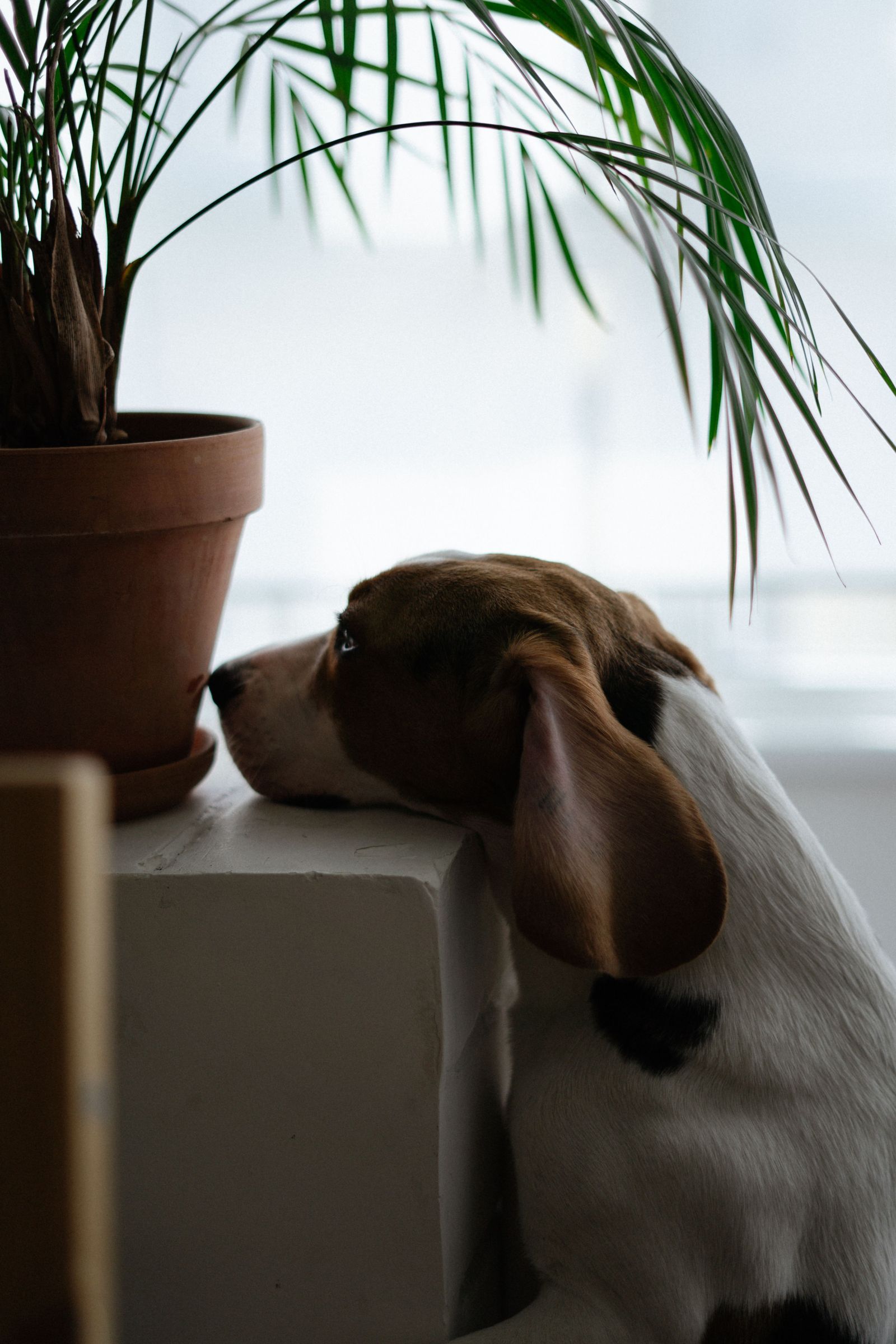
Photo: Albina White / Pexels
A dog does not meet a houseplant the way a cat does. The cat problem is altitude: what can be reached by jumping, and what must live higher. The dog problem is the floor itself. Dogs investigate at nose height, which is plant height for anything on the ground. Puppies chew with genuine intent. Dogs dig in pots, eat soil and mulch for reasons known only to dogs, drink from saucers, and sweep floor pots with a tail that does not know its own strength. A safe plant list for a dog household that ignores all of that is a list for a house with no dog in it. This page starts from the dog.
Safety first, as on our cats page, but a different safety: every plant below is listed non-toxic to dogs by the ASPCA, verified by scientific name, and chosen for a beginner. Our cats article owns the jumping, shelf based version of this problem. This page owns the floor.
Interactive tool
Dog Safe First Plants Checklist
Check off each step as you finish it. Your progress stays on this page.
0 of 7 complete
0% done
The Safe Shortlist, Sorted by Where the Dog Meets It
Plant
Scientific name to verify
Where it lives in a dog house
Care note
Spider plant
Chlorophytum comosum
Raised or hanging; its dangling babies invite dog attention
The beginner's friend; endlessly propagatable
Parlor palm
Chamaedorea elegans
Floor, in a heavy pot
Slow, graceful, tolerant of medium light
Areca palm
Dypsis lutescens
Floor, the big statement
Thirstier than parlor palm; a real presence
Ponytail palm
Beaucarnea recurvata
Floor or low stand
The trunk stores water; very forgiving of missed waterings
Boston fern
Nephrolepis exaltata
Raised; fronds at dog nose height get investigated
Wants humidity and steady moisture
Calathea and prayer plant
Calathea and Maranta species
Table height
Patterned leaves that fold at night
Peperomia
Peperomia species
Table or shelf
A genus of small, varied, easy plants
Cast iron plant
Aspidistra elatior
Floor, the dark corner
Nearly unkillable; tolerates low light and neglect
African violet
Saintpaulia species
Table, away from tails
Flowers indoors; water from the bottom
Haworthia
Haworthia species
Windowsill
The safe succulent look
Money tree
Pachira aquatica
Floor, in a weighted pot
Fast growing and forgiving; braid trunks tempt chewers
Christmas cactus
Schlumbergera species
Raised or table
Holiday blooms; not a true cactus, and dog safe
Verify every plant on the ASPCA toxic and non-toxic list by scientific name before it comes home, because common names are shared between safe and dangerous plants and store tags are not evidence. That one minute check is the foundation; everything else on this page is managing the dog.
The Sago Palm Warning, In Its Own Class
One plant needs its own section because it is sold exactly where beginners shop and it is not in the same risk class as anything else on the toxic list. The sago palm, Cycas revoluta, is not a true palm but a cycad, and every part of it is severely toxic to dogs, the seeds most of all; ingestion can cause liver failure and death, and veterinary sources treat it as one of the most dangerous house and landscape plants for dogs. It is sold as a tough, architectural, beginner friendly plant, which it is, for households without dogs. In a dog household it does not come inside, does not live on the patio in reach, and if one is already in the house or yard, it goes, because no placement discipline survives a determined chewer and a dropped seed. When you shop for a palm silhouette for a floor corner, the safe answers are the true palms above, parlor and areca and ponytail, and the way to be sure is the scientific name on the ASPCA list, since sago sits in garden centers wearing the word palm like a disguise.
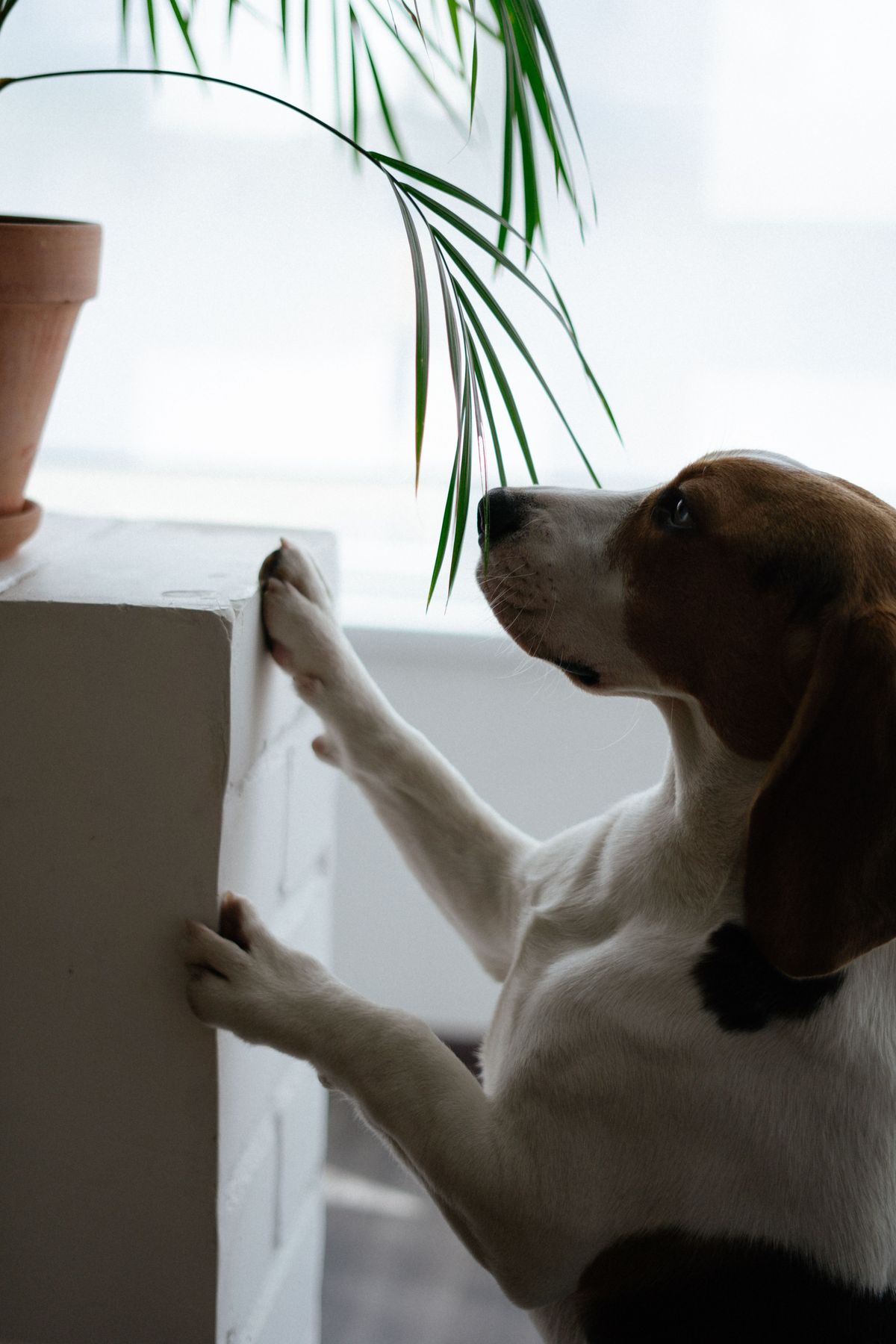
A beagle standing on its hind legs reaching toward a plant
The Hazards That Are Not the Plant
Dog owners auditing plant safety usually stop at the leaf, and dogs do not. Soil eating is the commonest dog and plant interaction of all: many dogs sample potting mix, and mix is not food. Fertilizer worked into the mix, slow release prills that look like kibble scattered on the surface, and any pesticide treated soil are the risks; keep fertilizer prills off the surface of dog reachable pots, water granular feeds in, and store all garden chemicals as if a dog will find them, because one will. Cocoa mulch, used outdoors rather than in pots, belongs in every dog owner's knowledge: it is made from cacao shells, carries the same theobromine that makes chocolate dangerous to dogs, and smells like food. In a dog's garden, choose wood or straw mulch instead. Saucer water is a dog bowl you did not intend: mostly harmless with plain water, genuinely unwise in the hour after fertilizing, when the saucer holds feed solution; empty saucers on fertilizing day. None of these require giving up plants. They require knowing that in a dog house, the plant is a system of pot, soil, surface, and saucer, and the dog audits all of it.
Puppy Rules and the Chewing Season
An adult dog that has ignored plants for years can usually be trusted after a supervised introduction. A puppy cannot, and the puppy season, roughly the first year, with its teething peak in the middle, runs on different rules. During the chewing months, dog reachable plants live behind a gate, on the other side of a playpen, or in a closed room, whatever the list says, because even a non-toxic plant is a choking and stomach upset risk in quantity, and the ASPCA's own caution stands behind this page's whole approach: consumption of any plant material may cause vomiting and gastrointestinal upset. Non-toxic means no poison, not no consequences. Give the puppy a legal chew target near the plants it covets, redirect without drama when it investigates, and reintroduce floor plants gradually as the chewing fades. The braid of a money tree and the trunk of a ponytail palm are texture targets for determined chewers of any age; a dog that worries trunks gets those plants raised or behind the gate permanently, and loses nothing by it.
Pot Discipline for a House With a Tail
The cat version of placement worries about shards from a shelf. The dog version worries about mass at floor level. A large dog's tail at full wag sweeps exactly at low table and floor pot height, and a light pot on a smooth floor is a spill waiting for a happy dog. Weight is the fix: choose heavy pots, or set pots inside heavier cachepots, for anything at tail height; place floor plants in corners and against walls rather than in traffic lanes and beside the dog's favorite turning circle by the door; and expect the bed beside the sunny window, the best plant spot in most rooms, to also be the dog's spot, which means the plant there should be the toughest on your list, the cast iron plant or ponytail palm, and not the fern. Soil on the floor after a digging episode is cleaned up without ceremony, the pot gets a top dressing of large stones too heavy to eat or a grid of bamboo skewers, point up, which ends most digging in a week, and the dog gets a sanctioned dig somewhere outdoors if the household can manage it, because digging is a need being expressed, not a crime being committed.
The First Month With a Dog
Introduce plants the way you would introduce anything valuable to a dog: supervised, briefly, and with the interesting ones out of reach at first. Watch what the dog actually does, because the individual dog outranks every generalization here: some dogs sniff a plant once and never again, and some file it under future projects. Note nose level interest, pawing, and any leaf mouthing, and rearrange for the dog you have. Keep the vet's number and the ASPCA animal poison control line saved before the first plant comes home, and if the dog does eat something it should not, identify the plant before you call, since the scientific name is what the answer will turn on. By the end of the month most households reach the arrangement this page is designed for: real plants, at floor level, in a house where a dog is being a dog, with the risk managed down to the level of ordinary life.
Balcony and Patio Dogs: the Outdoor Half
The dog and plant problem has an outdoor half, and it follows the same logic with a different plant list. Dogs on patios and in gardens meet plants at the same nose height, dig in the same soft soil, and add one outdoor hazard class the indoor list does not carry: common landscape plants with genuinely dangerous reputations for dogs, among them the sago palm again in warm climates, oleander, and in spring gardens the bulbs and the cocoa mulch already named. The working method outdoors is the indoor method scaled: a known safe list for the beds the dog can reach, a physical boundary for anything you are not sure of, and supervision during the puppy season, which outdoors lasts as long as the chewing does. Gardeners who vegetable garden with a dog add one more habit: the harvest basket and the freshly fed bed are managed like the indoor saucer, because a dog that has learned that the garden is where food comes from will eventually help with the harvest, and fertilizer day is not the day to teach that lesson.
Frequently Asked Questions
What are the safest first plants for a beginner with a dog?
Start with the ASPCA verified floor tolerant set: parlor palm, areca palm, ponytail palm, and cast iron plant for the floor, spider plant raised or hanging, and peperomia or African violet at table height. All are listed non-toxic to dogs by the ASPCA and all forgive beginner watering.
What is the most dangerous houseplant for dogs?
The sago palm, Cycas revoluta, by a wide margin: all parts are severely toxic to dogs and the seeds can cause fatal liver failure. It is not a true palm and it is sold as a beginner plant, which is what makes it dangerous. In a dog household it does not come home; the safe palm shaped alternatives are parlor palm, areca palm, and ponytail palm.
My dog ate a plant on the safe list. Should I worry?
Expect possible stomach upset rather than poisoning: the ASPCA cautions that eating any plant material may cause vomiting or gastrointestinal upset even when the plant is non-toxic. A dog that vomits once and returns to itself is usually an observation case; repeated vomiting, drooling, lethargy, or loss of appetite means a vet call, safe list notwithstanding.
How do I stop my dog digging in my houseplants?
Make the surface unrewarding: a top dressing of large stones too big to eat, or a grid of bamboo skewers point up, ends most digging within days. Clean up spills without drama, keep fertilizer prills off the surface, and if you can, give the dog a legal place to dig outdoors. Digging is a need; redirect it rather than only blocking it.
Are fertilizer and mulch dangerous to dogs around plants?
They can be. Slow release fertilizer prills on a pot's surface look like food and should be watered in or kept off dog reachable pots; saucer water on fertilizing day holds feed solution and should be emptied. Outdoors, cocoa mulch is a genuine hazard because it contains theobromine, the chocolate compound toxic to dogs; use wood or straw mulch in a dog's garden.
Can I keep toxic plants if I put them up high?
Dogs are not cats; height works better here, because most dogs cannot reach a shelf. But weigh what falls: leaves, petals, and in the sago's case seeds drop to floor level where the dog lives. For mildly toxic plants, a genuinely unreachable closed room is the honest answer; for the sago palm, the answer is out of the house entirely.
Photo credits: Albina White (Pexels); Albina White (Pexels). Photos are served from this site; follow the credit to the library page for the original.