Best Perennials for Beginners: A Border Plan, Not a Shopping List
By the Windchime Walker editorial team
Photo: Sky / Pexels
Perennial lists are usually parades: twenty plants, twenty photographs, no garden. The beginner comes home with one of everything, plants them in a row by height like a school photo, and wonders why the border looks like a waiting room. This page works the other way. The forgiving perennials are a known short set, and they are introduced here the way a gardener actually uses them: as a plan for one border, sun side and shade side, every plant with a job, spacing set by the size the plant will become, and the honest calendar of perennial growth stated before you spend anything. Peonies are covered here too, as the long lived classic of the list; the article map carries no peony guide of its own, so this page is where the peony decision lives.
One expectation before the plan, from University of Maryland Extension's perennial guidance as quoted in our research: perennials can take up to three years to establish fully. The gardener's proverb says it better: sleep, creep, leap. Year one the plant mostly roots and looks modest. Year two it grows noticeably. Year three it becomes the plant in the photograph. A beginner who knows this in advance reads a quiet first summer as progress; a beginner who does not reads it as failure and digs up healthy plants. Know it in advance.
Interactive tool
First Perennial Border Checklist
Check off each step as you finish it. Your progress stays on this page.
0 of 6 complete
0% done
The Sun Side of the Border
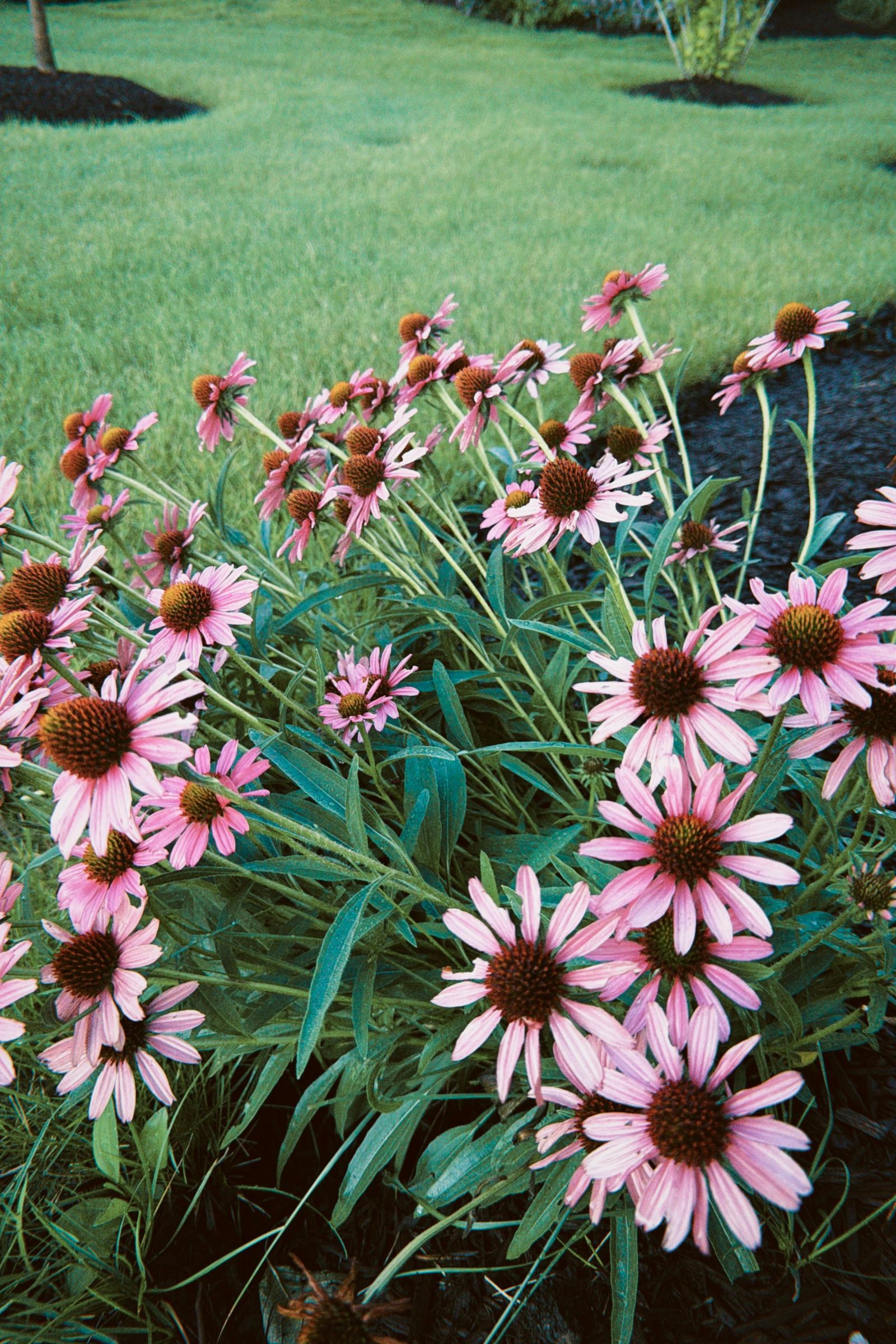
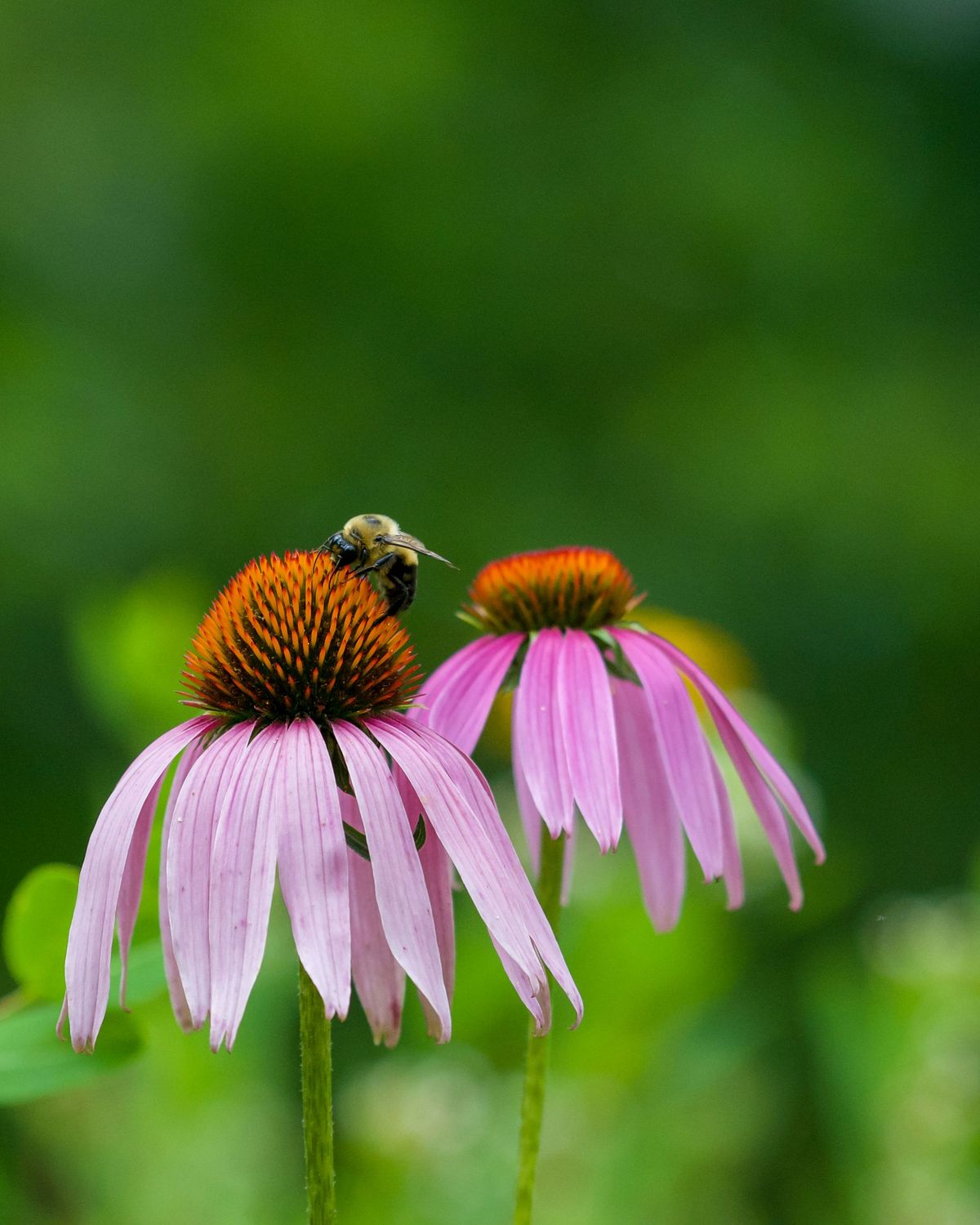
The back of a sunny border wants height with manners. Coneflower (Echinacea) is the anchor: 2 to 3 feet of purple pink daisies over a long summer, beloved of bees and butterflies, with seedheads that feed birds if left standing, which our deadheading guide argues for. Space plants about 18 inches apart; a group of three or five reads as a colony, not a queue. Its one demand is drainage in winter; wet crowns rot.
Black eyed Susan is coneflower's golden partner, similar height, similar toughness, blooming a little later and self seeding gently to fill gaps. Daylily is the border's reliable middle: fountain foliage that looks tidy from spring, flowers in sequence by variety, tolerant of almost any soil and most neglect, spaced about 18 to 24 inches for the clump it becomes. Daylilies are the plant that makes beginners feel competent, because they visibly thrive.
The front of the sun border wants low, long blooming edgers. Catmint spills blue flowers and gray green foliage over the edge from late spring, and a hard shear after the first flush brings a second; space about 18 inches and let it lean. Coreopsis threads yellow through the front all summer with deadheading, and sedum, the upright autumn types, closes the plan: fleshy foliage all season, pink to rust flowers in fall when the rest are tired, and stems that stand through winter. Sedum's one rule is restraint with water and fertilizer; rich kindness makes it flop.
The Shade Side of the Border
Shade is not the border's failure; it is its second room. Hosta owns it: foliage in greens, blues, and variegations that lights a dark corner, sized from teacups to wheelbarrows by variety, so the label's mature spread (12 inches to 4 feet and beyond) is the spacing, full stop. Hosta asks for steady moisture in its first season and protection from slugs where they abound, and then it is the most permanent plant in the garden.
Around the hostas, the shade supporting cast: coral bells for foliage color and wiry flower stems, astilbe for feathery plumes where the soil stays moist, and ferns for the texture nothing else gives. A shade border planted in foliage first and flowers second looks good for more months than a sun border does, because leaves do not have an off week. The beginner who plants the shady side as a foliage garden has understood something many experienced gardeners have not.
A bee gathering nectar on a purple coneflower in a green field
The Peony, Treated Honestly
The peony is the list's aristocrat: a plant that can outlive its planter, with flowers that stop conversations in June. It earns its place in a beginner border on two conditions. First, plant it correctly once: the eyes (buds on the root) set no more than about 2 inches below the soil surface, because a peony planted too deep grows leaves for years and never blooms, the most famous single fact in perennial gardening. Second, accept its calendar: a peony may not bloom its first year, blooms lightly its second, and comes into its glory from the third, then resents being moved for decades. Choose its spot like a tree's spot. Ants on the buds are normal and harmless. Staking or a support ring, placed early, keeps the heavy flowers off the ground in rain. Given sun, drainage, and patience, the peony is not a difficult plant; it is a slow promise, and beginners who plant one in year one are connoisseurs by year three.
Assembling the Plan
Lay the border out on the ground with a hose before buying, as our edging guide teaches, and mark the plant stations with the mature spacing from this page. Buy in odd groups (three, five) of fewer varieties rather than one of many; repetition is what separates a border from a collection, and a first border of six varieties in groups will look designed while a border of twenty singles looks like a nursery bench. Plant at the depth each grew in its pot, water in deeply, and mulch 2 to 3 inches, kept clear of crowns.
Fill the first year's gaps without shame: the sleep year leaves spaces, and annuals (a flat of marigolds or zinnias from our flower guides) tucked between the young perennials give the border a finished first summer and vacate as the perennials creep. This is not cheating; it is the standard professional trick, and it keeps a beginner's border photogenic while the permanent plants do their underground work.
The Three Year Calendar
Year one, sleep: water the new plants through dry spells all season, because establishing roots are shallow; expect foliage, some flowers, and no miracles. Year two, creep: the clumps widen, flowering strengthens, and the first divisions of the plan reveal themselves (the catmint is bigger than its station, the daylily exactly right). Adjust spacing sins now, in the cool of spring or fall, while moving is easy. Year three, leap: the border closes, flowering runs in sequence from spring bulbs to fall sedum, and the gardener's job changes from establishing to editing, dividing the vigorous every few years and sharing the surplus, which is the perennial gardener's social currency.
Fertilizer through all three years is a light hand: compost as mulch in spring feeds perennials adequately in most soils, and rich feeding grows foliage at the expense of flowers and makes the tall ones flop. The border that is planted right, spaced right, and left mostly alone outperforms the fussed over one by year three, which is the deepest reason perennials suit beginners: the plant's timeline forgives a human's learning curve.
Mistakes That Undo a Good Border
Three errors account for most beginner border disappointments, and each is a plan error rather than a plant error. The first is the collector's row: one of everything, planted in a line, each plant marooned in mulch with its neighbors strangers. The cure is in this page's method: groups of three or five, repeated, so the eye reads colonies and the plants shade their own soil as they mature.
The second is planting by the photograph's season. A border bought entirely from June's nursery benches blooms gloriously in June and offers foliage and regret from August on; the plan must be shopped across the calendar, spring (bulbs and early perennials), summer (coneflower, daylily, catmint), and fall (sedum, asters where you add them), so something is always arriving. Nurseries sell what is flowering this week; the border plan, written at home, is the discipline that buys across the year instead.
The third is the unedited border: perennials are long lived but not static, and by year four the vigorous have eaten the meek unless the gardener divides, moves, and occasionally removes. Division is the perennial gardener's core skill and it is genuinely simple: lift the clump in spring or fall, split it with a spade or two forks back to back, replant the vigorous outer pieces at proper spacing, and compost or give away the woody center. A border divided on a three to five year rhythm for its hungriest members stays at its planned size forever, and the surplus plants are the currency that stocks the next bed and the neighbors' gardens. The gardener who learns division in year three never buys the same plant twice, which quietly transforms the economics of the whole hobby.
A Note on Natives and Pollinators
Most of this page's core set (coneflower, black eyed Susan, catmint's cousins aside, coreopsis, sedum as a late nectar source) works for pollinators as well as for beginners, and that overlap is not a coincidence: plants that evolved with local insects tend to be the plants that tolerate local conditions without cosseting. A beginner border built on this list feeds bees through summer and birds through winter almost by accident. If you lean further that way, choose straight species or near species varieties over the most doubled, frilled cultivars, whose flowers can be harder for insects to use; the border loses nothing in beauty and gains a working ecology. It is the rare decision in gardening where the easier path for the gardener and the better path for the neighborhood are the same path.
The Border in Winter
A perennial border earns its keep in winter or it does not, and the beginner list on this page was quietly chosen with January in mind. Sedum's dried heads stand and catch frost; coneflower's seedheads feed birds against the snow; daylily crowns sleep invisibly but reliably; hostas vanish entirely, which is their own honesty; and the evergreen accents a gardener adds later have a composed stage to join. Resist the fall cleanup urge that strips the border to bare soil in October: the standing stems shelter crowns, feed wildlife, and mark the plants' places for the gardener who will divide in spring, and the tidy bare border is colder, hungrier, and harder to read than the one left standing. Cut down in spring, as the new growth pushes, and the border's year runs unbroken from snow to snow.
Frequently Asked Questions
What are the easiest perennials for a beginner?
Coneflower, black eyed Susan, daylily, hosta for shade, sedum, catmint, and coreopsis form the forgiving core set, with peony as the long lived classic planted once and correctly. All tolerate ordinary soil and beginner watering, and all are assembled into a border plan on this page.
Why is my perennial small in its first year?
Because that is the plan: perennials establish roots first, in the sleep, creep, leap pattern, and University of Maryland Extension notes they can take up to three years to establish fully. Water through the first season's dry spells, mulch, and judge the plant in year three, not month three.
How far apart do perennials go?
At mature size, not pot size: coneflower and catmint about 18 inches, daylily 18 to 24 inches, hosta by its label spread, which ranges from 12 inches to 4 feet by variety. Crowded perennials mildew and compete; wide spacing with annuals in the first year gaps is the professional method.
Why is my peony not blooming?
Usually depth: peony eyes planted more than about 2 inches below the surface grow leaves and skip flowers. Other causes are youth (peonies bloom lightly until year three), shade, and being moved recently. If depth is the cause, lift and replant at the correct depth in fall.
When is the best time to plant perennials?
Spring and early fall are the two great windows: spring for a full season of root growth, fall for warm soil and cool air with planting finished several weeks before hard frost. Container grown perennials can go in all season with faithful watering, but the windows are kinder.
Do perennials need fertilizer?
Lightly, if at all: a spring mulch of compost feeds most established perennials adequately. Heavy feeding grows soft foliage, fewer flowers, and flopping stems, sedum most of all. The border virtues are spacing, drainage, and patience, in that order.
Photo credits: Sky (Pexels); Andrew Patrick Photo (Pexels). Photos are served from this site; follow the credit to the library page for the original.