Best Vegetable Seeds for Beginners: Read the Packet First, Then Buy the Shortlist
By the Windchime Walker editorial team
Photo: RDNE Stock project / Pexels
The seed aisle and the seed catalogs are arranged to sell you a garden that exists in a photograph. The beginner who buys by photograph ends up with forty packets, three of which get planted, and a drawer of good intentions expiring quietly. This page takes the other route. First it teaches you to read the packet, because every fact that decides a first season is printed on it in small type. Then it gives a short list, deliberately short, ranked by the two qualities a first season actually needs: speed, so you eat something before your enthusiasm is tested, and forgiveness, so the crop survives beginner watering, beginner timing, and beginner luck.
Our seed starting and sowing pages own the method once the seeds are in hand. This page owns the purchase: what to buy, how much, and what to leave on the rack.
Interactive tool
First Seed Order Checklist
Check off each step as you finish it. Your progress stays on this page.
0 of 8 complete
0% done
Read the Packet: Five Lines That Decide Your Season
Packed for year. Seed packets are stamped with the year they were packed for, and seed viability falls with age at a rate that differs by crop. Fresh packets are not a luxury; for short lived seed like onions, leeks, and parsnips, which fade within a year or two, the packed for date is the difference between a row and a gap. Germination percentage. Sellers must test and print the germination rate for the lot. A packet at 90 percent is planted as it lies; a packet at 60 percent, legal and common in older stock, gets sown half again as thick. Days to germination tells you how long to keep the seedbed moist before you may fairly panic: radish in under a week, carrots in two to three, which is why beginners think their carrots failed. Days to maturity is counted differently by crop, sometimes from sowing, sometimes from transplant, and it is the number that tells you whether the crop fits your season at all. Hybrid or open pollinated is the line with a future in it, covered next. A beginner who can read these five lines can walk past a hundred packets and buy six with confidence.
Hybrid Versus Open Pollinated: What the Choice Actually Buys
An open pollinated variety breeds true: save its seed and the children resemble the parents, which is how the classic heirlooms exist at all. A hybrid, marked F1, is a cross of two parent lines; it often brings vigor, uniformity, and disease resistance that are genuinely valuable, and its saved seed grows out as a mixed crowd of the grandparents, not the plant you grew. Neither is superior in the abstract, and the moralizing around them wastes beginners' attention. The practical rule: in your first season, buy hybrids freely where disease resistance matters, tomatoes and cucumbers especially, because a living plant teaches more than a principled dead one. Buy open pollinated where you might save seed, beans, peas, lettuce, and radish, which self pollinate or cross simply and come true easily. Seed saving itself is a second season skill; the packet line matters now because it tells you whether the option will exist later.
The Shortlist, Ranked by Speed and Forgiveness
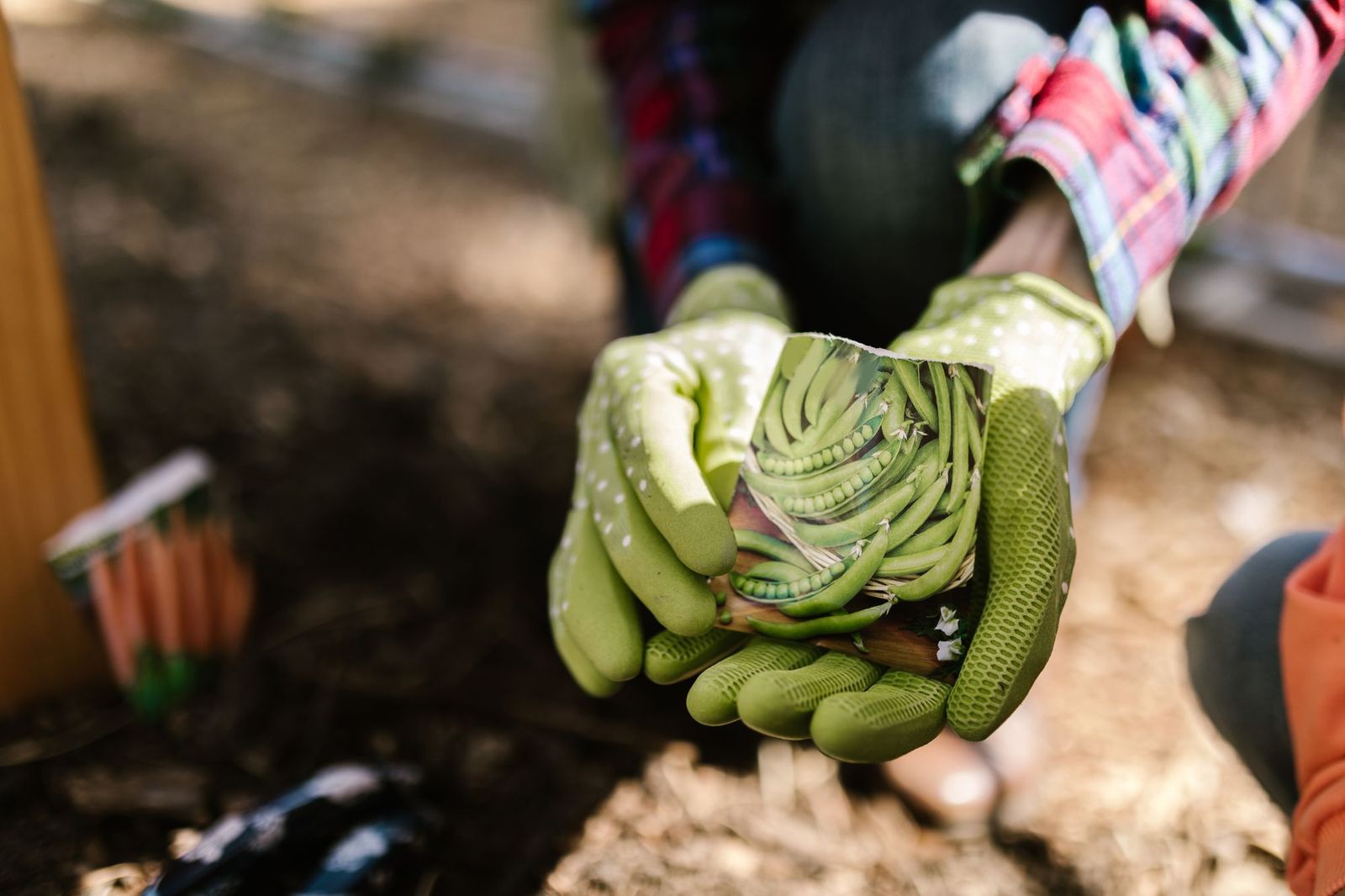
Radish, about 25 to 30 days. The fastest vegetable you can grow, the first harvest of most gardening lives, and the best teacher of succession sowing: a short row every week or two, eaten as fast as it grows. Forgiving of everything except heat, which makes it a spring and fall crop. Bush beans, about 50 to 55 days. Sow after frost into warm soil, keep them picked, and they produce generously with almost no skill involved. They forgive irregular watering better than most and feed the soil while they grow. Loose leaf lettuce, cut from about 30 days. Grown as baby leaf and cut and come again, it pays rent for weeks from one sowing and tolerates part shade that would stall the fruiting crops. Peas, about 60 days. A cool season crop with a sweetness that has converted more skeptics than any tomato; sow early, give them something to climb, and eat half the harvest standing in the row. Zucchini, about 45 to 55 days. One plant, famously, is a neighborhood supply; it forgives beginners everything except planting three. Carrots, about 70 days, ranked last on purpose. Slow to germinate and unforgiving of crusted soil, they are the shortlist's patience trainer: sow them, keep the row moist under a board or row cover until they emerge, and the sweetest carrots you have ever eaten are the graduation prize. Six crops, six packets, and every one of them can be direct sown where it will grow, which means a first season needs no lights, no heat mats, and no indoor seedling operation at all.
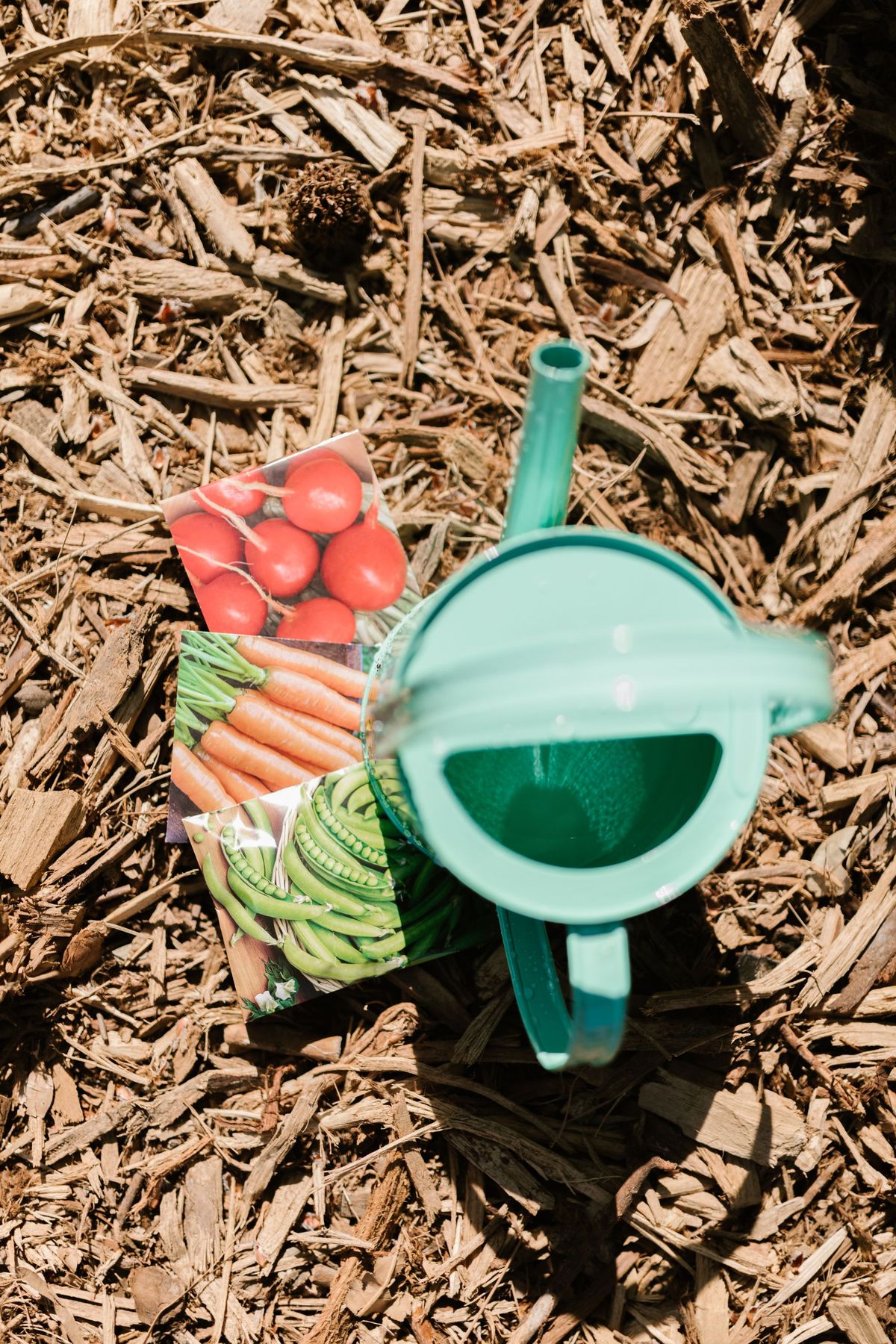
Seed packets and a watering can ready for sowing
Packets Versus Vault Kits: the Math Nobody Shows You
The beginner seed market is full of kits and vaults: 40, 60, 100 varieties in a box or a sealed bucket, marketed on count. The count is the trick. A vault's varieties are chosen for shelf life and margin, not for your climate or your table; the quantities per variety are small; and the whole format assumes a gardener who will plant forty crops, which a beginner is not and should not try to be. Six packets of the right varieties, bought fresh from a reputable seller for less than most kits cost, contain more viable seed of things you will actually eat than a vault of a hundred strangers. The kit format has one legitimate use, the gift, and even then the better gift is six chosen packets and a trowel. Buy from sellers who print the packed for year and the germination rate and who describe varieties by performance rather than by legend; regional seed companies, whose varieties are trialed in climates like yours, are the quiet best buy in the whole market.
How Much to Buy, and Storing What Is Left
A packet holds more seed than a first season needs, almost every time: a lettuce packet can hold hundreds of seeds, a bean packet enough for a long row. Buy one packet per crop on the shortlist, two only of the succession crops you will sow repeatedly, radish and lettuce, and resist the second variety of anything until the first has been eaten and judged. Leftover seed is money if it is stored right and litter if it is not. The enemies are heat, humidity, and light. Keep packets in a sealed jar or a zip bag with the air pressed out, in a cool dark place, a closet shelf rather than the garden shed, whose summer heat cooks viability away. A silica gel packet in the jar earns its place. Stored so, most seed keeps well past its first year: beans, peas, lettuce, and brassicas for 3 years or more, tomatoes and peppers similarly, with onions, leeks, parsnips, and corn the short lived exceptions to use up first. Write the year on every packet you open; the checklist below turns the whole purchase, reading, shortlist, quantities, and storage, into one order you can place in fifteen minutes.
When to Buy, and the Two Mistakes That Waste the First Season
Seed buying has a season, and it is earlier than feels natural: the best selection is on the racks and in the catalogs in late winter, and the beginner who shops in May chooses from the leftovers of other people's plans. Buy in February or March for a spring garden, and treat the packet's packed for year as this year's, full stop. Two mistakes waste more first seasons than all the others combined. The first is buying for the garden in the photograph instead of the garden in the yard: the shortlist exists because six crops matched to your space, light, and table beat thirty crops matched to a catalog cover, and the discipline is to plant the shortlist well rather than everything thinly. The second is starting everything indoors at once, the windowsill jungle of leggy seedlings in March that teaches beginners to hate seed starting. Notice that every crop on the shortlist is direct sown where it will grow; the entire indoor apparatus, lights, mats, trays, hardening off, is optional equipment for later seasons and other crops, tomatoes and peppers first among them. A first season that skips it is not a lesser season. It is a season spent learning soil, water, and timing on plants that want to live, which is the curriculum the fancy equipment cannot teach anyway.
Frequently Asked Questions
What are the easiest vegetable seeds for a beginner?
Radish for speed, about 25 to 30 days; bush beans for generosity, about 50 days and very forgiving; loose leaf lettuce for a long, easy harvest; peas for flavor; and one zucchini plant, never three. All six crops on this page's shortlist can be direct sown outdoors, so a first season needs no indoor seed starting setup at all.
Should beginners buy hybrid or open pollinated seed?
Both, by crop. Hybrids earn their place where disease resistance keeps a plant alive, tomatoes and cucumbers especially. Open pollinated varieties are the choice where you may save seed later, beans, peas, lettuce, and radish, because they grow true from saved seed and hybrids do not.
Are seed vault kits worth buying?
For gardening, no. The variety count is marketing; the varieties are not chosen for your climate or your cooking, the quantities are small, and no beginner plants forty crops. Six fresh packets of the right varieties cost less and contain more of what you will actually grow and eat. A kit is a gift format, not a garden plan.
How long do vegetable seeds stay good?
Stored cool, dry, and dark, most keep 3 years or more: beans, peas, lettuce, tomatoes, and peppers among them. Onions, leeks, parsnips, and corn are short lived at a year or two and should be bought fresh and used first. Check the packed for year and germination percentage on the packet, and sow older seed thicker.
How many seed packets should a beginner buy?
Six to eight. One packet per crop on a short list, two only of fast succession crops like radish and lettuce. A packet holds far more seed than one season uses, and the money saved on unpurchased packets buys the trowel, the compost, and next year's fresh seed.
Photo credits: RDNE Stock project (Pexels); RDNE Stock project (Pexels). Photos are served from this site; follow the credit to the library page for the original.