Bean Plant Spacing: The Bush and Pole Fork, the Georgia Standards, and the Depth Conflict
By the Windchime Walker editorial team
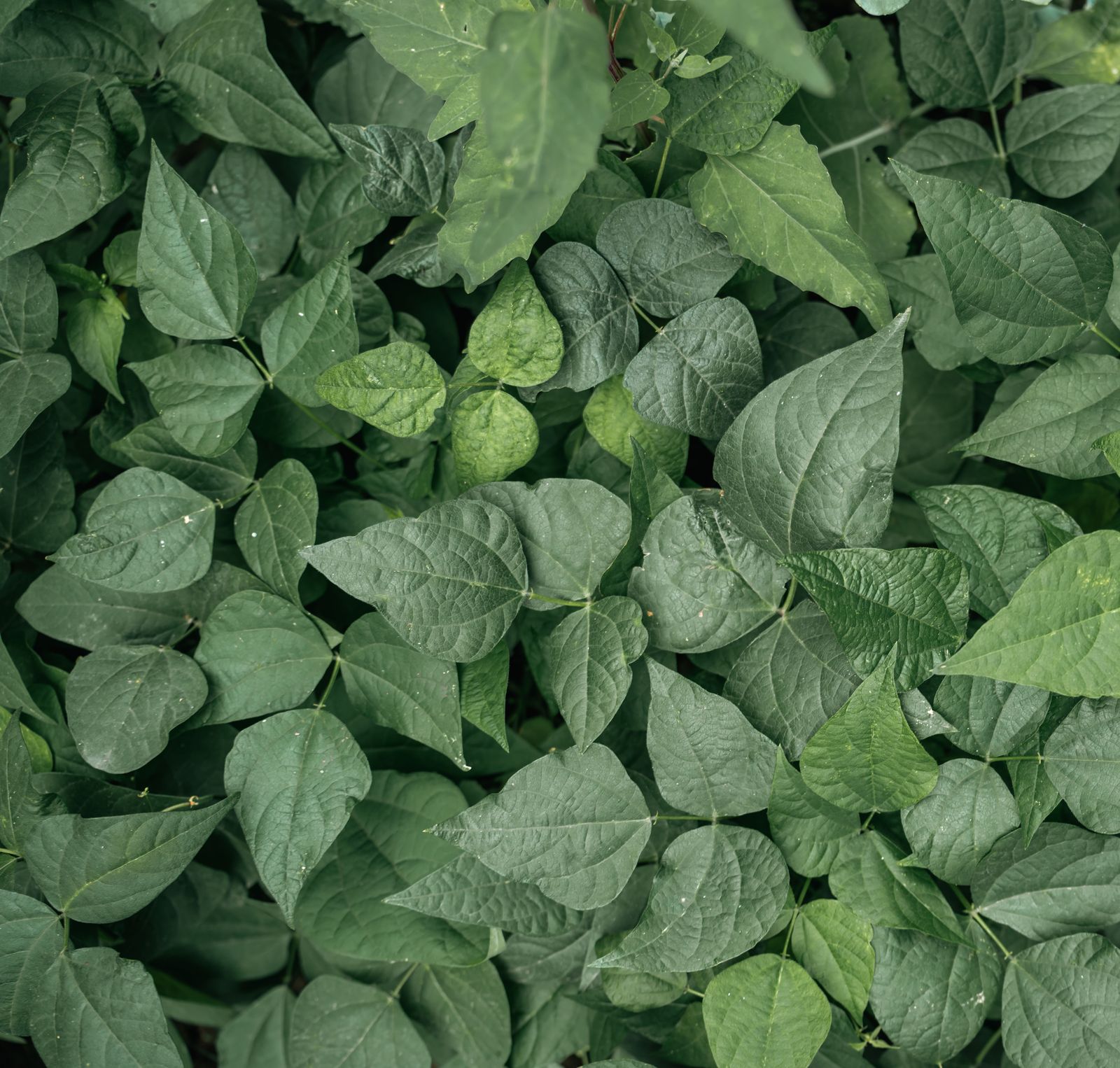
Photo: Iqbal farooz / Pexels
Beans are two crops wearing one name, and every spacing figure is meaningless until the fork is named. A bush bean is a self supporting plant a foot and a half tall that crops for a few weeks and finishes. A pole bean is a vine that climbs 6 to 8 feet, crops for months, and needs a structure before it needs anything else. The University of Georgia Cooperative Extension chart in Circular 963, the standard this site's planner runs, spaces bush beans 2 to 4 inches apart in rows 36 inches apart, sown 1 to 1.5 inches deep, and pole beans 4 to 12 inches apart in the same 36 inch rows at the same depth, with pole types taking 65 to 75 days against the bush crop's 50 to 60. Minnesota and Clemson land on the same bush figure, 2 to 4 inches in rows a foot and a half to three feet apart. This page runs the fork, the thinning that sets the final stand, the depth conflict flagged rather than averaged, and the succession rhythm that makes bush beans earn their row.
Our plant spacing chart owns the multi crop table. This page owns the bean rows, both of them.
Interactive tool
Plant Spacing Planner: The Bean Row
Bush and pole beans are both in the crop list below at the University of Georgia Cooperative Extension spacings, bush at 3 inches and pole at 8 inches, in 36 inch rows. Enter your bed or trellis size and plan the stand your thinning will finish.
8 tomato plants fit this bed
4 plants per row across 2 rows, on a 24 inch grid. Extension spacing for this crop: 24 in between plants, 48 in between rows.
The grid uses the in-row spacing in both directions, the standard square foot layout for raised beds. In open ground, keep the wider row spacing in the note above so you can walk and weed between rows.
Spacing figures: University of Georgia Cooperative Extension, Circular 963, Vegetable Planting Chart, source.
The Bush Standard: 2 to 4 Inches in 36 Inch Rows
A bush bean at final spacing stands 2 to 4 inches from its neighbor, close enough that the canopy closes and shades out weeds, open enough that air moves and the foliage dries. The planner uses 3 inches, the middle of the Georgia range. Sow thicker than the final stand, two seeds to a station or a seed every inch or two, because bean germination in cold or crusty soil is uneven and thinning a surplus is cheaper than filling gaps; then thin to the final figure when the seedlings stand a few inches tall, keeping the strongest. The 36 inch row is a working corridor, not a biological need: it fits a hoe, a harvest bucket, and a kneeling picker, and in raised beds the rows can close to a foot apart in a grid at the same in row spacing, which is how the planner converts the standard for bed growers. Days matter as much as inches with bush beans: at 50 to 60 days to harvest and a picking window of two to three weeks per sowing, the crop is a sprinter, and the spacing only pays if the succession system below keeps new rows coming.
The Pole Standard: 4 to 12 Inches and a Structure First
Pole beans space wider because the plant is bigger and the season is longer: 4 to 12 inches between plants in the Georgia chart, with the planner using 8 inches as the working figure for a trellis row. The wide end suits vigorous varieties and rich soil, the tight end a modest fence and an average garden. The structure is part of the spacing decision and goes in before or at sowing, never after the vines start searching: a trellis, net, or fence 6 to 8 feet tall, or poles tepee'd over the row, with the row itself at the chart's 36 inches so the picker can work both sides of the wall of vines. Hills are the traditional alternative in several extension charts, four to six seeds in a circle around a single pole, thinned to the strongest three or four plants; the geometry differs and the plant count per pole lands in the same place. What pole spacing must never do is crowd the base: vines that start tangled at the bottom shade their own lower leaves, hold moisture against them, and hand the picker a mildew curtain by August.
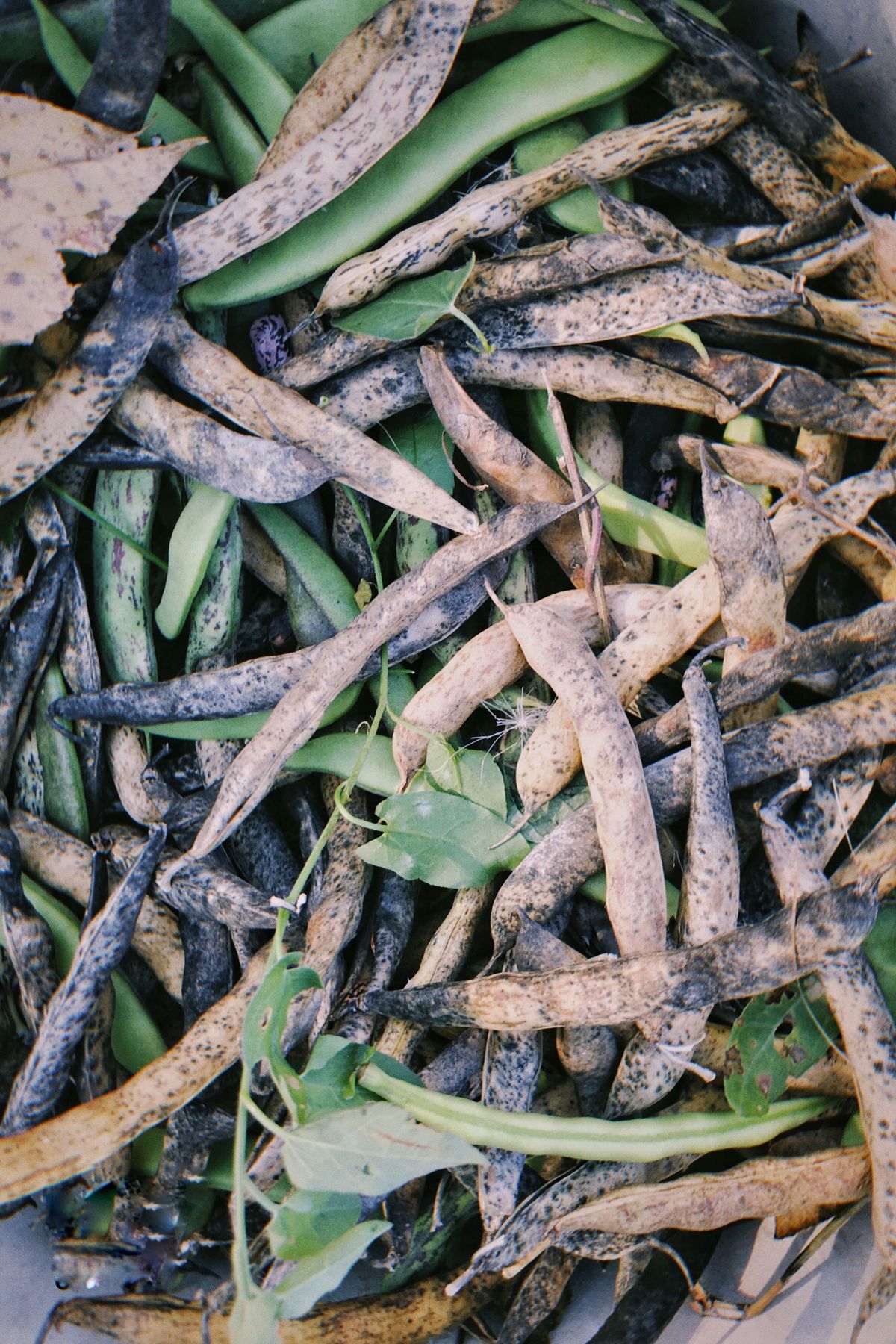
Close-up of harvested green and dried string beans
The Depth Conflict: Flagged, Not Averaged
The extension charts agree on spacing and disagree on sowing depth, and the disagreement is worth more than a compromise figure. Georgia's chart sows beans 1 to 1.5 inches deep. Minnesota and Clemson both say about 1 inch. Maryland's chart says 1/4 to 1/2 inch, a full inch shallower than Georgia's deep end. These are all real extension publications, and the spread is not an error to be averaged into a meaningless 3/4 inch; it reflects soil and season. In warm, sandy, fast drying soil, the deeper Georgia figure keeps the seed in moisture through germination. In cool, heavy soil in spring, a deep sown bean rots or exhausts itself before emergence, and the shallow Maryland end is the safer read. The working rule: sow about an inch deep in average soil in warm weather, shallower in cold heavy soil, deeper in sand, and never deeper than the Georgia figure. A bean seed carries a fixed lunch; the depth decides whether it reaches the light before the lunch runs out, which is why the shallow error shows as a failed stand and the deep error shows as the same failed stand a week later.
The Succession System: Bush Beans Are a Calendar Crop
A single sowing of bush beans gives a glorious fortnight and then a row of tired plants holding a few tough pods. The crop's economics only work as a relay: sow a short row, then sow the next row 2 weeks later, and again, from the last frost until about 8 to 10 weeks before the first fall frost. Each sowing at the same 3 inch spacing, in a new strip of the bed, and each pulled and composted the week its picking fades rather than left to decline in place. Pole beans skip the relay entirely; one sowing at the wide spacing crops from midsummer to frost, which is the real fork in the bean decision: bush beans trade garden labor for speed and succession discipline, pole beans trade structure building for a season long harvest from one planting. Many gardens run both, the bush rows feeding June and early July while the poles climb, the poles carrying August and September alone. Whichever you plant, the seed wants warm soil; beans sown into cold ground rot at any depth, and the calendar gate is soil at 60 degrees F and rising, not the frost date alone.
Frequently Asked Questions
How far apart should green beans be planted?
By type. Bush beans: 2 to 4 inches between plants in rows 36 inches apart, per the University of Georgia Cooperative Extension chart in Circular 963; the planner on this page uses 3 inches. Pole beans: 4 to 12 inches between plants in the same rows, with 8 inches the working figure for a trellis row. Minnesota and Clemson charts agree with the bush figure. In raised beds the row spacing can close up into a grid while the in row spacing stays the same.
How deep should bean seeds be planted?
The extension charts conflict, and the honest answer names them: Georgia sows 1 to 1.5 inches deep, Minnesota and Clemson about 1 inch, Maryland 1/4 to 1/2 inch. Soil and season arbitrate. Sow about an inch deep in warm average soil, toward the shallow end in cool heavy soil where deep seed rots, toward the deep end in warm sand that dries fast. Never sow deeper than the Georgia figure; the seed carries a fixed food supply and must reach the light before it runs out.
Do pole beans need wider spacing than bush beans?
Yes, roughly double at the working figures, 8 inches against 3, because the plant is a 6 to 8 foot vine cropping for months rather than a compact bush cropping for weeks. The Georgia range is 4 to 12 inches for pole types. Pole spacing also includes the structure: a trellis or poles 6 to 8 feet tall installed at sowing, with the row kept at 36 inches so both sides of the vine wall can be picked. Hills around a single pole, thinned to three or four plants, are the traditional equivalent.
How often should I sow bush beans for a continuous harvest?
Every 2 weeks, from after the last frost until 8 to 10 weeks before the first fall frost. Each sowing crops for about two to three weeks starting 50 to 60 days after sowing, so the relay overlaps into a steady supply. Pull each row when its picking fades; a spent row left standing yields tough pods and pest habitat. Pole beans need no succession at all, since one planting picks from midsummer until frost.
Why did my bean seeds rot instead of sprouting?
Usually cold soil or depth. Beans want soil at 60 degrees F and rising; seed sown into cold, wet ground rots before it germinates, at any spacing. Depth compounds it: a seed sown at the deep end of the range in cold heavy soil can exhaust its stored food before reaching the surface. Sow after the soil warms, at about an inch in average soil, shallower in heavy ground, and the stand problems mostly vanish. Old seed is the third suspect; beans lose vigor after a couple of years in a warm drawer.
Photo credits: Iqbal farooz (Pexels); Maria Pashkova (Pexels). Photos are served from this site; follow the credit to the library page for the original.