Basil Plant Spacing: The 12 Inch Maryland Standard, the Disease Ladder, and the Pinch Grown Bush
By the Windchime Walker editorial team
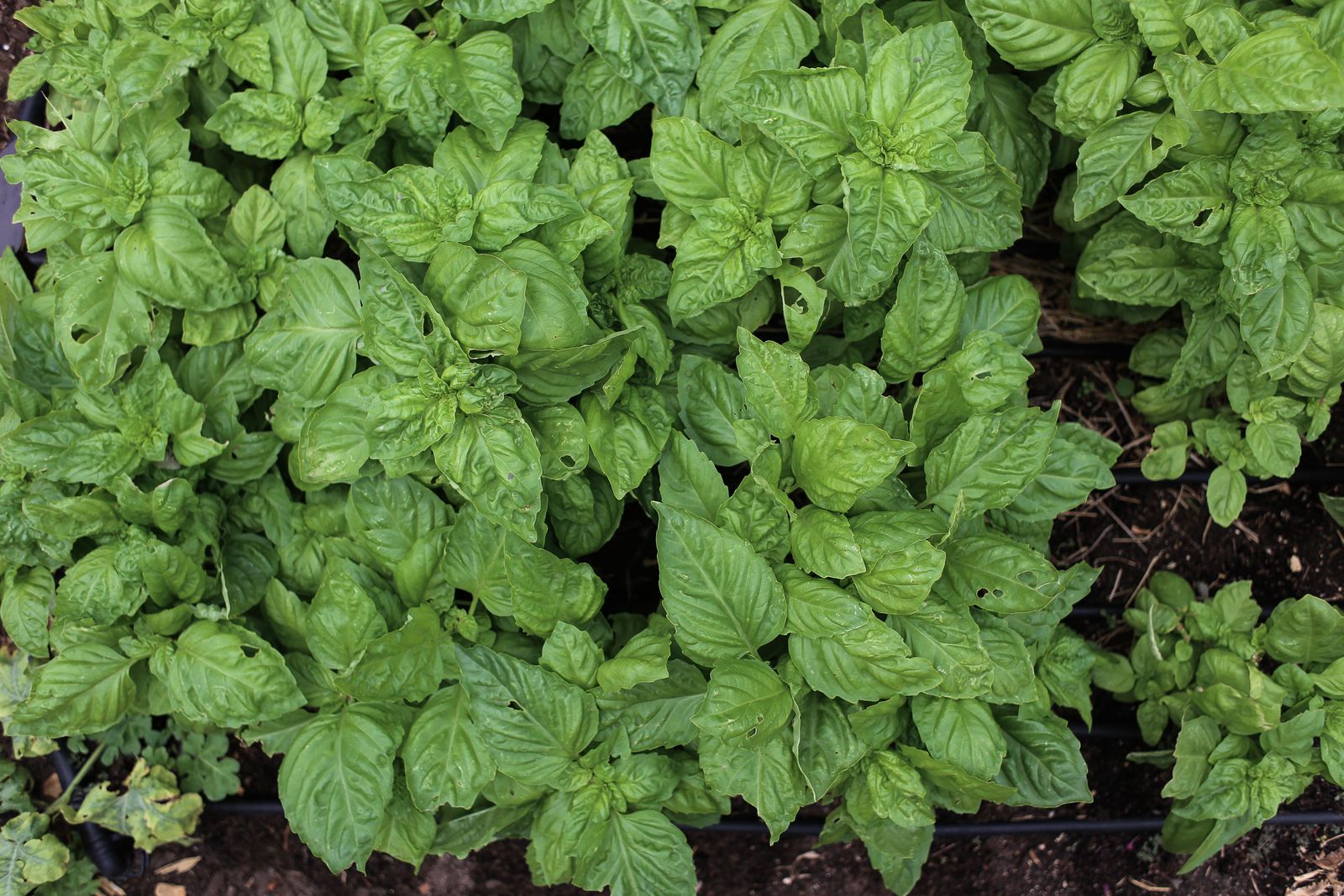
Photo: Rachel Claire / Pexels
Basil spacing looks like a question about how big the plant gets, and it is actually a question about how wet the air around it stays. The University of Maryland Extension fact sheet on growing basil in a home garden, read in full for this page, sets the standard this site's planner uses: thin basil to 12 inches between plants and 18 inches between rows, in full sun with 6 or more hours of direct light. The results around that standard sprawl widely, from square foot guides planting a large plant or four compact ones per square foot, to Clemson at 2 feet by 3 feet and Illinois advising at least 2 feet between plants. The wide figures are not generosity; they are downy mildew defense, buying airflow through a canopy that stays wet and dies crowded in humid summers. This page runs the Maryland standard as the verdict, teaches the ladder around it, and ties spacing to the pinch habit that turns one stem into a bush wide enough to fill the space honestly.
Our plant spacing chart owns the multi crop table. This page owns the basil row.
Interactive tool
Plant Spacing Planner: The Basil Row
Basil is in the crop list below at the University of Maryland Extension spacing of 12 inches between plants in rows 18 inches apart. Enter your bed size and count your plants before downy mildew makes the decision for you.
8 tomato plants fit this bed
4 plants per row across 2 rows, on a 24 inch grid. Extension spacing for this crop: 24 in between plants, 48 in between rows.
The grid uses the in-row spacing in both directions, the standard square foot layout for raised beds. In open ground, keep the wider row spacing in the note above so you can walk and weed between rows.
Spacing figures: University of Georgia Cooperative Extension, Circular 963, Vegetable Planting Chart, source.
The Maryland Standard: 12 Inches, 18 Inch Rows, and What the Numbers Buy
Twelve inches between plants is the spacing at which a well pinched Genovese basil becomes a bush about a foot across and meets its neighbors just as the harvest rhythm peaks. The canopy closes enough to shade the soil and hold moisture evenly, and stays open enough, with the 18 inch rows as air corridors, for foliage to dry after rain and morning dew. At 6 inches the same plants crowd by midsummer, hold wet air against their lower leaves, and present downy mildew with the still, humid canopy it wants; the first sign is yellowing upper leaves with grey fuzz beneath, and it moves through a tight planting faster than any picking pattern can outrun. At 2 feet the plants are magnificent and the bed is half empty, a fair trade only where mildew pressure is severe or the plants are being grown for seed and pesto harvests by the armload. Use the planner above to count a bed before you sow: a 4 by 8 foot bed at the standard carries a serious quantity of basil, and most households do better with a short row pinched hard than a wide bed left to flower.
The Disease Ladder: When to Run Wider Than the Standard
The wider extension figures exist because downy mildew rewrote basil growing in humid regions, and they should be read as the far end of one ladder rather than as competing answers. Maryland's 12 by 18 is the standard for ordinary conditions and resistant varieties. Clemson's 2 by 3 feet and the Illinois advice of at least 2 feet buy maximum airflow for gardens where mildew has already visited, where summers are humid, or where the variety is a susceptible heirloom type. Maryland's own fact sheet makes the connection explicit: airflow and resistant cultivars are the cultural defense, naming varieties bred for resistance, including Obsession, Devotion, Prospera, and Amazel, as the modern answer alongside spacing. The honest system is a match: a resistant variety at the standard spacing outperforms a susceptible one at any spacing, and a susceptible variety in a humid garden deserves the wide end of the ladder and morning sun that dries it early. What you must not do is plant tight and plan to spray your way out; by the time mildew shows on the upper leaves, the undersides have been sporulating for days.
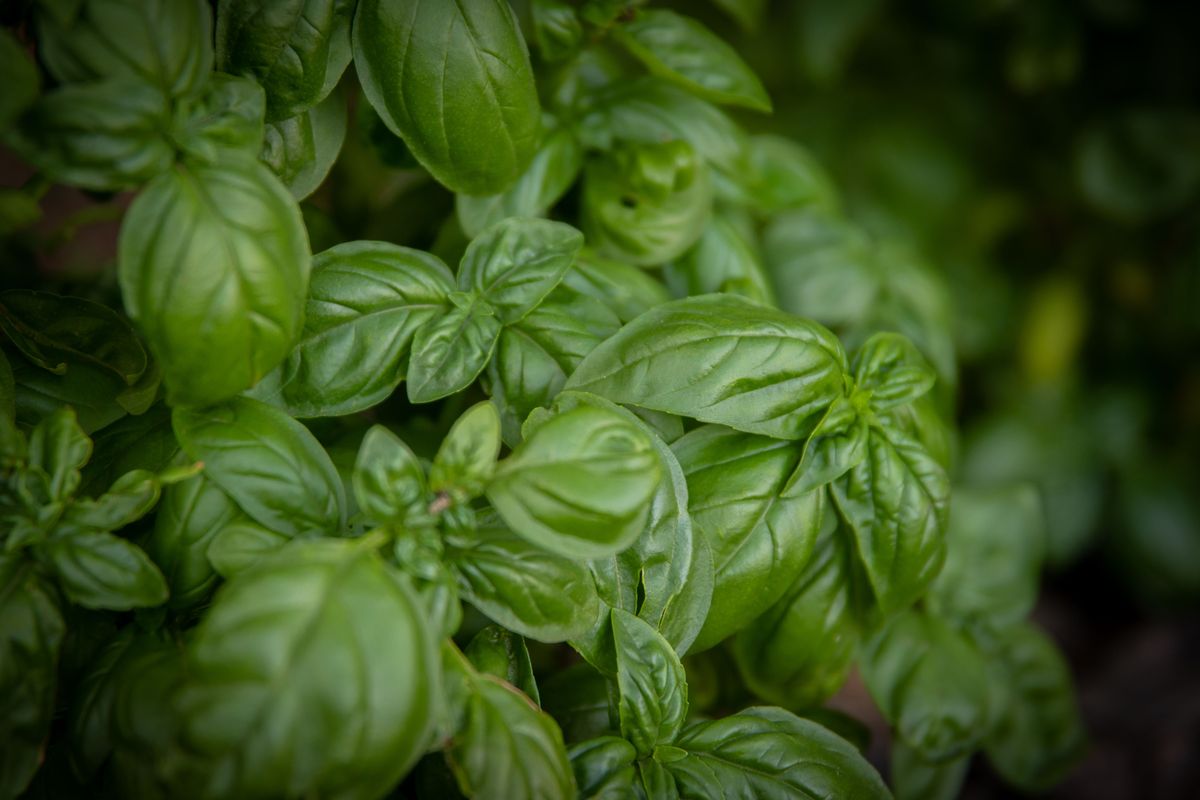
Lush green basil leaves in a garden
The Pinch Grown Bush: Spacing Assumes the Pinch
Every spacing figure for basil silently assumes the plant is pinched, because an unpinched basil is a single stem that occupies 3 inches of the 12 it was given and then flowers and dies. The pinch is simple and early: when the plant has three sets of leaves, cut the main stem just above the second leaf node, and the plant answers with two branches where there was one. Repeat on the new branches every week or two, always cutting above a node and never taking more than a third of the plant at once, and the stem becomes a rounded bush that fills its foot of space and produces leaves instead of flowers for months. Flower buds are pinched out on sight all season; a basil allowed to flower turns its leaves bitter and its energy to seed, and the plant is finished within weeks. Harvest is the same cut as the pinch, taken in the morning when the leaves are most aromatic, from the top down. Spacing and pinching are one system: the 12 inch grid is the bush's footprint, and a grower who will not pinch should plant at half the standard and accept the shorter, stalkier harvest.
Sowing, Succession, and the Cold Floor
Basil is a warm season annual with a hard cold floor, and the spacing calendar runs on temperature. Seed germinates in warm soil, transplants go out only after nights hold reliably above 50 degrees F, and a single cold night below that stalls or kills plants that looked settled; the Maryland fact sheet's production rhythm has harvest beginning about 6 weeks after planting in real warmth. Direct sow where summers are long, start indoors where they are short, and thin seedlings ruthlessly to the grid, because a cluster of five seedlings in one station is the tightest spacing mistake of all, five plants living at zero inches. Succession is the quiet half of the system: a second short sowing in midsummer replaces the spring plants as they tire and bolt in the heat, and it goes in at the same spacing, in the gap the cook has already harvested bare. Basil also sulks in wet, cold soil at any spacing; raised beds and pots that warm early suit it better than a cold clay row, and the spacing there converts cleanly, one plant per 10 to 12 inch pot, which is the container expression of the same 12 inch rule.
Frequently Asked Questions
How far apart should basil plants be spaced?
Twelve inches apart in rows 18 inches apart, per the University of Maryland Extension fact sheet on growing basil in a home garden, and that is the spacing in the planner on this page. It suits a pinched Genovese type plant in ordinary conditions. In humid gardens with a downy mildew history, or with susceptible heirloom varieties, run wider, toward the 2 foot spacing Clemson and Illinois advise for airflow. Compact varieties can sit a little tighter, but the disease logic, not the plant's size, is what sets the floor.
Why do some guides space basil 2 feet apart?
Airflow against downy mildew. The wide spacings in the results, Clemson at 2 by 3 feet and Illinois at a minimum of 2 feet, buy a canopy that dries fast after rain and dew, which is the cultural defense against the mildew that has made basil difficult in humid regions. Maryland pairs the same logic with resistant varieties such as Obsession, Devotion, Prospera, and Amazel. If mildew has never visited your garden and your summers are dry, the 12 inch standard serves; if it has, the wide end of the ladder is cheap insurance.
How many basil plants fit in a 4 by 8 foot bed?
At the Maryland standard of 12 inches between plants and 18 inches between rows, a 4 by 8 foot bed holds roughly 20 plants, laid out as the planner above shows. That is more basil than most households can use fresh, which is the point of the count: a shorter row, pinched hard and harvested weekly, outproduces a full bed of neglected plants. Consider planting half the bed and sowing the other half in midsummer as a succession when the first plants tire.
Can basil be spaced closer for a bigger harvest?
Closer spacing yields more plants and less basil. Crowded plants compete, stay wet, and invite downy mildew, and the harvest per plant falls faster than the plant count rises. The one legitimate tight system is a cut and come again row harvested very young, treated as a leaf crop and resown often, and even that wants 6 inches and ruthless picking. For standard plants, yield comes from the pinch, not from crowding: one pinched bush at 12 inches gives more leaves than three stalks at 4 inches.
When should basil be planted out?
After the cold floor clears: nights reliably above 50 degrees F and soil warm. Basil is a tropical annual in behavior, and a transplant set out into cold nights stalls, blackens at the edges, and may never recover its pace. In most temperate gardens that means waiting a week or two past the last frost date that tomatoes tolerate. Harvest begins about 6 weeks after planting in warm conditions, and a midsummer succession sowing keeps leaves coming as the spring plants tire.
Photo credits: Rachel Claire (Pexels); Magda Ehlers (Pexels). Photos are served from this site; follow the credit to the library page for the original.