Arugula Plant Spacing: The Harvest Size Ladder on the Delaware Standard
By the Windchime Walker editorial team
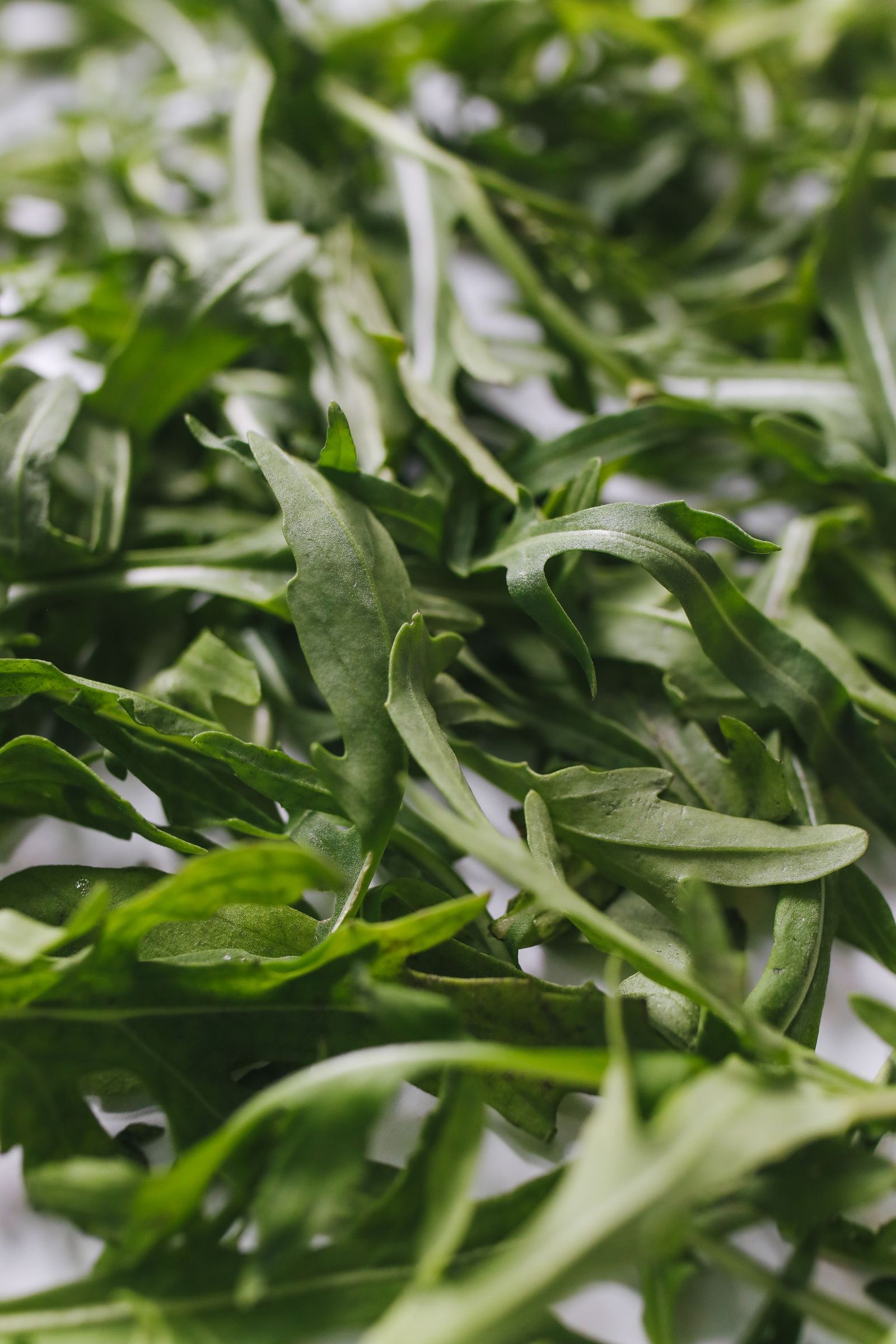
Photo: Polina Tankilevitch / Pexels
Arugula spacing is not one number, because arugula is not one harvest. The same bed can be cut as baby leaf at 3 weeks, picked as full leaves at 6, or left to grow into large plants for seed, and each harvest has its own correct distance. The anchor for this page is the University of Delaware Cooperative Extension's Grow Your Own arugula factsheet, read in full for this article: a minimum plant distance of 6 inches in both directions, seed sown a quarter to half an inch deep, direct sown into the bed, and thinned as the plants begin to touch. That 6 inch figure is the planner standard on this page, and the ladder below it is the system: sow thicker than 6 inches, because arugula seed is cheap and germination is patchy, then thin on a schedule where every thinning is itself a harvest of leaves. Around the Delaware standard the published numbers sprawl by purpose, and this page flags them rather than hiding them: production guidance runs wider, seed saving wider still, and baby leaf is not spaced at all in the usual sense.
Our plant spacing chart owns the multi crop table. This page owns the arugula bed.
Interactive tool
Plant Spacing Planner: The Arugula Grid
Arugula is in the crop list below at the University of Delaware Cooperative Extension spacing of 6 inches between plants in rows 6 inches apart, the factsheet minimum plant distance in both directions. Enter your bed size and plan the sow thick and thin ladder before you sow.
8 tomato plants fit this bed
4 plants per row across 2 rows, on a 24 inch grid. Extension spacing for this crop: 24 in between plants, 48 in between rows.
The grid uses the in-row spacing in both directions, the standard square foot layout for raised beds. In open ground, keep the wider row spacing in the note above so you can walk and weed between rows.
Spacing figures: University of Georgia Cooperative Extension, Circular 963, Vegetable Planting Chart, source.
The Planner Standard, and Why It Uses 6 Inches
The planner above carries arugula at the Delaware factsheet spacing: 6 inches between plants, 6 inches between rows, a true grid, because the factsheet gives its minimum plant distance in both directions rather than as a row spacing with a thinner in row figure. That choice suits how home growers actually plant arugula, which is in beds and blocks, not field rows. It also suits the plant: arugula forms a low rosette that fills a 6 inch square at full leaf size without the crowding stress that pushes it to bolt. The factsheet's other figures frame the planting: a cool season crop, sown from mid March to early May in Delaware conditions, wanting soil pH between 6.0 and 7.0, and harvested before flowering, because once the plant bolts the leaves turn harsh. The cultivar the factsheet names, Rocket Wild Roma at 35 days, tells you the tempo: this is a fast crop, and the spacing system below is built for speed, with the thinning ladder timed in weeks, not months.
The Ladder: Sow Thick, Thin to the Harvest You Want
Sow the bed at roughly 1 inch apart, a quarter to half an inch deep, and keep the seedbed moist; arugula germinates in days in cool soil. Then thin by harvest intent. For baby leaf, barely thin at all: the production pattern for baby leaf is a dense stand, cut whole at 3 to 4 inches tall, around 3 weeks, and resown, which is why baby leaf growers treat spacing as a seeding rate rather than a distance. For full leaves, thin in two passes: first to 3 inches as the plants touch, eating the thinnings, then to the full 6 inch grid, eating those too. For maximum size plants and for seed saving, go wider: seed saving guidance in the results thins to 10 inches, because a plant grown for seed needs air and room to branch, and production guidance in the SARE and Cornell manual runs full grown rows 7 to 9 inches apart in wide beds, a commercial echo of the same logic. The conflict in the sources is not an error; it is three different crops wearing one name, and the ladder is how a home grower runs all three from one packet.
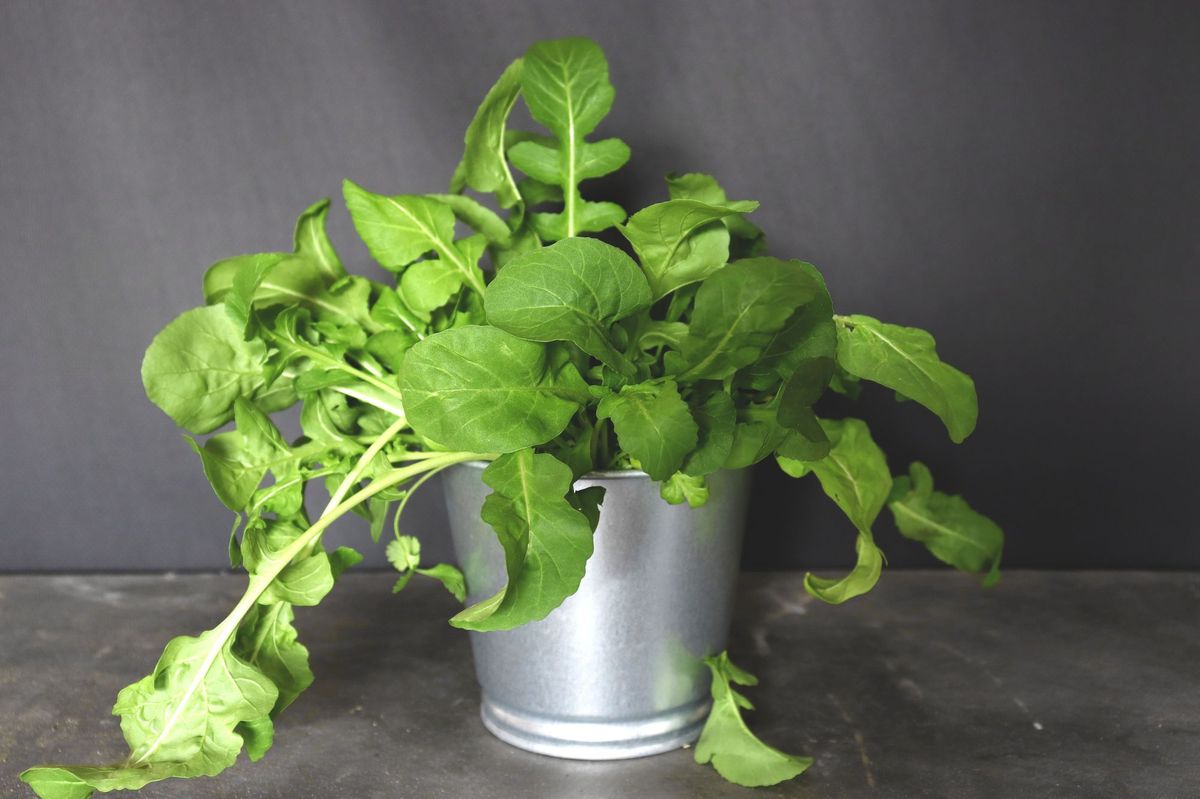
A bunch of freshly cut arugula
Succession, the Bolt Clock, and Where Spacing Fits
Arugula bolts in heat, sending up a flower stalk and turning its leaves peppery to the point of harshness, and the factsheet's harvest before flowering instruction is the clock the whole crop runs on. Spacing interacts with the clock: crowded, competing plants bolt a little sooner, which is one more reason the thinning passes matter, and a baby leaf block can be deliberately crowded because it is cut young, long before the clock runs out. The real yield system is succession. Sow a short row or a square foot every 2 weeks through the cool windows, spring and again from late summer, rather than one heroic bed that ages all at once. Each sowing runs the ladder at its own pace, and the garden gets young, mild leaves continuously instead of a glut of bolting ones. In the heat of midsummer, most growers pause arugula entirely or move it to afternoon shade; a shaded summer sowing bolts slower and tastes better, at the cost of speed. Fall sowings are the connoisseur's crop: cooling nights sweeten the leaves, and the plants hold at the 6 inch grid for weeks of picking before a hard frost, not heat, ends them.
Feeding, Water, and the Picking Rhythm
Arugula is a leaf, and leaves run on nitrogen and even moisture. Work compost into the bed before sowing, keep the stand evenly watered at about an inch a week, and expect the fastest growth in the cool, bright weeks the crop prefers. Dry swings toughen leaves and sharpen flavor past pleasant; a steady supply keeps the rosettes tender. Flea beetles pepper arugula with tiny holes in warm weather; a light row cover from sowing day prevents nearly all of it and lifts for the thinning passes. Picking method protects the spacing investment: for cut and come again harvest at the 6 inch grid, take the outer leaves from each rosette and leave the center growing, and a bed will produce for weeks. For baby leaf blocks, cut the whole stand an inch above the crown and let it regrow once, then resow, because the second regrowth is never as good as a fresh sowing at this crop's speed. Sow thick, thin to the harvest, succeed every 2 weeks, and beat the bolt clock: that is the entire arugula spacing system, and the six numbers in the sources were its six settings all along.
Arugula in Containers and Under Row Cover
Two common arugula setups bend the spacing rules slightly, and both are worth stating. In containers, use the grid figure without the row figure: a wide, shallow box or pot at least 8 inches deep plants on the same 6 inch grid as the planner's standard for full size leaves, or at baby leaf density across the whole surface for a cut and come again box, because a container has no rows to walk and the grid is the only geometry it needs. Keep the container in the coolest bright spot you have; a pot in full afternoon sun bolts its arugula faster than any bed, since the root zone heats with the container walls. Under floating row cover, which many growers lay over arugula against flea beetles, spacing stays as planted but thinning gets harder to do casually, so sow closer to the finish spacing from the start rather than planning to thin through the cover; every lift of the fabric is a door opened for the beetles the cover exists to exclude. The cover also holds humidity against the leaves, which argues for the wider end of any spacing choice beneath it. Neither setup changes the Delaware standard the planner runs on; they change how faithfully you can adjust after sowing, which is why both reward deciding the harvest size before the seed leaves the packet.
Frequently Asked Questions
How far apart should arugula be planted?
At 6 inches in both directions for full leaf harvest, per the University of Delaware Cooperative Extension Grow Your Own factsheet, which gives 6 inches as the minimum plant distance and is the planner standard on this page. Sow thicker, about 1 inch apart, and thin to the grid as plants touch, eating the thinnings. Baby leaf is the exception: sow it dense and cut the whole stand young, around 3 weeks, rather than spacing it at all.
How deep should arugula seed be planted?
A quarter to half an inch deep, per the Delaware factsheet, direct sown into the bed or row. Arugula is not a transplant crop for home growers; it germinates quickly in cool soil and grows so fast that direct sowing wins. Keep the seedbed evenly moist until the stand is up, because a crusted, dried surface in the first week is the usual cause of a patchy bed. A light row cover over the sowing holds moisture and keeps flea beetles off at the same time.
Why do sources give different arugula spacings?
Because they are spacing different harvests. The Delaware factsheet's 6 inches serves full leaf rosettes. Production guidance in the SARE and Cornell manual runs full grown rows 7 to 9 inches apart in wide beds. Seed saving guidance thins to 10 inches so plants can branch and flower. Baby leaf production uses broadcast density with no real spacing at all. None of these contradict each other once the harvest is named; the error is quoting any one of them without saying which crop it belongs to.
When should I sow arugula?
In the cool windows: from early spring, mid March to early May in the Delaware factsheet's terms, and again from late summer into fall. Arugula is a cool season crop that bolts in heat, turning its leaves harsh as it flowers, so midsummer sowings belong in afternoon shade or not at all. Sow a short row every 2 weeks through the windows rather than one large bed, and the succession keeps leaves young and mild. The factsheet's named cultivar, Rocket Wild Roma, matures in about 35 days, which sets the succession tempo.
Can I grow arugula without thinning?
For baby leaf, yes: crowding is the method, and the stand is cut whole at 3 to 4 inches tall. For full leaves, no: an unthinned stand stalls into competing rosettes that stay small, toughen, and bolt early under the stress. The middle path is the ladder on this page, where thinning is not waste but the harvest itself, since every plant you pull at 3 inches is a salad. Thin in two passes, to 3 inches and then to the 6 inch grid, and nothing is thrown away.
Photo credits: Polina Tankilevitch (Pexels); Natali Yakovleva (Pexels). Photos are served from this site; follow the credit to the library page for the original.