Beet Plant Spacing: Sow Thick, Thin Twice, and Finish at 2 Inches
By the Windchime Walker editorial team
Photo: Vero Lova / Pexels
Ask how far apart to plant beets and the honest answer is a process, not a distance. What you buy as beet seed is not a seed at all but a dried fruit cluster containing several true seeds, which is why a carefully spaced sowing still comes up in tufts, and why the crop's success is decided not by the sowing but by the thinning. This page gives beet spacing as the system it really is: the sow, the two thinning passes, the final spacing at one named standard, and the succession rhythm that keeps beets coming for months instead of all at once.
Our standard is the University of Georgia Cooperative Extension Circular 963: beets thinned to 2 inches between plants, rows 18 to 36 inches apart, sown 1/2 inch deep, 55 to 65 days to harvest. Our plant spacing chart carries beets in the full vegetable list; this page owns the beet row and the thinning craft that makes it.
Interactive tool
Plant Spacing Planner: The Beet Row
Beets are in the crop list below at the University of Georgia Cooperative Extension final spacing of 2 inches between plants after thinning. Enter your bed or row size and plan the row your thinning will finish.
8 tomato plants fit this bed
4 plants per row across 2 rows, on a 24 inch grid. Extension spacing for this crop: 24 in between plants, 48 in between rows.
The grid uses the in-row spacing in both directions, the standard square foot layout for raised beds. In open ground, keep the wider row spacing in the note above so you can walk and weed between rows.
Spacing figures: University of Georgia Cooperative Extension, Circular 963, Vegetable Planting Chart, source.
The Numbers, With the Conflict Flagged
Stage
Spacing
Notes
Sowing
Seeds about 1 in apart, 1/2 in deep
Clusters, so expect tufts whatever you do
First thinning
To about 1 in between seedlings
When seedlings stand about 2 in tall
Final thinning
2 in between plants (this site's standard)
University of Georgia Extension, Circular 963
Rows
18 to 36 in in the ground; closer in beds
Planner uses 27 in as the working middle
Harvest window
55 to 65 days from sowing
Roots at golf ball size are the sweetest
The flag, stated plainly: many grow guides and seed packets tell you to thin beets to 3 or 4 inches, and gardeners following them grow fine beets, larger ones, in fact. We keep the Georgia 2 inch figure in the planner because it is this site's cited standard and because it suits the way home gardeners actually eat beets, picked young at golf ball size, where 2 inches is room enough and the bed yields more roots per foot. If your household wants big storage beets for winter, thin to the wider figures with a clear conscience and a citation; what you may not do is skip thinning altogether, because a cluster left to fight itself produces three stunted roots instead of one good one, every time.
The Cluster Seed, and Why Thinning Is the Crop
Each beet cluster germinates into a small crowd, two to five seedlings shoulder to shoulder, and underground the same crowding waits: roots that touch early swell against each other, fork, and stall. Thinning is therefore not tidying; it is the moment the harvest is chosen. Do it in two passes. The first pass, when seedlings are about 2 inches tall, takes each tuft down to its strongest seedling and spaces the row to about an inch, which is quick, rough work. The second pass, a week or two later, sets the final 2 inches, and by then the pulled seedlings are big enough to be the point: beet thinnings, greens and marble sized roots together, are one of the garden's genuine delicacies, steamed whole or dropped into salads. A gardener who eats the thinnings never experiences thinning as waste, and beets get thinned on time in that garden.
Technique matters because beet roots resent disturbance: thin after watering or rain, when the soil releases roots easily, pinch or snip the losers at soil level rather than pulling where roots are tangled, and firm the soil back around the keepers. Delay is the real enemy. Past the first true leaves, crowded roots have already traded size for survival, and a late thinned row never quite catches a row thinned on time.
Sowing: Depth, Timing, and Succession
Sow beets 1/2 inch deep, about an inch apart along the row, and keep the row evenly moist until germination, which takes 5 to 10 days in warm soil and stretches toward three weeks in cold spring ground; a board or a strip of row cover over the row holds the moisture that a crusting surface loses. Beets are a cool season crop: sow from a few weeks before last frost through spring, pause in real summer heat when germination fails and roots grow woody, and sow again from about 8 weeks before first fall frost for the sweetest roots of the year, since cool nights concentrate the sugars that make beets taste like beets.
Succession is the system that turns one row into a season: sow a short row every 2 to 3 weeks instead of the whole packet in April. Each sowing is picked at its own peak and cleared, the bed yields steadily instead of glutinously, and no root sits in the ground growing woody while you work through its elders. The planner on this page counts a row at the final spacing, which is the count that matters for seed buying: a 10 foot row finishes at about 60 plants, and a packet holds several successions' worth of clusters.
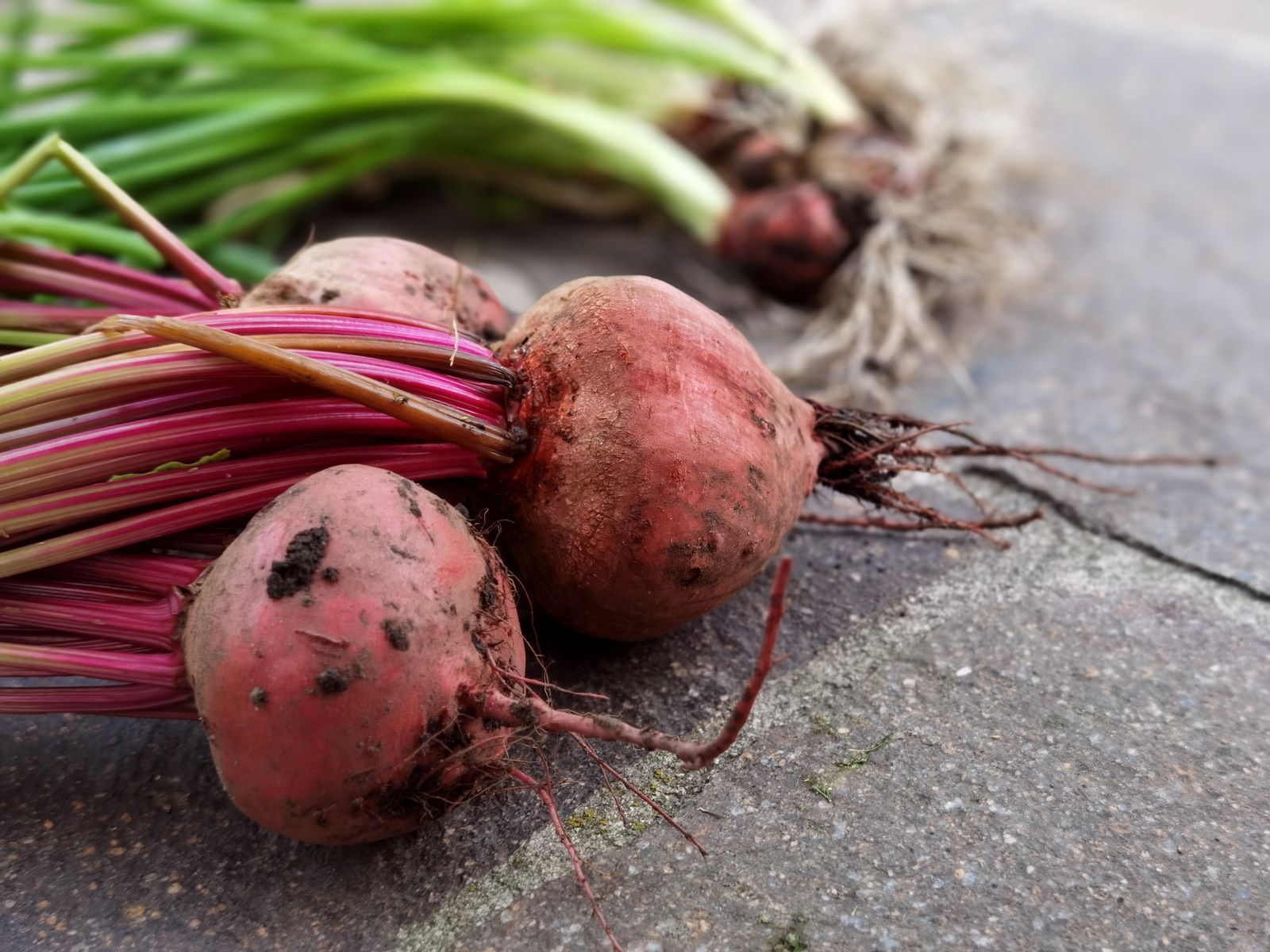
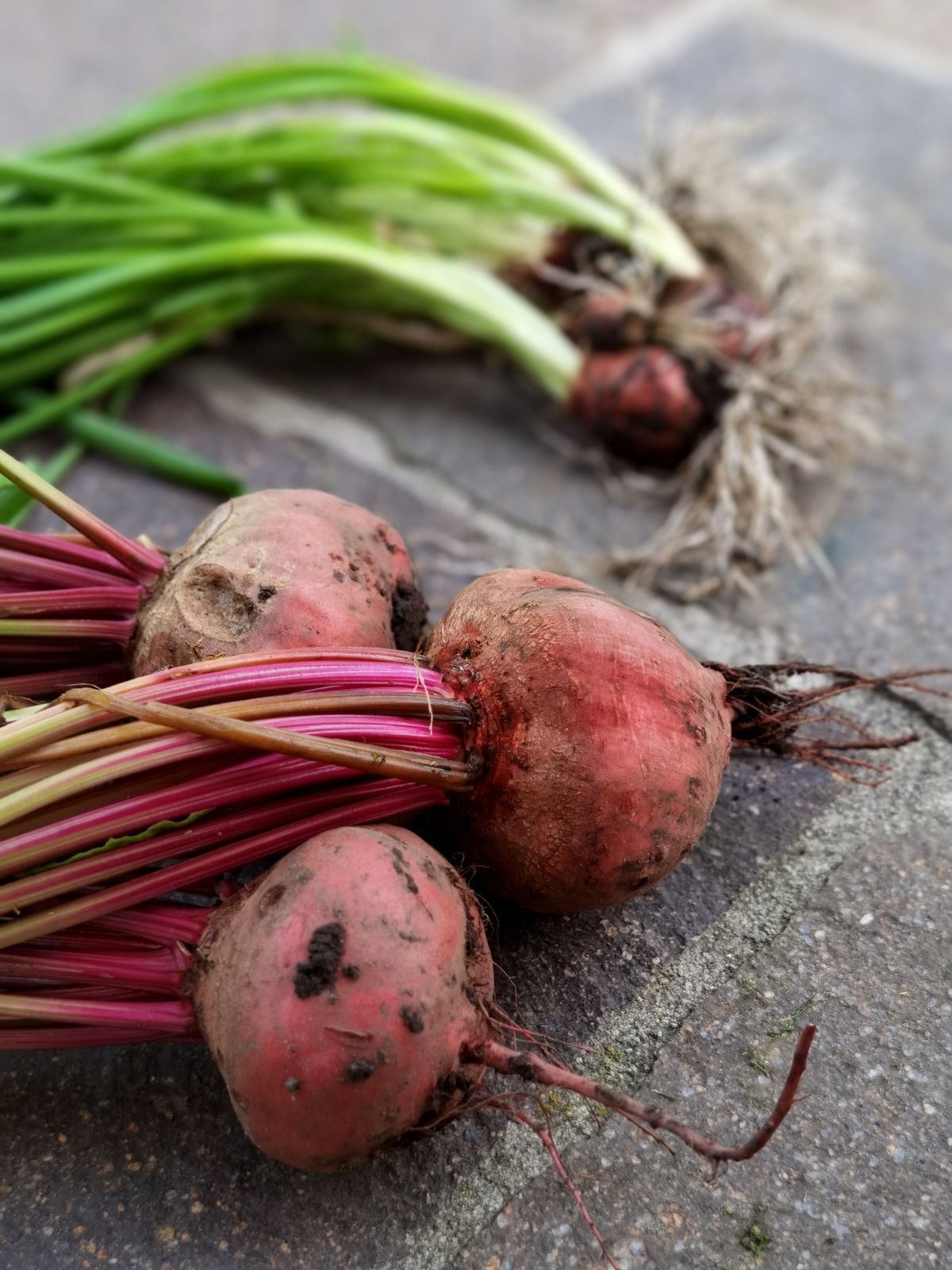
A bunch of just picked beets with roots and greens attached
Growing On: Water, Weeds, and the Greens
Beets want even moisture, because a root that grows through drought and then drinks deeply can split and turns woody at the core; an inch of water a week and a mulch once the row is thinned keep the growth steady that sweetness requires. Weed early and shallowly, since the young roots sit close to the surface and a deep hoe is a thinning of the wrong kind. And grow beets as the two crops they are: the greens are cut spinach's equal, harvested a few outer leaves at a time from plants also growing roots, as long as you never strip a plant bare, because the root below is fed by the leaves above. A row thinned and picked with both harvests in mind yields more food per foot than almost anything else in the spring garden.
Harvest at Golf Ball Size
Georgia allows 55 to 65 days, and the calendar is the backup signal; the root's shoulder is the real one. When the crown pushes up at golf ball size, about 1.5 to 2 inches across, the root is at its sweetest and most tender. Pull a test beet rather than guessing the row. Beets forgive a late harvest better than most roots, growing to tennis ball size with some woodiness at the core, which cooking handles and salads do not. For storage, the fall sowing is the keeper crop: twist the tops off rather than cutting, leave the tail root whole, and store unwashed in damp sand or a perforated bag in the cold, where they hold for months.
The Beet Year: Two Windows on One Calendar
Run the row twice a year and the beet becomes a staple rather than an event. The spring window opens a few weeks before last frost, when the soil can be worked: sow the first succession then, repeat every 2 to 3 weeks, and expect the last spring sowing to size up just as heat arrives, which is the signal to stop. Through the summer the bed belongs to other crops, and the beets you eat are the spring rows pulled young and the ones you pickled. The fall window opens about 8 weeks before first frost, with one or two generous sowings rather than a drip of successions, because the cooling season slows growth and stretches the harvest: roots size steadily, sweeten as nights cool, and then hold in the cold ground for weeks, a living storage that asks no cellar. A light mulch over the fall row after a hard frost extends the pulling into early winter in most gardens. Two windows, one packet or two, and the beet row has covered the table for three seasons of the year, which is what a spacing system is ultimately for: not a number, but a rhythm the garden can keep.
Beets in Containers and Tight Spaces
The beet is one of the roots that genuinely accepts a container: a pot or box at least 8 to 10 inches deep, filled with loose, stone free mix, sown at the same inch and thinned to the same final 2 inches, with rows or a grid as the container's shape allows. The container's demand is the bed's demand with the volume turned down: even moisture, checked more often, because a pot dries from all sides and a beet that rides a drought and flood cycle splits in a pot as faithfully as in the ground. For the smallest spaces, the greens alone justify the sowing: a dense patch sown thick and cut as baby greens, unthinned on purpose, is a different crop wearing the same seed, and it is the one case in this whole article where skipping the thinning is the plan rather than the failure.
Frequently Asked Questions
How far apart should beets be planted?
Thin them to a final 2 inches between plants at this site's standard, the University of Georgia Extension figure, in rows 18 to 36 inches apart. Guides that say 3 to 4 inches are growing larger storage roots; both are defensible, and skipping thinning entirely is the only spacing answer that is simply wrong.
Why do my beet seeds come up in clumps?
Because a beet seed is a cluster fruit holding several true seeds, and each cluster germinates as a tuft. This is the plant's nature, not your sowing error, and it is exactly why thinning, not sowing precision, is the skill that decides the crop.
When should I thin beets?
Twice: first when the seedlings stand about 2 inches tall, taking each tuft to its strongest seedling, and again a week or two later to the final spacing. Eat the second thinnings. Thinning late, after roots have crowded past the first true leaves, permanently costs size.
How deep and when do I sow beet seed?
Sow 1/2 inch deep, about an inch apart, from a few weeks before last frost in spring and again from about 8 weeks before first fall frost. Keep the row moist until germination. Beets are a cool season crop; midsummer sowings germinate poorly and grow woody roots.
Why are my beets all tops and no roots?
Crowding is the first suspect: an unthinned row pours everything into leaves. Heat is the second, since beets in hot weather stall underground, and fresh nitrogen heavy feeding is the third, pushing leaf at the root's expense. Thin on time, sow in the cool windows, and feed moderately.
Can I grow beets in a raised bed?
Very well. In a bed, keep the 2 inch final spacing and set rows as close as 12 to 18 inches, since bed soil is worked across its whole surface. Beds suit beets especially: the loose, deep, stone free soil is what straight, round roots are made of.
Photo credits: Vero Lova (Pexels); Vero Lova (Pexels). Photos are served from this site; follow the credit to the library page for the original.