Container Gardening for Beginners: The Full Method, From Pot to Harvest
By the Windchime Walker editorial team
Photo: Richa Varshney / Pexels
Container gardening is usually taught as a list of tips, and it deserves better, because it is not a collection of tips. It is a method with a logic: a plant in a pot lives in a small, artificial soil volume that you entirely control and entirely maintain, which means containers reward system and punish improvisation in a way garden beds forgive. Get the system right and a patio of pots out produces a beginner's first bed. Get it wrong and the same patio is a row of thirsty, hungry plants in expensive buckets. This page teaches the system whole.
Our gardening for beginners in pots guide owns the first pots fleet start: the few pots, the first plants, the first week. This page owns the full method that fleet grows into: materials, sizing, mix, and the rhythm of water and food that containers demand.
Interactive tool
Container Soil Calculator: Fill Every Pot on the List
You sized the pots from the table in this guide. Enter each container's length, width, and fill depth and get the total volume in cubic feet and the bag count, so the mix order matches the fleet instead of surprising it.
32.0 cubic feet of soil
That is 1.19 cubic yards in bulk, or about 22 bags at 1.5 cubic feet or 16 bags at 2 cubic feet.
Filling a new bed with a 60/40 mix: 19.2 cubic feet of topsoil and 12.8 cubic feet of compost.
Loose soil settles after the first few waterings. Most gardeners add roughly a tenth more than the raw volume and top the bed up in the second season.
The math is plain geometry: length times width times depth. One cubic yard is 27 cubic feet. Bag counts are rounded up, because a half filled bed helps no one.
The Pot: Material Is a Watering Decision
Every pot material is a choice about how fast the container dries, and therefore about your summer. Terracotta breathes through its walls, dries fastest, and keeps roots cool and aerated; it suits herbs, Mediterranean plants, and overwaterers, and it asks for the most frequent watering and can crack in hard freezes. Glazed ceramic holds moisture longer, weighs more (a virtue on windy balconies), and costs more; it suits thirsty vegetables and flowers. Plastic and resin are light, cheap, and moisture retentive, and they are the practical choice for large containers that must be moved; dark plastic in full sun can overheat roots, so light colors earn their keep in hot climates. Fabric grow bags air prune roots and are nearly impossible to overwater, dry nearly as fast as terracotta, and fold away in winter; they are the beginner's best value for vegetables. Wood insulates well and looks right everywhere and rots on a schedule of years, which most growers accept. Whatever the material, one feature is non negotiable and it is the next section's whole subject.
Drainage Is Law
A container without a drainage hole is not a container; it is a slow drowning arranged in advance. Roots sitting in the water that collects at a hole free pot's base rot, and the plant above them yellows and stalls while its owner waters more carefully into the same trap. Every pot gets a hole, or serves as a decorative cachepot around a plain pot that has one, lifted out for watering and never left standing in its own runoff. The old advice to put gravel in the bottom for drainage is retired: a gravel layer does not improve drainage, it raises the water table inside the pot and shrinks the root volume, a result soil science has demonstrated and extension guidance now repeats. What improves a container's drainage is the mix itself, which is the section after next, and a hole with nothing over it but, if mix escapes, a single piece of mesh or a coffee filter, never a plug of gravel or shards.
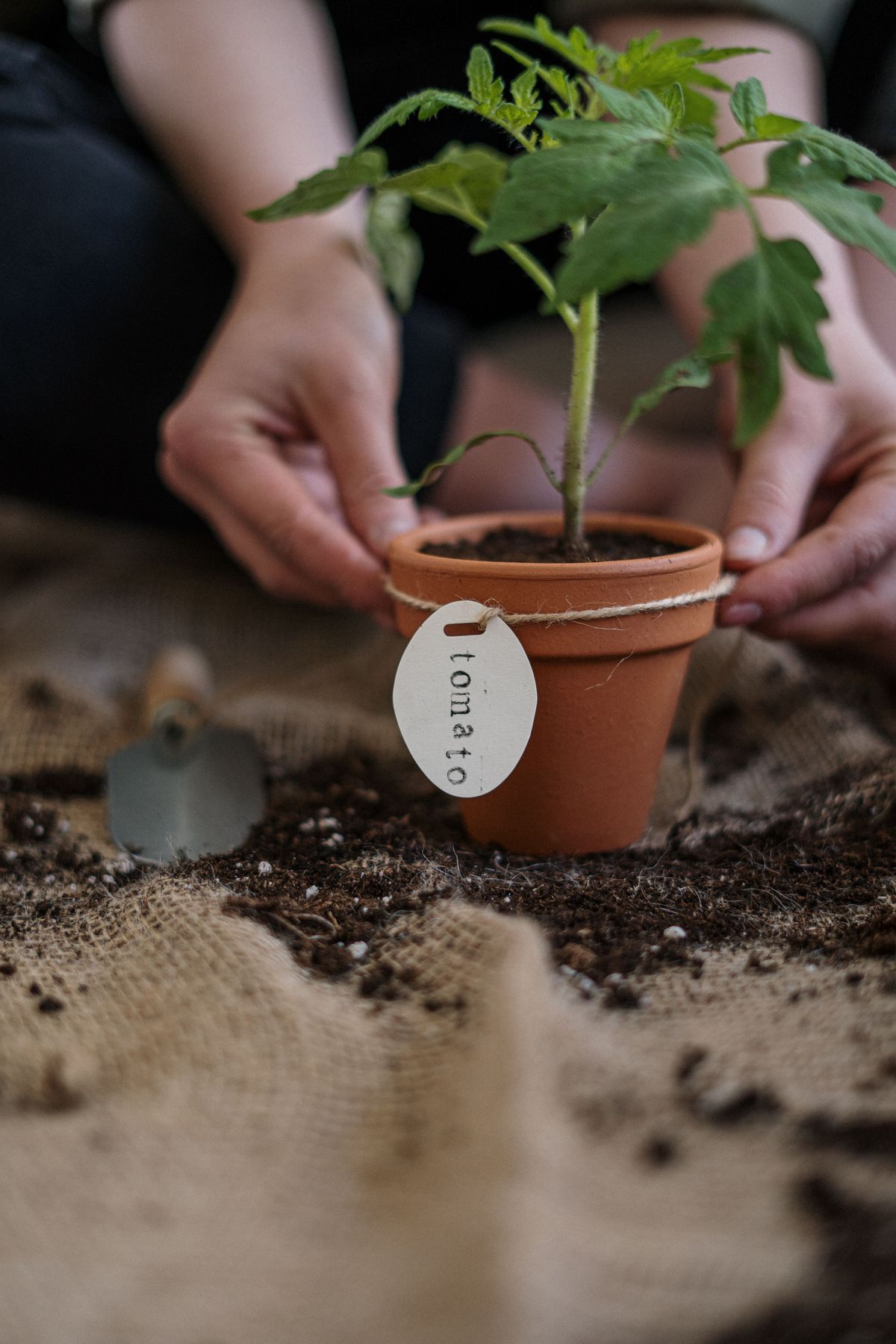
Hands planting a tomato seedling into a pot
Size: the Crop by Crop Table
Pot size is the beginner's most common container error, almost always too small, because small pots look tidy in spring and become a twice daily watering sentence in July. Virginia Cooperative Extension's container guidance, the anchor for the table below, sizes containers to the crop's root system and water demand rather than to the seedling's current height.
Crop
Minimum container
Notes
Herbs (basil, parsley, cilantro)
1 gallon per plant
Basil wants the gallon in summer heat
Mint
2 gallons, alone
Always alone; it takes any shared pot
Lettuce and salad greens
1 to 2 gallons, wide and shallow
Several plants per wide pot
Peppers
3 to 5 gallons
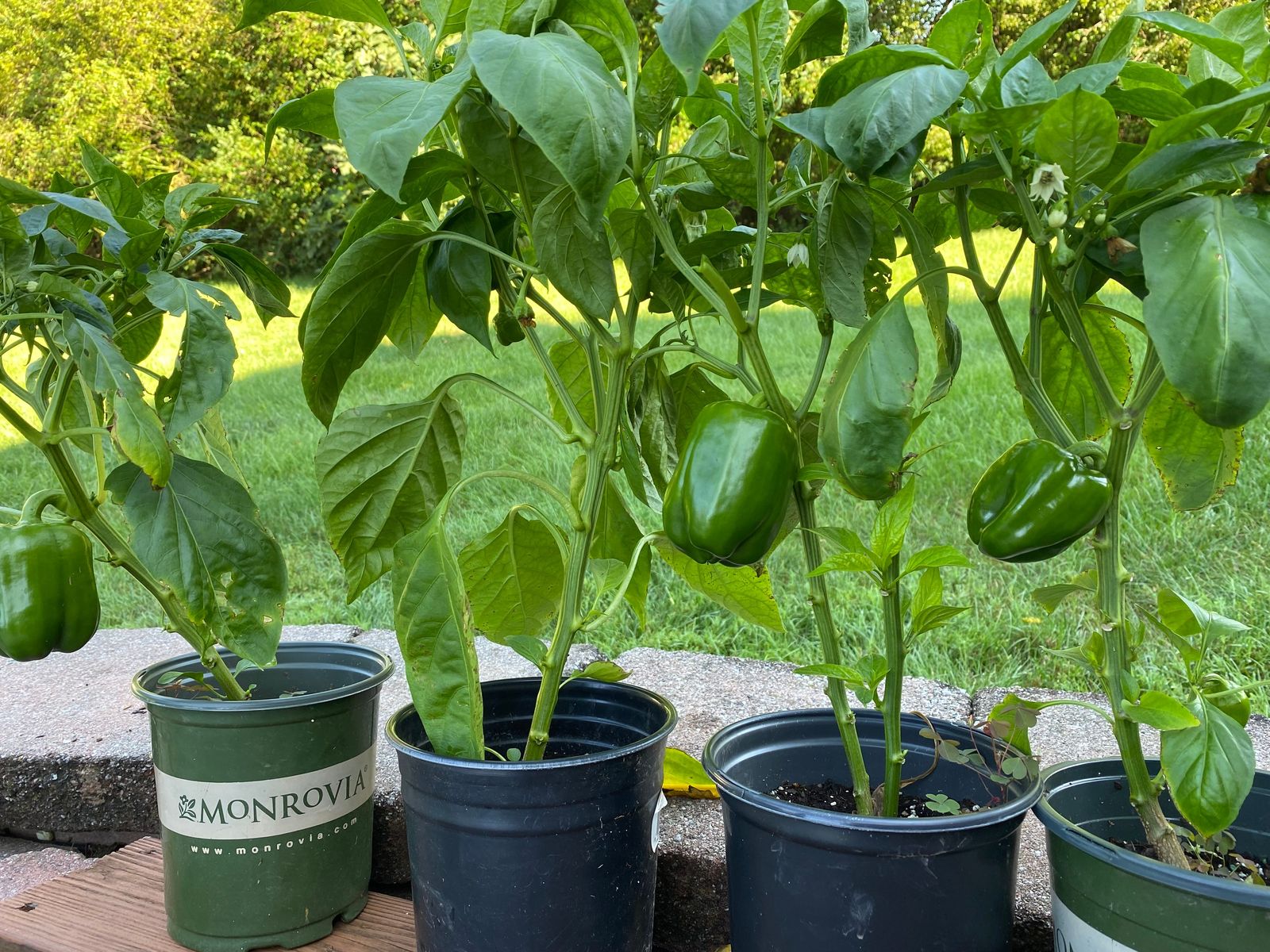
The 5 gallon end yields noticeably more
Tomatoes, determinate
5 gallons
Indeterminate types want 10 or a grow bag
Cucumbers
5 gallons, with a trellis
One plant per pot
Zucchini and squash
5 to 10 gallons
One plant; it becomes the patio's landlord
Beans, bush
3 to 5 gallons
Several plants per wide pot
Carrots
2 to 3 gallons, deep
Depth matters more than width
Strawberries
2 to 3 gallons or a pocket planter
Shallow roots, many plants
Flowers, annual
1 gallon per plant, roughly
Mixed plantings share by volume
When between sizes, take the larger: the cost of a bigger pot is paid once, and the cost of a smaller one is paid in watering labor and stunted plants all season.
The Mix: Never Garden Soil
Fill containers with potting mix, a soilless blend of peat or coir, bark, and perlite, and never with garden soil or topsoil, however good the garden. Soil in a pot compacts into a dense brick that drains poorly, because the structure that keeps it open in the ground, the depth, the worms, the freeze and thaw, does not exist in a container. Potting mix is engineered to hold water and air at the same time in a shallow volume, which is the entire technical problem of container growing. For vegetables, a mix with compost blended in, or plain mix plus a third compost, gives a nutrient base the season builds on. The calculator on this page turns your pot list into fill volumes, because the second beginner surprise after pot size is how much mix a fleet of pots swallows: buy by the cubic foot, compare the big bag's unit price honestly, and expect a 5 gallon pot to take roughly two thirds of a cubic foot once settled.
The Rhythm: Water and Food on Container Time
Containers run on a faster clock than beds, and the rhythm is the method's beating heart. Water: a pot in summer sun can dry in a day, and the check is daily, a finger 2 inches down or the pot's lifted weight, with watering done thoroughly in the morning until it drains. Self watering containers and drip lines on a timer are legitimate systems, not cheating, and for vacations they are the difference between a harvest and a loss; a trusted neighbor with clear instructions is the other classic system, and the instruction that matters most is the drainage one. Food: every watering leaches nutrients out of the pot's small volume, so container plants are fed steadily, a slow release fertilizer worked into the mix at planting plus a half strength liquid feed every week or two in the growing season for vegetables and flowers. The pale, stalled container plant in midsummer with adequate water is almost always hungry, and it is hungry because the method guarantees it: you are the soil now, and the soil's pantry is your schedule.
Sun, Wind, and the Microclimate You Actually Have
A container garden's climate is measured at the pot, not the property. Six hours of direct sun remains the rule for fruiting vegetables, and containers add two wrinkles: they can be moved to chase it, which is their superpower in a partly shaded yard, and they suffer wind and reflected heat in ways beds do not. A pot against a sun baked wall gets the wall's stored heat as a bonus in spring and a punishment in August; a pot on a windy balcony dries from the sides as well as the top, which is an argument for glazed or plastic over terracotta there. Group pots together in summer: the cluster shades its own pots, slows everyone's drying, and creates the little humidity pocket plants prefer. And weigh the wind honestly before placing tall pots, because a top heavy tomato in a light plastic pot on a balcony is a plant that will, on a specific gusty night, lie down.
The Seasonal Reset
The method ends the year with a reset that sets up the next. At season's end, empty spent annual pots: the mix from healthy plants can be refreshed with a third new mix and compost and used again for a season or two, while mix from diseased plants goes out and its pot gets scrubbed before reuse. Terracotta and ceramic come under cover or indoors where freezes bite, because a wet pot in a hard freeze is a cracked pot. Perennials in pots in cold climates need their own plan, since roots in a container experience roughly a zone colder than the ground; the classic answers are the biggest pot you can give them, clustering and wrapping the pots, or sinking pot and all into a garden bed for the winter. Keep notes as you reset: which pot sizes starved which crops, which corner baked, which mix you will not buy again. The second year of a container garden run on notes beats the first year run on enthusiasm by a margin that surprises everyone who tries it.
The Vacation Problem, Solved in Advance
Containers punish absence more than any other garden, because a bed draws on the ground's reservoir and a pot draws only on yours. Solve vacations before they arrive, in layers. For a weekend, the deep water and cluster method suffices: water everything thoroughly, group the pots in shade, and mulch the surfaces. For a week, add a system: self watering pots for the thirstiest crops, drip lines on a battery timer for the fleet, or wicking setups and water reservoirs for individual pots, all tested for several days while you are still home, because an untested system is a hope, not a system. For longer, the neighbor protocol: a person, a walkthrough, written instructions that lead with the drainage and thoroughness rules rather than a schedule, and a harvest invitation, because a neighbor allowed to pick the tomatoes checks the tomatoes. The container garden that survives its owner's holidays is designed for them in spring, not rescued in August.
Frequently Asked Questions
What is the biggest mistake beginners make with container gardening?
Undersizing the pot and watering by calendar. A small pot in summer sun dries daily and stunts the plant no matter how faithfully it is watered. Size the pot to the crop's mature needs from the table above, check moisture daily with a finger or by weight, and water thoroughly when the top couple of inches are dry.
Can I use garden soil in pots?
No. Garden soil compacts in containers, drains badly, and suffocates roots, whatever its quality in the ground. Use potting mix, a soilless blend built to hold water and air together in a shallow volume, and blend in compost for vegetables. The calculator on this page sizes the fill so the right material can be bought in the right amount.
Do containers really need drainage holes?
Yes, without exception. A hole free pot collects water at its base and rots roots while the surface looks fine. Use decorative pots as cachepots around a plain drained pot, skip the gravel layer (it raises the water table inside the pot rather than helping), and never leave a plant standing in its runoff.
How often should I fertilize container plants?
Steadily, because watering leaches the small soil volume clean. A slow release fertilizer at planting plus a half strength liquid feed every one to two weeks in the growing season is the standard rhythm for vegetables and flowering annuals. A pale, stalled plant with adequate water in midsummer is usually hungry, not thirsty.
What are the best first crops for containers?
The forgiving producers: a determinate tomato in 5 gallons, a pepper in 3 to 5, bush beans in a wide pot, lettuce and herbs in gallons, and one zucchini in the biggest pot you own if you want the full comedy and abundance of the method. Mint is the easiest plant of all and always gets its own pot, because it takes shared pots entirely.
Can I reuse potting mix next year?
Yes, with judgment: refresh healthy mix with about a third new mix and fresh compost, and retire mix from diseased plants entirely, scrubbing their pots before reuse. After two or three seasons even refreshed mix tires and compacts, and replacing it wholesale restores the drainage the method depends on.
Photo credits: Richa Varshney (Pexels); cottonbro studio (Pexels). Photos are served from this site; follow the credit to the library page for the original.