Container Gardening Soil: One Base Mix, Adjusted Per Plant Family
By the Windchime Walker editorial team
Photo: Anna Shvets / Pexels
Container soil advice is a pile of ratios, 1:1:1 here, 40/40/20 there, 2:1:1 somewhere else, and the beginner reasonably asks which one is true. All of them are, for the plants and pots their authors were filling, because a container mix is not a recipe to obey but a balance to strike: water held against air held, fertility against drainage, tuned to what is growing in it. This page replaces the ratio pile with one base mix and a set of adjustments. Learn the base, learn the four adjustments, and you can fill any pot in the house or on the patio without buying a different bag for each. The rules underneath every published ratio agree, and they are the real content: never garden soil alone in a pot, because it compacts into a brick that sheds water and suffocates roots; drainage and air matter more than fertility, which you can add later; and the mix shrinks and exhausts over a season, so it is a consumable, not a permanent asset.
Our container gardening for beginners guide owns the general container method, and our garden soil versus potting soil page owns the product comparison. This page owns the mix itself.
Interactive tool
Container Mix Calculator: Batch the Fleet
One base mix, adjusted per plant family, beats a different bag for every pot. Enter a pot's inside length, width, and fill depth to get its mix volume, then multiply across your fleet before you buy or blend anything.
32.0 cubic feet of soil
That is 1.19 cubic yards in bulk, or about 22 bags at 1.5 cubic feet or 16 bags at 2 cubic feet.
Filling a new bed with a 60/40 mix: 19.2 cubic feet of topsoil and 12.8 cubic feet of compost.
Loose soil settles after the first few waterings. Most gardeners add roughly a tenth more than the raw volume and top the bed up in the second season.
The math is plain geometry: length times width times depth. One cubic yard is 27 cubic feet. Bag counts are rounded up, because a half filled bed helps no one.
The Base Mix
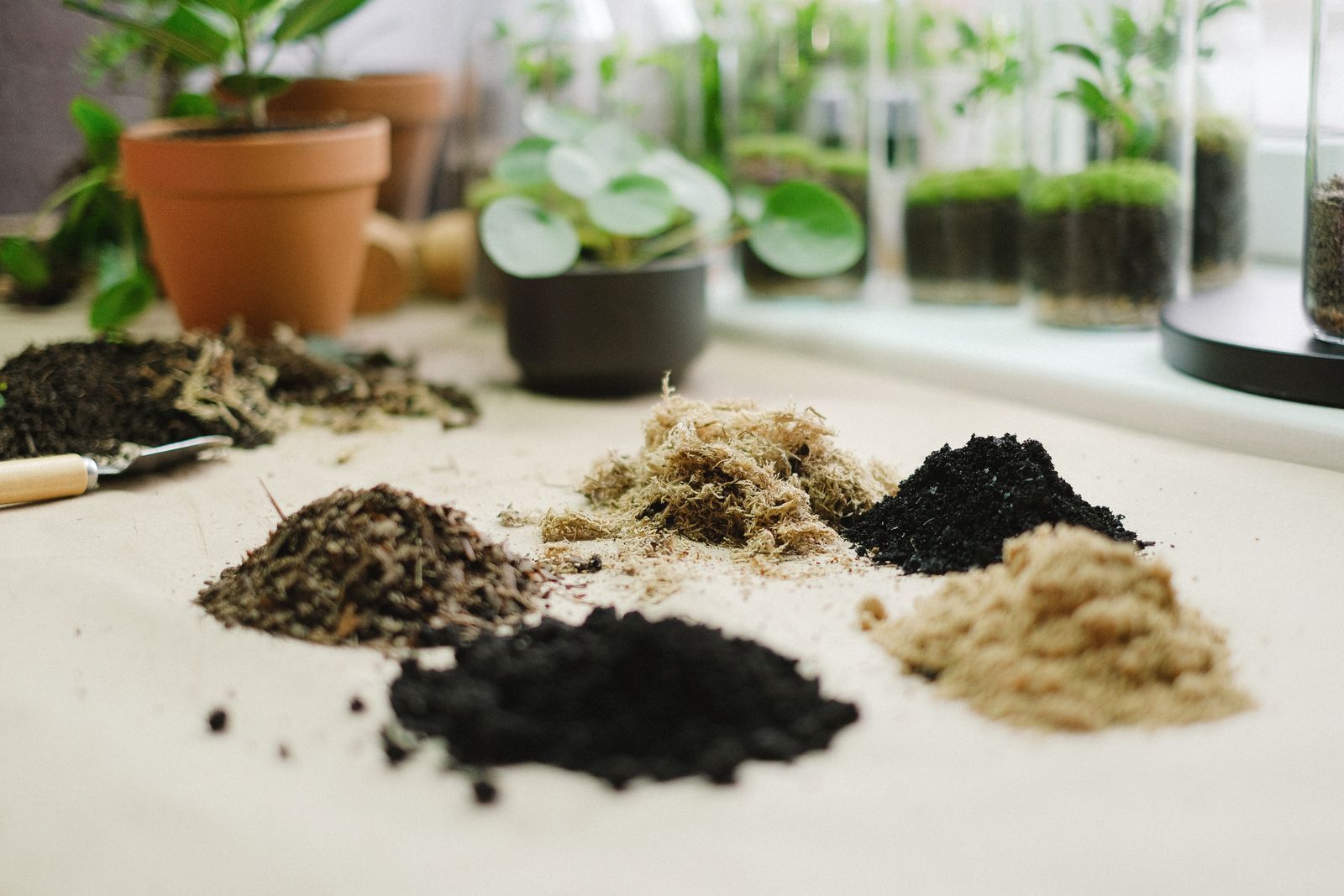
By volume: one part peat moss or coco coir, one part finished compost, one part perlite. The coir or peat is the water bank, holding moisture against the roots. The compost is the fertility and the biology, and it also holds water. The perlite is the air, the white volcanic grit that keeps the mix from packing and keeps drainage open all season. This is the 1:1:1 the guides publish, and as a base for general foliage plants, herbs, and mixed planters it needs no improvement. Two handling notes decide whether it performs as written. Wet the peat or coir before mixing, because dry peat resists water stubbornly and a mix blended dry can shed your first several waterings down the pot walls. And mix in a tub or on a tarp in batches sized by the calculator below, because a fleet of pots filled from five separate small mixes is five different soils wearing one name.
Adjustment One and Two: Grit for Succulents, Moisture for Ferns
Succulents, cactus, and the Mediterranean herbs that hate wet feet get the grit adjustment: take the base mix and cut it with an additional part of coarse grit, pumice, or sharp sand, bringing the mineral share to roughly half the volume. The mix drains fast, dries fast, and matches plants built to drink in pulses and then sit dry. Ferns, peace lilies, and the moisture loving tropicals get the opposite adjustment: add an extra half part of coir or peat and a handful of leaf mold or fine bark, and drop the perlite slightly, building a mix that holds an even moisture without going soggy. The principle is one dial, not two recipes: you are sliding the same base along the drainage axis in the direction the plant family lives. Snake plants and ZZ plants sit near the grit end of the dial for the same rhizome rot reasons their watering pages describe; a fern sits at the far moisture end and still must never be planted in anything that holds standing water.
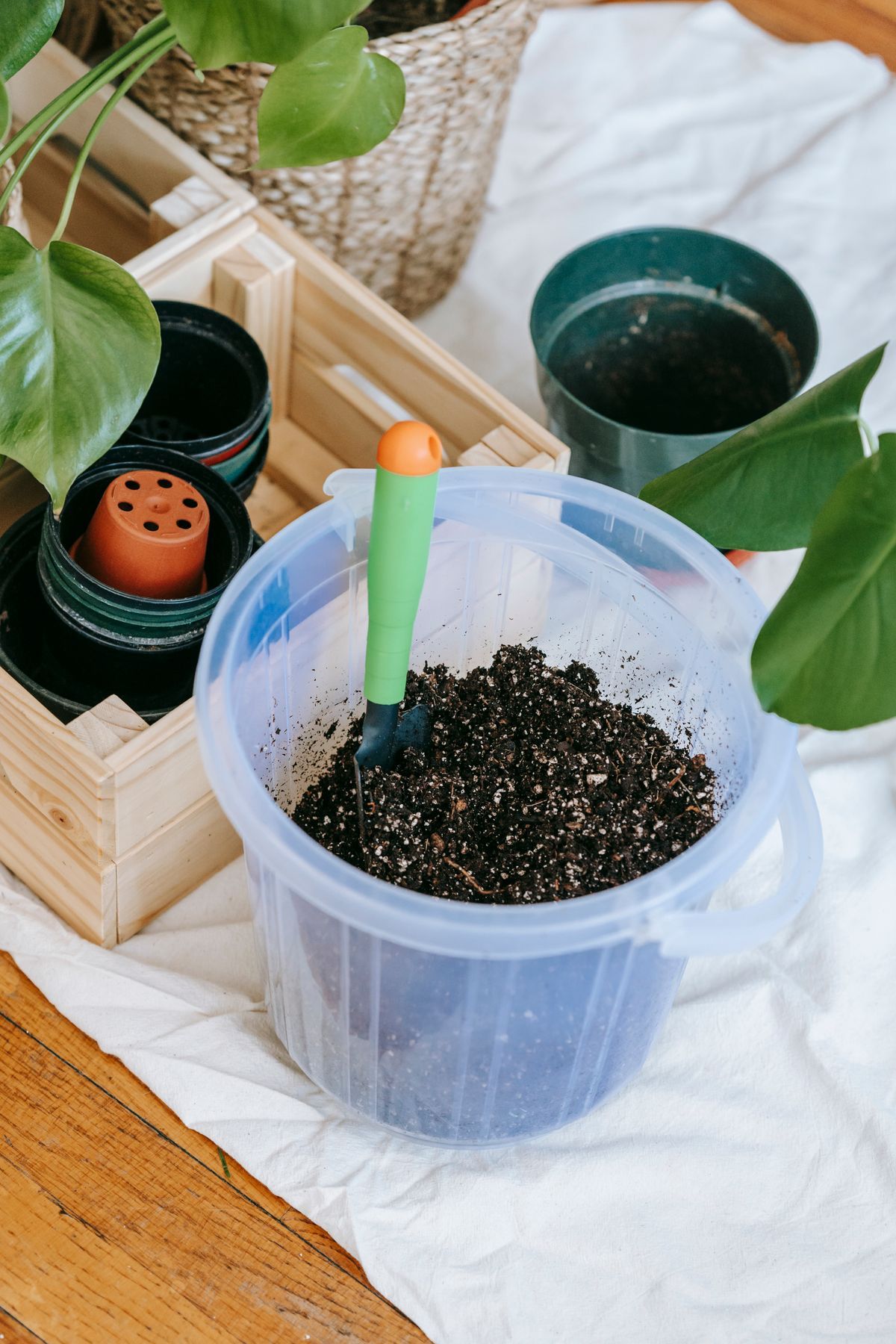
A bucket of potting soil with a spade beside plant pots
Adjustment Three: The Vegetable Version, Built to Feed
Vegetables in containers are heavy feeders in a small volume, and their mix adjustment is about capacity: raise the compost share, to roughly 40 percent of the volume, add a measured dose of slow release balanced fertilizer at planting, and keep the perlite share honest so the extra organic matter does not pack. This is where the 40/40/20 published recipes come from, 40 percent coir or peat, 40 percent compost, 20 percent perlite: they are the vegetable version wearing a ratio. Fruiting crops in pots, tomatoes and peppers and zucchini, also repay a liquid feed rhythm through the season, because a container's fertility washes out the drainage holes a little with every drink. Flowers for cutting and bloom sit between the base and the vegetable version: base mix, a slow release dose at planting, and liquid feeding once flowering starts.
Adjustment Four: Big Pots, Trees, and the Weight Problem
Large containers add a physics problem the ratios ignore: a 20 gallon pot of wet mix is heavy, expensive to fill, and slow to dry at the core. The adjustment is structural, not chemical: keep the mix the same but lighten the lower third with coarse bark chunks, which hold air and drain freely where roots arrive last, and never use the folk trick of a gravel layer at the bottom, which does not improve drainage and instead raises the water table inside the pot, a layer of saturated mix sitting on the gravel where roots rot. Fill big pots where they will stand, because nobody moves them after. And cost the fill before you buy the pot: the calculator below gives the volume per pot in the units bags are sold in, and a fleet of large planters can hold a startling amount of mix, which is an argument for mixing your own base from bales and bulk compost rather than buying it by the small bag.
Year Two: Refreshing Last Season's Mix
Old container mix is not dead; it is depleted, compacted, and full of last year's roots, and throwing it all away every spring is waste the refresh protocol exists to prevent. Tip the pot out, break the root ball apart, and pick out the coarse root mass. What remains is the base for renewal: cut it with a third of its volume in fresh compost, add a fresh share of perlite to restore the air the season packed out, and recharge it with a slow release feed. Refreshed mix is fit for undemanding tenants, foliage plants, herbs, flowers; give the demanding vegetable crops the freshest mix you have and let the refresh cascade down to the easy pots, the same fleet logic as the first fill. Two exceptions never get refreshed into a new crop: mix from a pot where a plant died of root rot or wilt disease, which goes in the bin, not the compost, and mix that has served three or more seasons, whose structure has broken down past what perlite can restore. Retire that to the garden beds, where soil life will finish it kindly.
Bagged Mix: Reading the Label, Fixing a Bad Bag
Most growers will buy bagged mix at least sometimes, and the label is readable once you know the code. A bag that lists coir or peat first, then bark and perlite, is a base mix wearing a brand; a bag whose first ingredient is composted forest products with no aeration listed will run dense and wants a bag of perlite blended in at a ratio of about one part perlite to three parts mix before it touches a pot. Fertilizer charges in premium bags are real but short, a few weeks of feeding, so the season's feeding plan does not change because the bag said plus food. The bad bag diagnosis is worth learning: mix that smells sour or ammonia sharp, that comes out of the bag in a wet brick, or that grows a white mold bloom in storage has gone anaerobic, and it should be spread out to dry and rewet before use, or returned. Fungus gnats riding home in a bag are the other common defect; mix that will live indoors repays a week stored sealed in the sun or a boiling water drench of the portion for indoor pots. None of this argues against bagged mix, which is consistent and convenient; it argues for reading it as an ingredient with properties, the same way this page reads a homemade blend, because the plant cannot tell the difference between a ratio you mixed and a ratio you bought, only between a mix that holds air and one that does not.
Frequently Asked Questions
What is the best all purpose container soil mix?
One part peat moss or coco coir, one part finished compost, one part perlite, by volume. It balances water holding, fertility, and air for general foliage plants, herbs, and mixed planters. Wet the peat or coir before blending, and adjust the base per plant family rather than hunting for a different recipe per pot.
Why do container soil recipes all have different ratios?
Because they answer different questions. The 1:1:1 recipes are general purpose bases; the 40/40/20 recipes are vegetable mixes with a higher compost share for heavy feeders; grittier ratios are succulent mixes. They are one base slid along the drainage and fertility axes, which is how this page teaches you to build them.
Can I use garden soil in containers?
Not alone. Garden soil compacts in a pot into a dense mass that sheds water and starves roots of air. It can be a minor ingredient in a large outdoor planter blend, but the working container medium is a soilless mix of coir or peat, compost, and perlite, built for drainage and air.
How do I adjust potting mix for succulents and ferns?
Succulents get grit: add another part of coarse grit, pumice, or sharp sand to the base mix, to about half mineral by volume, for fast drainage. Ferns get moisture: an extra half part of coir or peat plus leaf mold or fine bark, and slightly less perlite, for even moisture without sogginess.
Can I reuse last year's container soil?
Yes, with a refresh: break out the old roots, cut the old mix with a third of its volume in fresh compost, add fresh perlite and a slow release feed, and cascade it to undemanding plants. Never reuse mix from a pot where a plant died of rot or wilt; bin that mix instead.
Photo credits: Anna Shvets (Pexels); Teona Swift (Pexels). Photos are served from this site; follow the credit to the library page for the original.