Flowers That Bloom All Summer: Sorted by Pattern, Built Into One Border
By the Windchime Walker editorial team
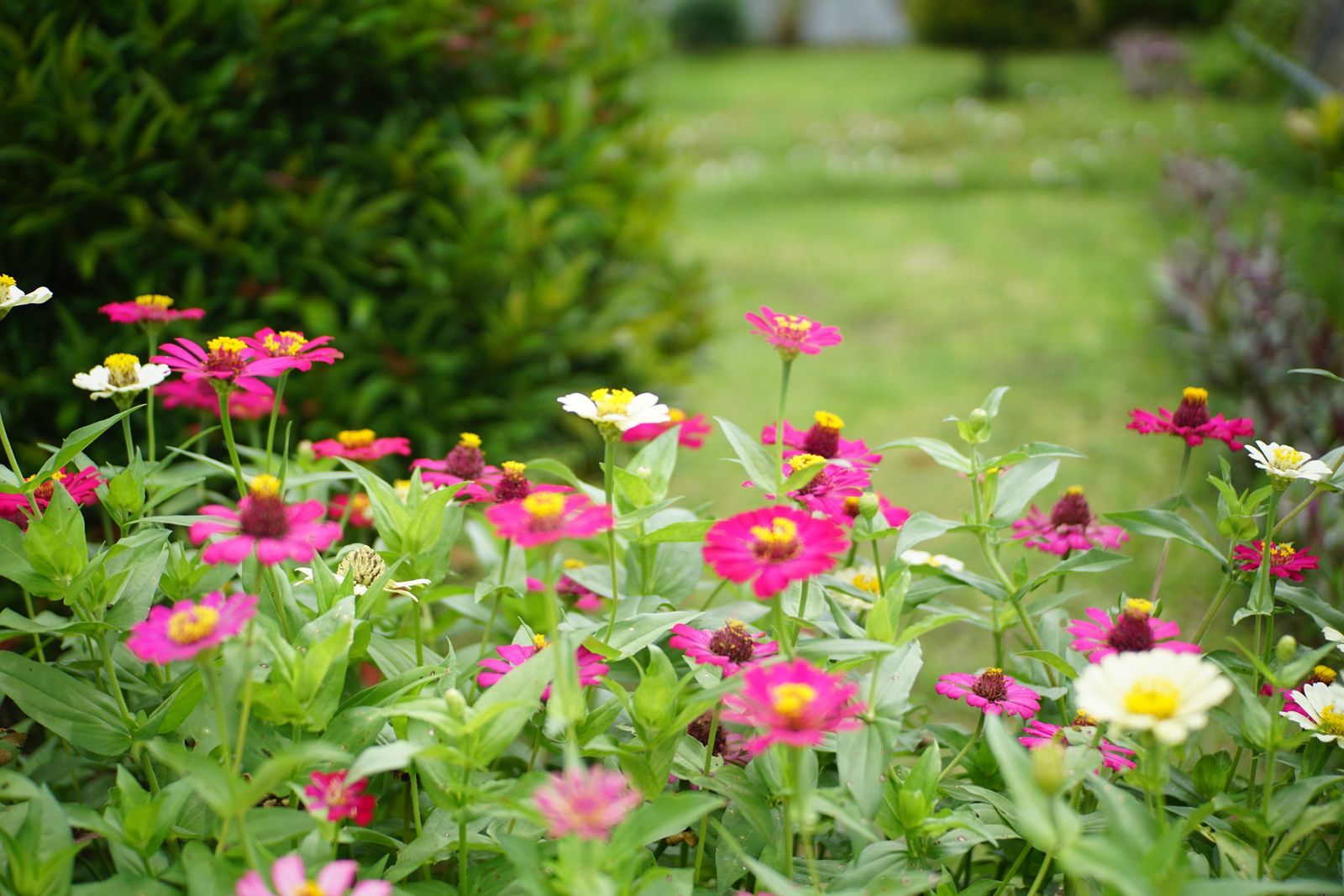
Photo: Agung Sutrisno / Pexels
Here is the honest secret behind every garden that seems to bloom all summer: no plant in it does. Peonies give you a glorious week. Irises give you a fortnight. What the all summer garden actually runs on is relay: plants with different bloom patterns handing the season to each other, so something is always opening as something else rests. Most lists for this query parade twenty or thirty names alphabetically and leave the assembly, which is the entire skill, to you. This page sorts the reliable flowers by how they bloom, states what upkeep each pattern charges, and then builds one border out of them that runs from early summer to frost.
Our first flower bed guide owns the beginner's shortlist for a new bed. This page owns the long season specifically, for the gardener whose bed went quiet in July and who wants to know why, structurally, and what to plant so it never happens again.
Interactive tool
All Summer Bloom Checklist
Check off each step as you finish it. Your progress stays on this page.
0 of 7 complete
0% done
Pattern One: Continuous Bloomers, the Annual Engine
These annuals flower from early summer until frost kills them, with no strategy required beyond keeping them picked or deadheaded lightly. They are the engine of the all summer border, and they are planted fresh every year, which is their price.
Zinnia. The hardest working flower in the summer garden: sown direct after frost about a quarter inch deep, thinned to 8 to 9 inches for dwarf types and about 12 for tall ones per this site's zinnia guide, pinched once at 8 to 12 inches tall for branching, and then cut constantly, because a zinnia cut for the vase responds by branching and blooming again. The wiggle test from our zinnia guide tells you a stem is ripe to cut: it holds stiff when shaken gently. Powdery mildew is its tax in humid weather; spacing and base watering are the mitigation.
Marigold. French types for edging at 8 to 10 inches apart, African types for height at about 12, per our marigold guide, in at least 6 hours of sun. Marigolds bloom from planting to frost with a reliability that makes gardeners take them for granted, and their deadheading ask is minimal: a weekly pinch of spent blooms on your garden walk.
Cosmos. The tall, ferny, self sufficient one: sow it in lean soil, because rich ground grows a green fountain that flowers late and little. Cosmos in poor soil at the back of a border is summer's easiest height, and it self sows for next year if you let the last flowers go to seed.
Petunia, lantana, and verbena. The container and edging corps. Petunias want a midsummer shearing when they go leggy and return in a fortnight. Lantana laughs at heat that stops everything else and blooms until frost in hot gardens. Verbena trails and weaves through its neighbors, stitching the border's front edge together.
Pattern Two: Rebloomers, Bloom in Exchange for Deadheading
These perennials flower, rest, and flower again if you remove the spent blooms before the plant invests in seed. The upkeep is the pattern's price, and it is honest work: a weekly pass with snips.
Salvia. The perennial salvias throw their first great spike show in early summer; shear the spent spikes down to the foliage and a second, smaller show follows in late summer. Skip the shear and the second show is a rumor.
Coreopsis. Threadleaf types bloom in waves across the whole summer if the spent flowers are sheared off in handfuls; left alone they seed themselves into next year's plan, which many gardeners accept as a feature.
Gaillardia, blanket flower. Blooms from early summer to frost in hot, lean, dry spots where other perennials file complaints, and deadheading stretches it further. It is short lived for a perennial but self sows to compensate.
Catmint. Shear after the first flush and it reblooms; its spring to fall arc, foliage included, is why it edges so many famous borders.
Pattern Three: Long Holders, the Perennial Backbone
These do not bloom all summer individually either, but each holds its show for many weeks, and staggered together they cover the season's middle and end while asking almost nothing.
Coneflower. Blooms from midsummer for weeks on end, then holds its seed heads for the goldfinches into fall; our coneflower care guide owns its full routine, lean soil, no fertilizer, deadhead then leave the last flush. A border without coneflower has a hole in August.
Black eyed Susan. The gold of late summer, blooming when the garden is tired of everything else, tough in lean soil and drought, and generous with self sown reinforcements.
Yarrow. Flat topped clusters from early summer, deadheaded into a second round, in foliage that stays handsome when nothing is blooming. Yarrow in rich soil flops; lean ground is its posture coach.
Sedum, the autumn kind. The closer: foliage all season, flowers in late summer deepening into fall seed heads that stand through winter. Every all summer border needs a plant whose best month is September, and this is it.
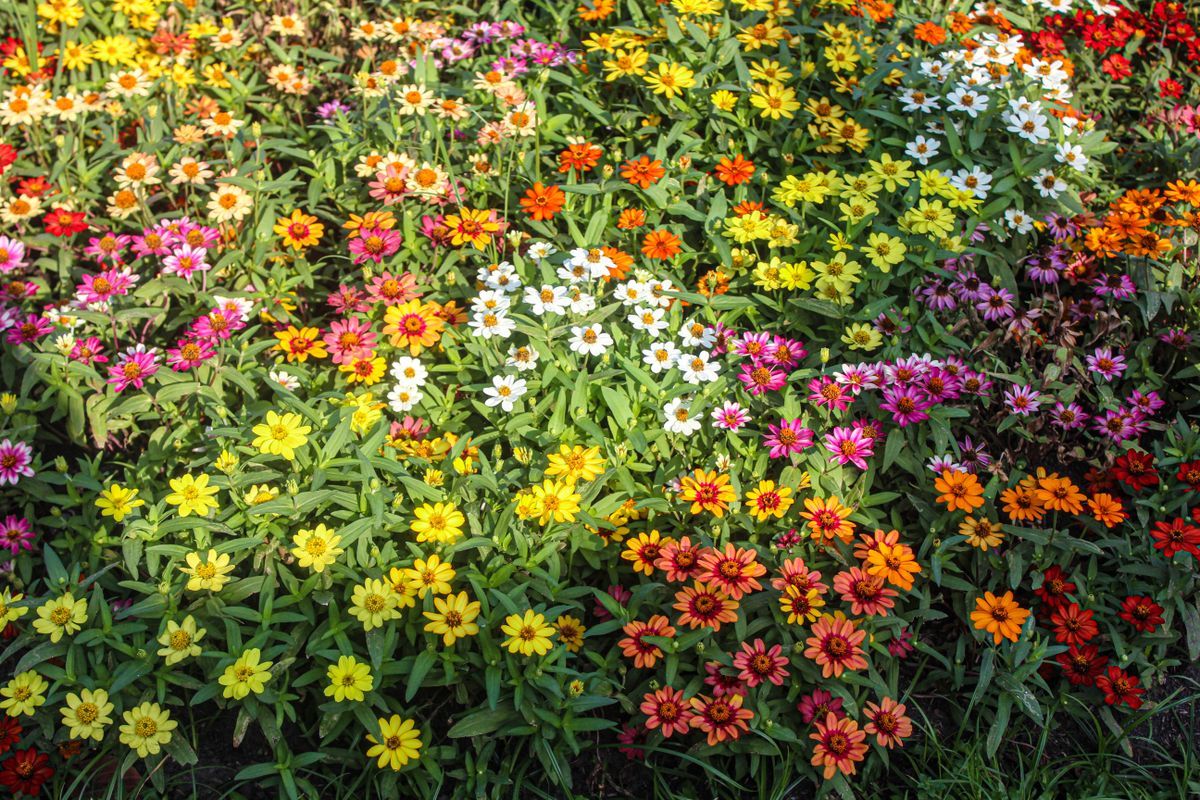
A field of zinnias in full bloom in many colors under sunlight
The Assembly: One Border, June to Frost
Build the border in layers of pattern, not rows of species. The back gets height: cosmos on lean soil, tall zinnias, the autumn sedum's sturdy clumps. The middle gets the backbone: coneflower, black eyed Susan, yarrow, gaillardia, planted in drifts of three or more so each reads as a presence rather than a rumor. The front gets the engine and the stitching: French marigolds, dwarf zinnias, verbena, catmint along the edge. Then check the relay honestly against the calendar: June opens with catmint, salvia, and coreopsis while the annuals size up; July is the annual engine at full throttle with coneflowers joining; August belongs to coneflower, black eyed Susan, gaillardia, and the indefatigable zinnias; September hands to sedum, late salvia, and whatever the zinnias still owe you, until frost closes the account. If any month in your plan has fewer than three things in bloom, that month is your shopping list. That audit, run on paper in winter, is the entire difference between a border that blooms all summer and a bed that has a nice June.
The Upkeep Ledger, Priced Honestly
Continuous annuals charge you a spring planting session and a weekly cutting or deadheading walk, and pay in nonstop bloom. Rebloomers charge the weekly snips in season and pay in perennial permanence. Long holders charge almost nothing beyond their planting year and pay in structure. The pattern beginners get wrong is staffing the whole border with pattern two and then resenting the snips by August, or planting only long holders and wondering why July looks green. Mix the patterns the way you would staff any long job: some who work daily, some who work in shifts, and some who simply never leave.
The Relay in the Ground: Succession and Self Sowers
The border plan assumes you plant once, and the garden improves on the plan by planting continuously. The annual engine rewards succession: a second small sowing of zinnias and cosmos a few weeks after the first lands fresh plants exactly as the first sowing tires in late summer, covering the season's most common gap, the shabby August border full of plants that peaked in July. Mark the succession date when you sow the first batch, because nobody remembers in the June flush that August needs help. Self sowers are the relay that runs itself: cosmos, gaillardia, coreopsis, and black eyed Susan drop seed that becomes next year's volunteers, arriving free, pre adapted to your soil, and in slightly surprising places that often improve on your design. The gardener's part is editing rather than planting: recognize the volunteers in spring, weed around the ones standing in good places, and move or remove the rest without sentimentality. A border with a self sowing corps needs less new seed every year and develops the settled, interwoven look that planted once borders never achieve. Between the planned relay, the succession sowings, and the volunteers, an all summer border is less a flower bed than a small ongoing operation, which is why it keeps blooming when static plantings quit.
The Shady Edge: An Honest Short Paragraph
Everything above assumes sun, because summer long bloom is mostly a sun phenomenon, and the shady border deserves honesty rather than a padded list. In part shade, the relay runs on different runners: impatiens and begonias among annuals genuinely flower from early summer to frost in bright shade, and coleus carries a border on foliage alone, in colors that make flowers feel redundant. Perennial shade bloomers mostly take turns rather than overlap, astilbe into hosta flowers into Japanese anemone, which is a relay of a slower, more elegant kind. Deep shade does not do an all summer flower show, and the gardener who accepts that, and builds the deep shade bed on foliage texture instead, has a better garden than the one still buying sun plants for it every May. Match the ambition to the light, as with every page on this site, and the garden stops disappointing you in the specific way it never promised not to.
Frequently Asked Questions
Is there a flower that truly blooms all summer by itself?
Not really, and any list implying otherwise is selling something. The reliable continuous bloomers are annuals like zinnia, marigold, cosmos, petunia, and lantana, flowering from early summer to frost. Perennials bloom in long shows or in waves with deadheading. An all summer garden is a relay of patterns, assembled on purpose.
What is the easiest flower for nonstop summer color?
Zinnia, for most gardens. Direct sow after frost about a quarter inch deep, thin dwarf types to 8 to 9 inches and tall types to about 12, pinch once at 8 to 12 inches tall, water at the base, and cut flowers constantly: cutting is what keeps a zinnia branching and blooming until frost.
Which perennials bloom the longest?
Coneflower and black eyed Susan hold their shows for many weeks through the middle and end of summer, gaillardia blooms from early summer to frost in lean hot spots with deadheading, and autumn sedum peaks in September. Salvia and coreopsis rebloom in waves if you shear the spent flowers. Our coneflower care guide covers that plant's full routine.
Why did my flower bed go quiet in July?
Because it was planted as a collection of spring and early summer shows with no relay behind them. The fix is structural: add the annual engine (zinnia, marigold, cosmos) for continuous bloom, rebloomers like salvia for waves, and late holders like black eyed Susan and sedum for August and September. Audit the border month by month and plant for the empty month.
Do I have to deadhead to keep flowers blooming?
For the reblooming pattern, yes: salvia, coreopsis, gaillardia, and catmint flower again because spent blooms are removed before seed sets. Continuous annuals need only light deadheading and regular cutting. Long holding perennials like coneflower ask the opposite at season's end: leave the last seed heads for the goldfinches.
What belongs at the front and back of an all summer border?
Height at the back: cosmos, tall zinnias, sedum clumps. The perennial backbone in the middle: coneflower, black eyed Susan, yarrow, gaillardia, in drifts of three or more. The front edge gets the low continuous workers: French marigolds at 8 to 10 inches apart, dwarf zinnias, verbena, and catmint to stitch it together.
Photo credits: Agung Sutrisno (Pexels); Tuyền Nguyễn (Pexels). Photos are served from this site; follow the credit to the library page for the original.