Garden Bed Cover: Which Cover for Which Job, by Weight, Grade, and Season
By the Windchime Walker editorial team
Photo: Boys in Bristol Photography / Pexels
A garden bed cover looks like the simplest purchase in the garden store, a white fabric in a bag, and it is quietly one of the most technical: the same product family protects a tomato from a hard frost, keeps a cabbage moth off your kale for a whole season, and cooks a bed of lettuce to death on a sunny afternoon when it is used wrong. The difference is never the brand. It is the weight of the fabric, the job you bought it for, and how you put it on. This page makes the whole decision on one page.
Our cold frame guide owns the rigid, glazed version of season extension. This page owns the fabric: row cover and frost cloth in all their grades, plus the neighboring products, insect netting, shade cloth, and plastic, that beginners confuse with it.
Interactive tool
Garden Bed Cover Checklist
Check off each step as you finish it. Your progress stays on this page.
0 of 8 complete
0% done
Start With the Job, Not the Product
Job
The right cover
Why
Light frost, a few degrees
Medium weight row cover
Holds warmth at the soil while passing most light
Hard frost, early or late season
Heavy weight row cover
The most frost protection fabric can give
Insects, all season
Light weight row cover or insect netting
A physical barrier pests cannot cross, with the least light loss
Heat and harsh sun
Shade cloth
Cuts light on purpose to cool the crop
Warming soil early
Clear or black plastic, on the soil
A mulch job, not a crop cover; plastic over plants needs a tunnel and venting
Frost and insects are the two jobs row cover was born for. Shade cloth and plastic solve different problems and fail at row cover's jobs: plastic over a crop on a still, sunny day overheats it within hours, and shade cloth stops no insect and holds no frost warmth worth naming. Naming the job first is the entire discipline of this page.
The Weight Grades, in One Chart
Row cover is spunbonded polypropylene, and it is sold by weight in ounces per square yard. Weight is destiny: heavier fabric holds more warmth and passes less light, and there is no grade that does both jobs best.
Grade
Weight
Light passed
Frost protection
Best use
Light
About 0.45 to 0.55 oz
85 to 90 percent
About 2 to 4 degrees F
Insect barrier all season; a whisper of frost help
Medium
About 0.9 to 1.0 oz
About 70 percent
About 4 to 6 degrees F
Spring and fall frost on established crops
Heavy
About 1.5 to 2.2 oz
30 to 50 percent
About 8 degrees F
Hard frost, overwintering, the season's edges
Read the trade honestly: the heavy grade that saves a crop at 24 degrees F also starves it of half its light, so heavy cover is a tool for nights and short cold snaps, not a blanket to leave on for a month. The light grade is the opposite bargain, nearly invisible to the crop's light budget, which is why it can stay on from transplant to harvest as an insect barrier. Medium is the general purpose spring and fall frost grade most home gardens should own first.
Floating Versus Hoops
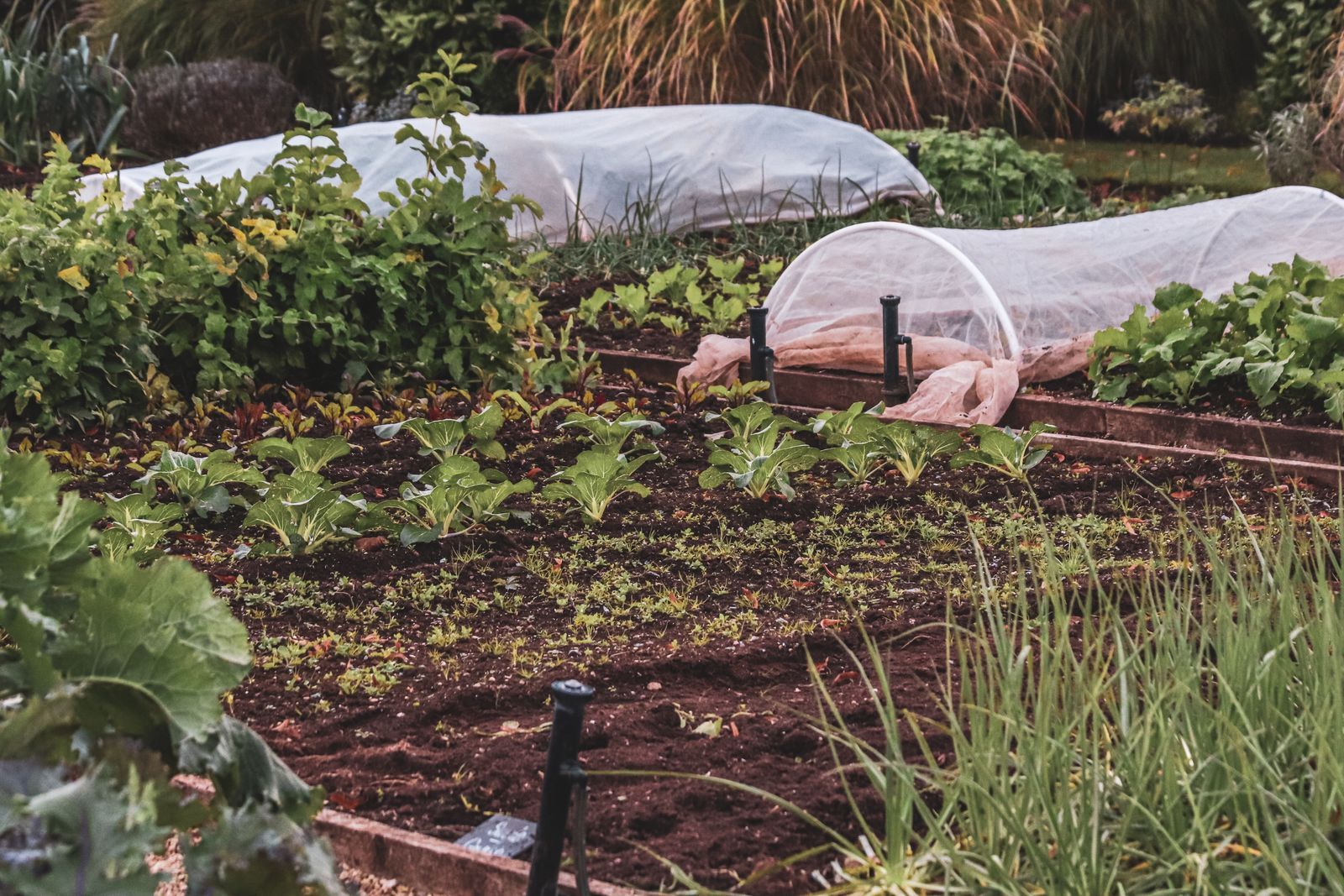
A cover can be floated, laid directly on the crop with slack for growth, or held above it on hoops. Floating is faster, cheaper, and fine for sturdy crops and insect duty, where leaf contact does no harm. Hoops earn their trouble in two situations. On a frost night, fabric touching a leaf conducts the cold straight through at the contact point, and the leaf freezes exactly where it touched; a hoop's air gap is the insulation. And tender, brittle crops, young transplants and soft greens, are bruised and bent by fabric weight and wind movement, where a hoop turns the cover into a roof instead of a blanket. The rule of thumb: float for insects, hoop for frost, and hoop anything you would not want a wet sheet resting on.
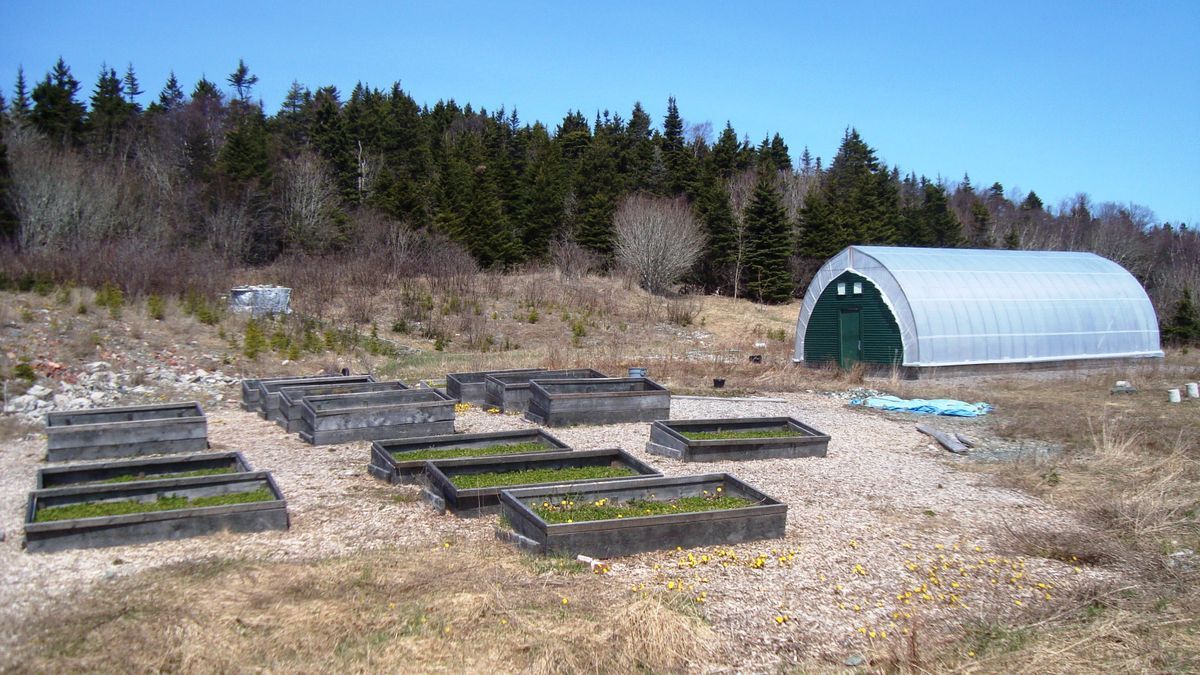
Raised beds and a hoop house on a small farm in early spring
The Rules That Make a Cover Work
Seal the edges. For insect duty, a gap at the edge is an open door, and the pests you excluded will find it more reliably than the crop finds the light. Bury the edges in soil, or weight them with boards, bricks, or sandbags, all the way around, every time.
Mind the pollination date. A cover that keeps cabbage moths out also keeps bees out, and a covered squash, cucumber, or strawberry bed will set no fruit until the cover comes off at flowering. Mark the removal date when you cover the bed, not when you notice the flowers wilting unvisited underneath. Crops grown for leaves and roots never notice; crops grown for fruit always do.
Vent the heat. Fabric traps warmth, which is the point at night and the danger at noon. On warm, sunny days, lift the edges or pull the cover back, especially under medium and heavy grades and over cool season crops like lettuce and spinach, which would rather be cold than hot. More beginner crops are lost to a cooked afternoon under cover than to the frost the cover was bought for.
Take it off in stages at the season's turn. A crop that has lived under cover for weeks is soft. When the season settles and the cover's job is done, open it on a cloudy day or in the evening first, the same hardening logic as moving seedlings outdoors, rather than stripping it at noon in full sun.
Cover Plans by Crop: A Season at a Glance
The decision gets easier when you watch it applied. Kale and cabbage go under light cover the day they are transplanted and stay under it until harvest, because the cabbage moth is a season long threat and these crops never need a bee; the cover is their whole pest program. Squash and cucumbers start under light cover against cucumber beetles, then the cover comes off the morning the first flowers open, and the gardener accepts the beetle risk from then on because fruit matters more. Tomatoes and peppers get medium cover only on the specific spring and fall nights when frost threatens, hooped so the fabric never rests on the leaves, and spend the rest of the season uncovered. Lettuce and spinach wear light cover in the hot weeks only if it is true shade cloth instead, since row cover's warmth is the last thing a bolting prone green wants in July, and wear medium row cover happily in the cool shoulders of the year. Strawberries take medium cover on frost nights during bloom, off again each morning for the bees, a nightly dance that saves the crop that frost would take at its most vulnerable week.
Hoops and Hardware: The Cheap Frame
A hoop costs almost nothing and turns a blanket into a roof. The standard materials are lengths of half inch PVC pipe or 9 gauge wire, cut to arc across the bed and pushed into the soil or into short rebar or pipe stubs at the bed's edges, spaced about every 3 to 4 feet along the row. In a raised bed, hoops socket neatly into short pipe sections screwed to the inside of the frame, which keeps them vertical and makes the whole cover a lift off unit. Size the hoop so the fabric clears the crop at its expected height under cover, not its height on covering day, because a crop that grows into its cover has rebuilt the contact problem the hoops were meant to solve. Clips, clothespins, or short split pipe sections pin the fabric to the hoops against wind; weights and buried edges finish the seal at ground level. The whole frame for a home bed costs less than the heavy grade fabric it carries, and it stores flat against a wall all winter.
Storage: How One Cover Lasts Seasons
Row cover is cheap, but a cared for piece still outlasts a neglected one by years, and the failure is almost always storage, not use. Shake and brush the soil off, let the fabric dry completely before folding, because a damp folded cover mildews and weakens over winter. Store it out of sunlight, which degrades polypropylene steadily, in a labeled bin or bag: label the weight grade and the bed it fits, because next spring's medium and light pieces look identical on the shelf and behave nothing alike in the garden. Small tears patch with tape or a stitched scrap and matter little for frost duty; for insect duty, patch or retire the piece, since the barrier is only as good as its largest hole.
Frequently Asked Questions
What is the difference between row cover and frost cloth?
In the garden store, almost none: the names are used interchangeably for the same spunbonded fabric, and both are sold by weight. What matters is the grade on the package, light, medium, or heavy, and the light transmission and frost protection that grade carries, not which of the two names is printed larger.
Can I leave row cover on all season?
The light grade, yes, over leaf and root crops, as an insect barrier, provided the edges stay sealed and you lift it on the hottest days. Over fruiting crops, no: it must come off at flowering for pollinators. Medium and heavy grades should come off whenever frost is not threatening, because their light cost is real.
Does row cover protect against a hard freeze?
The heavy grade holds about 8 degrees F of protection at the crop, which saves plants through a night in the mid twenties but not through a deep, sustained freeze. For harder cold you are in cold frame and greenhouse territory, or you accept the loss and replant; fabric has an honest limit and this is it.
Will row cover keep out every pest?
It stops the flying and crawling insects that must reach the crop to lay eggs or feed: cabbage moths, flea beetles, cucumber beetles, and leaf miners among them. It does nothing against what is already in the soil, and slugs under a cover enjoy the shelter as much as the crop does. It is a barrier, not a pesticide, and it works by arrival prevention.
Can I water through a garden bed cover?
Yes. Row cover passes water readily, and rain and overhead watering reach the crop through it, which is one of its advantages over plastic. Drip lines under a cover work normally as well.
How long does a piece of row cover last?
A light grade typically serves one to two seasons before it thins and tears; medium and heavy grades serve several seasons if they are dried, folded, and stored out of sunlight. Sunlight is the main aging force, so the cover you store in the dark outlives the one left wadded on the fence, even though the fence one feels more convenient in October.
Photo credits: Boys in Bristol Photography (Pexels); Jason Youngman (Pexels). Photos are served from this site; follow the credit to the library page for the original.