Most beginner advice lists are a pile. Water deeply, mulch everything, feed the soil, start small, all true, all in no order, and none of it tells you which tip matters most when you only have the energy to learn three things this week. So this list is ranked, and the ranking rule is simple: what does it cost you if you get this one wrong? A tip that prevents a dead plant outranks a tip that prevents a messy bed. A habit that saves a whole crop outranks one that saves an afternoon.
Read the list in order if you are starting out. The top tips are the load bearing ones. Get the first five right and your garden will forgive almost everything else while you learn. The tips lower down still matter, but they refine a garden that already works instead of rescuing one that does not.
As you read, work through the Beginner Habits Checklist on this page. It turns each tip into a box you can tick in your own garden, this week, with your own plants. A tip you have turned into a habit is worth ten tips you have only read.
Interactive tool
Beginner Habits Checklist
Check off each step as you finish it. Your progress stays on this page.
0 of 6 complete
0% done
Tip 1: Start Smaller Than You Want To
The cost of getting this wrong is the whole garden. A bed that is too big does not fail in spring, when everything is small and the weather is kind. It fails in July, when the weeding, watering, and harvesting all peak at once and the garden becomes a chore you avoid. Avoided gardens die of neglect in a fortnight of hot weather.
Start with one bed, around 4 by 8 feet, or a handful of large containers. Tend it well. A small garden you visit daily teaches you more, and usually feeds you more, than a large garden you visit with dread. Expansion is easy next year, and by then your ambitions will be based on what your kitchen actually used, which is the only expansion plan that works.
Tip 2: Put Sun Before Everything Else
The cost of getting this wrong is a season of weak, hungry looking plants that no fertilizer can rescue. Sunlight is the one input you cannot add later. Most fruiting vegetables, tomatoes, peppers, beans, cucumbers, and squash among them, perform best with at least 6 hours of direct sun a day, and 6 to 8 hours is the target range extension planting guides use for a vegetable bed. Leafy greens and many herbs manage with less.
Before you dig, watch your candidate spot across a day, morning, noon, and late afternoon, and count its honest sun hours. Remember that a tree shadow grows as the tree leafs out, so a spot that is sunny in early spring can be shaded by late May. Choose the spot by its summer sun, not its March sun, and choose one you walk past daily, because a garden you see is a garden you water.
Tip 3: Water the Roots, Deeply and Less Often
The cost of getting this wrong is twofold: shallow rooted plants that collapse in the first heat wave, and, from the opposite mistake, roots rotting in soil that never dries. Watering is the habit beginners get wrong in both directions at once, sprinkling a little every day.
The working rule is depth over frequency. Garden plants need about 1 inch of water per week in the growing season, from rain and watering combined, and more in hot or windy weather and in sandy soil. Give that water in deep soakings at the base of the plants, so it sinks to where roots live, then let the surface dry between waterings. Check with a finger pushed into the soil: moist a couple of inches down means wait, dry at that depth means water. Deep, spaced watering grows deep roots. Daily sprinkling grows roots that live in the top inch and panic in August.
Tip 4: Space Plants for the Plant They Will Become
The cost of getting this wrong is disease and disappointment in midsummer. Seedlings are small and beds look empty, so beginners plant close. Then the plants grow into each other, compete for light and water, and hold damp, still air around their leaves, which is exactly what fungal disease wants.
Space at the distance printed on the seed packet or plant tag, measured for the mature plant. A tomato transplant set at its full spacing looks lost for two weeks and correct by July. Use a tape measure or a marked stick for the first plantings of the year. Your eye will calibrate quickly, but it calibrates on honest measurements, not on guesses.
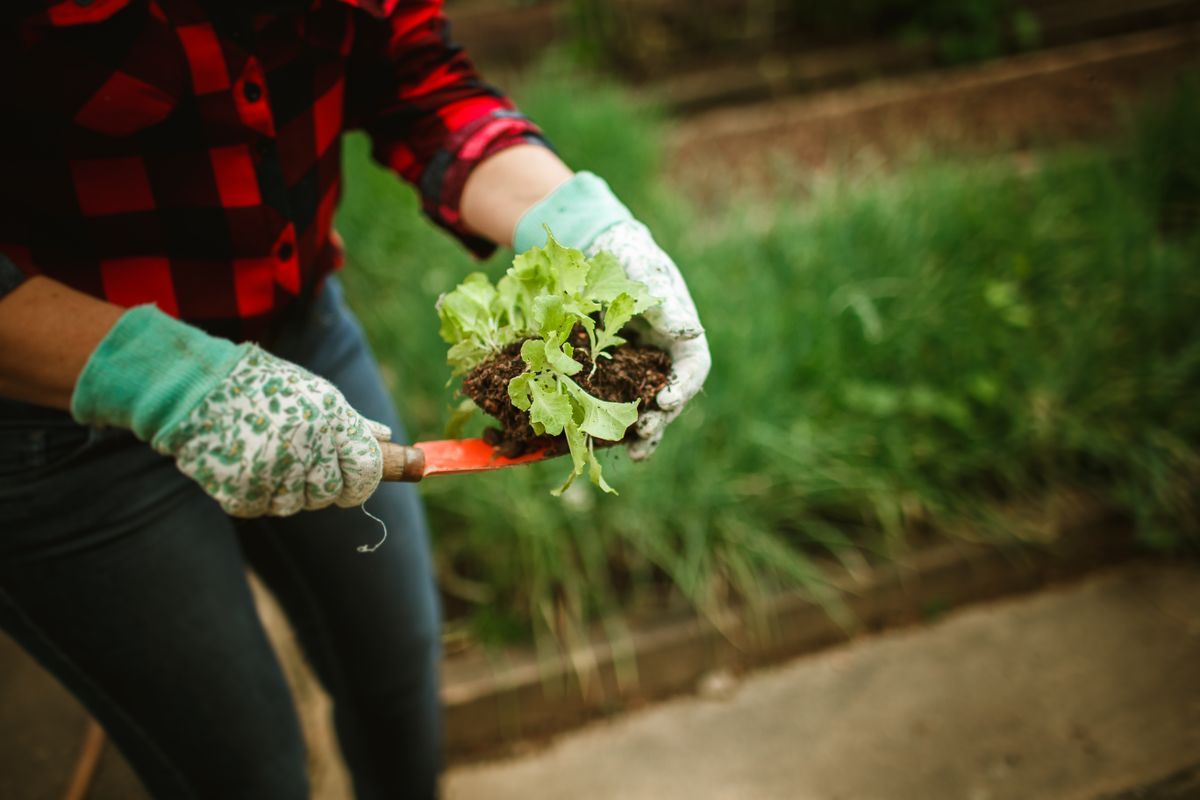
A gardener holding a young lettuce plant with soil around its roots, ready to set it at its full spacing
Tip 5: Mulch Bare Soil Once Plants Are Settled
The cost of getting this wrong is paid in watering and weeding all season. Bare soil loses moisture to sun and wind, crusts under heavy rain, and offers every weed seed a clean place to start. A layer of mulch, straw, shredded leaves, or wood chips on beds, spread once seedlings are up and transplants are growing, slows evaporation, softens rain impact, and keeps soil from splashing onto leaves, where it can carry disease.
Keep mulch a small distance from stems rather than piled against them, and top it up when it thins. Mulch is the cheapest labor a beginner can buy: an hour spreading it saves many hours of watering and weeding later.
Tip 6: Weed Small, Weed Often, Never Wrestle
The cost of getting this wrong is a weekend lost to weeds with root systems like cables, plus the crop plants you damage pulling them out. Weeds are a five minute problem or a five hour problem, and the difference is entirely timing. A weed pulled when it has two leaves comes out with two fingers. The same weed in three weeks needs a fork and takes your lettuce with it.
Build weeding into your garden visits rather than scheduling weeding days. Walk the bed with your morning coffee or your evening round, and pull what you see while it is tiny. A hand weeder or short hoe makes the round faster, scraping seedlings out before they establish. Ten calm minutes twice a week beats a heroic monthly purge, for the garden and for your back.
Tip 7: Feed the Soil, Not Just the Plants
The cost of getting this wrong is a slow decline: each year the garden produces a little less, and no single season shows you why. Plants eat nutrients, and something has to replace them. The beginner friendly answer is compost, spread on the bed and worked in, which returns organic matter, feeds soil life, and improves both clay and sandy soil at once.
Beyond compost, go carefully. More fertilizer is not always better, and excess fertilizer can burn roots and push soft growth that pests love. If plants struggle despite good sun, water, and spacing, a soil test through your local extension office or a home kit tells you what is actually missing, including whether your soil pH sits near the neutral range most garden crops prefer. Test first, then feed what the test asks for.
Tip 8: Plant in Season, Not on Impulse
The cost of getting this wrong is dead transplants after one cold night, or warm season crops sulking in cold soil for weeks. Every crop has its weather. Cool season crops, lettuce, peas, radishes, kale, and carrots, prefer spring and fall and shrug off light frost. Warm season crops, tomatoes, peppers, beans, cucumbers, and basil, need frost gone and soil warmed.
Your local last spring frost date is the hinge of the whole calendar. Cool season crops can go in before it, warm season crops after it, and the seed packet for each crop tells you its timing relative to that date. Garden centers sell tomato plants weeks before it is safe to plant them, because selling is their job. Planting dates are yours.
Plant in rounds as well as in season. Fast crops such as lettuce, radishes, and bush beans do not need to go in all at once. Sowing a short row every couple of weeks spreads the harvest across the season instead of landing it in one overwhelming week, and it hedges your bets: if one sowing meets bad weather, the next is already coming. The seed packet's timing guidance applies to each round, and the last sowing of the year is counted backward from your first fall frost, which your local extension dates give you.
Tip 9: Label Everything and Keep Dumb Notes
The cost of getting this wrong is small each time and enormous over a year. In three weeks, two kinds of seedlings look alike, and by next spring you will not remember which tomato variety produced and which one split. Label every row and pot the day you plant, with crop, variety, and date.
Keep notes in whatever form survives your habits: a notebook by the door, a notes app, photos with dates. What you planted, where, when it sprouted, what you harvested, what failed. Those notes are the real harvest of a first garden. They turn one season of experience into a plan instead of a rumor.
Tip 10: Look at Your Garden for a Few Minutes Most Days
The cost of getting this wrong is every problem arriving as an emergency. Thirst, pests, yellowing leaves, the first ripe fruit: all of them announce themselves early and quietly. A two minute look today is cheaper than a rescue next week, and it is the habit that makes all the other tips work, because you cannot fix what you have not seen.
Tip 11: Grow What You Actually Eat
The cost of getting this wrong is quiet: a bed full of healthy plants nobody harvests, tended with slowly dying enthusiasm. A garden built from a seed catalog's best photographs gets watered in May and ignored by July. A garden built from your shopping list gets visited daily, because dinner is out there.
Start your plant list in the kitchen. Write down the vegetables and herbs you buy most weeks, then check that list against your season and your sun. Five to eight crops you love will outperform twenty crops you felt you should grow, in harvest, in learning, and in the only metric that keeps a garden alive: whether you still walk out to it gladly in August.
Tip 12: Expect Losses, and Count Them as Tuition
The cost of getting this wrong is giving up. Every gardener, including the ones with beautiful social media gardens, loses plants: a late frost, a rabbit, a week of neglect during a trip, a disease that arrived on the wind. Beginners read losses as verdicts on their ability. Experienced gardeners read them as data with a tuition fee attached.
When something fails, ask the diagnostic questions before you blame yourself. Did it have sun? Was the soil moist at root depth, or only at the surface? Was it planted in its season? Was it spaced for its mature size? Most failures answer to one of those four, and all four are fixable next planting. A garden where nothing ever dies is a garden where nothing was risked, and risk, in small beds, is cheap.
When a Tip and Your Yard Disagree
These tips are ranked for the average first garden, and your yard is not average. It has its own microclimate: a wall that stores heat, a low corner that holds frost, wind that funnels between houses. When a tip and your yard disagree, believe your yard, and write down what it taught you. Local evidence beats general advice, including the advice on this page, every time.
That is also why the notes in Tip 9 matter so much. A season of honest notes converts national tips into your garden's own rulebook, and your rulebook is the one you will actually use. The tips get you started. Your notes make you a gardener.
The Five Minute Weekly Routine
Once a week, give the garden one slightly longer visit, in this order. Walk the whole bed and look, really look, at leaves top and underside. Push a finger into the soil in two or three places and judge the week's watering. Pull the weeds you can see, which will be few if your daily rounds are happening. Check ties, stakes, and trellises before plants get heavy. Harvest anything ripe, because regular picking keeps many crops producing. Write one line of notes. Five minutes, six jobs, and the garden almost never surprises you.
Three Traps That Are Not Tips at All
Some beginner habits look like diligence and work like sabotage. The first is spraying first and diagnosing later. Most plant problems that look like disease or pests are water, sun, or spacing problems wearing a disguise, and a spray cannot fix a thirsty plant. Diagnose in the order of these tips, sun, water, space, soil, before reaching for any product.
The second trap is planting everything on one heroic spring day. A garden planted in a day must be weeded, watered, and harvested all at once too, all season. Stagger the work: prepare the bed one weekend, plant the cool season crops the next, and hold the warm season crops until their weather truly arrives. The garden rewards pacing because gardening is a season long conversation, not a single event.
The third trap is comparing your first garden to photographed gardens. Photographed gardens show harvest day, not the failed row that was composted in June. Your garden's honest comparison is your own garden last month. If it is greener, fuller, and better understood than it was, you are doing the thing correctly.
Frequently Asked Questions
What is the single most important tip for a beginner?
Start small, because size is the mistake that turns into all the others. A small garden gets watered, weeded, and watched, and those three habits carry a garden further than any product. One bed of about 4 by 8 feet, tended daily in short visits, will teach you more in one season than a large plot you dread by July.
How much sun do vegetables really need?
Most fruiting vegetables do best with at least 6 hours of direct sun a day, with 6 to 8 hours the usual target in extension planting guides. Leafy greens and many herbs produce with less. Count your spot's sun across a whole day before you plant, and judge it by its summer pattern, because tree shade grows as leaves come out in spring.
How often should I water?
Water by soil, not by calendar. Garden plants need roughly 1 inch of water per week from rain and watering combined, more in heat, wind, or sandy soil. Push a finger into the soil near your plants: dry a couple of inches down means water deeply at the base; moist at that depth means wait. Deep, less frequent watering grows deeper roots than a daily sprinkle.
Why are my plants crowded even though I followed the packet?
Usually because the spacing was measured for the seedling instead of the mature plant, or measured once and then eyeballed for the rest of the row. Packet spacing is written for the full grown plant. Use a tape measure or marked stick for every plant in the row, not just the first, and trust the empty looking bed. It fills in faster than you expect.
Do I need fertilizer in my first year?
Compost worked into the bed covers most first year needs. Beyond that, feed by evidence, not by schedule: if plants have good sun, water, and spacing and still struggle, get a soil test through your local extension office or a home kit and add what the test shows is missing. Guessing with fertilizer can burn roots and push soft, pest prone growth.
Do these tips apply to container gardens too?
Yes, with one adjustment: containers live faster. A pot dries out far quicker than a bed, heats and cools faster, and gives roots a fixed volume of soil to live in, so the watering tip matters even more and the finger test becomes a daily habit in hot weather. Sun, spacing for mature size, labeling, and notes work exactly the same. Start small applies most of all: three large pots tended well beat a patio crowded with pots you cannot keep watered.
How do I stop weeds without spending every weekend on them?
Never let them get big. Pull or scrape weeds while they are tiny, during short daily garden rounds, and keep bare soil covered with mulch so fewer weed seeds start at all. A weed with two leaves takes two fingers and two seconds. The same weed three weeks later takes a fork, a struggle, and sometimes the crop plant beside it.
Photo credits: Helena Lopes (Pexels); Helena Lopes (Pexels). Photos are served from this site; follow the credit to the library page for the original.